5 min di lettura
Questo articolo è per gli abbonati.
Parte 4
How and why I became a musician
Di Edouard Gros
Questo articolo è in inglese. Italiano disponibile dal numero 60.
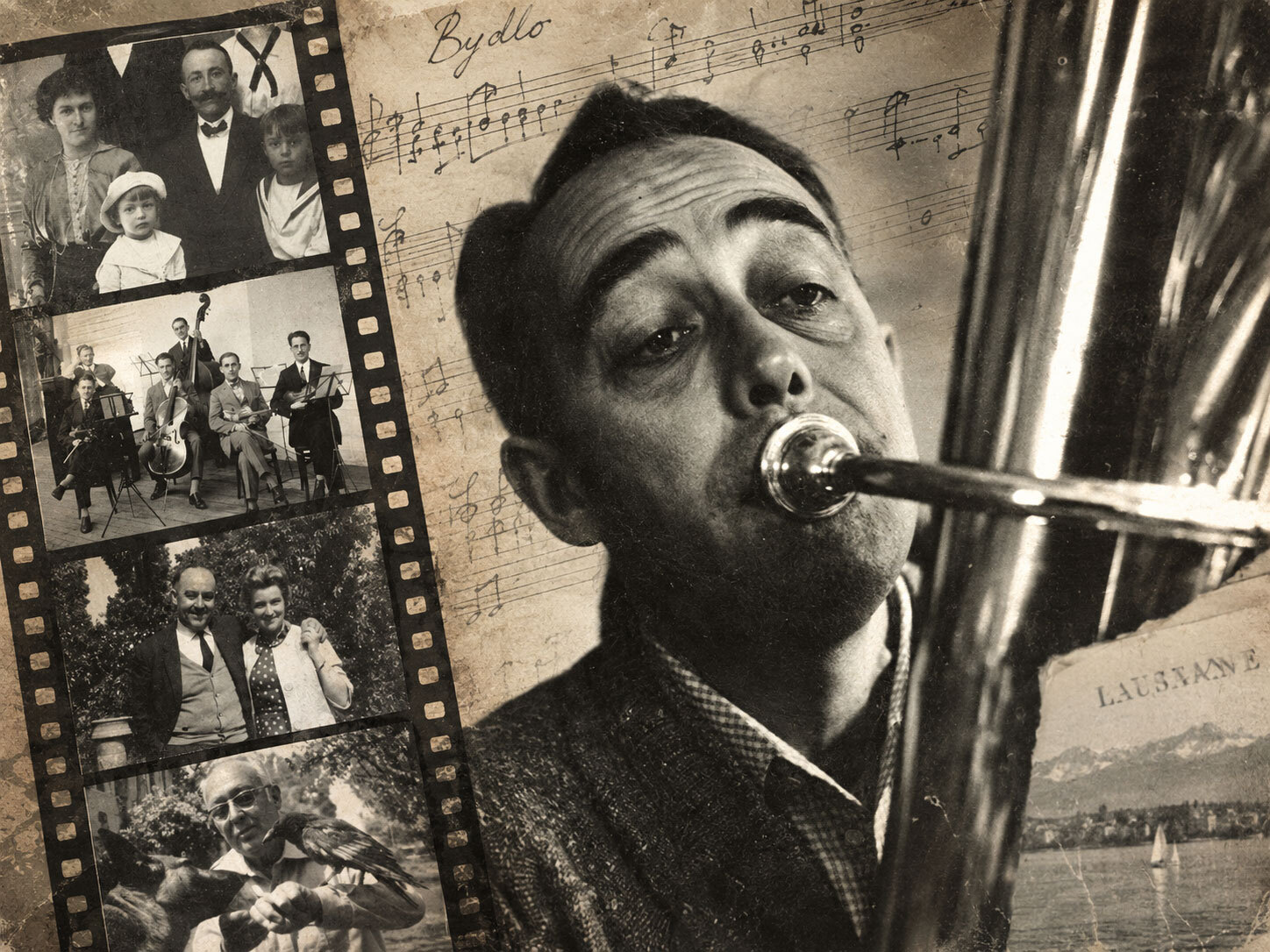
Edouard Gros
Edouard Gros has had a remarkable career in Switzerland playing double bass and tuba. (His reputation as a tuba player was exceptional.) In BB50 he started to tell us about his beginnings.
My contract at the OSR began on 1st October 1938; I went to Geneva in September, first to get my residence permit and then to look for somewhere to live. People who did not know the Geneva of those days will find it hard to believe but there was nothing easier than finding a flat and you could pick whatever you wanted. Every house in every street had notices offering two, three or four rooms available immediately and the agents for recently built blocks or flats were offering long leases with the first three or six months free. In other words Geneva was a dead city. It had also become very disapproving towards the newcomers and, although I was a Swiss citizen, I had to show my contract of employment. There were various reasons for this — and here is one!
Some communities in the French-speaking cantons had found a very shrewd and practical (if not very elegant) way to get rid of their native unemployed citizens: they made them the generous offer of a one-way ticket to Geneva, which, being socialist at the time, had to take charge of these poor wretches since the original communities would not. As the trick had been discovered and exposed, I could understand their reluctance to accept another out-of-work applicant (a musician as well) with only a six-month contract in his pocket. Once these little administrative matters were settled, however, it remained only for us to make contact with our new Geneva colleagues and their boss, Ernest Ansermet.
Ansermet, first rehearsal
It has to be said that the reception was on the chilly side. The Geneva musicians accepted us well enough but Ansermet, a trifle vindictive, found it difficult to forgive us our fight for our bread and butter at Radio Lausanne. At the first rehearsal he informed us politely that here at the OSR all unions were out of the question, that claims stopped at the studio door and that it was in the best interests of us Radio Lausanne survivors to forget the past. He also informed us, equally politely, that he alone was empowered to renew our contracts — every season — if appropriate! Well, imagine how we felt.
Despite this cold-shower treatment we were happy to have found a job, if only for six months, and proud to belong to a well known orchestra, so we swallowed this bitter pill without too much trouble, thinking of the new life which was about to begin.
At first we were somewhat taken aback by the rumblings and growlings and instrument noises which Ansermet liked to make to illustrate what he wanted; we were amused by his words, which were sometimes fierce, and by his shouting and anger, which were equally so, but we soon got used to it and came to like him, while still slightly afraid of him, and above all to admire him a lot. Others, far better qualified than I, have already said all there is to say about this great man. As his greatest performances have all, thank goodness, been recorded, their eloquent testimony make it unnecessary for this humble tuba player to add his three ha'porth to the discussion. No, I will content myself with passing on some of his remarks, both humorous and ill-humoured, which the recipients did not always appreciate.
Questo articolo è per gli abbonati.
CHF 5.00 al mese · Disattiva il rinnovo automatico in qualsiasi momento.
Goditi l’accesso illimitato a tutti gli articoli digitalizzati di Brass Bulletin.
Brass Bulletin 53, I / 1986 pagine 81–85
Tutti i contenuti sono protetti dal diritto d’autore © Brass Bulletin 1986–2026