Las traducciones originales al español de Brass Bulletin comienzan con el n.º 60.

2 min de lectura

Interview with Thomas Müller

Interview with Thomas Müller

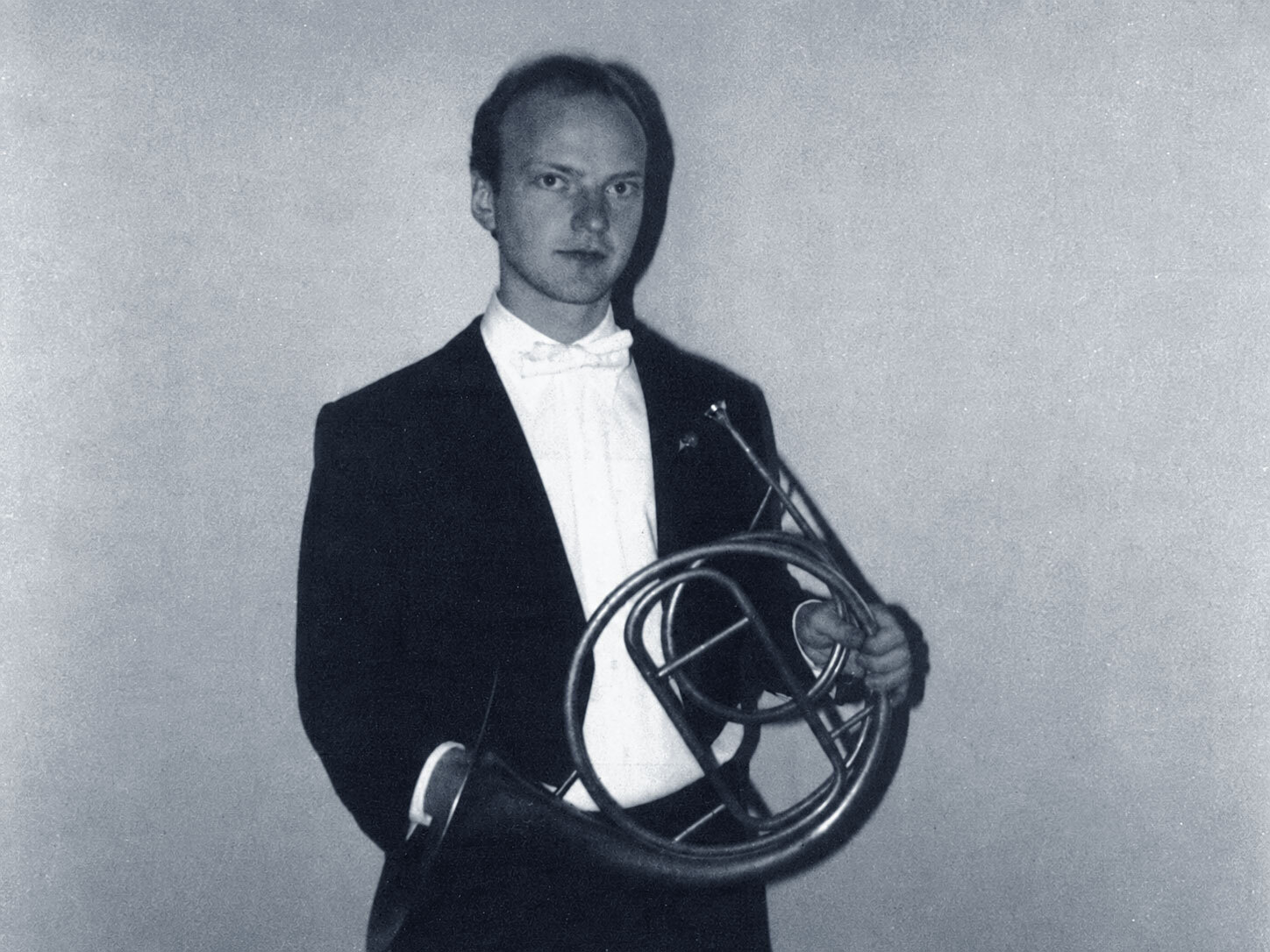
Thomas Müller

The Schola Cantorum Basiliensis, one of the major centers in Europe for the study of old music, has announced the appointment of Thomas Müller as instructor of natural horn. Thomas Müller is presently solo horn of the Bern Symphony Orchestra, but he has had extensive experience in performing on natural horn, including performance of the Bach B minor Mass in Geneva, London and Vienna; concerts and tours with the ensemble Il Divertimento; Baroque opera productions in Milan, Innsbruck, Amsterdam, the Hague and Basel; and participation in eight record albums of Baroque music. Address for further information: Schola Cantorum Basiliensis, Leonhardstr. 6, CH-4051 Basel, Switzerland.

In the following mini-interview, Thomas Müller answers the four questions most typically asked about the study of natural horn.

B.B. Why would one study natural horn in this day and age?

T.M. Today, in order to comprehend any particular branch of a profession as well as possible, one must try to illuminate the subject from any different sides, and frequently one learns more from practical experience than from just theoretical study. It is simply not sufficient to study the horn in its contemporary (often “commercial”) form and use, with no attention to its development. It can be rightfully asserted that no other musical instrument has had as long and steady a development or evolution as the horn.

B.B. Wouldn’t Mozart have written differently if he had had the triple horn?

M.T. Do you know what Mozart and (the contemporary Swiss composer) Kelterborn have without doubt in common? They both display in their compositions the same enthusiasm for the horn of their respective eras. One can ask such a question as “Wouldn’t Mozart have used the horn differently if it had been more ‘modern’?”, but there is no point to it — things were the way they were. You might as well ask what Leonardo da Vinci might have done if he had had a photocopy machine.

B.B. Don’t you run into the danger of ignoring progress?

T.M. One must of course appreciate the contemporary. However, I would speak less of “progress” than “development”; ie things have changed with the times. A look to the past should not be taken as a step backwards. It is a look to increase our scope; it broadens our horizons and furthers our knowledge.

B.B. Does the study of natural horn have advantages or disadvantages for playing technique?

T.M. By the promotion of concentration on such basics as embouchure, breathing, right hand use (stopping techniques), I see only advantages. I also believe that study of the classical natural horn is the most direct path to lyric playing.

The reason to study natural horn today is that this instrument is simply, in every respect, worth the study.

Brass Bulletin 47, III / 1984 páginas 31–33

Todo el contenido está protegido por derechos de autor © Brass Bulletin 1984–2026

Compartir este artículo

Facebook LinkedIn
Cargando…

Preguntas y respuestas

Cómo funciona la edición digital

¿Qué incluye la edición digital?

La edición digital reúne los artículos ya digitalizados como textos legibles y consultables en línea —no simplemente como escaneos o archivos PDF— junto con sus ilustraciones originales, notas, autoría, información del número y traducciones disponibles. Las sugerencias de artículos relacionados incluyen actualmente solo este material digitalizado.

¿Los artículos digitales son idénticos a los originales?

Conservamos con la mayor fidelidad posible el texto original, el idioma, las ilustraciones, los pies de imagen, las notas y el contexto editorial. La presentación se adapta para facilitar la lectura en línea y pueden corregirse errores evidentes de transcripción o escaneado. El contenido y el carácter del artículo publicado permanecen inalterados.

¿Qué idiomas están disponibles?

Brass Bulletin se publicó en inglés, francés y alemán a lo largo de toda su historia. Las traducciones al italiano y al español se añadieron a partir del número 60. Por este motivo, en los sitios italiano y español los artículos de los números 1 a 59 se muestran en inglés de forma predeterminada.

¿Con qué frecuencia se añaden nuevos artículos?

Se añaden nuevos artículos casi a diario, con aproximadamente un número completo digitalizado cada semana. El ritmo puede variar según el trabajo de preparación, tratamiento de imágenes y revisión editorial necesario.

¿Por qué no están disponibles todos los artículos en formato digital?

La colección completa de Brass Bulletin contiene 1.246 artículos publicados entre 1971 y 2003. El índice completo ya está disponible en línea y permite descubrir todos los artículos de la colección, incluidos aquellos cuyo texto íntegro todavía no ha sido digitalizado.

La digitalización comenzó en febrero de 2026. Cada artículo se prepara cuidadosamente para la lectura en línea, se revisa y se vincula con su número, sus autores, sus temas y sus ilustraciones. Al ritmo actual de digitalización, se prevé que la colección completa esté disponible en línea en febrero de 2028.

¿Por qué algunas referencias mencionan artículos que todavía no están disponibles?

Las referencias de los artículos originales se conservan aunque el material al que remiten aún no haya sido digitalizado. De este modo se mantiene intacto el contexto histórico y editorial. A medida que se incorporen más números a la edición digital, un número creciente de estas referencias conducirá a artículos que podrán leerse en línea.

¿Puedo sugerir un artículo o informar de un error de transcripción?

Sí. Si hay algún artículo que le gustaría especialmente ver digitalizado, o si detecta un posible error de transcripción o algún dato que falta, póngase en contacto con nosotros. Los comentarios de los lectores nos ayudan a mejorar la edición digital y a establecer prioridades útiles dentro del archivo.

¿Cómo puedo apoyar a Brass Bulletin?

Su apoyo ayuda a financiar la preparación, verificación y publicación en línea de la colección completa.

Suscríbase a la Edición Digital

¿Prefiere apoyarnos sin suscribirse?

Haga una donación

Busca en Brass Bulletin.