Ofrezca Brass Bulletin en su universidad, conservatorio o biblioteca Descubra el acceso institucional

5 min de lectura

Low register development for the trombone

Should you really drop the jaw for low notes? James Fulkerson challenges this idea and proposes a more stable approach to extend the low register.
Low register development for the trombone

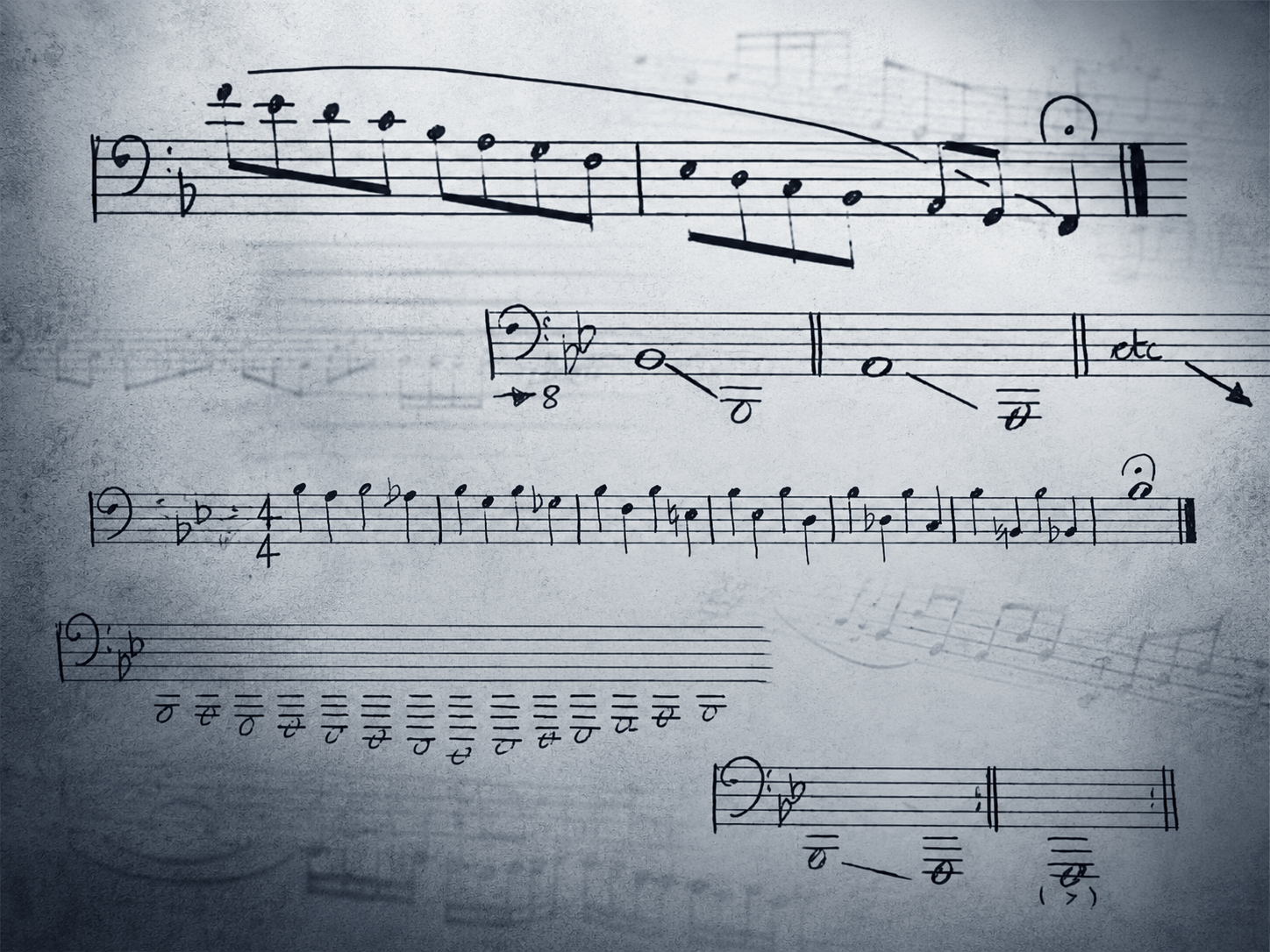
In developing a low register, we are usually told to drop the jaw as we descend. True, we will need to drop the jaw for the low register, but most people overcompensate and drop the jaw too much. Eventually, the jaw drops so far that the lips no longer make contact and therefore can no longer vibrate. This defines the bottom of their low register. Before this, however, the tone will have lost its center, become unfocused, and is not projecting.
Many trombonists, including respected bass trombonists, say that to play the really low pedal tones, i.e. beginning with G or G♭, one must shift the embouchure upwards on the upper lip. This creates the obvious problem that it cannot be done without some embouchure readjustment, and it is true that it is possible to work this out to an acceptable minimum of time required. Even in this case, the player is working with a type of «double embouchure», and since it can be eliminated, I think it should.

I find that by using mouthpiece pressure on the lower lip and jaw as I descend rather than thinking of dropping the jaw, a player is able to play the horn down rather than collapsing downwards. The jaw will still drop, but not to an excess. With a single embouchure, one plays down to the double pedal B♭ or lower. With this technique, the bottom jaw is gradually strengthened and helps to support the high- and low-register playing and can increase endurance.
For the player who worries that not dropping the jaw will rob him of a dark sound: the oral cavity shape need not be changed. We can use any syllable in any register as an aid to creating the «sound» we want. In addition, the airstream speed is a contributing factor to our sound. Lewis Van Haney has described an image of the airstream as being within the continuum: cool, dry (quick) — hot, wet (slow), in order to create one’s desired sound. I find this imagery to be extremely helpful in creating the sound I want for differing musical situations.

Some players are troubled by a somewhat related problem when playing loudly in the low register. Because they use too quick an airstream (and not enough air quantity), the sound cracks up or disintegrates. By remembering Van Haney’s continuum, one could substitute a slower airstream and the tone will not crack up.

Continue reading

Accede a la edición digital completa.

Brass Bulletin 13, I / 1976 páginas 35–43

Todo el contenido está protegido por derechos de autor © Brass Bulletin 1976–2026

Compartir este artículo

Facebook LinkedIn
Cargando…

Preguntas y respuestas

Cómo funciona la edición digital

¿Qué incluye la edición digital?

La edición digital reúne los artículos ya digitalizados como textos legibles y consultables en línea —no simplemente como escaneos o archivos PDF— junto con sus ilustraciones originales, notas, autoría, información del número y traducciones disponibles. Las sugerencias de artículos relacionados incluyen actualmente solo este material digitalizado.

¿Los artículos digitales son idénticos a los originales?

Conservamos con la mayor fidelidad posible el texto original, el idioma, las ilustraciones, los pies de imagen, las notas y el contexto editorial. La presentación se adapta para facilitar la lectura en línea y pueden corregirse errores evidentes de transcripción o escaneado. El contenido y el carácter del artículo publicado permanecen inalterados.

¿Qué idiomas están disponibles?

Brass Bulletin se publicó en inglés, francés y alemán a lo largo de toda su historia. Las traducciones al italiano y al español se añadieron a partir del número 60. Por este motivo, en los sitios italiano y español los artículos de los números 1 a 59 se muestran en inglés de forma predeterminada.

¿Con qué frecuencia se añaden nuevos artículos?

Se añaden nuevos artículos casi a diario, con aproximadamente un número completo digitalizado cada semana. El ritmo puede variar según el trabajo de preparación, tratamiento de imágenes y revisión editorial necesario.

¿Por qué no están disponibles todos los artículos en formato digital?

La colección completa de Brass Bulletin contiene 1.246 artículos publicados entre 1971 y 2003. El índice completo ya está disponible en línea y permite descubrir todos los artículos de la colección, incluidos aquellos cuyo texto íntegro todavía no ha sido digitalizado.

La digitalización comenzó en febrero de 2026. Cada artículo se prepara cuidadosamente para la lectura en línea, se revisa y se vincula con su número, sus autores, sus temas y sus ilustraciones. Al ritmo actual de digitalización, se prevé que la colección completa esté disponible en línea en febrero de 2028.

¿Por qué algunas referencias mencionan artículos que todavía no están disponibles?

Las referencias de los artículos originales se conservan aunque el material al que remiten aún no haya sido digitalizado. De este modo se mantiene intacto el contexto histórico y editorial. A medida que se incorporen más números a la edición digital, un número creciente de estas referencias conducirá a artículos que podrán leerse en línea.

¿Puedo sugerir un artículo o informar de un error de transcripción?

Sí. Si hay algún artículo que le gustaría especialmente ver digitalizado, o si detecta un posible error de transcripción o algún dato que falta, póngase en contacto con nosotros. Los comentarios de los lectores nos ayudan a mejorar la edición digital y a establecer prioridades útiles dentro del archivo.

¿Cómo puedo apoyar a Brass Bulletin?

Su apoyo ayuda a financiar la preparación, verificación y publicación en línea de la colección completa.

Suscríbase a la Edición Digital

¿Prefiere apoyarnos sin suscribirse?

Haga una donación

¿Cómo avanza la digitalización?

Estamos poniendo Brass Bulletin a disposición de los lectores en línea, artículo por artículo. Pueden leer los artículos recién digitalizados en cuanto estén listos, incluso antes de que se complete un número entero.

Consulten nuestro calendario de digitalización para descubrir las últimas novedades y las fechas estimadas de disponibilidad de los próximos números. Estas estimaciones se basan en nuestro ritmo reciente y pueden cambiar.

Busca en Brass Bulletin.