Explore institutional access →

Complete articles index

Browse Brass Bulletin articles published since 1971. Search by topic, subject, instrument, author, series or issue, with new material added as the digital edition grows.

No. 83 • 1993 Awaiting digitization

Norbert Böpple

Master craftsman

By Jean-Pierre Mathez

Equipment
No. 116 • 2001 Awaiting digitization

Part 3

Stage fright and instrumental technique (2)

By Michel Ricquier

Health
No. 90 • 1995 Awaiting digitization

Bernhard Krol

At 75! A look back on a life

By Bernhard Krol

Encounters
No. 98 • 1997 Awaiting digitization

Interview with Harold Nash

A half century with the trombone on the British music scene

By Simon Hogg
Encounters
Friedemann Immer Free
No. 50 • 1985 Digitized

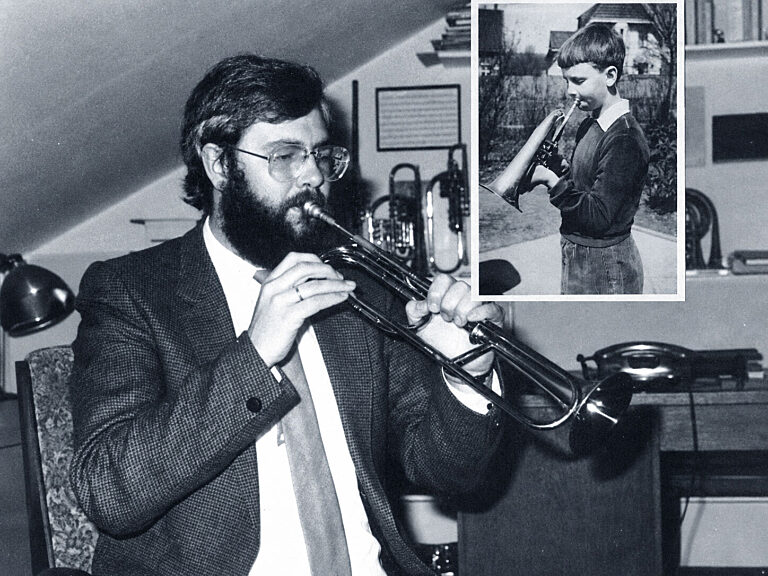
Friedemann Immer

A new Trumpet

Baroque tradition and modern trumpet playing converge in Friedemann Immer’s unusual double career, shaped by Bach, natural trumpet and early music.

By Jean-Pierre Mathez

Encounters Historical instruments
No. 103 • 1998 Awaiting digitization

Editorial

By Jean-Pierre Mathez

No. 59 • 1987 Awaiting digitization

The early 19th-century invention-posthorn

By Albert Hiller
History Equipment
Editorial Free
No. 43 • 1983 Digitized

Editorial

Mass media, record-industry economics and the return of cornet virtuosity collide in a sharp warning about fashion, manipulation and musical independence.

By Jean-Pierre Mathez

Society Professional life Sociology Ideas Contemporary Music
No. 61 • 1988 Awaiting digitization

Hakan Hardenberger

The conquest of the future

By Jean-Pierre Mathez

Encounters
No. 91 • 1995 Awaiting digitization

Toulon 1995

International trombone competition

By Roland Schnohrk

Competition
No. 122 • 2003 Awaiting digitization

Ernie Hammes - Jazz in his blood

By Jean-Pierre Mathez
Encounters
The double-slide trombone Free
No. 30 • 1980 Digitized

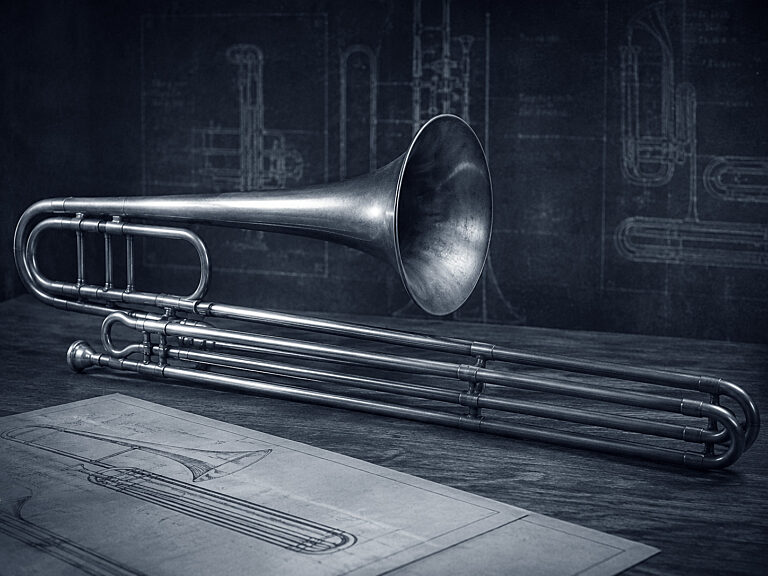
The double-slide trombone

museum-piece with a future?

As virtuosity reshaped 20th-century brass playing, Boris G. Manzora argued that the forgotten double-slide trombone could redefine technique and range.

By Boris G. Manzora

Equipment Instrument Makers Historical instruments Instrument making Valves
No. 88 • 1994 Awaiting digitization

Editorial

By Jean-Pierre Mathez

The contrabass trombone Member
No. 22 • 1978 Digitized

Part 1

The contrabass trombone

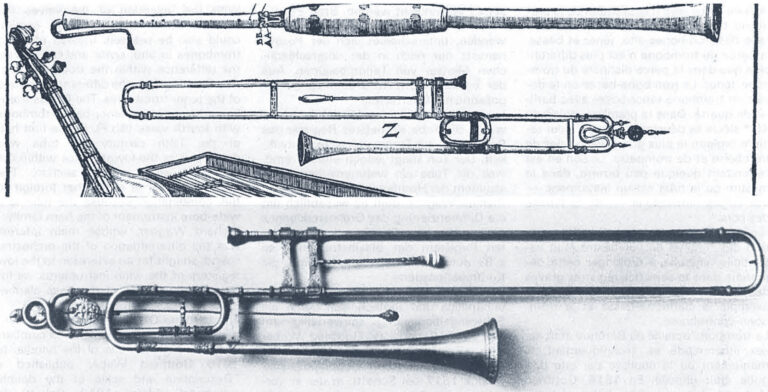
Picture and sketches, taking particularly into account the construction principles (1973)

From Praetorius to Wagner: Heinrich Thein traces the evolution of the contrabass trombone—revealing how history, acoustics, and design shaped this powerful orchestral voice.

By Heinrich Thein

History Equipment Historical instruments Instrument making Valves
No. 98 • 1997 Awaiting digitization

Angelo Galletti, Hornist and collector

Of curious mind and cusrious character, this man of 84 years has never stopped examining and critiquing the world. A remarkable story about a amn and his love/hate relationship with his twin passions

By Jean-Pierre Mathez

Encounters
No. 120 • 2002 Awaiting digitization

Part 3

A look at the evolution of the valved cornet and its repertoire

By Géry Dumoulin

History
No. 84 • 1993 Awaiting digitization

Clifford Brown (1930-1956)

A brief but full life

By Robert L. Watt

Encounters
No. 93 • 1996 Awaiting digitization

Being a Concert Trombone

By Ronald Barron
Professional life Solo playing
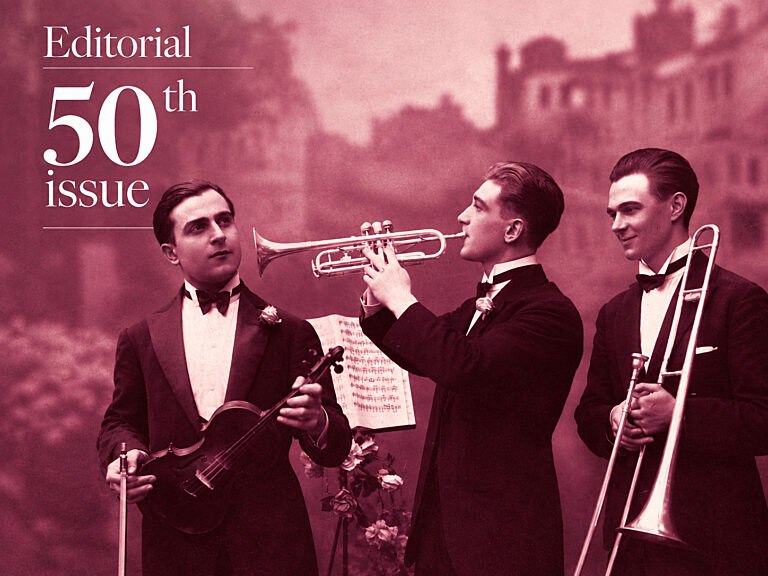
Editorial Free
No. 50 • 1985 Digitized

Editorial

What began modestly in 1971 became a worldwide network, shaped by respect for brass players, shared knowledge, history and professional solidarity.

By Jean-Pierre Mathez
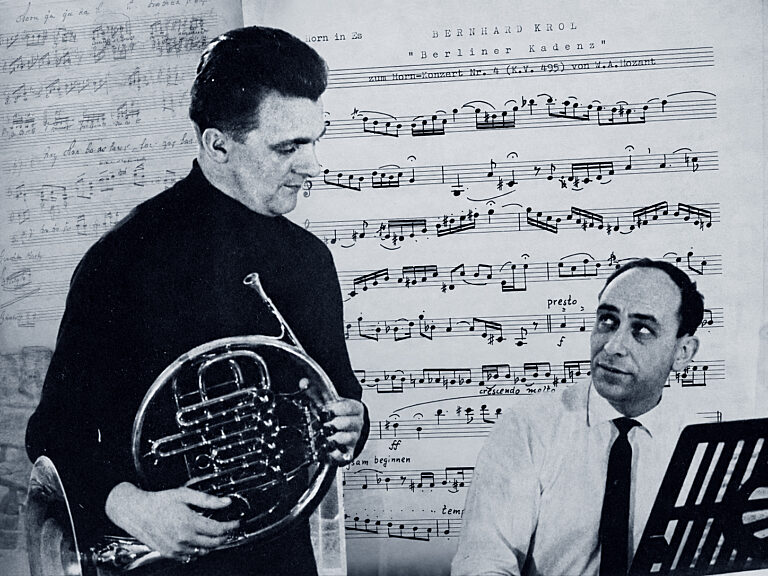
Why pretend to be Mozart? Member
No. 12 • 1975 Digitized

Why pretend to be Mozart?

The concerto’s cadenza: copy of style — or bold but true?

Should a cadenza imitate the past—or speak in today’s voice? Bernhard Krol questions the tradition of stylistic imitation and argues for cadenzas that bridge past and present with authenticity.

By Bernhard Krol

Repertoire Ideas Interpretation
No. 118 • 2002 Awaiting digitization

From a Designer’s Diary

By Denis Wedgewood

Equipment
No. 96 • 1996 Awaiting digitization

Jacques Mauger, on 7th heaven with the trombone

By Jean-Pierre Mathez
Encounters
Brass achieves academic respectability Member
No. 53 • 1986 Digitized

Special Finland

Brass achieves academic respectability

Once treated as marginal, Finland’s brass septet tradition entered academic research, challenging where folk practice ends and music history begins.

By Kauko Karjalainen

History Society Sociology Brass Ensemble
No. 106 • 1999 Awaiting digitization

Part 15

Dental Clinic for Wind Players

Brass instruments and breathing

By Toshio Nemoto

Health Teeth
Loading…

Questions & Answers

How the Digital Edition works

What does the Digital Edition include?

The Digital Edition brings together the articles already digitized as searchable online texts—not simply as scans or PDF files—along with their original illustrations, notes, authorship, issue information, and available translations. Related-article suggestions currently include only this digitized material.

Are the digital articles identical to the originals?

We preserve the original text, language, illustrations, captions, footnotes, and editorial context as faithfully as possible. The presentation is adapted for comfortable online reading, and obvious transcription or scanning errors may be corrected. The substance and character of the published article remain unchanged.

Which languages are available?

Brass Bulletin was published in English, French, and German throughout its history. Italian and Spanish translations were added from issue No. 60 onward.

On the Italian and Spanish sites, articles from issues 1–59 are therefore shown in English by default.

How often are new articles added?

New articles are added almost daily, with approximately one complete issue digitized each week. The pace may vary depending on the preparation, image work, and editorial checking required.

Why aren’t all articles available digitally?

The complete Brass Bulletin collection contains 1,246 articles published between 1971 and 2003. The full index is already available online, allowing readers to discover every article in the collection, including those whose complete text has not yet been digitized.

Digitization began in February 2026. Each article is carefully prepared for online reading, checked, and connected to its issue, authors, subjects, and illustrations. At the current pace of digitization, the complete collection is expected to be available online by February 2028.

Why do some references mention articles that are not available yet?

References in the original articles are preserved even when the material they point to has not yet been digitized. This keeps the historical and editorial record intact. As more issues are added to the Digital Edition, an increasing number of these references will lead to articles that can be read online.

Can I suggest an article or report a transcription error?

Yes. If there is an article you would particularly like to see digitized, or if you notice a possible transcription error or missing detail, please contact us. Reader feedback helps us improve the Digital Edition and prioritize useful connections within the archive.

How can I support Brass Bulletin?

Your support helps fund the preparation, verification, and online publication of the complete collection.

Subscribe to the Digital Edition

Prefer to support us without subscribing?

Make a donation

How is the digitization progressing?

We’re gradually making the Brass Bulletin available online, article by article. You can read newly digitized articles as soon as they’re ready, even before an entire issue is complete.

Visit our Digitization Roadmap to browse recent additions and see estimated availability for upcoming issues. These estimates follow our recent pace and may change.

Search Brass Bulletin.