It may be interesting to investigate the origin of a collector of instruments. I loved brass music, yet it was not music in the first place that urged me to collect brass instruments. The Bernoullis are not primarily a musical family (for centuries they have been scientists), whereas my mother's family, the Basle Speyrs, were lovers - and also in a way collectors - of antiques. What made brass instruments so fascinating for me however was their unique harmonic colour in different fields, especially so in the old classical military music and in the lovely hymns of the Reformed Church.
And this brings me to my profession: my theological call.
I studied theology in Basle and Berlin and in spite of my predisposition for an academic career, I was unerringly guided towards diaconal activity, i.e. social and psychological care. This led me in the course of the years to the presidency of the Swiss as well as of the International League of the Diaconate of the Reformed Church. This charge involved such amount and variety of duties, that I had little time left for my hobby as a collector - and none whatsoever for publications about my growing collection.
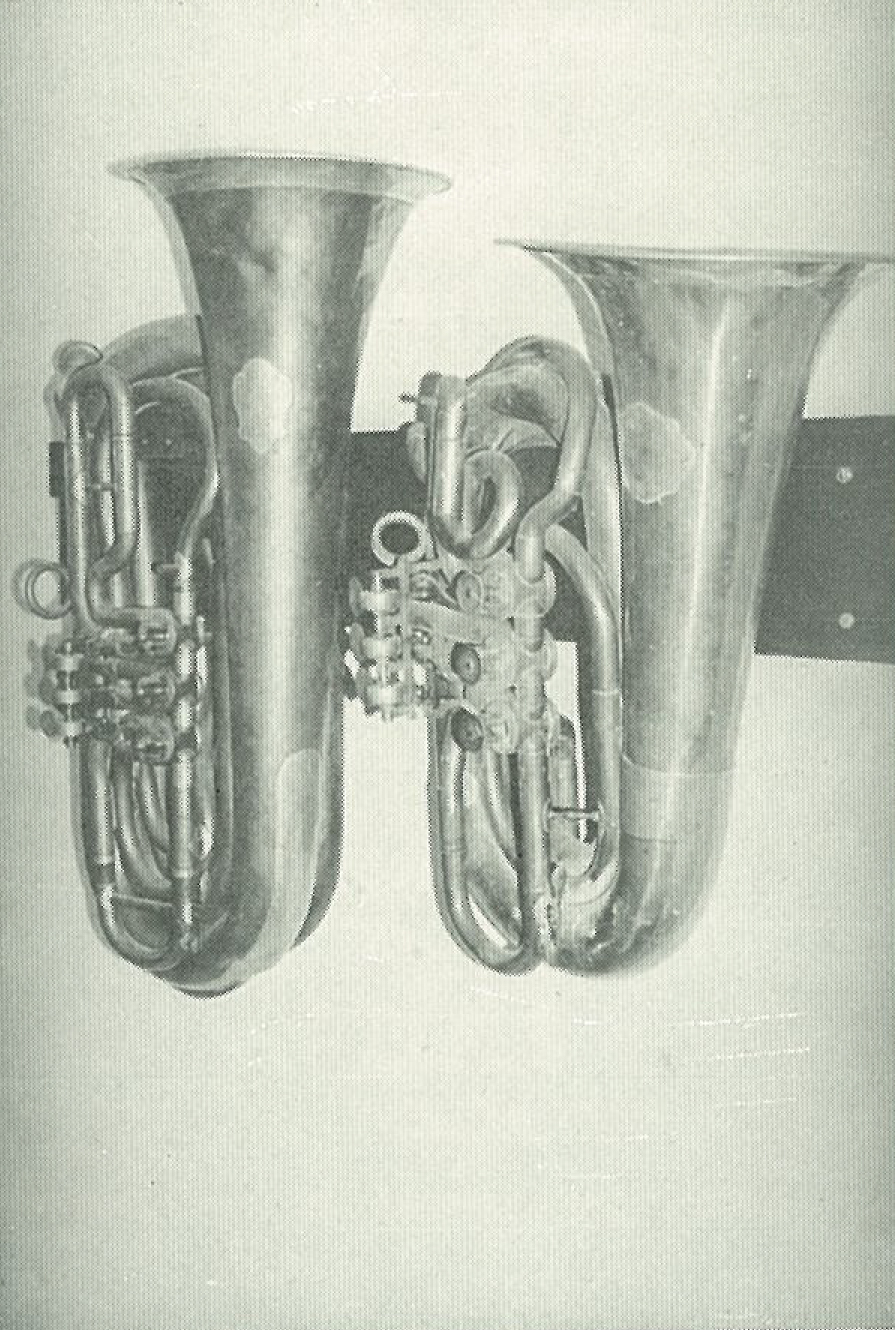
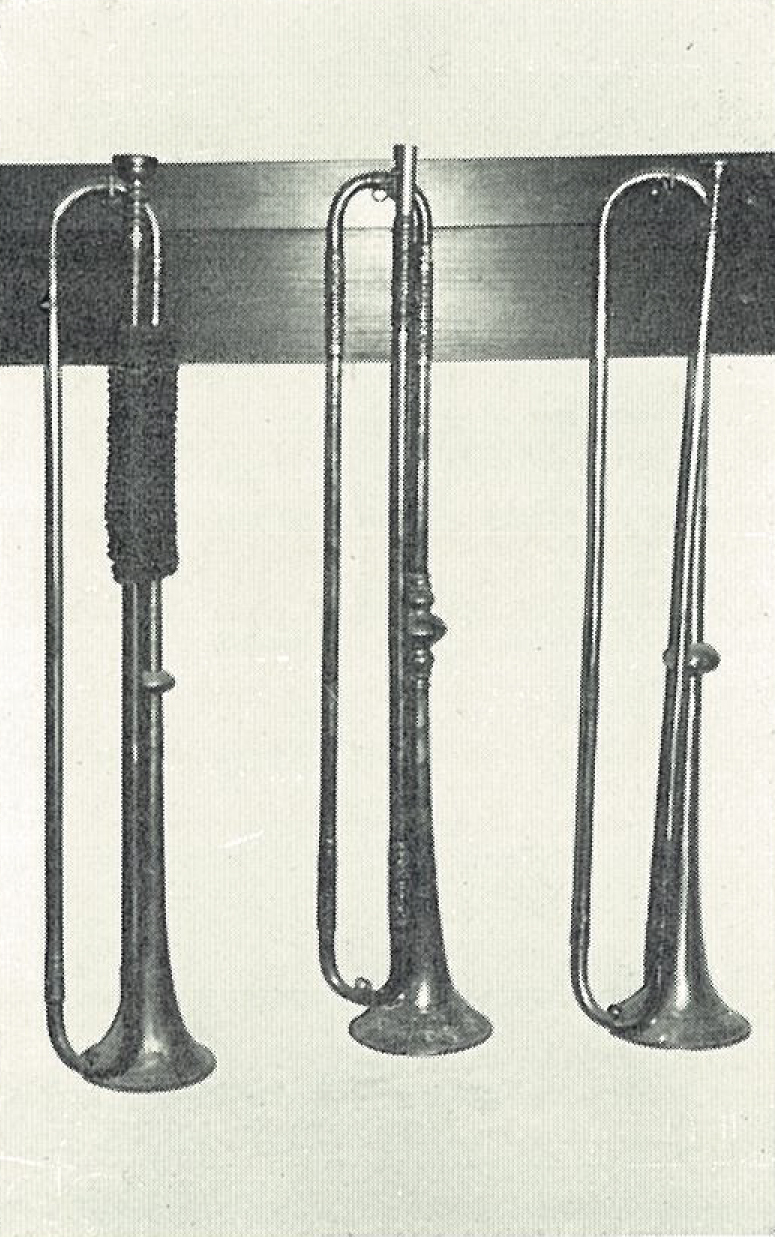
My knowledge of instruments was based on the - unfortunately not very numerous - books in German on the subject and on the study of martial history and it was enlarged by lifelong association with professional experts and with the instruments themselves. No doubt one acquires a special flair for tracing good instruments. Two of the most beautiful pieces of my collection were traced in just such a way: I simply had the feeling that something exciting must be around and never let loose until the instruments were brought forth. One is a Waldhorn with four slide-valves and the other is a magnificent silver trumpet made by Blanvalet, Berlin in 1721 (photo), decorated with the Prussian eagle and trophy. It had served in the Garde du Corps of King Friedrich-Wilhelm I of Prussia. Since this trumpet was used for parades till 1918, it was unfortunately shortened from D to E flat, an irreparable mutilation.
When I buy a damaged instrument, I have it repaired if possible, although that becomes more difficult nowadays. Mouthpieces are generally missing and even if one is supplied with the instrument, one cannot be sure of its origin, as the old mouthpieces were never signed.
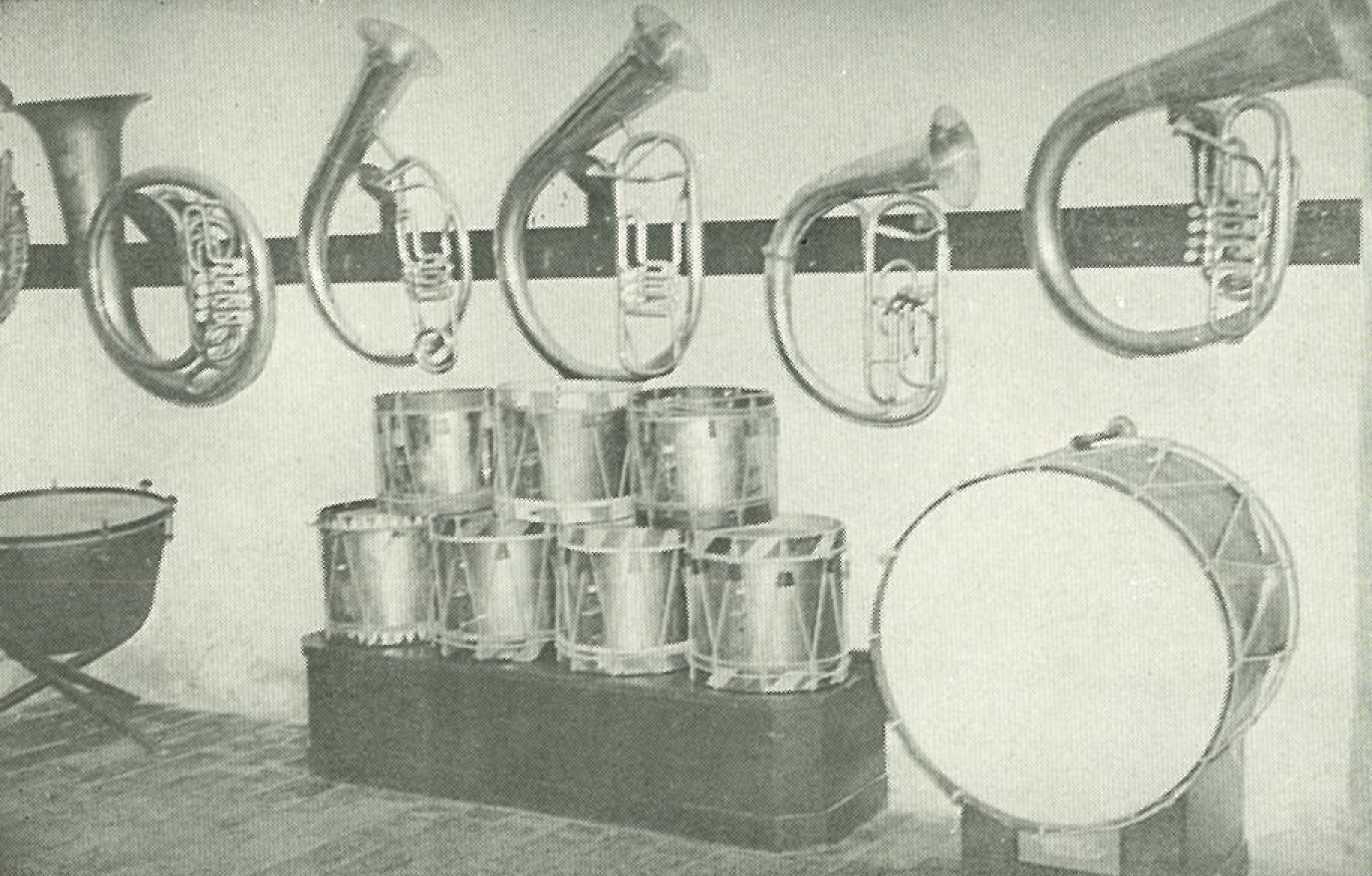
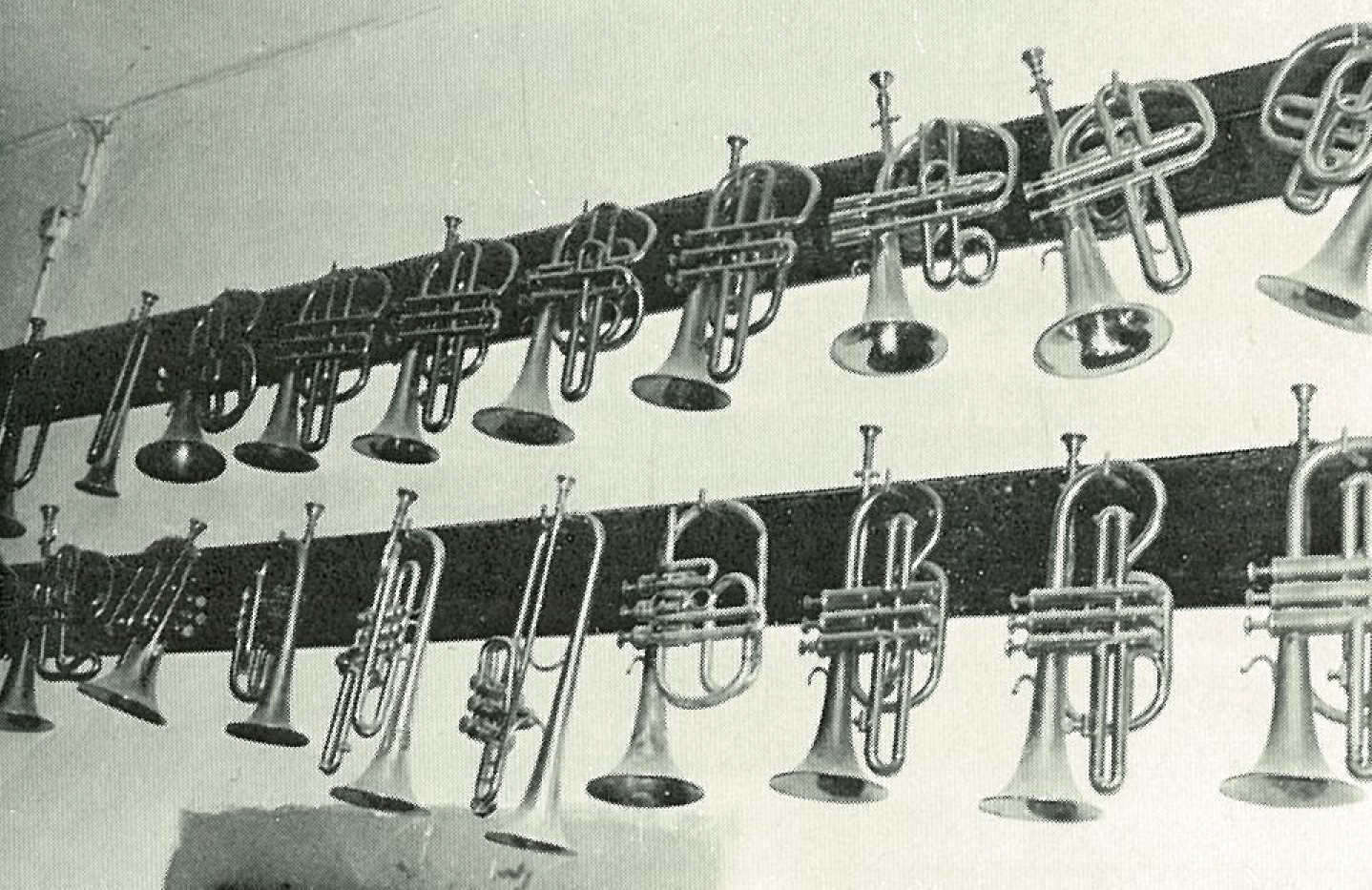
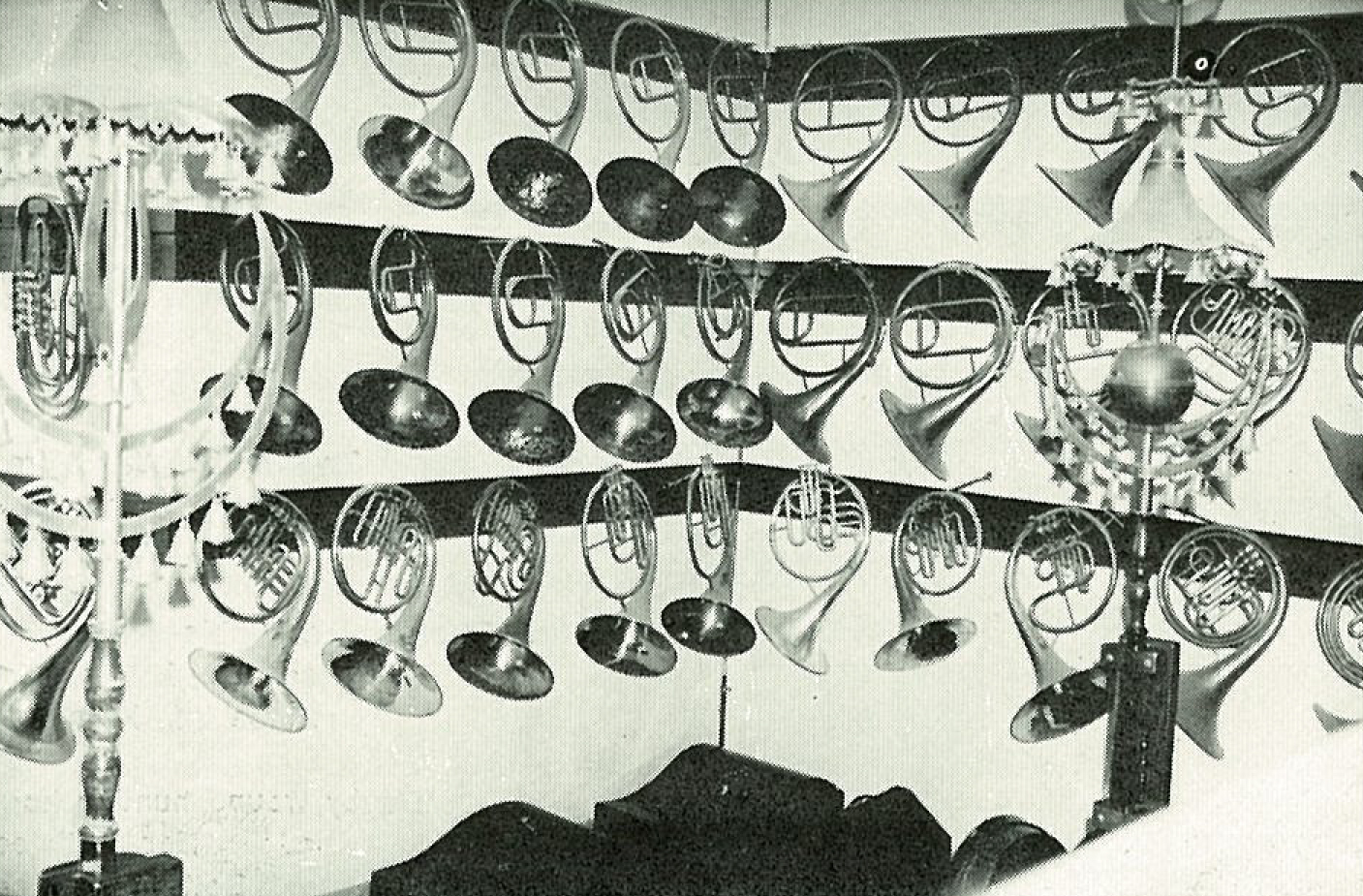
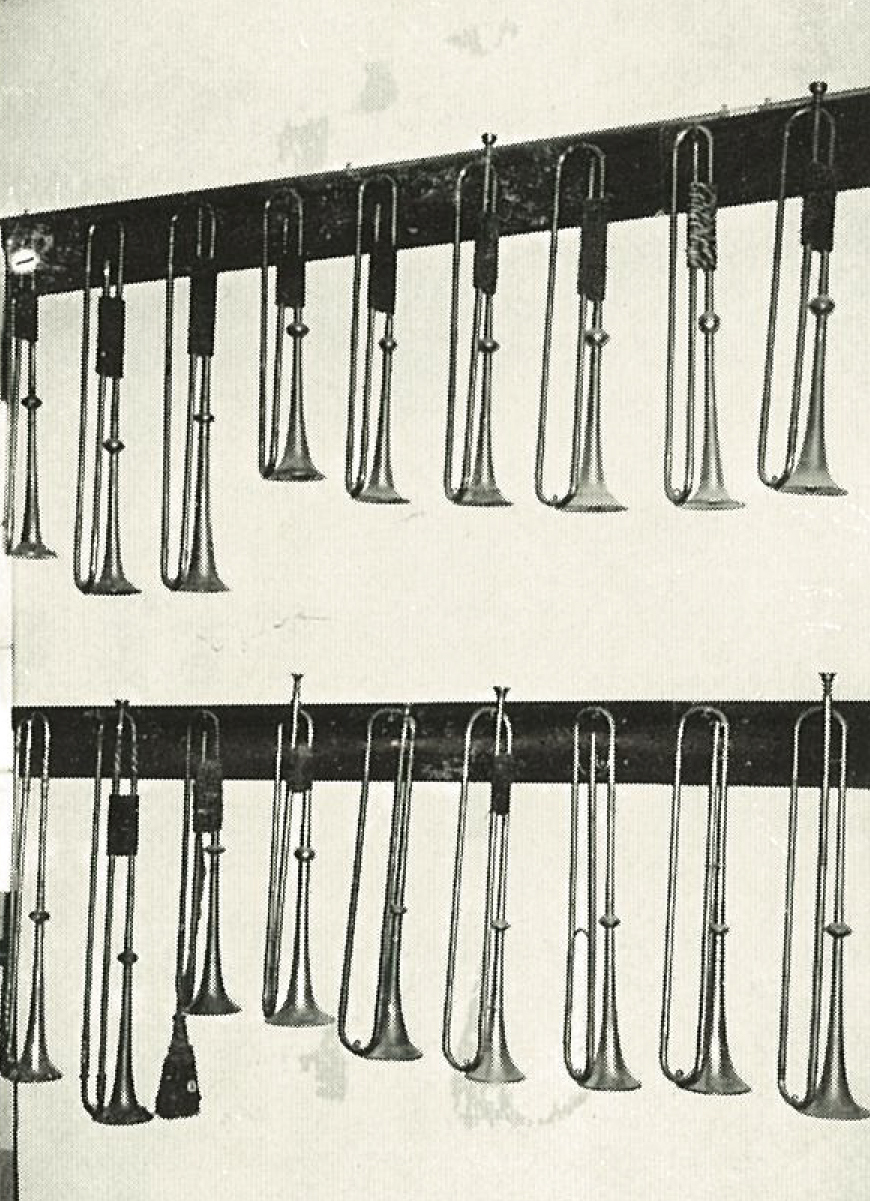
A collector needs patience, perseverance, knowledge and a « good nose » - as well as financial means. And much time of course. My collection now contains 684 instruments, of which 32 batons and drum major's maces and 84 drums. The 578 brass instruments come from 369 different makers of 139 different places. 539 of them are signed and 81 dated. I do not collect exotic, extravagant or folkloristic instruments.
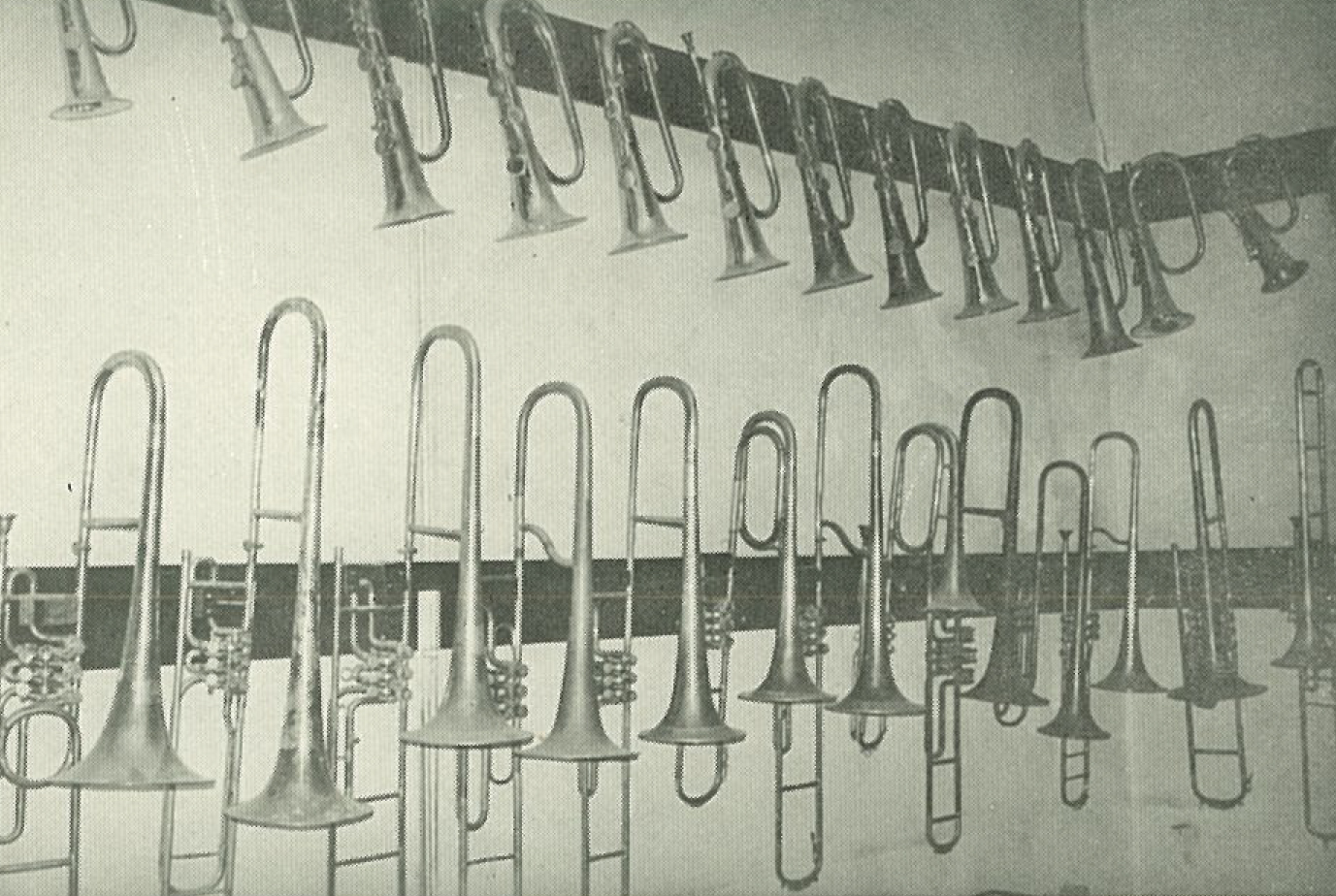
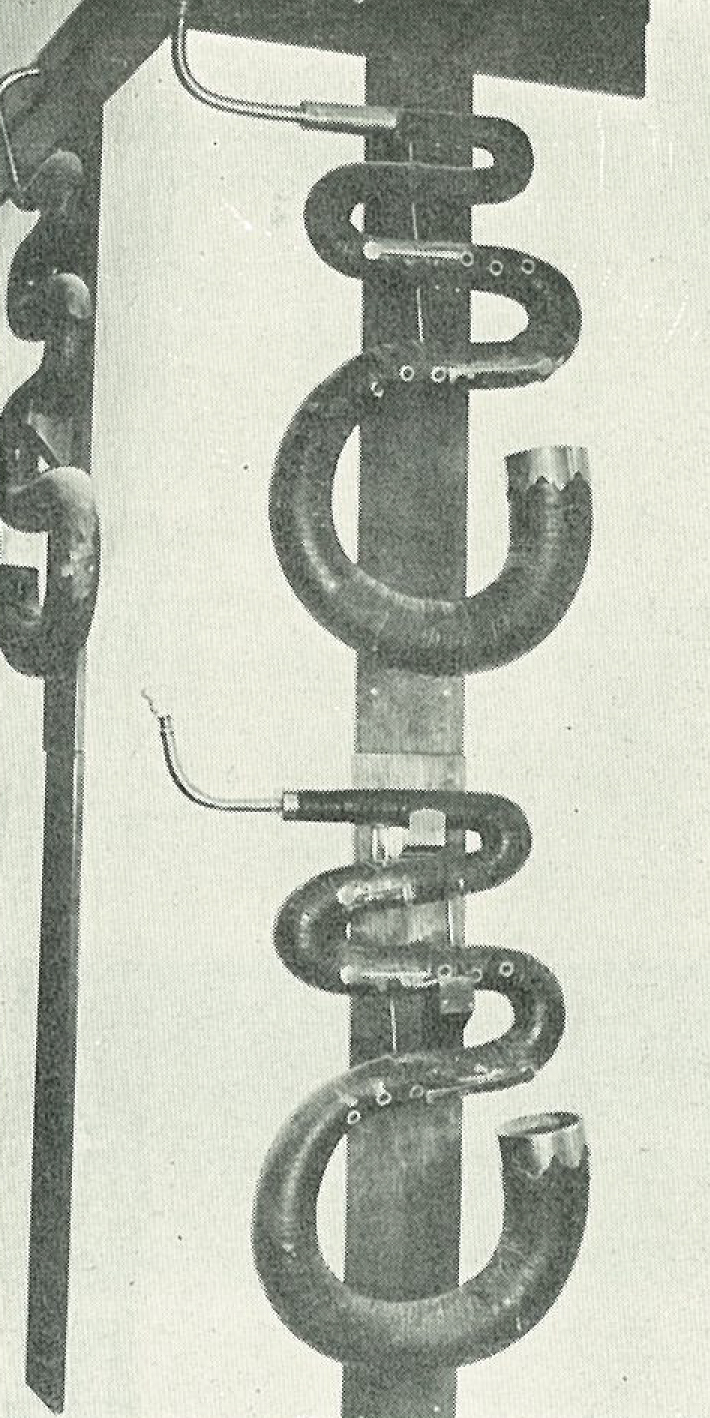
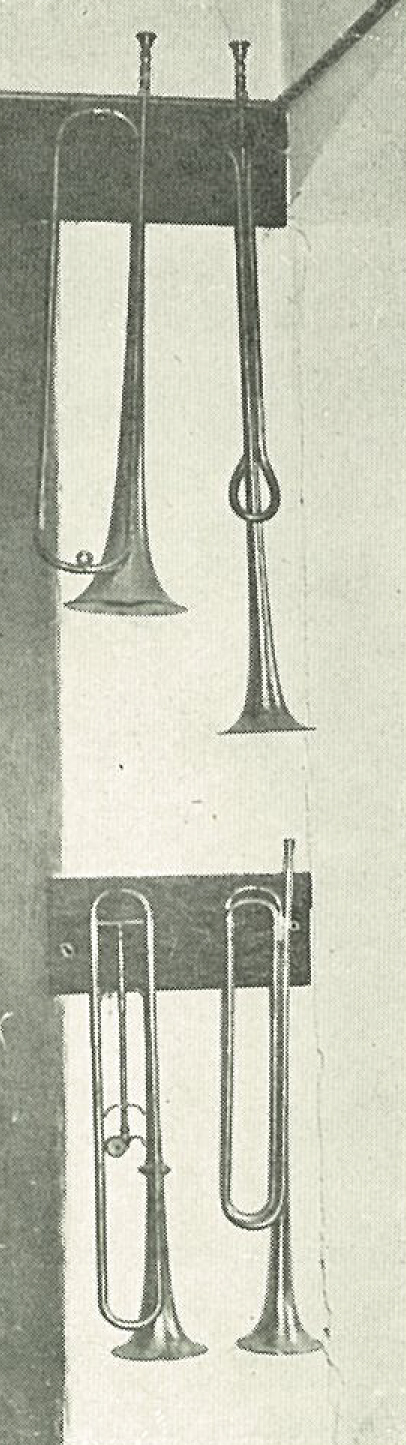
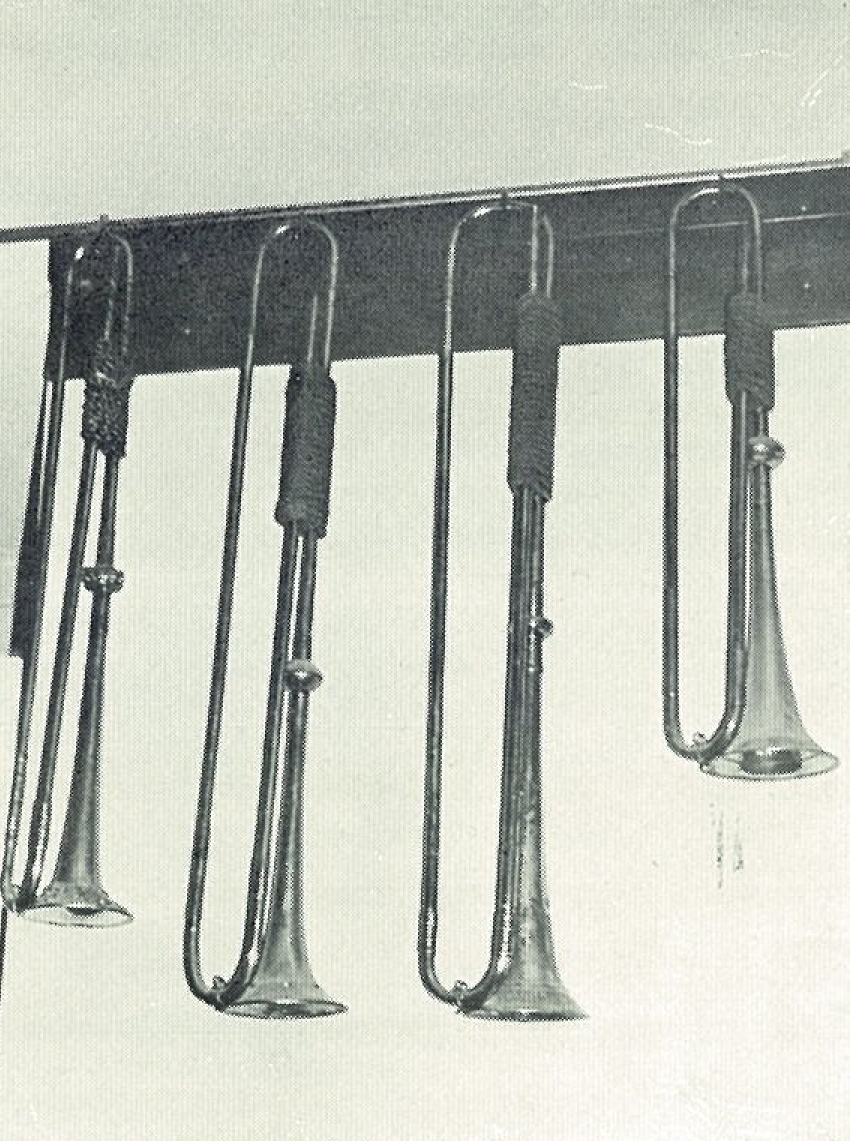
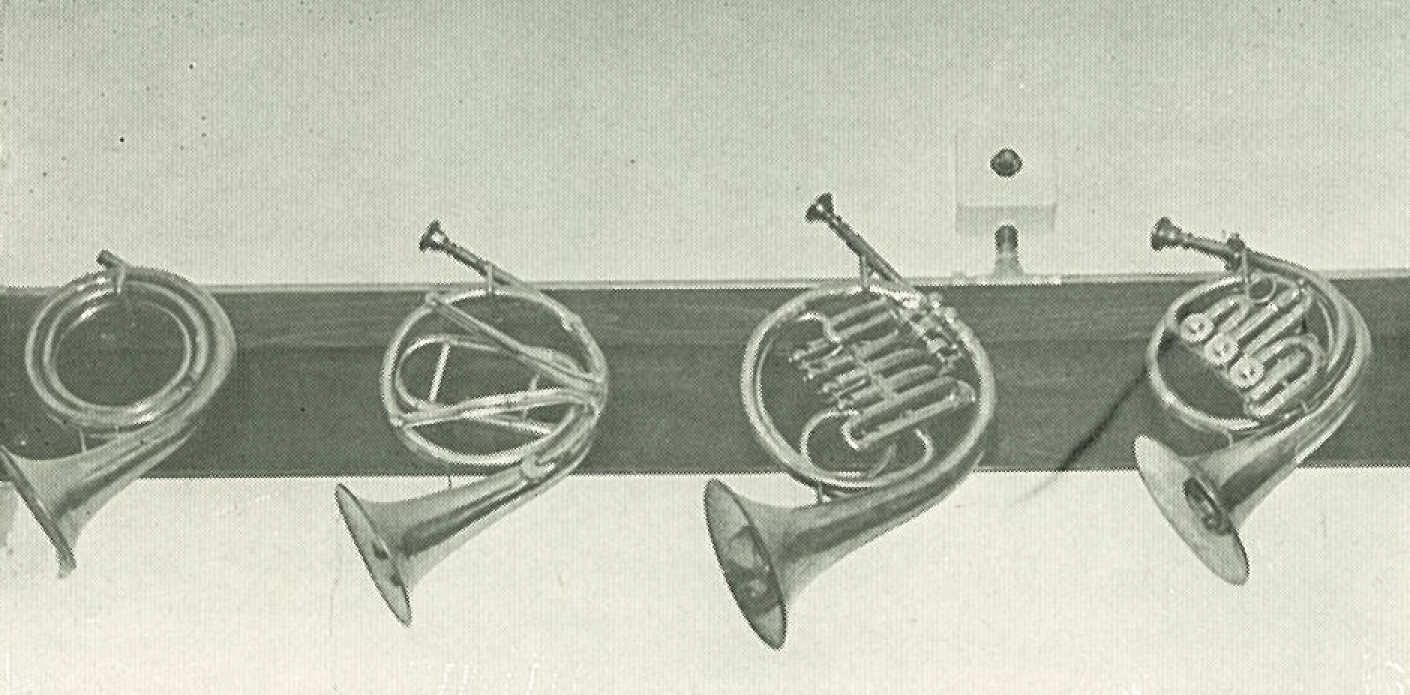
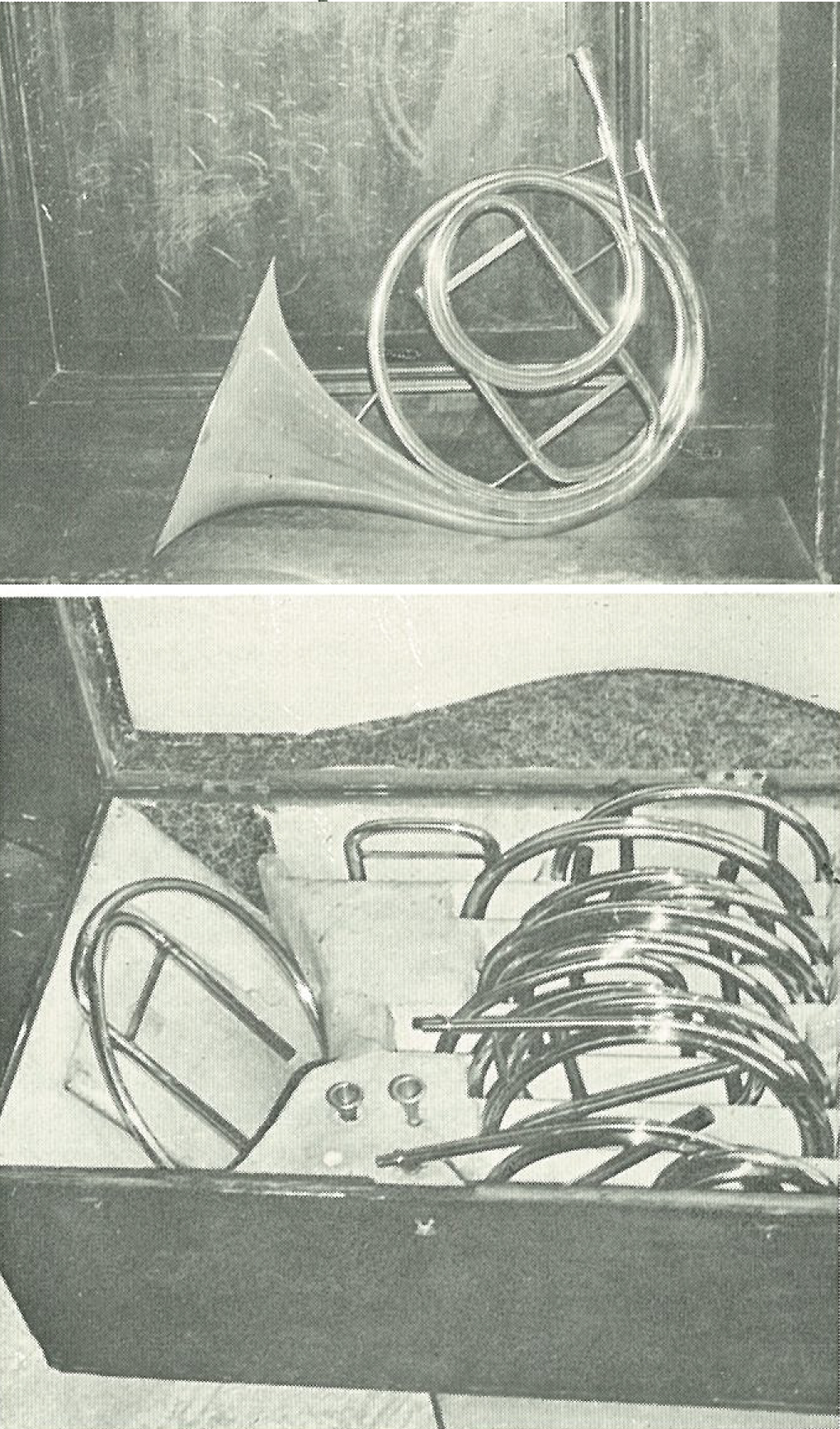
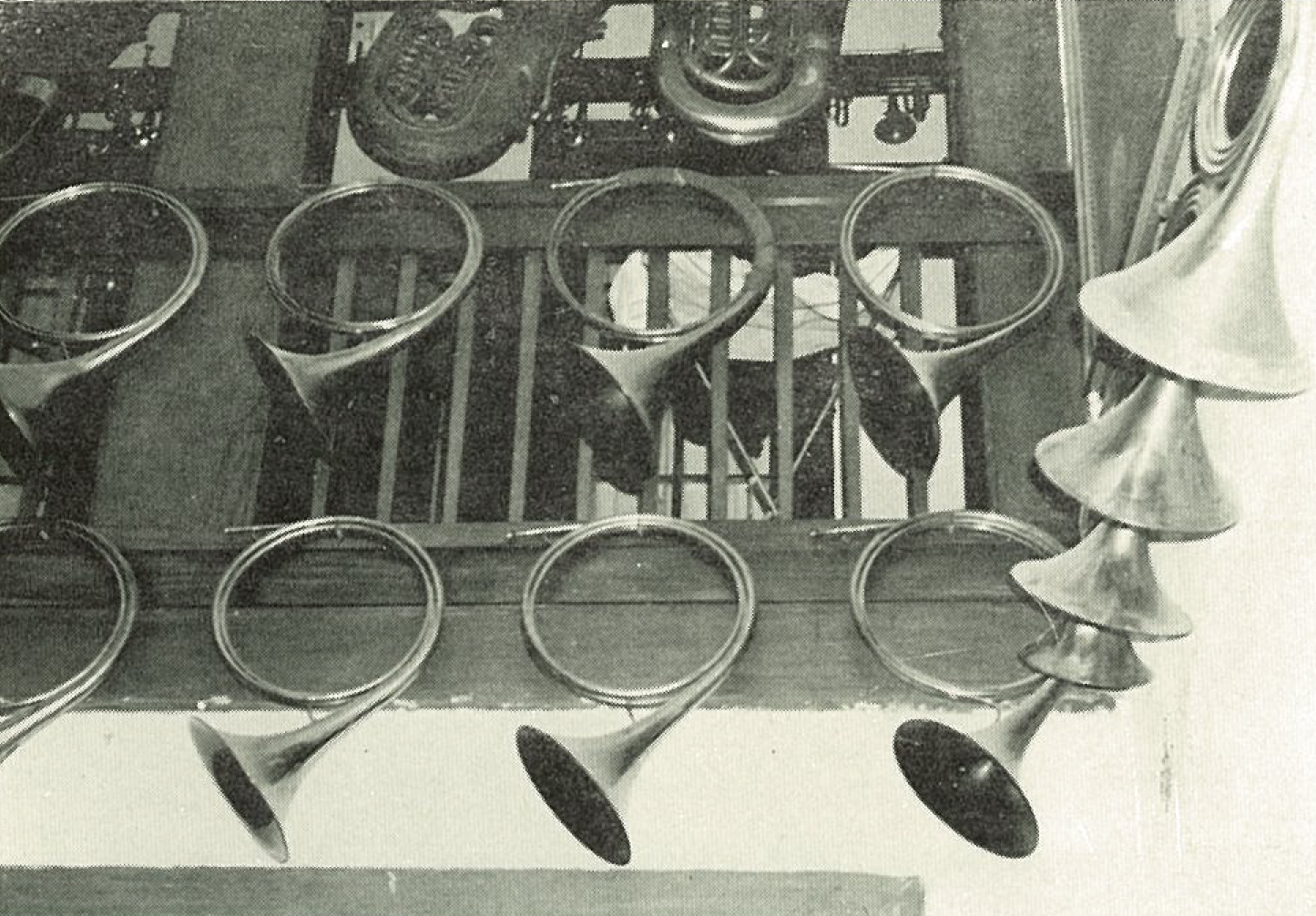
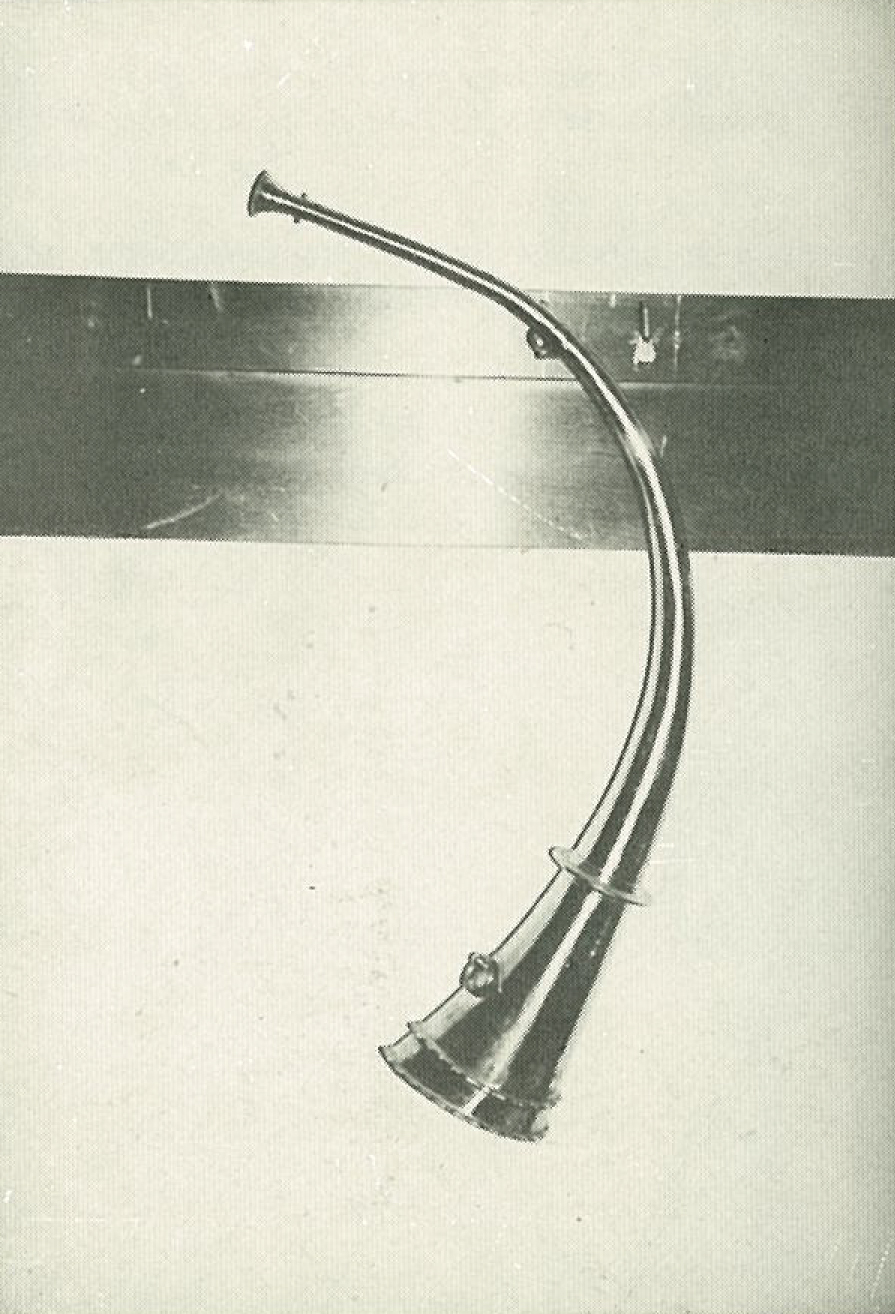
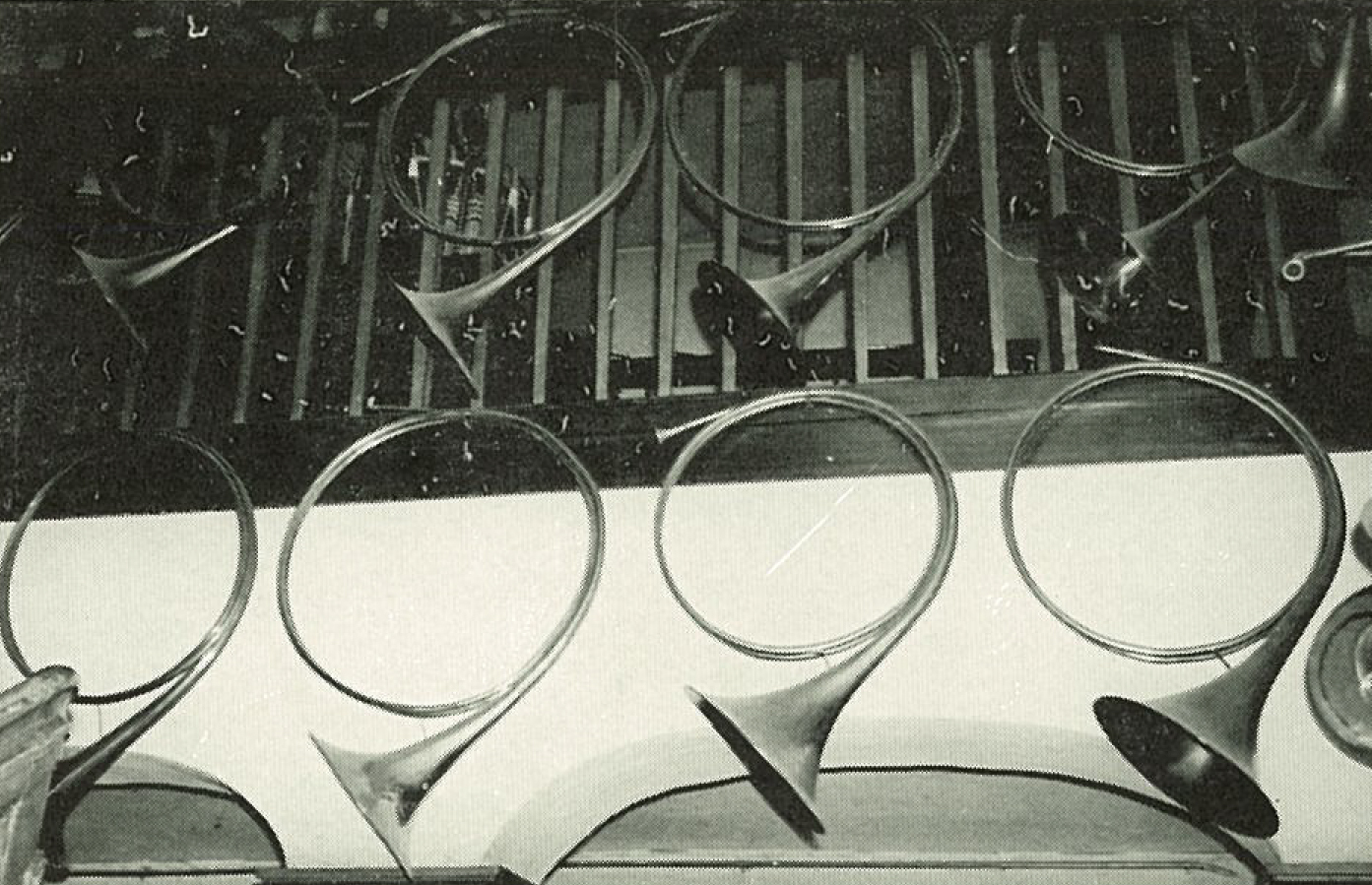
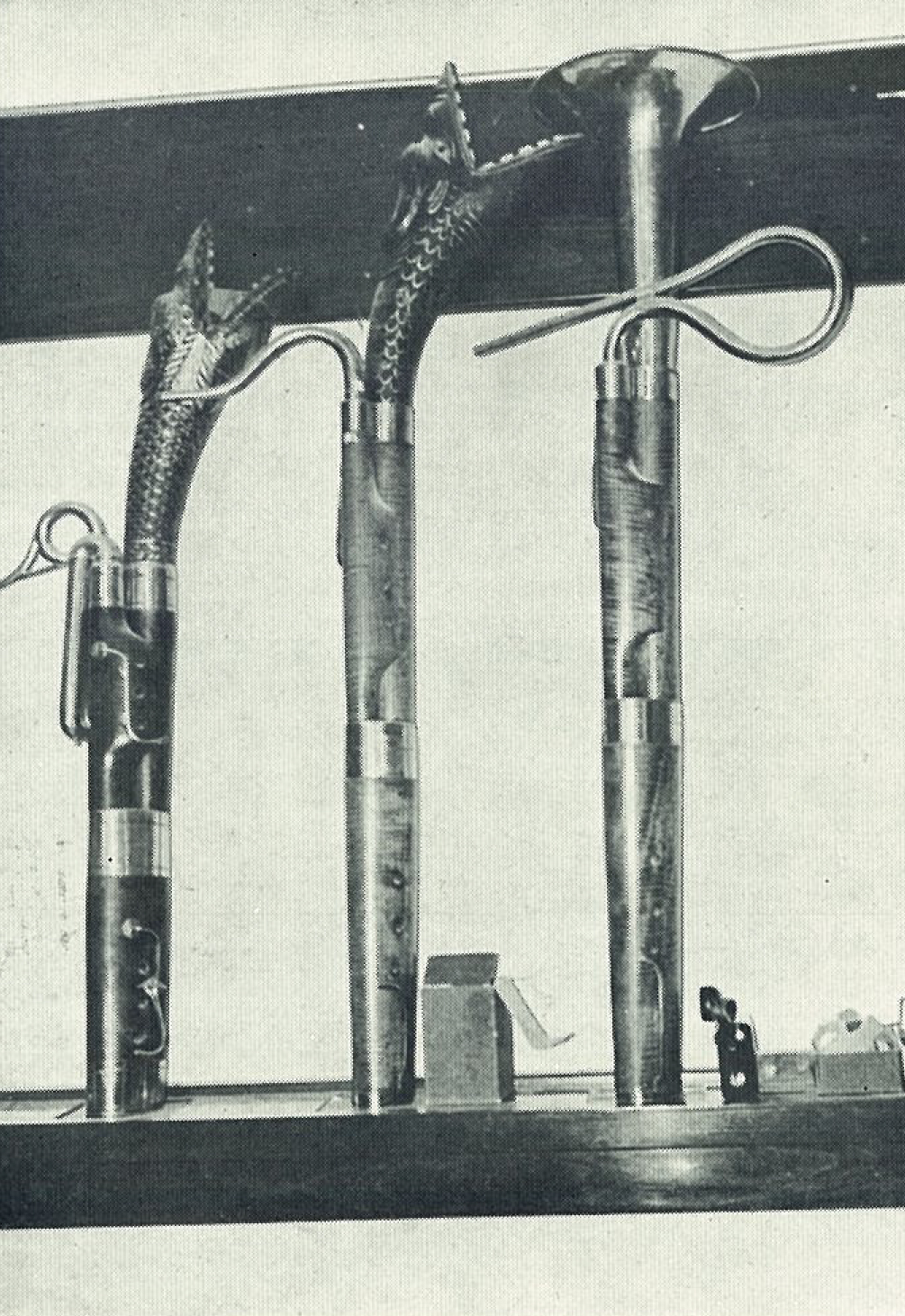
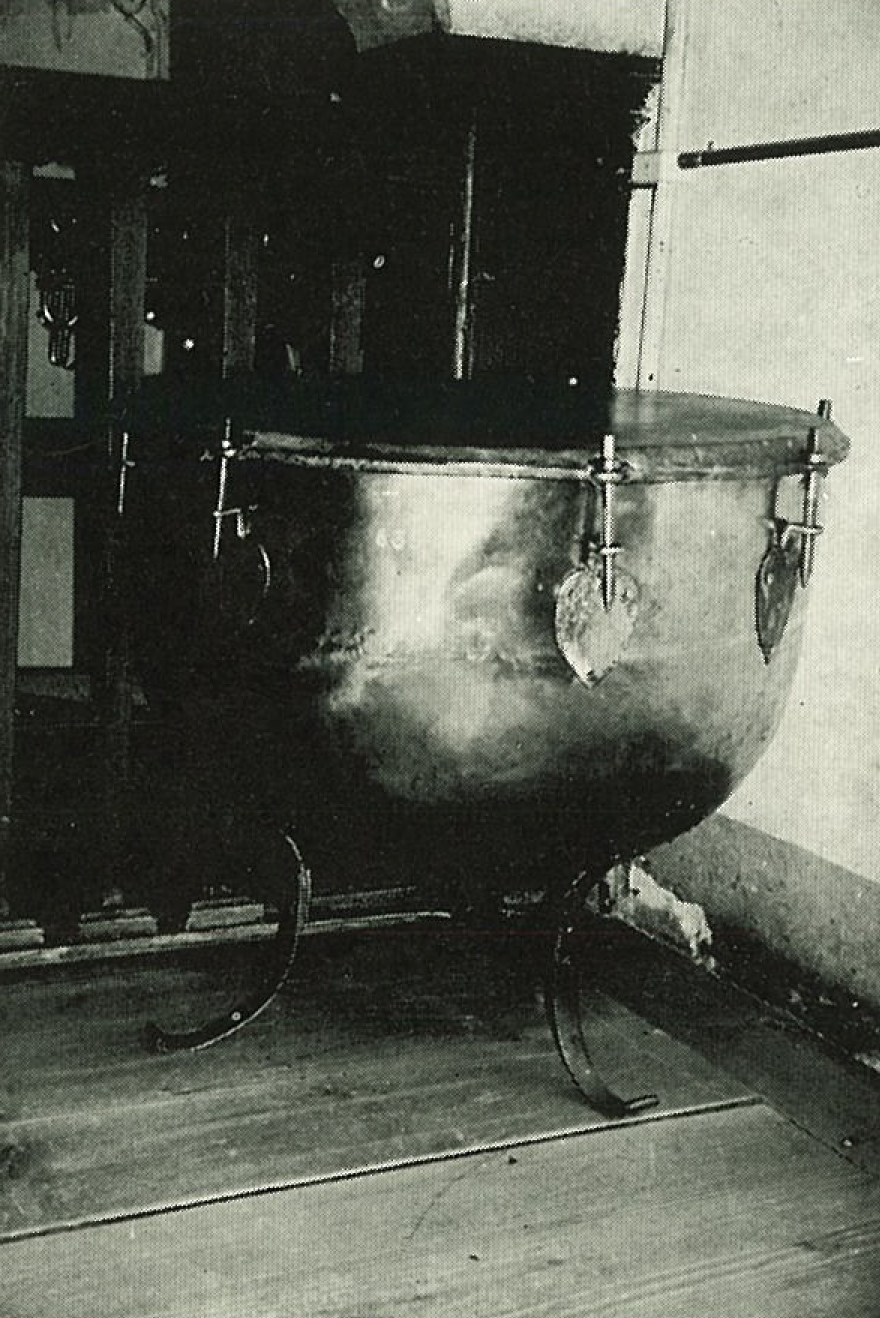
It has been my aim to collect those instruments that give a historical review of the different families and kinds of European brass instruments of all times. So I am happy to possess 43 fanfare trumpets, 26 valve trombones, 24 keyed bugles and 27 handhorns (photo 3), because it is only by comparing them that one can acquire exact knowledge of the instrument. What interests me too are the different military units the instruments have belonged to: e.g. do I possess a drum major's mace used in Napoleon's 21st Inf. Regiment and one of the Prussian Regiment of the Guards of Kaiser Alexander (photo), whereas the Northumberland Light Infantry is represented by a drum and the Russian Hussar Regiment Achtirsk by a trumpet of honour, presented to it in 1812. My special pride is a Harsthorn (Harst = group) made in Lucerne in 1455 (photo), as well as the silver Friedrich-Wilhelm trumpet described above.
I am still in search of a double slide trombone, of an omnitonic Waldhorn and of Russian bugles (each bugle has, as you may know, only one tone. The serfs in Russia were apparently lined up in a row, each supplied with his bugle, a bigger or a smaller one according to the pitch and the melody was acquired by each serf having to blow exactly when it was the turn for his bugle to sound... Let us hope that they did not err too often!).
I am now completing a catalogue and gradually adding exact descriptions of the instruments, which makes most interesting work. One day the whole collection will be taken over by the Collection of Musical Instruments of the Historical Museum, Basle.
Many visitors come my way: sometimes they are well-known brass players who take a special interest in the origin and history of their instrument, then again musicologists or dealers in old instruments. Although I must restrict my contacts with the outer world since also my time and strength are limited, I shall always be happy to hear about instruments and their players and especially so if somebody has the excellent idea to offer me one of the missing instruments!
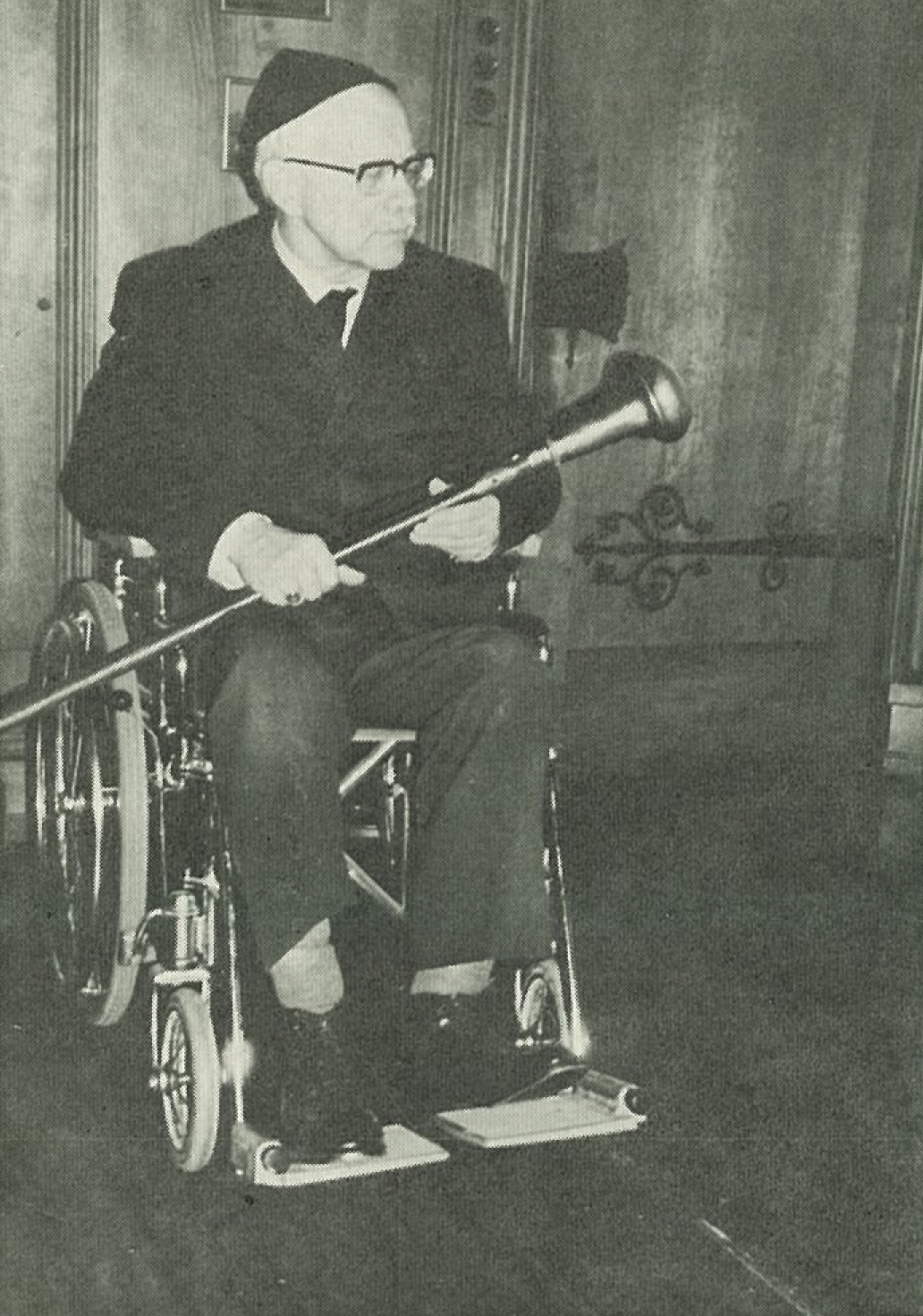
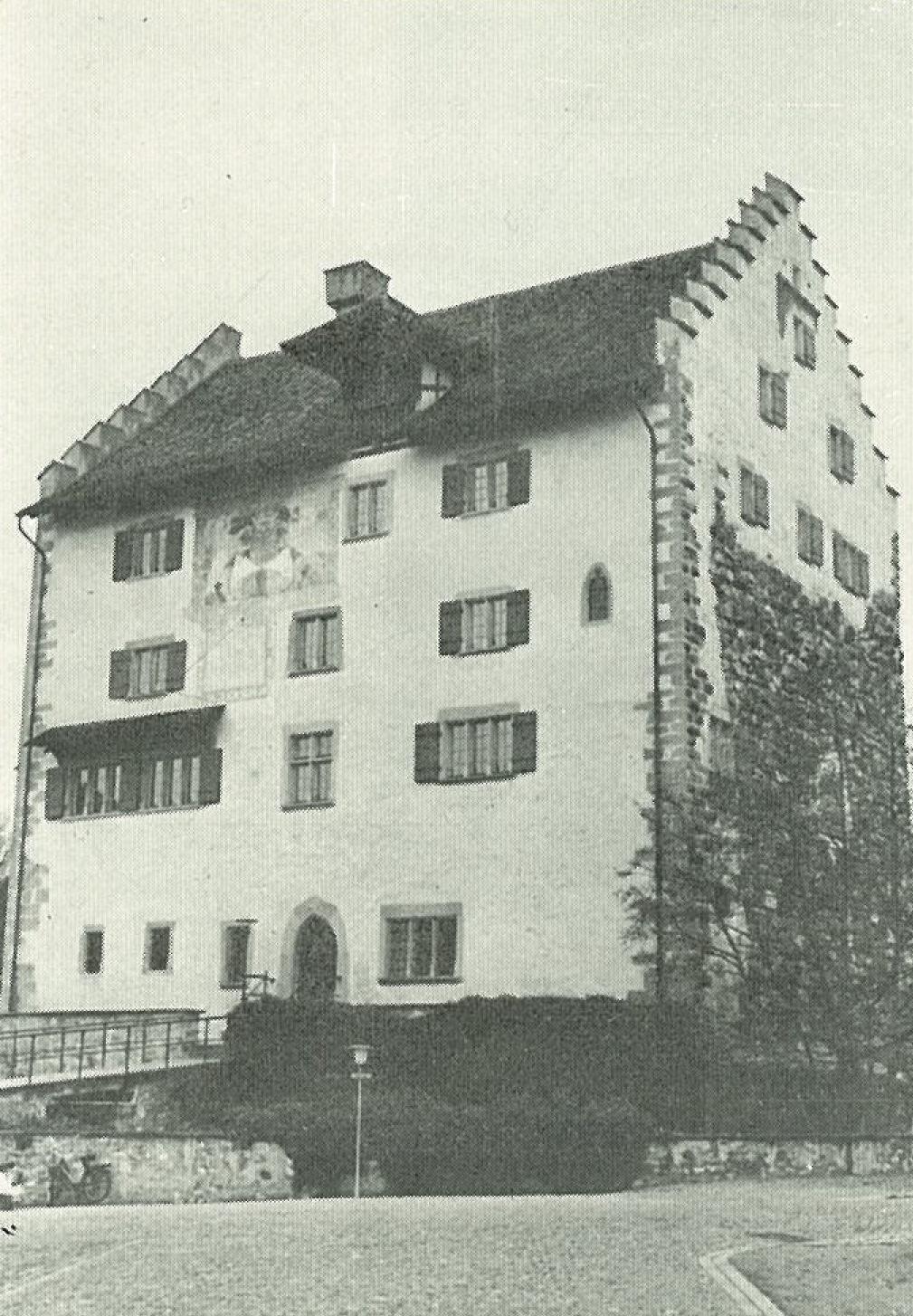
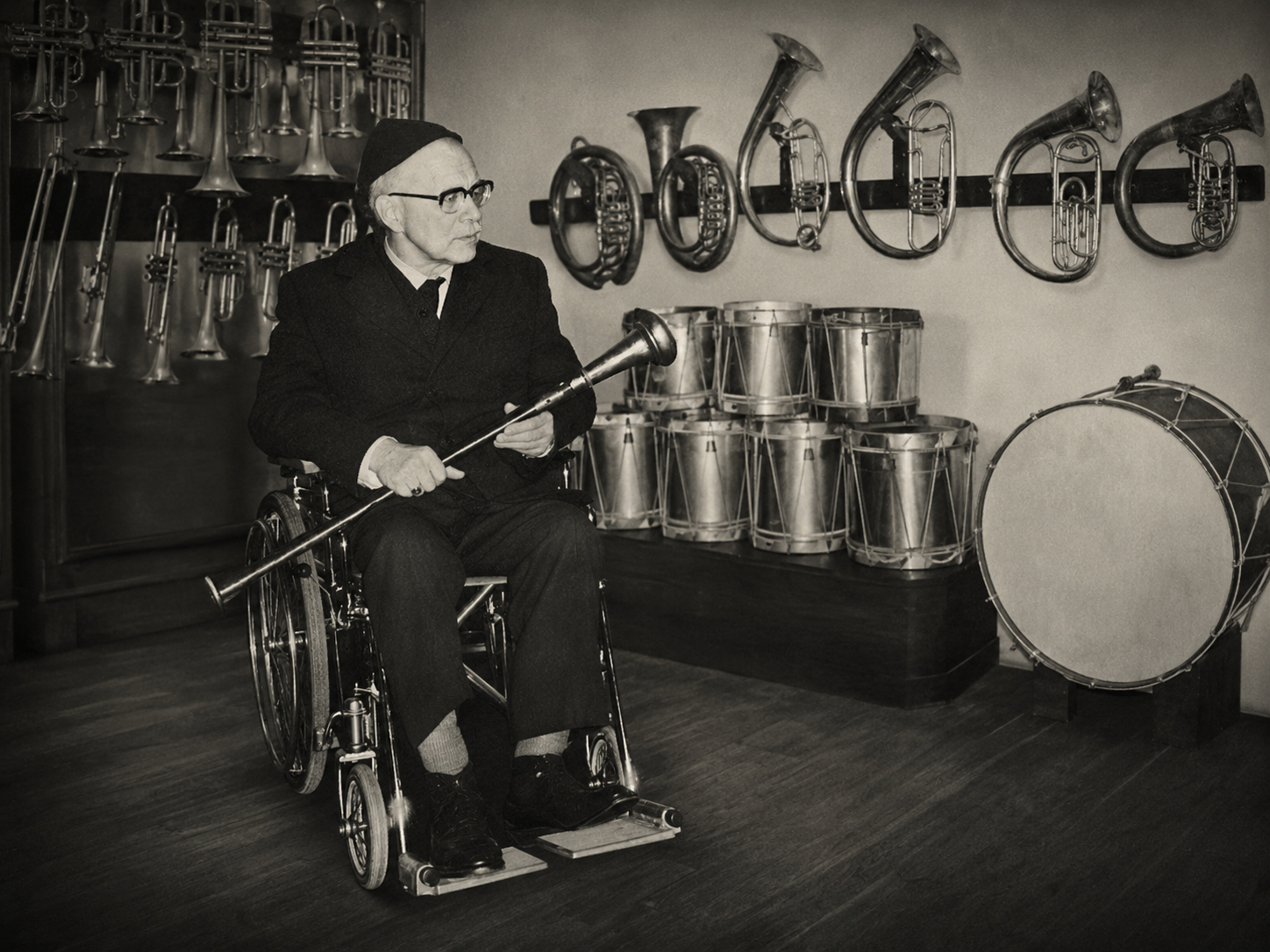
(Summary of a conversation with the Rev. W. Bernoulli at his home (photo), in Greifensee (CH - 8606), Switzerland, by E. Mende.)