12 min. read
Lip vibration characteristics
of the trombone embouchure in performance
By Leno Lloyd
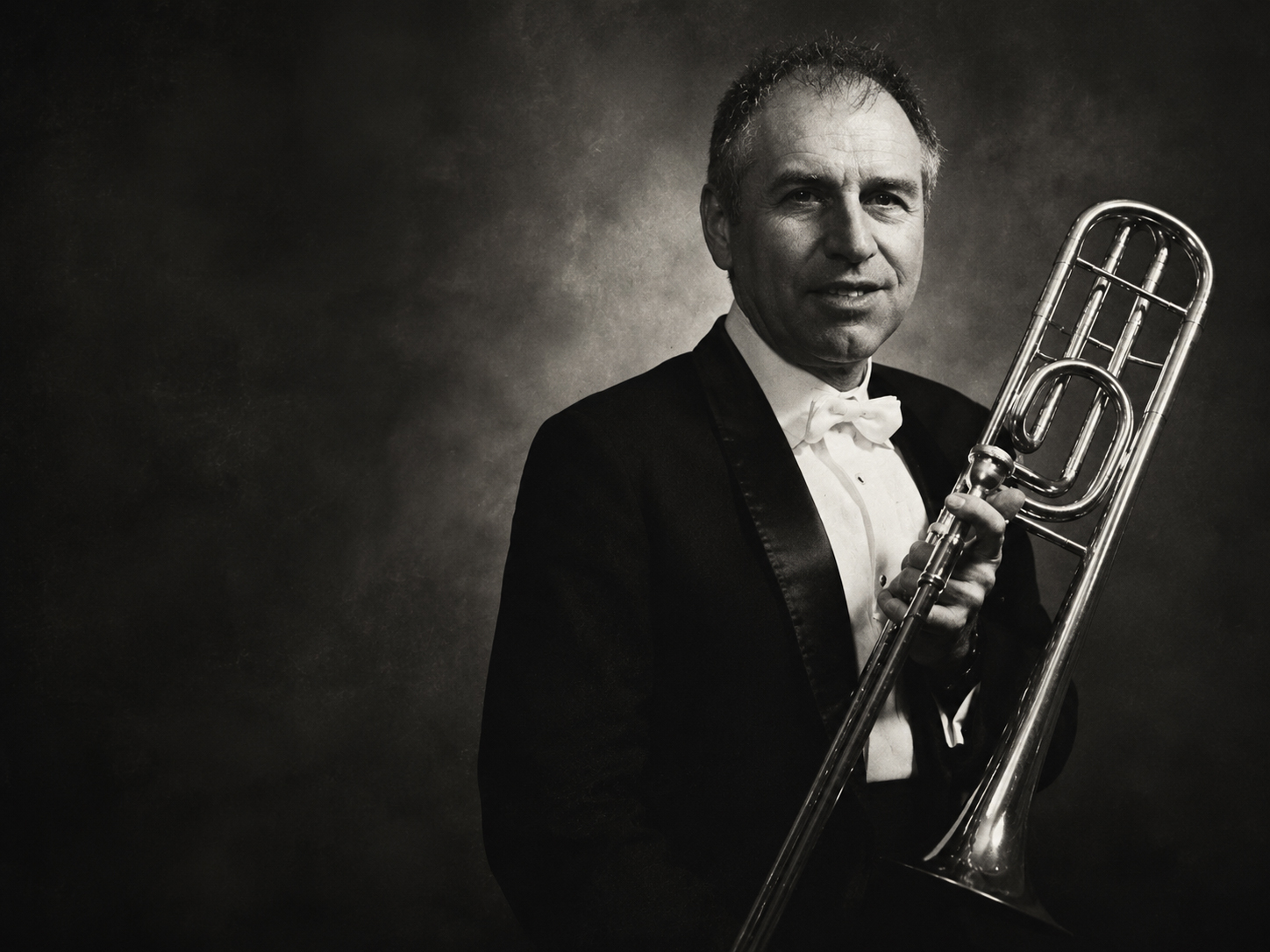
Leno Lloyd
In the last decade the physical aspects of brass playing have been the subject of serious investigation by brass teachers and performers. Studies by Fay Hanson (1968), Joseph Meidt (1967) and John Haynie (Tetzlaff, 1969) have provided us with photographic information concerning the function of the jaw, tongue, throat, and breathing apparatus during performance. Unfortunately, no comparable study of the lips during performance has been available. Several investigations of lip action under simulated performance conditions have been made. Dr. P. H. Damste of the University of Utrecht compared the lips of a trombonist with the vocal chords by high-speed photography of a single player on three pitches using a plastic mouthpiece in the shape of a right angle prism (1966).
Perhaps the most significant investigation was conducted by Robert Weast (1963) using a « square » plastic mouthpiece. The lips were observed, but not photographed, through a stroboscopic disc as the players produced tones on the various brass instruments. A nation-wide survey of brass teachers by Richtmeyer revealed that « the incidence of abnormal embouchures among brass students of college age was quite high » and he concluded that « faulty teaching techniques are primarily to blame for the great majority of incorrectly developed embouchures » (Richtmeyer, 1966, pp. 157–158).
Any attempt to develop sound teaching procedures inevitably must deal with problems which are concerned with (1) the relationship of lip vibration frequency to pitch; (2) the relationship of the upper lip to the lower lip; and (3) the relationship of pitch and volume to the aperture size. The purpose of this research was to study these basic vibrational characteristics of the trombone embouchure. Four successful trombonists, two amateur and two professional players, were used as subjects for study. Under carefully controlled performance conditions each subject was photographed through a transparent mouthpiece with interior dimensions copied from an existing performance mouthpiece. The outer contour was designed to keep the walls of the cup uniform in thickness, providing for maximum visibility and reducing distortion to a minimum. A special spray was used to prevent moisture from clouding the mouthpiece. The photography was done with two high-speed motion analysis cameras which photographed the embouchure at speeds of from 600 to 900 frames per second. Sustained tones, pitch changes and crescendos were included in the performance tasks.
Brass Bulletin 7, I / 1974 pages 7–25
All content is protected by copyright © Brass Bulletin 1974–2026