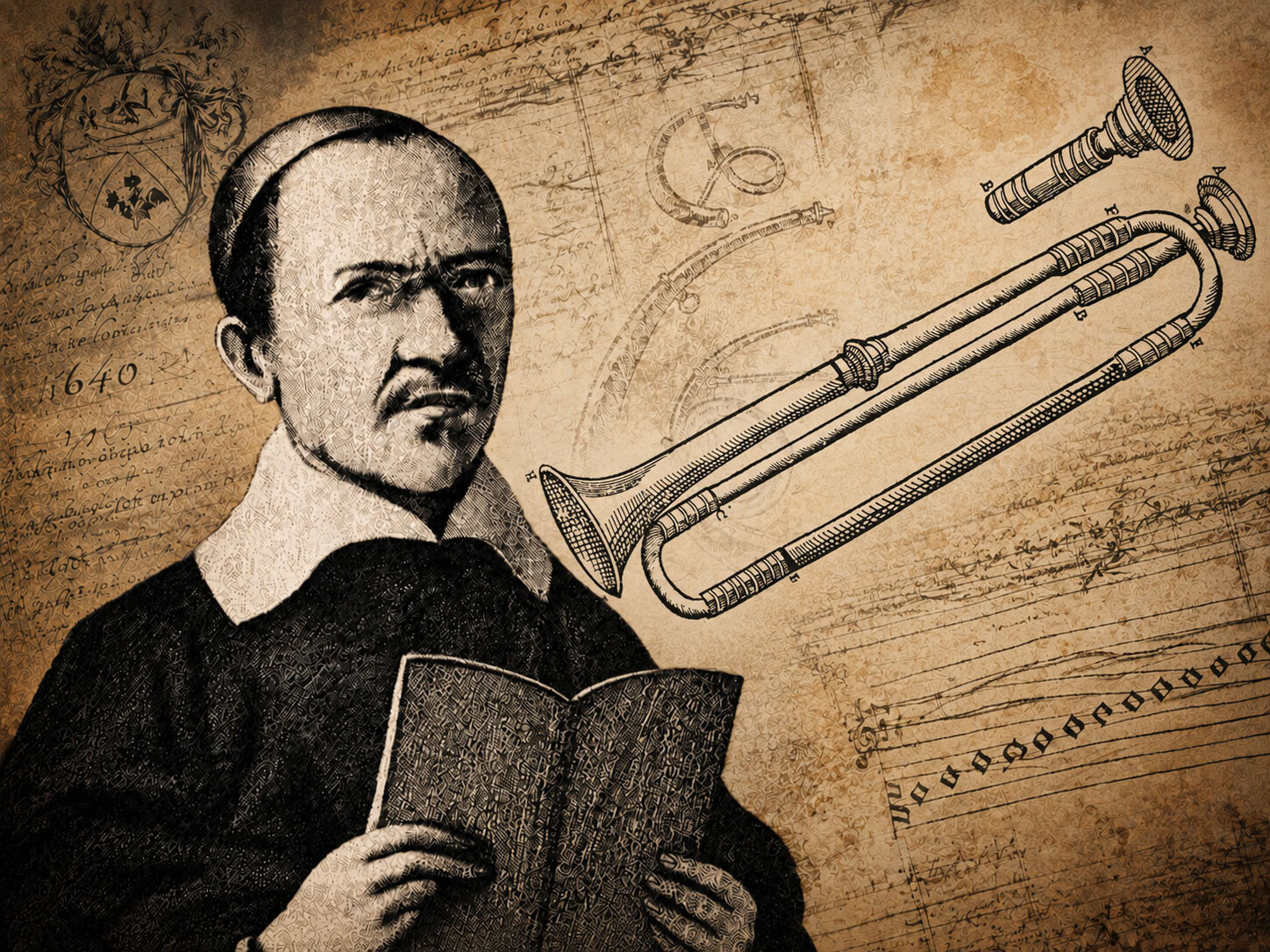
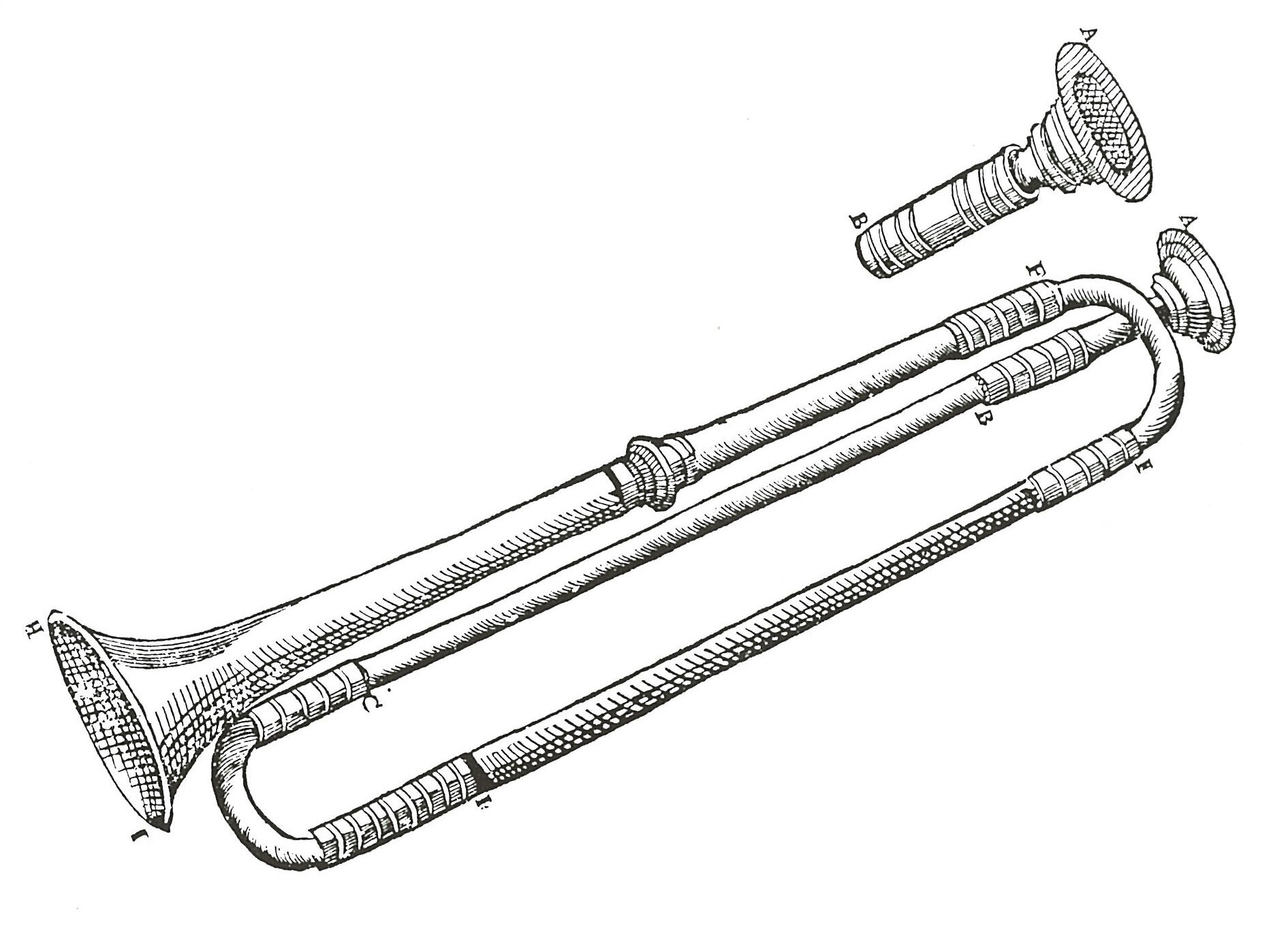
Illustrations from “L’Harmonie Universelle” by Marin Mersenne, Paris 1636.
Even those who take the muses’ part will not be displeased to hear trumpets at times of rejoicing and public celebrations, at carousels, at tragic and comic plays, at wedding and banquets.
In France and several other countries trumpets are now used only amongst the cavalry and aboard warships destined to fight at sea, the fife and drum being reserved for the infantry. Great lords also have them played after their meals... In Bordeaux our popular magistrates, called jurats, have two officers, each of whom bears before him a long, uncoiled silver trumpet with a banner bearing the city coat of arms. But this is done only at general processions, bonfires and other public celebrations. The same officers are employed with their trumpets to make public proclamations and are required to attend at the execution of criminals condemned to suffer some exemplary penalty for their crimes. In this they imitate the ancient Romans who were wont, according to Gruterus, in celeberrimus urbis locis classico canere, quum jam instaret supplicii hora. Another custom of the Roman emperors, to be found in Suetonius, was to make their entrance into the city of Rome with trumpets...
Before I end this speech, it would be useful and most fitting for me to say something of the mute, which is nothing other than a piece of wood shaped by a turner and introduced into the bell of the trumpet so as to stop it so exactly and in such a way that it be weakened, muffled and reduced. So that this mute may be pushed easily into the bell, it has a stem which adheres to it, made in one piece, very narrow unlike the rest, however, but widening slightly towards the end. This note must be pierced and completely hollowed out from one end to the other, with very thin sides so that it can bend slightly and fit the bell; this hollowness is so vital that without it the trumpet would not sound at all, the air having no means of escape. Thus one recognises that the function of this mute is but to constrict the opening of the bell and to weaken and deaden the sound which, passing through a very narrow wooden channel, is less striking than if it were completely free. That is why the mute is used when there is a fear of being discovered by the enemy or when there is a desire to surprise him, as when one wishes to move and make a secret retreat, something which I must also do so as not to weary those who have had the courage to follow me thus far.
Pierre Trichet, “Traité des Instruments de Musique”, ca. 1640. Published with an introduction and notes by François Lesure (Genève, Minkoff Reprint, 1978 - in French only).