Explore institutional access →

Complete articles index

Browse Brass Bulletin articles published since 1971. Search by topic, subject, instrument, author, series or issue, with new material added as the digital edition grows.

No. 116 • 2001 Awaiting digitization

Brno International Performer’s Competition - Horn

By Lucie Hofmanova

Report Competition
No. 80 • 1992 Awaiting digitization

Kunsthistorisches Museum of Vienna

Special Austria

By Friedrich Anzenberger
History
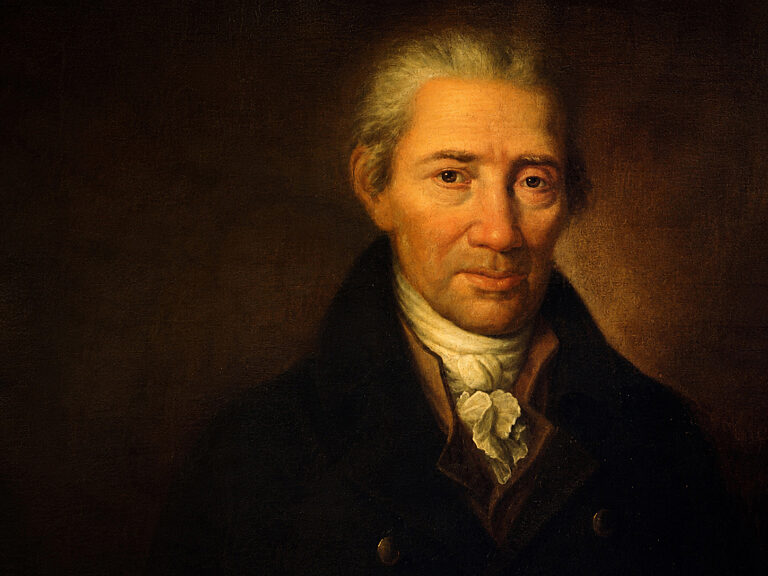
J. G. Albrechtsberger (1736-1809) Member
No. 1 • 1971 Digitized

J. G. Albrechtsberger (1736-1809)

Concertino for chromatic trumpet

Study by Reine Dahlqvist arguing that Albrechtsberger’s 1771 Eb concertino was intended for Jew’s harp rather than keyed or slide trumpet.

By Reine Dahlqvist

History Repertoire Equipment Historical instruments Keyed trumpet
No. 60 • 1987 Awaiting digitization

Editorial

By Jean-Pierre Mathez

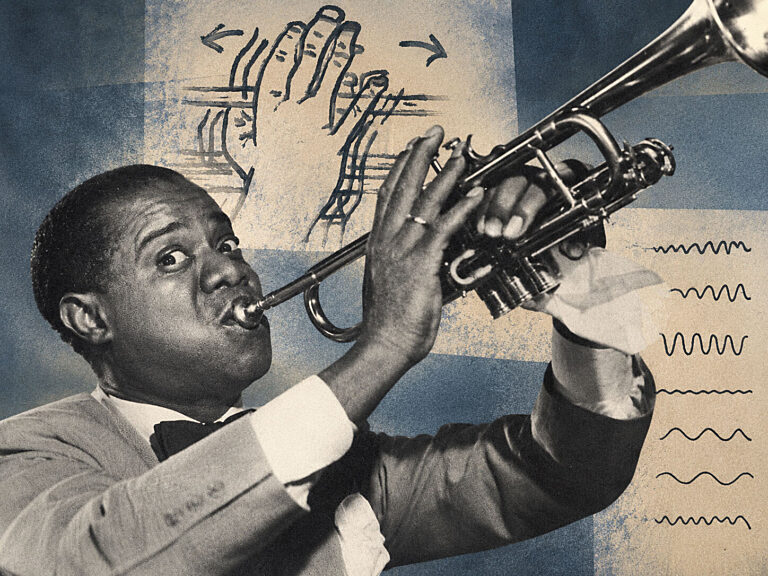
The Trumpet and the Cornet in Jazz and Popular Music Member
No. 47 • 1984 Digitized

Part 6

The Trumpet and the Cornet in Jazz and Popular Music

Special jazz techniques

Vibrato, half-valves, growls and shakes lead to a larger argument: jazz transformed trumpet technique, yet its contribution remained strikingly undervalued.

By Michel Laplace

History Jazz Improvisation Articulation
No. 70 • 1990 Awaiting digitization

Neruda's Concerto for Horn (or trumpet)

By Edward H. Tarr

Repertoire
No. 108 • 1999 Awaiting digitization

Hamamatsu, Music capital of Japan

5th Annual International Festival and Academy for wind instruments

By Jean-Pierre Mathez

Report Event
No. 113 • 2001 Awaiting digitization

Frank Martin, The Ballade for trombone and piano

By Roland Schnohrk

Repertoire
No. 64 • 1988 Awaiting digitization

Minsk 1988 - The grand national competition

Special USSR

By Jean-Pierre Mathez

Report Competition
No. 119 • 2002 Awaiting digitization

Part 5

A player’s first years

The opinion of an expert

By James Thompson

Teaching Technique
No. 69 • 1990 Awaiting digitization

Part 3

The influence of Berlioz

on contemporary 19th Century use of brass instruments

By Ernest H. Gross
History Repertoire
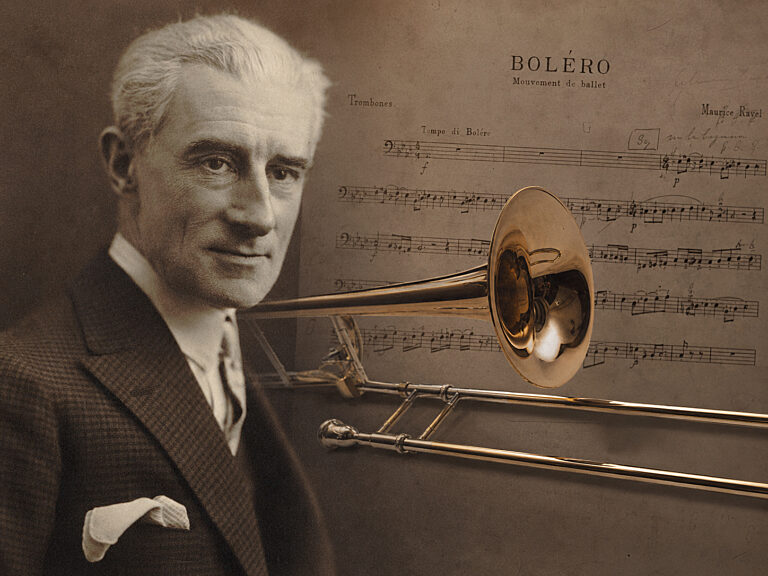
The trombone in Maurice Ravel's Bolero Member
No. 13 • 1976 Digitized

Part 1

The trombone in Maurice Ravel's Bolero

How should Boléro’s trombone solo be played? After 100 performances, Jean Douay challenges conventions and argues for a more supple, controlled approach.

By Jean Douay

Repertoire Technique Interpretation Orchestral playing
No. 73 • 1991 Awaiting digitization

A short history of the tango

By Abel Larrosa Cuevas

History
Member
No. 9 • 1974 Digitized

Reflections on the horn

Francis Orval reflects on horn playing, discussing tone production, breathing and the influence of French and German traditions on sound and style.

By Francis Orval

Technique Equipment Repertoire Sound Instrument making
No. 66 • 1989 Awaiting digitization

Stanko Arnold

Yugoslavia's Trumpet Virtuoso

By Jean-Pierre Mathez
Encounters
Transcription fundamentals Free
No. 31 • 1980 Digitized

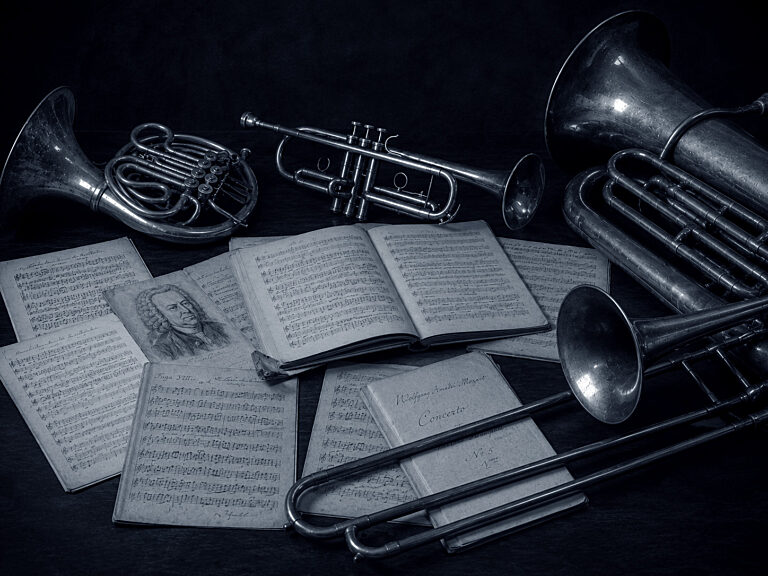
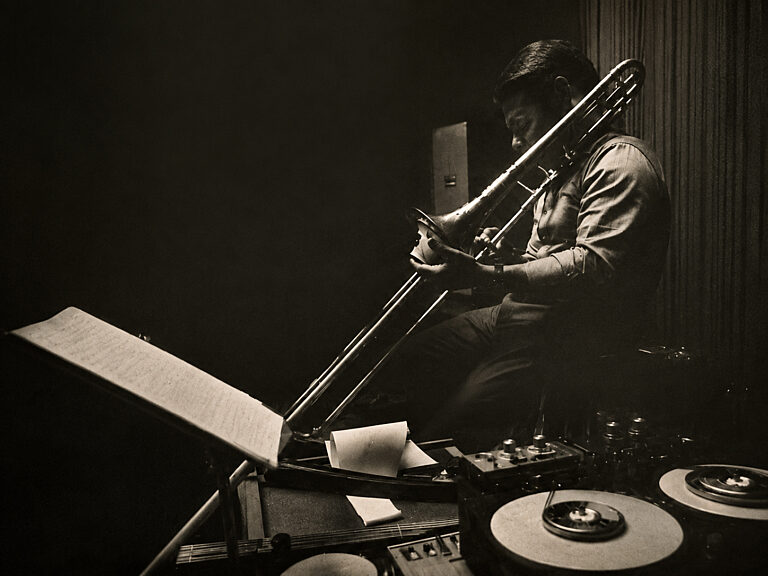
Transcription fundamentals

Between Bach fugues and Mozart concertos, Ralph Sauer questions where brass transcription renews a work — and where it merely imitates.

By Ralf Sauer
Repertoire Interpretation Brass Ensemble
On the sensitivity of brass instruments Free
No. 30 • 1980 Digitized

On the sensitivity of brass instruments

Metal, pressure nodes and temperature shifts shape response, timbre and tuning, as Emile Ferron links instrument acoustics to the player’s imprint.

By Emile Ferron

Instrument Makers Acoustics Instrument making Sound Intonation
No. 105 • 1999 Awaiting digitization

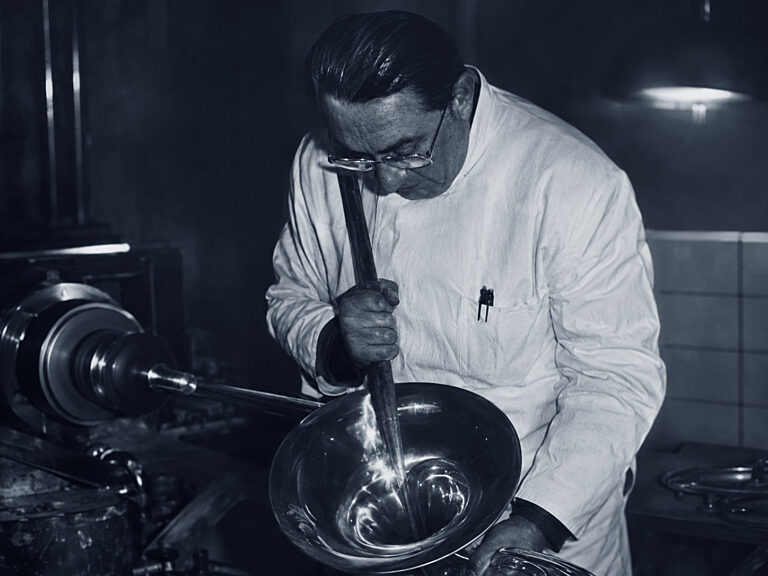
Egger, maker of brass instruments

By Jean-Pierre Mathez
Equipment
Possibilities for development of brass instruments (1967) Member
No. 5 • 1973 Digitized

Possibilities for development of brass instruments (1967)

Experimental study by Vinko Globokar on extended techniques for brass instruments, covering microtonality, voice-instrument interaction and new sound production methods.

By Vinko Globokar

Technique Equipment Repertoire Contemporary Music Improvisation
Loading…

Questions & Answers

How the Digital Edition works

What does the Digital Edition include?

The Digital Edition brings together the articles already digitized as searchable online texts—not simply as scans or PDF files—along with their original illustrations, notes, authorship, issue information, and available translations. Related-article suggestions currently include only this digitized material.

Are the digital articles identical to the originals?

We preserve the original text, language, illustrations, captions, footnotes, and editorial context as faithfully as possible. The presentation is adapted for comfortable online reading, and obvious transcription or scanning errors may be corrected. The substance and character of the published article remain unchanged.

Which languages are available?

Brass Bulletin was published in English, French, and German throughout its history. Italian and Spanish translations were added from issue No. 60 onward.

On the Italian and Spanish sites, articles from issues 1–59 are therefore shown in English by default.

How often are new articles added?

New articles are added almost daily, with approximately one complete issue digitized each week. The pace may vary depending on the preparation, image work, and editorial checking required.

Why aren’t all articles available digitally?

The complete Brass Bulletin collection contains 1,246 articles published between 1971 and 2003. The full index is already available online, allowing readers to discover every article in the collection, including those whose complete text has not yet been digitized.

Digitization began in February 2026. Each article is carefully prepared for online reading, checked, and connected to its issue, authors, subjects, and illustrations. At the current pace of digitization, the complete collection is expected to be available online by February 2028.

Why do some references mention articles that are not available yet?

References in the original articles are preserved even when the material they point to has not yet been digitized. This keeps the historical and editorial record intact. As more issues are added to the Digital Edition, an increasing number of these references will lead to articles that can be read online.

Can I suggest an article or report a transcription error?

Yes. If there is an article you would particularly like to see digitized, or if you notice a possible transcription error or missing detail, please contact us. Reader feedback helps us improve the Digital Edition and prioritize useful connections within the archive.

How can I support Brass Bulletin?

Your support helps fund the preparation, verification, and online publication of the complete collection.

Subscribe to the Digital Edition

Prefer to support us without subscribing?

Make a donation

How is the digitization progressing?

We’re gradually making the Brass Bulletin available online, article by article. You can read newly digitized articles as soon as they’re ready, even before an entire issue is complete.

Visit our Digitization Roadmap to browse recent additions and see estimated availability for upcoming issues. These estimates follow our recent pace and may change.

Search Brass Bulletin.