Explore institutional access →

Complete articles index

Browse Brass Bulletin articles published since 1971. Search by topic, subject, instrument, author, series or issue, with new material added as the digital edition grows.

No. 61 • 1988 Awaiting digitization

Kurt Laberer, instrument maker in Munich

By Jean-Pierre Mathez

Equipment
No. 61 • 1988 Awaiting digitization

Gregory Cass

Horn and soul

By Jean-Pierre Mathez

Encounters
Oscillatory Mechanism of the Glotis in Horn Playing Member
No. 41 • 1983 Digitized

Oscillatory Mechanism of the Glotis in Horn Playing

A horn note may begin before it is heard, as subtle vocal-fold oscillations appear to prepare the airflow that the lips will ultimately shape.

By Philippe-Henri Dejonker, Francis Orval, R. Miller, R. Sneppe

Technique Research Breathing Articulation Sound
No. 66 • 1989 Awaiting digitization

Breathing

By Hans Boschma

Technique
No. 86 • 1994 Awaiting digitization

Part 2

French cornet methods published before Arban's Complete Grand Method for Cornet and Saxhorn

By Friedrich Anzenberger

History Repertoire Teaching
No. 77 • 1992 Awaiting digitization

André Heuvelman, trumpet player, 26 years old

Special Holland

By Jean-Pierre Mathez

Encounters
No. 81 • 1993 Awaiting digitization

André Cazalet

The Horn, the brasses and France

By Jean-Pierre Mathez

Encounters
No. 105 • 1999 Awaiting digitization

Bb or C trumpet? A true story

By Irving Bush

Report
No. 60 • 1987 Awaiting digitization

Bernard Soustrot

Portrait

By Jean-Pierre Mathez

Encounters
No. 86 • 1994 Awaiting digitization

Malte Burba

Explorer of new music

By Jean-Pierre Mathez

Encounters
Practical Hints Free
No. 30 • 1980 Digitized

Part 1

Practical Hints

Built around Herbert L. Clarke’s Technical Studies, these practice routines refine flexibility, intonation and note placement through structured brass exercises.

By James Stamp

Technique Teaching Intonation Range Articulation
No. 85 • 1994 Awaiting digitization

Donald Green

Trumpet player of the Los Angeles Philharmonic

By Jean-Pierre Mathez
Report Encounters
On Trumpets Free
No. 49 • 1985 Digitized

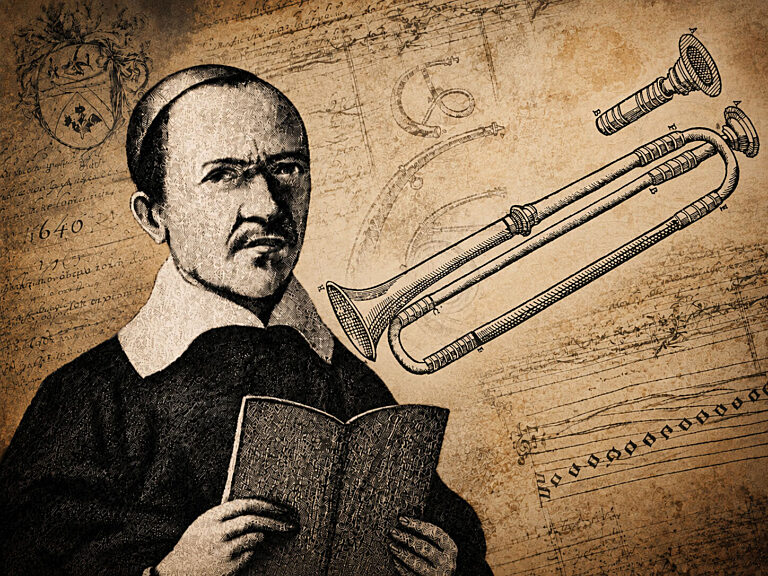
On Trumpets

From Pierre Trichet’s Traité des Instruments de Musique (c. 1640)

Trumpets served war, ceremony and even medicine before Trichet turned to the mute, a simple device whose purpose extended far beyond changing the sound.

By Pierre Trichet

History Equipment Historical instruments
No. 76 • 1991 Awaiting digitization

Sir Peter Maxwell Davies

Fire in the music

By Jean-Pierre Mathez

Repertoire Encounters
No. 70 • 1990 Awaiting digitization

Bernhard Krol (1920-2013)

Composer

By Jean-Pierre Mathez

Encounters Repertoire
No. 105 • 1999 Awaiting digitization

Brasses in Dombes

By Jeremy Mathez

Report Event
No. 60 • 1987 Awaiting digitization

Kalison, Milano

Instrument makers in Europe

By Jean-Pierre Mathez

Equipment
No. 85 • 1994 Awaiting digitization

Editorial

By Jean-Pierre Mathez

Editorial Free
No. 28 • 1979 Digitized

Editorial

From cultural codes to personal sincerity, Jean-Pierre Mathez questions how musicians recognise truth across styles, traditions and musical languages.

By Jean-Pierre Mathez

Society Interpretation Sociology
No. 90 • 1995 Awaiting digitization

Bernhard Krol

At 75! A look back on a life

By Bernhard Krol

Encounters
No. 61 • 1988 Awaiting digitization

Empire Brass Quintet

The road to success

By Jean-Pierre Mathez

Encounters
No. 111 • 2000 Awaiting digitization

Enrique Crespo - seducer and musician in one

By Jean-Pierre Mathez
Encounters
Harmonics or partials? Free
No. 33 • 1981 Digitized

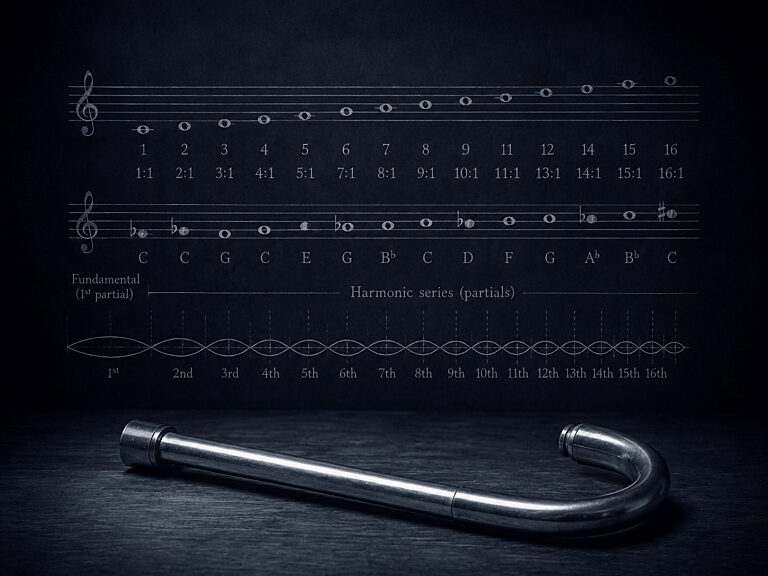
Harmonics or partials?

Behind every brass note lies a compromise between acoustical theory and instrument design, as E. Ferron questions what players call a harmonic.

By Emile Ferron
Acoustics Intonation Sound Instrument making
Instrument Makers in USA Free
No. 53 • 1986 Digitized

Part 6

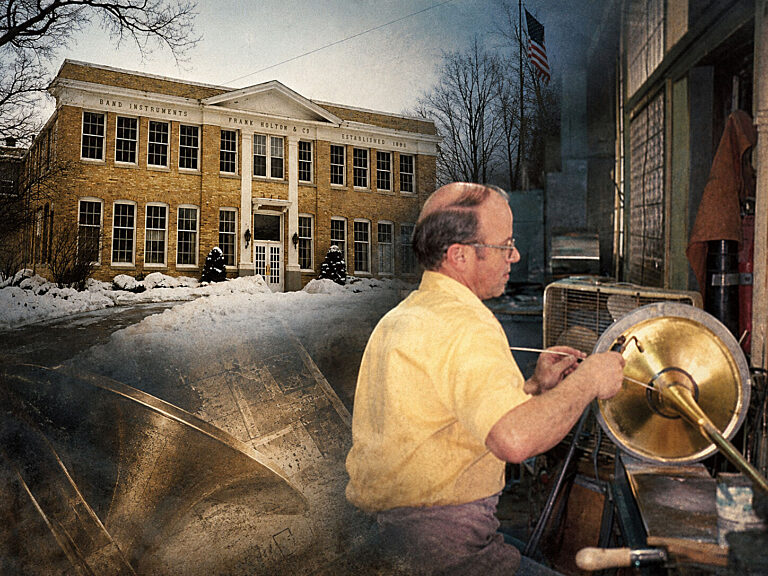
Instrument Makers in USA

Holton (G. Leblanc Corporation)

In Elkhorn, Wisconsin, traditional craftsmanship meets industrial production, while Holton confronts the delicate balance between innovation and musicians’ conservatism.

By Stephan Suter

Instrument Makers Instrument making
Loading…

Questions & Answers

How the Digital Edition works

What does the Digital Edition include?

The Digital Edition brings together the articles already digitized as searchable online texts—not simply as scans or PDF files—along with their original illustrations, notes, authorship, issue information, and available translations. Related-article suggestions currently include only this digitized material.

Are the digital articles identical to the originals?

We preserve the original text, language, illustrations, captions, footnotes, and editorial context as faithfully as possible. The presentation is adapted for comfortable online reading, and obvious transcription or scanning errors may be corrected. The substance and character of the published article remain unchanged.

Which languages are available?

Brass Bulletin was published in English, French, and German throughout its history. Italian and Spanish translations were added from issue No. 60 onward.

On the Italian and Spanish sites, articles from issues 1–59 are therefore shown in English by default.

How often are new articles added?

New articles are added almost daily, with approximately one complete issue digitized each week. The pace may vary depending on the preparation, image work, and editorial checking required.

Why aren’t all articles available digitally?

The complete Brass Bulletin collection contains 1,246 articles published between 1971 and 2003. The full index is already available online, allowing readers to discover every article in the collection, including those whose complete text has not yet been digitized.

Digitization began in February 2026. Each article is carefully prepared for online reading, checked, and connected to its issue, authors, subjects, and illustrations. At the current pace of digitization, the complete collection is expected to be available online by February 2028.

Why do some references mention articles that are not available yet?

References in the original articles are preserved even when the material they point to has not yet been digitized. This keeps the historical and editorial record intact. As more issues are added to the Digital Edition, an increasing number of these references will lead to articles that can be read online.

Can I suggest an article or report a transcription error?

Yes. If there is an article you would particularly like to see digitized, or if you notice a possible transcription error or missing detail, please contact us. Reader feedback helps us improve the Digital Edition and prioritize useful connections within the archive.

How can I support Brass Bulletin?

Your support helps fund the preparation, verification, and online publication of the complete collection.

Subscribe to the Digital Edition

Prefer to support us without subscribing?

Make a donation

How is the digitization progressing?

We’re gradually making the Brass Bulletin available online, article by article. You can read newly digitized articles as soon as they’re ready, even before an entire issue is complete.

Visit our Digitization Roadmap to browse recent additions and see estimated availability for upcoming issues. These estimates follow our recent pace and may change.

Search Brass Bulletin.