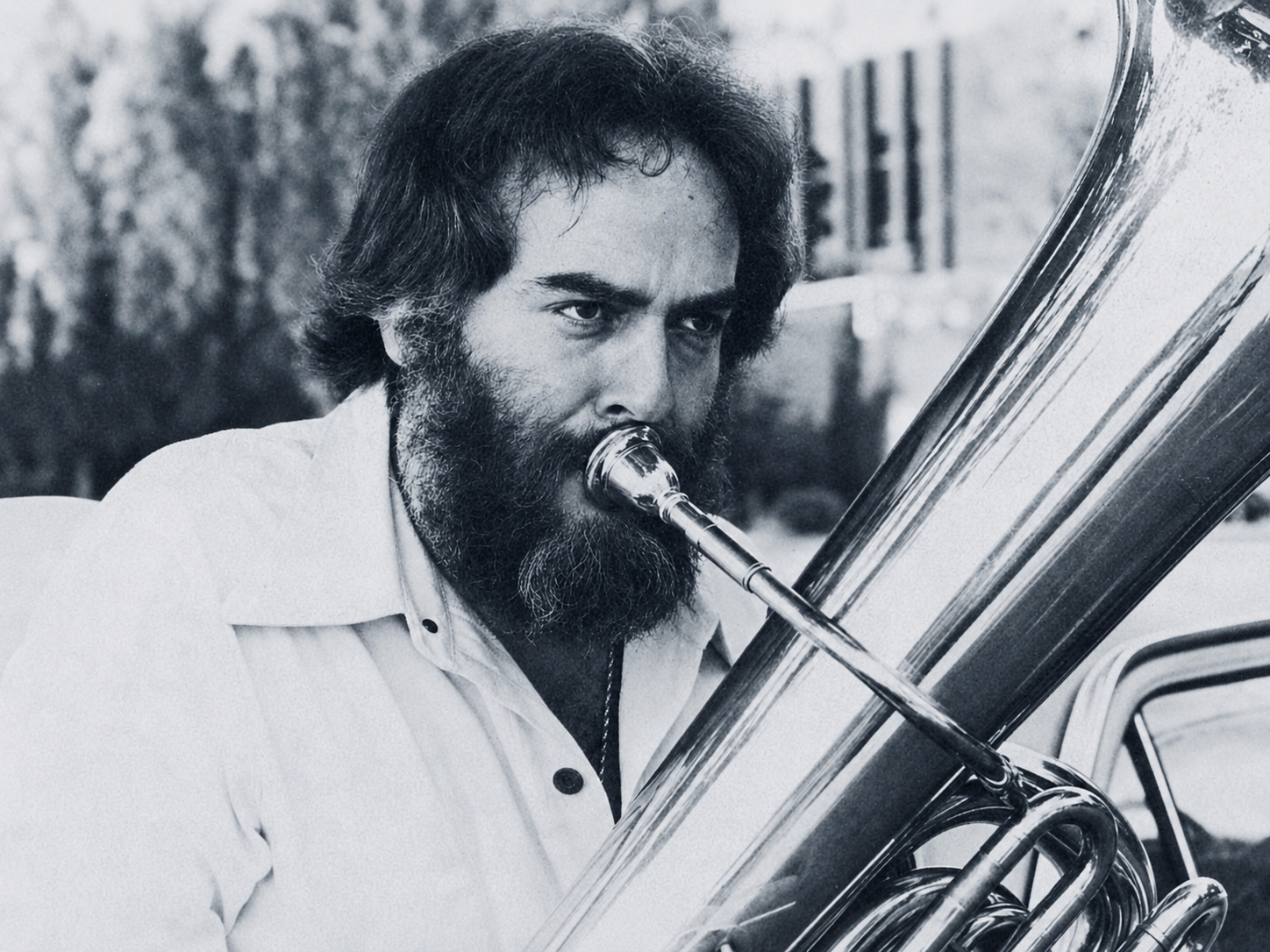
We were very fortunate to have the pedagogical influence of Professor Hieronymus Engels from the Academy of Music in Berlin, who offered vast insight and experience in the tuba in Germany, and orchestral concepts which probably cannot be duplicated by anyone. We missed, however, not only in tuba but in trumpet and trombone also, hearing our West German colleagues. The West Germans have a strong tradition in their school of brass playing and they were greatly missed. At the next International Brass Congress I would hope for at least one representative for trumpet, trombone, and tuba. Most places in the world, for example, are not familiar with the advantages of the German rotary-valved trumpets. This we need to know for a thorough insight into uses of brass today. To our West German colleagues I would say, you were missed in Montreux, and wherever and whenever the second International Brass Congress should occur, please come and help us make it an even greater success.
The one big problem in Montreux seemed to be that most instrumental groups tended to stick together. This of course is only natural. It became difficult, however, to make a decision whether to attend a lecture on The Russian School of Horn Playing, with Vitali Bujanovsky; The Psychology of Brass Playing by trombonist Vinko Globokar; The Basic Performance Elements of New Solo Music with trumpeter Thomas Stevens; or The Tuba in Japan with Katsuhiko Kaijima. There were twelve meetings a day (four at a time) plus spending a proper amount of time trying out instruments from the represented manufacturers, plus the always present opportunities to play ensembles of various sorts with colleagues with whom you've never played before, plus the necessary amount of practice time for our various performance responsibilities. I am not suggesting a solution to this problem because in fact I think it is not solvable unless we could have a brass congress that lasts one month — which makes an even less solvable problem. We did have to make several decisions every day. Most players ended up going to their own instrumental groups. How one discriminates in a situation such as that is purely up to each individual. I can only say that I firmly believe that we as tubaists (or any instrumental group) can benefit greatly by exposing ourselves as much as possible to as many different kinds of musicians as possible.
My thanks to Harvey Phillips whose overwhelming energy made this brass congress possible.