Rendete Brass Bulletin disponibile nella vostra università, nel vostro conservatorio o nella vostra biblioteca Scoprite l’accesso istituzionale

16 min di lettura

The Coiled Hunting Instrument by J. W. Haas

Bad Säckingen Trumpet Museum
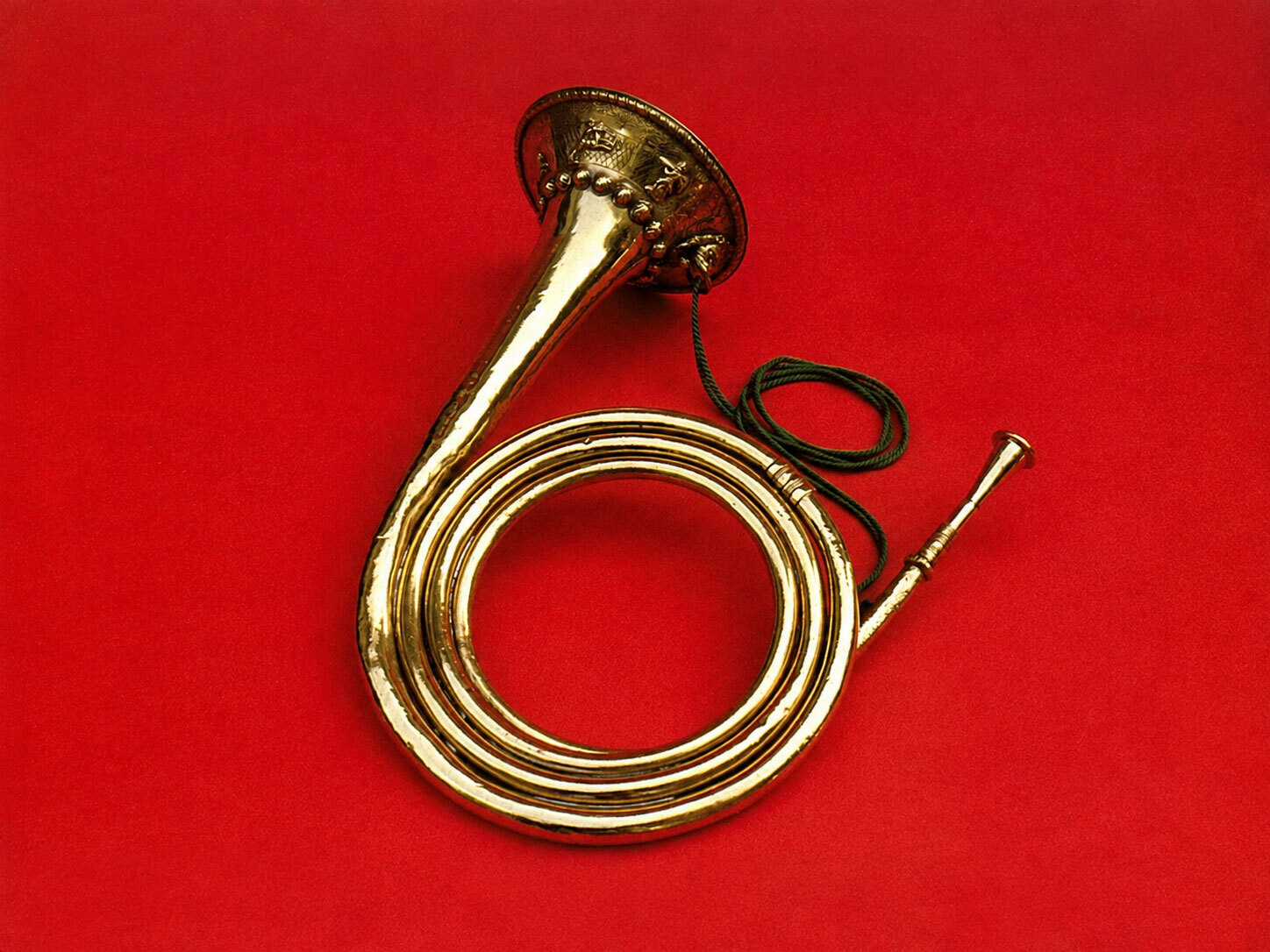
A rare instrument made in 1688 blurs the boundary between horn and trumpet, while its maker’s mark raises an unresolved question about the Haas family.
The Coiled Hunting Instrument by J. W. Haas

The hunting horn by Haas after restoration.

In a showcase in the second exhibit room of the Bad Säckingen Trumpet Museum an instrument is hanging which, in the museum catalogue, is simply described as a "coiled hunting instrument".¹ The instrument's value increases when we learn that it was made in 1688 by Johann Wilhelm Haas (1649-1723), probably the most famous brass instrument maker of his time. Its singular impact, however, comes from the almost life-size portrait hanging next to it: a framed color reproduction of the famous oil painting of Bach's trumpeter in Leipzig, Gottfried Reiche (1667-1734).² The viewer can recognize immediately that the Haas instrument and the coiled one in the Reiche portrait are of one and the same type. The true revelation of the jewel we have before us comes, furthermore, when we realize that the Haas instrument is the only one of its type to have survived, after a similar one made in 1697 by Heinrich Pfeiffer of Leipzig disappeared during the Second World War.³ The Bad Säckingen instrument is thus unique.

Characteristic of this coiled instrument's form is the fact that the three and a half coils — four and a half for the one in the Reiche portrait — are all in one plane. The earliest pictorial representation of such a brass instrument can be found in Michael Praetorius' Syntagma musicum. On Plate VIII of Volume II (Wolfenbüttel 1619)⁴ a similar instrument with four and a half coils and a whole-tone crook — as with Reiche's instrument — is depicted as No. 11. In the legend below, it is called a "hunters' trumpet" ("Jäger-Trommet").

A similar instrument can be seen on an engraving from 1710. The source is Unfehlbare Engel-Freude oder Geistliches Gesangbook ("Infallible Angel Joy or Spiritual Hymnal") (Leipzig 1710), showing the musicians in St. Thomas's Church in Leipzig under the direction of Bach's predecessor Johann Kuhnau (1660-1722).⁵ In the left foreground, a musician — perhaps Gottfried Reiche himself, who in 1706 became "Stadtpfeifer-Senior" — is standing next to two other instrumentalists who are holding long natural trumpets. The musician in question is holding a horn-like instrument with one and a half coils (probably incorrectly drawn in the engraving), its bell in the air.

Similar instruments of small diameter with coils in one plane do exist, but on the evidence of their bell form they are unequivocally to be called horns.⁶ Reiche's instrument, however, has variously been called a horn or a trumpet.⁷ The great scholar Herbert Heyde recently wrote the following about it:

The instrument has a hybrid bore between that of a horn and of a trumpet. Such a bore had already been developed, at the latest, by the mid 17th century and was to become the normal bore of posthorns and cornets in the 19th century.⁸

He further calls attention to a Saxon tradition of constructing small horns, a tradition which "can be followed back to the 16th century".⁹ Since Heyde has announced his intention of writing a longish article on this subject in these pages, I will not anticipate what he has to say.¹⁰

In the case of such an obvious dispute among scholars, some of whom call the instrument a horn, others a trumpet, it is impossible to give Reiche's instrument a definite name on the basis of the literature alone. However, the Bad Säckingen instrument does offer us some help. Let us look at it more closely.

Continue reading

Accedi all’edizione digitale completa.

Brass Bulletin 54, II / 1986 pagine 8–22

Tutti i contenuti sono protetti dal diritto d’autore © Brass Bulletin 1986–2026

Condividi questo articolo

Facebook LinkedIn
Loading…

Domande e risposte

Come funziona l’edizione digitale

Che cosa comprende l’edizione digitale?

L’edizione digitale riunisce gli articoli già digitalizzati sotto forma di testi leggibili e ricercabili online — non semplicemente come scansioni o file PDF — insieme alle illustrazioni originali, alle note, agli autori, alle informazioni sul numero della rivista e alle traduzioni disponibili. I suggerimenti di articoli correlati comprendono attualmente solo questo materiale digitalizzato.

Gli articoli digitali sono identici agli originali?

Conserviamo il più fedelmente possibile il testo originale, la lingua, le illustrazioni, le didascalie, le note e il contesto editoriale. La presentazione viene adattata per una lettura confortevole online e gli evidenti errori di trascrizione o scansione possono essere corretti. Il contenuto e il carattere dell’articolo pubblicato rimangono invariati.

Quali lingue sono disponibili?

Brass Bulletin è stato pubblicato in inglese, francese e tedesco nel corso di tutta la sua storia. Le traduzioni italiane e spagnole sono state aggiunte a partire dal numero 60. Sui siti italiano e spagnolo, gli articoli dei numeri da 1 a 59 vengono quindi mostrati in inglese per impostazione predefinita.

Con quale frequenza vengono aggiunti nuovi articoli?

Nuovi articoli vengono aggiunti quasi ogni giorno, con circa un numero completo digitalizzato ogni settimana. Il ritmo può variare in base al lavoro di preparazione, elaborazione delle immagini e verifica editoriale necessario.

Perché non tutti gli articoli sono disponibili in formato digitale?

La collezione completa di Brass Bulletin comprende 1.246 articoli pubblicati tra il 1971 e il 2003. L’indice completo è già disponibile online e consente di scoprire tutti gli articoli della collezione, compresi quelli il cui testo integrale non è ancora stato digitalizzato.

La digitalizzazione è iniziata nel febbraio 2026. Ogni articolo viene accuratamente preparato per la lettura online, verificato e collegato al relativo numero, agli autori, agli argomenti e alle illustrazioni. Al ritmo attuale di digitalizzazione, la collezione completa dovrebbe essere disponibile online entro febbraio 2028.

Perché alcuni riferimenti citano articoli che non sono ancora disponibili?

I riferimenti presenti negli articoli originali vengono conservati anche quando il materiale a cui rimandano non è ancora stato digitalizzato. In questo modo si preserva l’integrità storica ed editoriale della rivista. Man mano che nuovi numeri vengono aggiunti all’edizione digitale, un numero crescente di questi riferimenti condurrà ad articoli leggibili online.

Posso suggerire un articolo o segnalare un errore di trascrizione?

Sì. Se desiderate che un determinato articolo venga digitalizzato, oppure se notate un possibile errore di trascrizione o un’informazione mancante, contattateci. I riscontri dei lettori ci aiutano a migliorare l’edizione digitale e a stabilire priorità utili all’interno dell’archivio.

Come posso sostenere Brass Bulletin?

Il vostro sostegno contribuisce a finanziare la preparazione, la verifica e la pubblicazione online dell’intera collezione.

Abbonati all’Edizione digitale

Preferite sostenerci senza abbonarvi?

Fate una donazione

Come procede la digitalizzazione?

Stiamo rendendo Brass Bulletin disponibile online gradualmente, articolo per articolo. Potete leggere gli articoli appena digitalizzati non appena sono pronti, anche prima che un intero numero sia completato.

Consultate il nostro calendario di digitalizzazione per scoprire le ultime aggiunte e le date di disponibilità stimate dei prossimi numeri. Le stime si basano sul nostro ritmo recente e possono cambiare.

Cerca in Brass Bulletin.