Ofrezca Brass Bulletin en su universidad, conservatorio o biblioteca Descubra el acceso institucional

16 min de lectura

The Coiled Hunting Instrument by J. W. Haas

Bad Säckingen Trumpet Museum

A rare instrument made in 1688 blurs the boundary between horn and trumpet, while its maker’s mark raises an unresolved question about the Haas family.
The Coiled Hunting Instrument by J. W. Haas

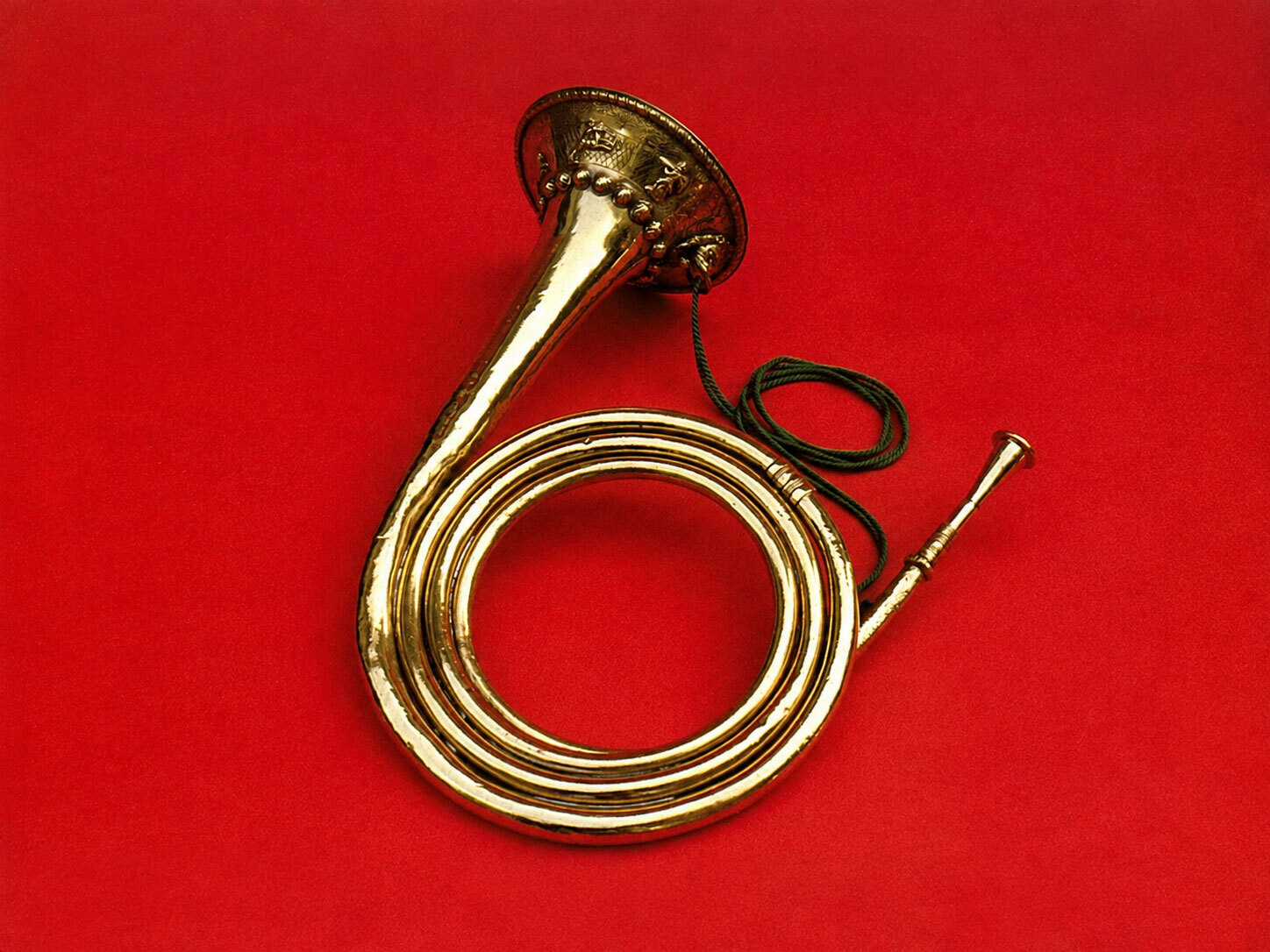
The hunting horn by Haas after restoration.

In a showcase in the second exhibit room of the Bad Säckingen Trumpet Museum an instrument is hanging which, in the museum catalogue, is simply described as a "coiled hunting instrument".¹ The instrument's value increases when we learn that it was made in 1688 by Johann Wilhelm Haas (1649-1723), probably the most famous brass instrument maker of his time. Its singular impact, however, comes from the almost life-size portrait hanging next to it: a framed color reproduction of the famous oil painting of Bach's trumpeter in Leipzig, Gottfried Reiche (1667-1734).² The viewer can recognize immediately that the Haas instrument and the coiled one in the Reiche portrait are of one and the same type. The true revelation of the jewel we have before us comes, furthermore, when we realize that the Haas instrument is the only one of its type to have survived, after a similar one made in 1697 by Heinrich Pfeiffer of Leipzig disappeared during the Second World War.³ The Bad Säckingen instrument is thus unique.

Characteristic of this coiled instrument's form is the fact that the three and a half coils — four and a half for the one in the Reiche portrait — are all in one plane. The earliest pictorial representation of such a brass instrument can be found in Michael Praetorius' Syntagma musicum. On Plate VIII of Volume II (Wolfenbüttel 1619)⁴ a similar instrument with four and a half coils and a whole-tone crook — as with Reiche's instrument — is depicted as No. 11. In the legend below, it is called a "hunters' trumpet" ("Jäger-Trommet").

A similar instrument can be seen on an engraving from 1710. The source is Unfehlbare Engel-Freude oder Geistliches Gesangbook ("Infallible Angel Joy or Spiritual Hymnal") (Leipzig 1710), showing the musicians in St. Thomas's Church in Leipzig under the direction of Bach's predecessor Johann Kuhnau (1660-1722).⁵ In the left foreground, a musician — perhaps Gottfried Reiche himself, who in 1706 became "Stadtpfeifer-Senior" — is standing next to two other instrumentalists who are holding long natural trumpets. The musician in question is holding a horn-like instrument with one and a half coils (probably incorrectly drawn in the engraving), its bell in the air.

Similar instruments of small diameter with coils in one plane do exist, but on the evidence of their bell form they are unequivocally to be called horns.⁶ Reiche's instrument, however, has variously been called a horn or a trumpet.⁷ The great scholar Herbert Heyde recently wrote the following about it:

The instrument has a hybrid bore between that of a horn and of a trumpet. Such a bore had already been developed, at the latest, by the mid 17th century and was to become the normal bore of posthorns and cornets in the 19th century.⁸

He further calls attention to a Saxon tradition of constructing small horns, a tradition which "can be followed back to the 16th century".⁹ Since Heyde has announced his intention of writing a longish article on this subject in these pages, I will not anticipate what he has to say.¹⁰

In the case of such an obvious dispute among scholars, some of whom call the instrument a horn, others a trumpet, it is impossible to give Reiche's instrument a definite name on the basis of the literature alone. However, the Bad Säckingen instrument does offer us some help. Let us look at it more closely.

Continue reading

Accede a la edición digital completa.

Brass Bulletin 54, II / 1986 páginas 8–22

Todo el contenido está protegido por derechos de autor © Brass Bulletin 1986–2026

Compartir este artículo

Facebook LinkedIn
Cargando…

Preguntas y respuestas

Cómo funciona la edición digital

¿Qué incluye la edición digital?

La edición digital reúne los artículos ya digitalizados como textos legibles y consultables en línea —no simplemente como escaneos o archivos PDF— junto con sus ilustraciones originales, notas, autoría, información del número y traducciones disponibles. Las sugerencias de artículos relacionados incluyen actualmente solo este material digitalizado.

¿Los artículos digitales son idénticos a los originales?

Conservamos con la mayor fidelidad posible el texto original, el idioma, las ilustraciones, los pies de imagen, las notas y el contexto editorial. La presentación se adapta para facilitar la lectura en línea y pueden corregirse errores evidentes de transcripción o escaneado. El contenido y el carácter del artículo publicado permanecen inalterados.

¿Qué idiomas están disponibles?

Brass Bulletin se publicó en inglés, francés y alemán a lo largo de toda su historia. Las traducciones al italiano y al español se añadieron a partir del número 60. Por este motivo, en los sitios italiano y español los artículos de los números 1 a 59 se muestran en inglés de forma predeterminada.

¿Con qué frecuencia se añaden nuevos artículos?

Se añaden nuevos artículos casi a diario, con aproximadamente un número completo digitalizado cada semana. El ritmo puede variar según el trabajo de preparación, tratamiento de imágenes y revisión editorial necesario.

¿Por qué no están disponibles todos los artículos en formato digital?

La colección completa de Brass Bulletin contiene 1.246 artículos publicados entre 1971 y 2003. El índice completo ya está disponible en línea y permite descubrir todos los artículos de la colección, incluidos aquellos cuyo texto íntegro todavía no ha sido digitalizado.

La digitalización comenzó en febrero de 2026. Cada artículo se prepara cuidadosamente para la lectura en línea, se revisa y se vincula con su número, sus autores, sus temas y sus ilustraciones. Al ritmo actual de digitalización, se prevé que la colección completa esté disponible en línea en febrero de 2028.

¿Por qué algunas referencias mencionan artículos que todavía no están disponibles?

Las referencias de los artículos originales se conservan aunque el material al que remiten aún no haya sido digitalizado. De este modo se mantiene intacto el contexto histórico y editorial. A medida que se incorporen más números a la edición digital, un número creciente de estas referencias conducirá a artículos que podrán leerse en línea.

¿Puedo sugerir un artículo o informar de un error de transcripción?

Sí. Si hay algún artículo que le gustaría especialmente ver digitalizado, o si detecta un posible error de transcripción o algún dato que falta, póngase en contacto con nosotros. Los comentarios de los lectores nos ayudan a mejorar la edición digital y a establecer prioridades útiles dentro del archivo.

¿Cómo puedo apoyar a Brass Bulletin?

Su apoyo ayuda a financiar la preparación, verificación y publicación en línea de la colección completa.

Suscríbase a la Edición Digital

¿Prefiere apoyarnos sin suscribirse?

Haga una donación

¿Cómo avanza la digitalización?

Estamos poniendo Brass Bulletin a disposición de los lectores en línea, artículo por artículo. Pueden leer los artículos recién digitalizados en cuanto estén listos, incluso antes de que se complete un número entero.

Consulten nuestro calendario de digitalización para descubrir las últimas novedades y las fechas estimadas de disponibilidad de los próximos números. Estas estimaciones se basan en nuestro ritmo reciente y pueden cambiar.

Busca en Brass Bulletin.