Rendete Brass Bulletin disponibile nella vostra università, nel vostro conservatorio o nella vostra biblioteca Scoprite l’accesso istituzionale

3 min di lettura

On Trumpets

On Trumpets

On trumpets (17). [fol. 62]

Having decided to consider the trumpets now, I wanted to start with a description of them, which, according to Casserius, is as follows: Tuba est instrumentum musicum teres, oblungum, plurimis circuitibus, gyris, geminisque sinubus praeditum, in duo orificia non aeque tamen ac similiter exiens, ex materia ut plurimum aurichalcea ad sonos et harmoniam edendam paratum.

Yet this description does not fit all kinds of trumpet but it is enough that it should fit the majority so that I need not stop for something small as I have many details to set forth on this subject. Firstly, concerning the invention of trumpets, attributed to Pliny, Hyginus and Raphaël de Volterre to Pisaeus, and by others to Maleus, both Tuscans. Pausanias and Silius Italicus do not provide the inventor’s name, one saying that he was born of Hercules and a Lydian woman, the other that he was the man who led the Moeonians to Italy... Diodorus and Pollux (1.4, onom., c. 10) accord this honour to the whole Tuscan nation, which does not entirely contradict previous opinions.

The Muses hated drums and trumpets: Horrent Tyrrhenos heliconia plectra tumultus.

But this is because of other considerations, for I accept that melody is acceptable to them; but the melody of these instruments displeases them inasmuch as it diverts them from their exercises, disturbs their rest and prevents them from tending to their contemplation of things natural and supernatural. I would like to believe that they would take pleasure in the diversity of sounds which trumpets produce, if it were necessary to find the reasons for this and to know whether it is true that, to sound them, one uses the Phrygian mode, as Loyer believes, or the hypoiasian, as Glareanus believes. They might still like trumpets if these were used in the same way that the doctor Asclepiades used them: to bring back the sense of hearing to the deaf and to cure them of their infirmity. Or else for the purpose that Aristotle speaks of, for he says that, if a trumpet is brought up to the ear of one who is rather deaf, so that the words go straight to his hearing, he will be greatly helped by it because the air is not dissipated in its journey but is entirely preserved, enclosed within the trumpet.

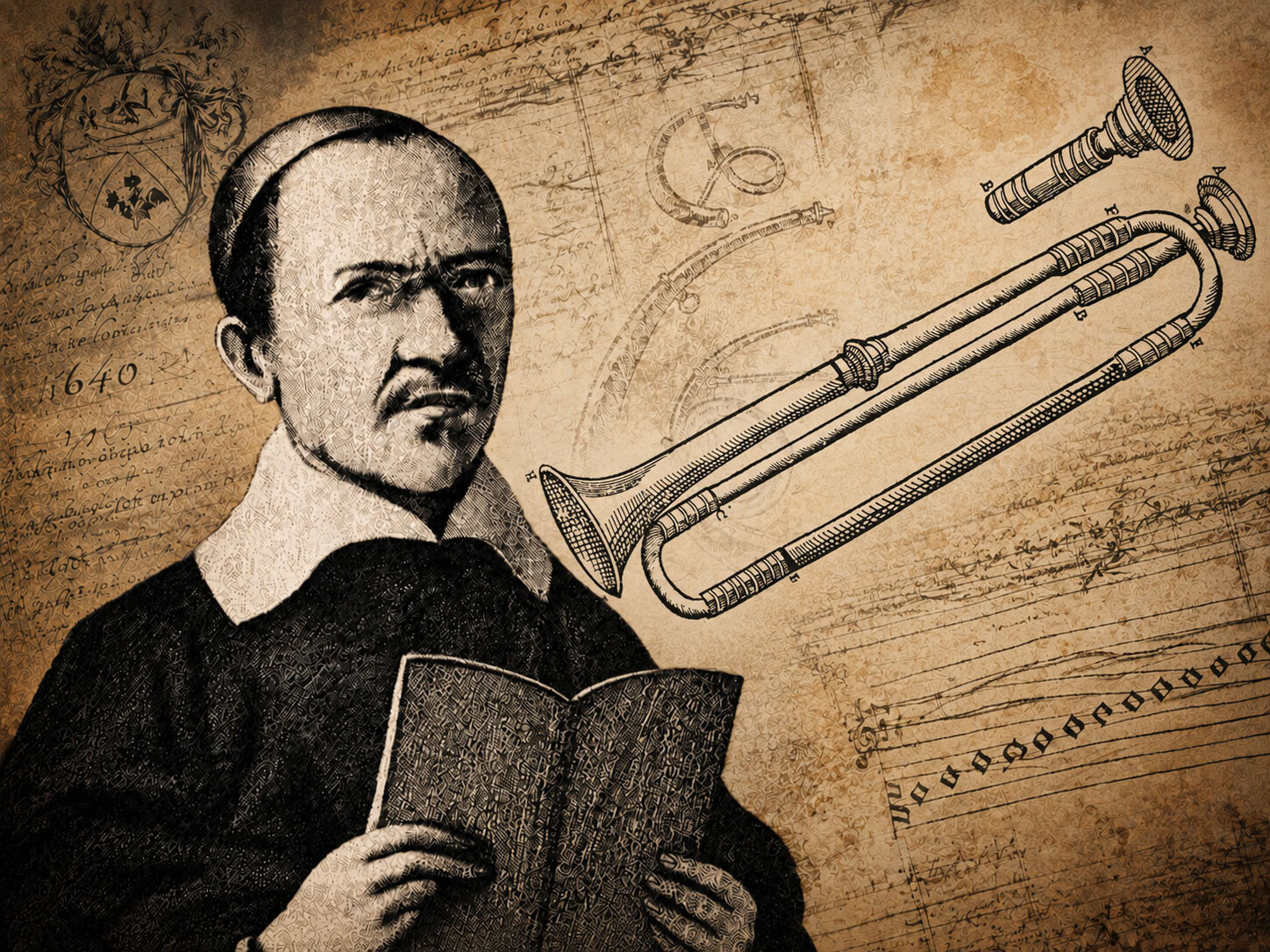
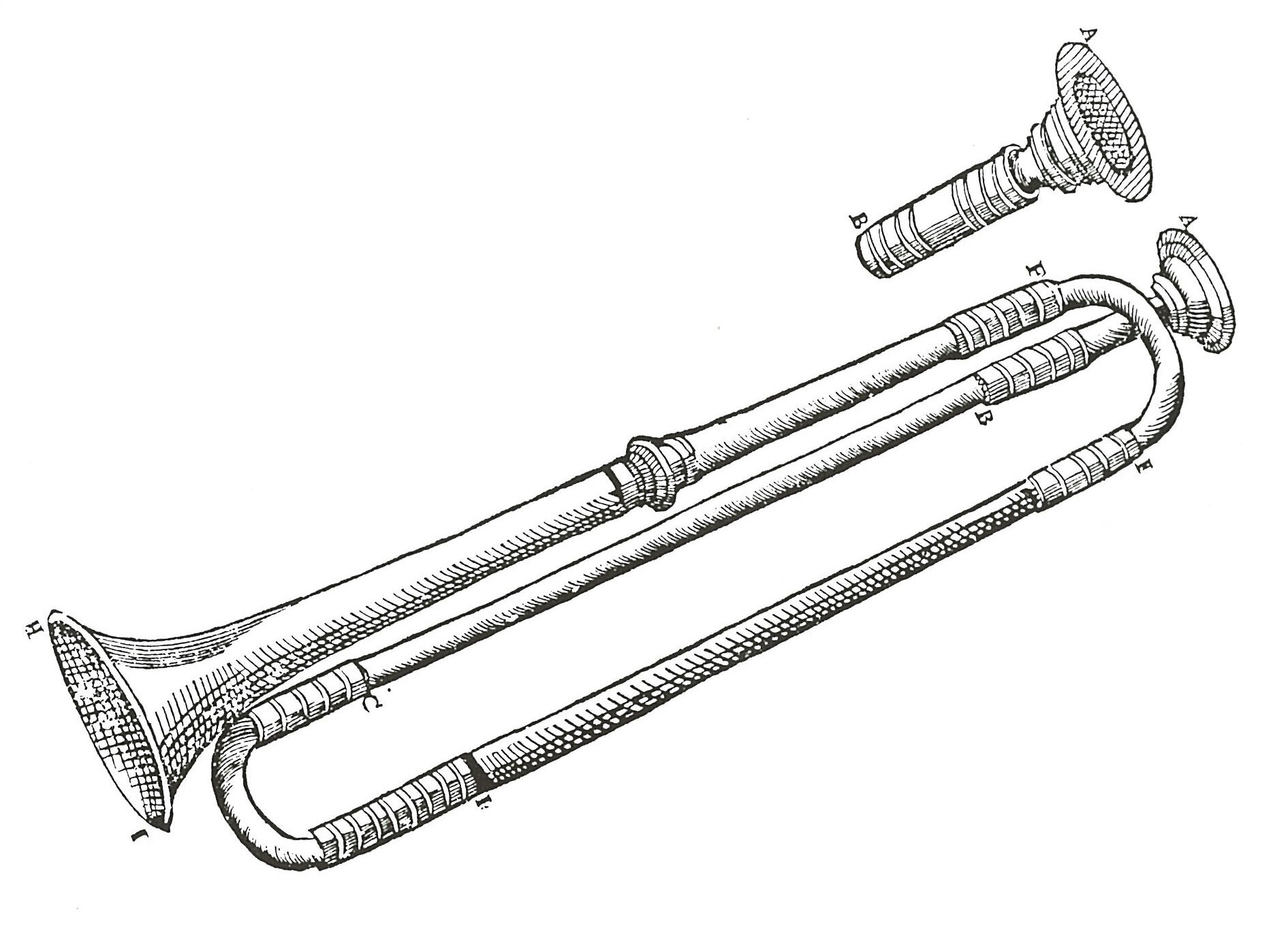
Illustrations from “L’Harmonie Universelle” by Marin Mersenne, Paris 1636.

Illustrations from “L’Harmonie Universelle” by Marin Mersenne, Paris 1636.

Even those who take the muses’ part will not be displeased to hear trumpets at times of rejoicing and public celebrations, at carousels, at tragic and comic plays, at wedding and banquets.

In France and several other countries trumpets are now used only amongst the cavalry and aboard warships destined to fight at sea, the fife and drum being reserved for the infantry. Great lords also have them played after their meals... In Bordeaux our popular magistrates, called jurats, have two officers, each of whom bears before him a long, uncoiled silver trumpet with a banner bearing the city coat of arms. But this is done only at general processions, bonfires and other public celebrations. The same officers are employed with their trumpets to make public proclamations and are required to attend at the execution of criminals condemned to suffer some exemplary penalty for their crimes. In this they imitate the ancient Romans who were wont, according to Gruterus, in celeberrimus urbis locis classico canere, quum jam instaret supplicii hora. Another custom of the Roman emperors, to be found in Suetonius, was to make their entrance into the city of Rome with trumpets...

Before I end this speech, it would be useful and most fitting for me to say something of the mute, which is nothing other than a piece of wood shaped by a turner and introduced into the bell of the trumpet so as to stop it so exactly and in such a way that it be weakened, muffled and reduced. So that this mute may be pushed easily into the bell, it has a stem which adheres to it, made in one piece, very narrow unlike the rest, however, but widening slightly towards the end. This note must be pierced and completely hollowed out from one end to the other, with very thin sides so that it can bend slightly and fit the bell; this hollowness is so vital that without it the trumpet would not sound at all, the air having no means of escape. Thus one recognises that the function of this mute is but to constrict the opening of the bell and to weaken and deaden the sound which, passing through a very narrow wooden channel, is less striking than if it were completely free. That is why the mute is used when there is a fear of being discovered by the enemy or when there is a desire to surprise him, as when one wishes to move and make a secret retreat, something which I must also do so as not to weary those who have had the courage to follow me thus far.

Pierre Trichet, “Traité des Instruments de Musique”, ca. 1640. Published with an introduction and notes by François Lesure (Genève, Minkoff Reprint, 1978 - in French only).

Brass Bulletin 49, I / 1985 pagine 31–33

Tutti i contenuti sono protetti dal diritto d’autore © Brass Bulletin 1985–2026

Condividi questo articolo

Facebook LinkedIn
Loading…

Domande e risposte

Come funziona l’edizione digitale

Che cosa comprende l’edizione digitale?

L’edizione digitale riunisce gli articoli già digitalizzati sotto forma di testi leggibili e ricercabili online — non semplicemente come scansioni o file PDF — insieme alle illustrazioni originali, alle note, agli autori, alle informazioni sul numero della rivista e alle traduzioni disponibili. I suggerimenti di articoli correlati comprendono attualmente solo questo materiale digitalizzato.

Gli articoli digitali sono identici agli originali?

Conserviamo il più fedelmente possibile il testo originale, la lingua, le illustrazioni, le didascalie, le note e il contesto editoriale. La presentazione viene adattata per una lettura confortevole online e gli evidenti errori di trascrizione o scansione possono essere corretti. Il contenuto e il carattere dell’articolo pubblicato rimangono invariati.

Quali lingue sono disponibili?

Brass Bulletin è stato pubblicato in inglese, francese e tedesco nel corso di tutta la sua storia. Le traduzioni italiane e spagnole sono state aggiunte a partire dal numero 60. Sui siti italiano e spagnolo, gli articoli dei numeri da 1 a 59 vengono quindi mostrati in inglese per impostazione predefinita.

Con quale frequenza vengono aggiunti nuovi articoli?

Nuovi articoli vengono aggiunti quasi ogni giorno, con circa un numero completo digitalizzato ogni settimana. Il ritmo può variare in base al lavoro di preparazione, elaborazione delle immagini e verifica editoriale necessario.

Perché non tutti gli articoli sono disponibili in formato digitale?

La collezione completa di Brass Bulletin comprende 1.246 articoli pubblicati tra il 1971 e il 2003. L’indice completo è già disponibile online e consente di scoprire tutti gli articoli della collezione, compresi quelli il cui testo integrale non è ancora stato digitalizzato.

La digitalizzazione è iniziata nel febbraio 2026. Ogni articolo viene accuratamente preparato per la lettura online, verificato e collegato al relativo numero, agli autori, agli argomenti e alle illustrazioni. Al ritmo attuale di digitalizzazione, la collezione completa dovrebbe essere disponibile online entro febbraio 2028.

Perché alcuni riferimenti citano articoli che non sono ancora disponibili?

I riferimenti presenti negli articoli originali vengono conservati anche quando il materiale a cui rimandano non è ancora stato digitalizzato. In questo modo si preserva l’integrità storica ed editoriale della rivista. Man mano che nuovi numeri vengono aggiunti all’edizione digitale, un numero crescente di questi riferimenti condurrà ad articoli leggibili online.

Posso suggerire un articolo o segnalare un errore di trascrizione?

Sì. Se desiderate che un determinato articolo venga digitalizzato, oppure se notate un possibile errore di trascrizione o un’informazione mancante, contattateci. I riscontri dei lettori ci aiutano a migliorare l’edizione digitale e a stabilire priorità utili all’interno dell’archivio.

Come posso sostenere Brass Bulletin?

Il vostro sostegno contribuisce a finanziare la preparazione, la verifica e la pubblicazione online dell’intera collezione.

Abbonati all’Edizione digitale

Preferite sostenerci senza abbonarvi?

Fate una donazione

Cerca in Brass Bulletin.