12 min di lettura
Joannès Rochut (1881-1952)
Trombonist of the Boston Symphony Orchestra
Di David Fetter
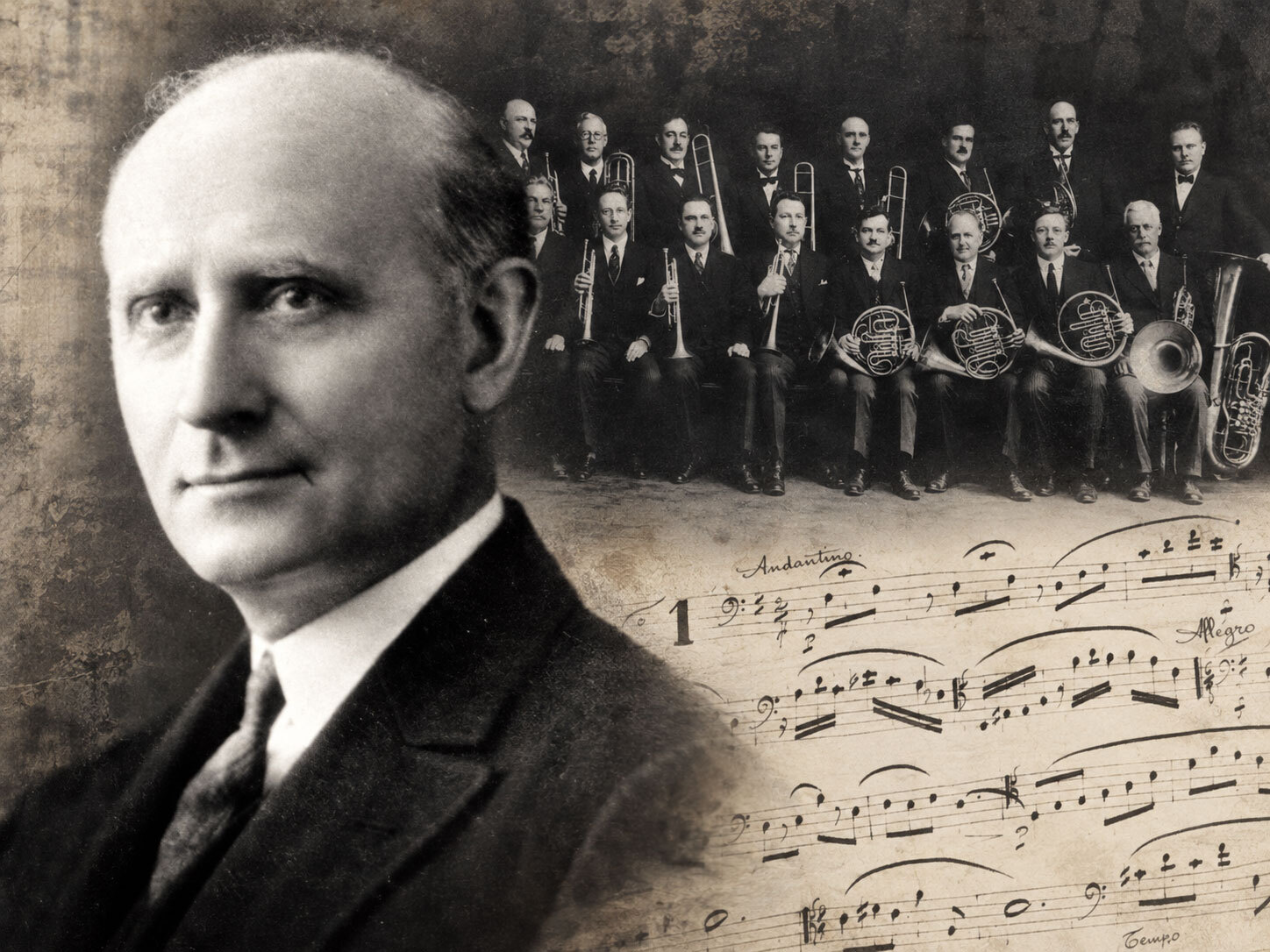
Joannès Rochut (1881-1952)
The “Melodious Etudes”¹ for trombone, transcribed by Joannès Rochut from the vocalises of an Italian tenor who performed and taught in Paris, Giovanni Marco Bordogni (1789-1856), have had a greater impact on American trombone playing in recent decades then any other set of trombone studies. In them, Bordogni achieved a consistency of vocal legato style which proved to be uniquely beneficial when transferred to the trombone. That Rochut alone could have exerted so much influence through his publication of the Bordogni etudes is remarkable, and this raises questions about whether he transcribed other music for trombone and what he was like as a person and as a trombonist.
My interest in Joannès Rochut was sharpened in the early 1970’s when a bassoonist in the Baltimore Symphony Orchestra handed me a manuscript. His teacher, M. Allard, a former bassoonist in the Boston Symphony Orchestra, had given it to him. Titled “Lectures Pour Trombone”, it was another set of etudes transcribed by Joannès Rochut, signed by him in 1902, and taken, this time, from the solfege exercises of Lucien Grandjany (1862-1891), a composer and vocal coach who was Professor of Solfege at the Paris Conservatoire. It soon became apparent that these exercises were valuable practice material, both for the development of a facile, lyric style and the ability to read awkward changes of clef.
Joannès Rochut was born on Aug. 13, 1881, in Paris.² His family included an older sister and two brothers. His father, a certified accountant-manager of a business, died early at 40 in 1888. His widow, who remained without any means to bring up her four children, placed her two older boys in an orphanage in the state of Seine near Beauvais. Thus, from his seventh until his sixteenth year, Rochut was raised in the company of children, girls and boys together. They grew learning a profession, printing for Rochut, and they all learned music. Without exception, all played a brass instrument. Thus, Rochut was introduced to the trombone, since the director of the orphanage determined that his lips and teeth were suited to that instrument.
Rochut remained in the orphanage for nine years, except for some weeks each summer when the children went on foot to the seashore about 150 km. away. When he returned to his mother’s home in Paris, Rochut found employment as a typographer in a large publishing house. At eighteen he volunteered in advance for the military, serving for three years as a musician. It was during that time that some of his comrades encouraged him to apply to the Paris Conservatoire. He was admitted, graduating in 1905 after winning a First Prize in trombone.
He then performed in the studio orchestras typical of that time for roll or disc recordings, quite often for the Edison Company. Splicing was unheard of then, so that if there was any mishap during a recording, it was necessary to start again from the beginning. Thus, one piece might have been played all day until a suitable straight-through recording was achieved.
During this time Rochut, who taught throughout his life, had as a student André Lafosse who later won a First Prize in trombone at the Paris Conservatoire in 1908 in his 18th year after only two years there. Subsequently Lafosse was solo trombone at the Paris Opera from the early twenties until 1949 and Professor of Trombone at the conservatoire from 1948 to 1960³. Lafosse indicated his agreement that the Bordogni vocalises were valuable by including six of them in his “Méthode complète” for trombone, printed in Paris in 1948.
Brass Bulletin 50, II / 1985 pagine 41–49
Tutti i contenuti sono protetti dal diritto d’autore © Brass Bulletin 1985–2026