Ofrezca Brass Bulletin en su universidad, conservatorio o biblioteca Descubra el acceso institucional

6 min de lectura

Michel Becquet

Interview

Michel Becquet

Michel Becquet

Benny Sluchin: Michel Becquet, today you are an example to many trombone players. Can you tell us about your career?

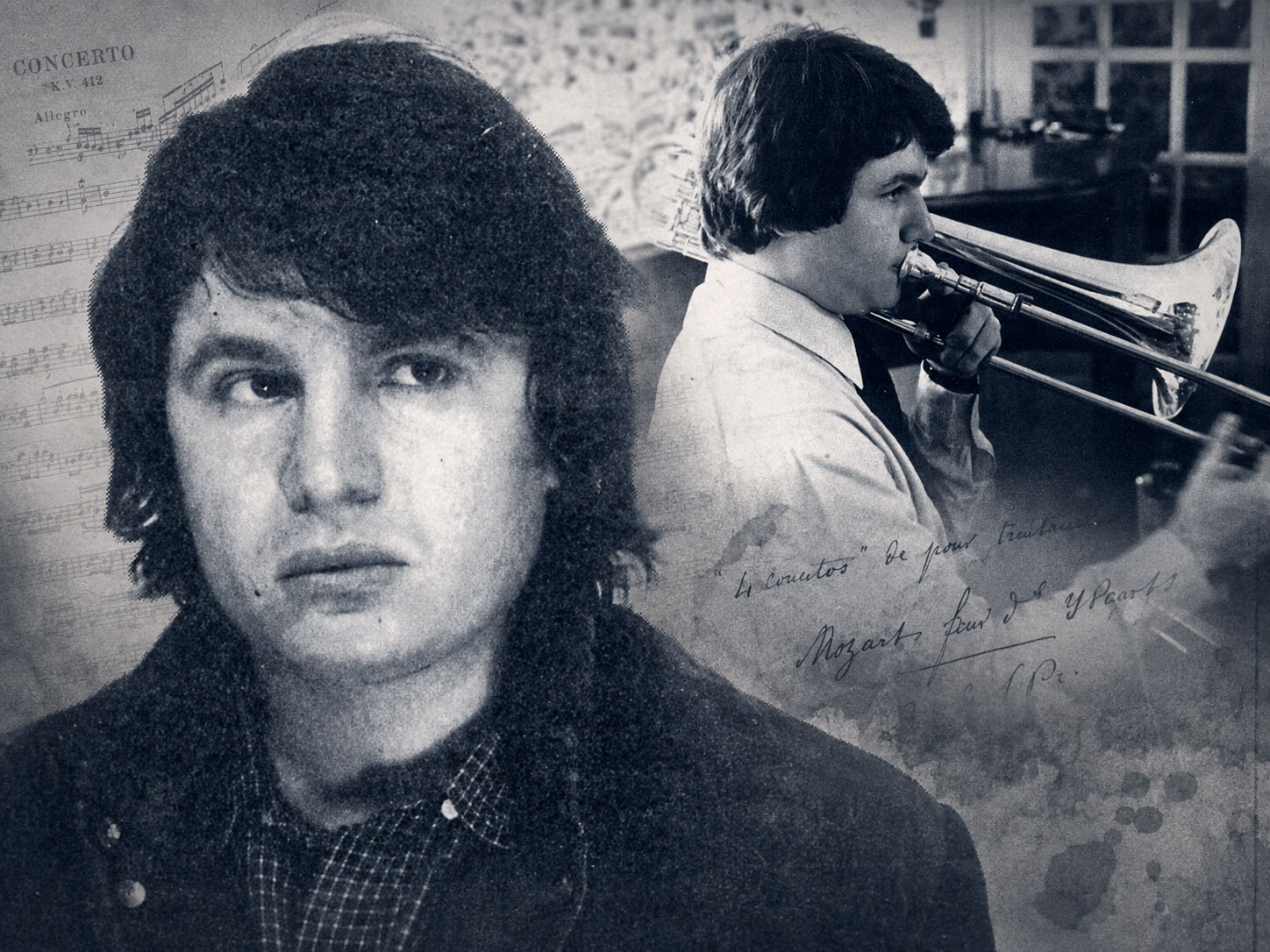
Michel Becquet: I was born in Limoges (in the centre of France) in 1954. First I studied the horn with my father, who was a horn teacher at the regional music college, then I joined Mr. Jean Jeudi’s trombone class. At 15 I was the baby of the trombone class at the Paris Conservatoire (with Gérard Pichaureau) where my classmates included Branimir Slokar, Alain Manfrin, Gilles Millière and Jacky Fourquet. So we are all from the same vintage and this is something I find very important now: working with other people of the same standard creates a healthy work atmosphere and makes it possible to get results. The work goes on after you win the prize!

B.S.: What about international competitions! Can you say something about those?

M.B.: In Munich in 1974, when I was twenty, I won 3rd prize (there was no 1st prize). In Toulon in 1977 I shared 1st prize with Gilles Millière. In Prague, 1978, 2nd equal (no 1st prize). In Geneva, 1979, unanimous choice for 1st prize and in Munich in 1981 2nd equal (still no 1st). Competitions are an important factor because they make you work and progress and they allow you to meet a lot of people. The jury isn’t always composed of suitable people but it is thanks to these events that the capacities of the instrument can be exploited.

B.S.: What capacities?

M.B.: In college we spent time learning concertos and, once we had won our prizes, everybody looked for orchestral jobs. Personally I prefer to try and profit from that repertoire and make it better known. The trombone is a little known instrument. Often people know it as a comical instrument, one that does sound effects, and ugly ones at that. It is unusual for composers to write for the trombone to show the good things it can do. I and other people are trying to show what the trombone can do as a solo instrument. Composers write for musicians, not for the instrument, so you have to attract their attention. Mozart wrote four horn concertos for a friend, Strauss wrote two for his father and things go on like that today. That’s why you have to aks for new things and show that the trombone can play as a soloist.

B.S.: Like the way the trumpet evolved as a solo instrument?

M.B.: For the trumpet they found a repertoire of Baroque pieces which are not very strong musically — if there’s no high D at the end, it won’t sell! I think trombone playing is more varied and the possibilities are more interesting.

B.S.: What do you think of transcriptions?

M.B.: To make the repertoire evolve you have to start with something else. Maurice André started out playing original Baroque trumpet pieces (Leopold Mozart, Bach, etc.) and gradually, in response to demand, he had to find other pieces to transcribe. So you have to start with pieces written for the trombone which not many people know. The general public does not know the Leopold Mozart or Albrechtsberger concertos — not even the trombone players.

B.S.: That’s the result of another problem: orchestral trombone players are not generally the most outgoing people.

M.B.: That’s right. Trumpet players, even the one who play in the orchestra, know the solo repertoire of the instrument, which is not the case with the trombone.

Michel Becquet

Michel Becquet

B.S.: So what do you play as a soloist?

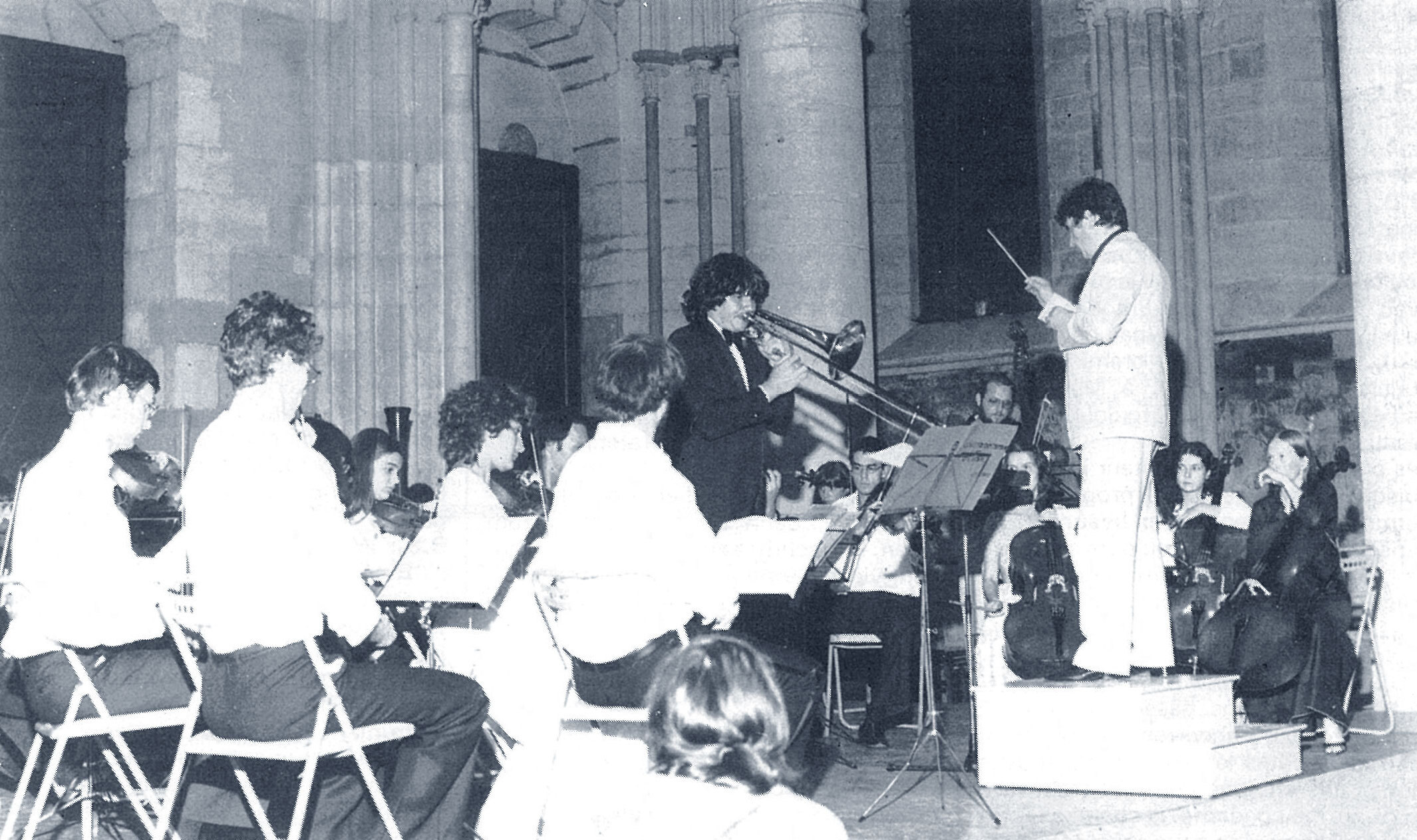
M.B.: I try to show what the instrument can do, with a classical piece first and then a modern piece. For example, I combine the Albrechtsberger concerto with the “Ballade” by Frank Martin. For people who don’t know the trombone, that selection enables them to discover it.

B.S.: Do you use the alto trombone for classical concertos originally written for it?

M.B.: No, I don’t like the alto. It’s an instrument which is very good for playing certain parts in sacred music, for example, in the symphony orchestra. It gives better resistance and the sound blends with the chorus voices. For solo playing the alto trombone is too stiff, it doesn’t let you trill easily and the intonation is suspect. You gain nothing in speed and you lose quality. You have to play the instrument so that people like it and appreciate it and for me, at least, the tenor is better for that.

B.S.: What instrument do you use?

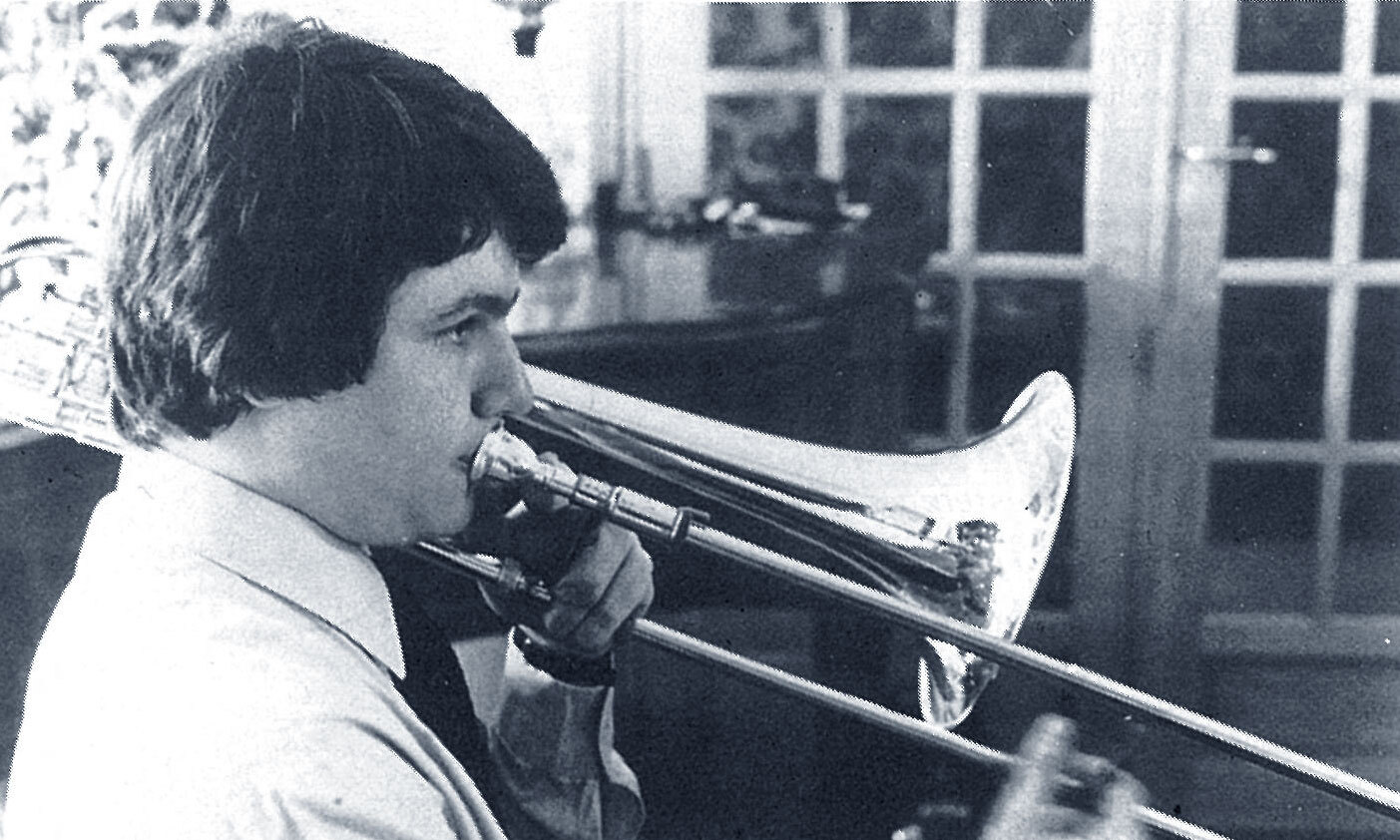
M.B.: I play the new Courtois model (300 Prestige) which we developed recently with Millière. It’s a light instrument with a removable bell. This enables you to use bells of different metals, which are of very good quality because they’re hand hammered. We had to talk the makers into abandoning their machines to get professional instruments. So we’ve made progress in France thanks to the metal. French trombonists play quite bright and existing instruments don’t help this aspect of the sound. We have difficulty getting satisfactory results using other markers’ instruments, which are too dull for our taste. So we had to develop this model.

B.S.: Is this instrument intended for solo playing?

M.B.: No, not at all. People criticise me for it but the bell is interchangeable; it can be adapted for solo or orchestral playing. The problem is that musicians don’t practise their instrument regularly and so cannot have a precise idea of an instrument. Many orchestral trombone players never practise seriously until they have to play something like the “Boléro”.

B.S.: And yet the time to practise is when there isn’t much to do in the orchestra. When the “Boléro” comes along, it’s too late.

M.B.: So these players can’t say this instrument doesn’t suit them. I really think the nickel silver bell has a future in the orchestra.
Michel Becquet

Michel Becquet

B.S.: What is your experience in the orchestra?

M.B.: I was solo trombone at the Suisse Romande from 1972 to 1975. In June 1975 I went to the Paris Opéra. I have to admit that the orchestra is not my ideal way of making music. It isn’t in my temperament or my habits. I like to do things the way I want and I don’t like having to do them the way the conductor wants. For me it’s that first of all, and then teaching.

B.S.: Could you tell us a bit about the Lyon Conservatoire?

M.B.: The Lyon Conservatoire is parallel to the one in Paris and tries to be an alternative for many people who can’t get in in Paris. Two trombone teachers work side by side: I handle the concertos and chamber music and my assistant Alain Manfrin takes them for more technical things — sight-reading, orchestral excerpts and alto trombone. We each teach twelve hours a week. I prefer that students have a B♭/F trombone from the start and we study the difficult concertos in the third and fourth years. I have made a list of repertoire works and we finish by working on pieces like Tomasi, Martin and Constant with classical concertos which need education as well as advanced technique.

N.S.: Do you use a particular tutor?

M.B.: You can’t use the same tutor with everybody. You have to adapt the exercises to suit the person in front of you. Every pupil has his own problems and that’s where I try to start. I train musicians to be as complete as possible. Even without special resources they can be well trained for the job. The problem at the Conservatoire is that there are too many applicants for the entry competition. Just a few years ago there were 20 to 25 applicants. Today there are 50! It’s hard to listen to every one attentively to select them. I try to find the ones who can be good orchestral trombone, not just soloists.

B.S.: Do you also deal with the bass trombone?

M.B.: No, that’s a different instrument in my opinion, just as different as the tuba. You need a specialist to teach it properly.

B.S.: Is modern music part of your programme?

M.B.: It will come at the end of the study programme (four years). I prefer that the students go through everything else and have a good standard before starting on pieces like that. The list of works I was telling you about also includes pieces in all styles.

B.S.: Doesn’t this list consist almost entirely of pieces by French composers?

M.B.: The list is only a suggestion. Obviously pieces can be added to it.

B.S.: Do you teach abroad too?

M.B.: Yes, and I think that’s very important for me. We meet a lot of people who come looking for us, to learn French music. You have to remember that in France our speciality is solo playing. So we have to show them our way of looking at things.

B.S.: But, at the same time, are French orchestras not of this same high standard?

M.B.: That’s because of the system of recruitment. At the competition you have to look for people who will fit best into the section. The solo trombone has to impose his style of playing so as to establish homogeneity. We are too individualistic and that’s also true of the other instruments.

B.S.: Can you tell us some of your plans?

M.B.: Apart from concerts, I’m planning a record. It will contain extracts from pieces taken from public concerts. I want to show the evolution of the trombone repertoire in a real concert-hall atmosphere.

B.S.: Michel Becquet, thank you and good luck!

Discography

  • Two LPs with Maurice André and the Paris Brass Octet (Erato)
  • An album based on original music by Janko Nilovic with the Paris Trombone Ensemble (Crystal Records S223)
  • Two albums with the Paris Trombone Quartet (Pluriel Records)
  • Janko Nilovic: Concerto for trombone and string orchestra; Georges Delerue: “Madrigal” for trombone sextet; J. Michel Defay: “Fluctuation” for solo trombone, 6 trombones and 2 percussion (Symphony Land)
  • Leopold Mozart: “Serenade in D” for trumpet, trombone and orchestra (Schwann-Musica Mundi 2005)

Brass Bulletin 50, II / 1985 páginas 11–16

Todo el contenido está protegido por derechos de autor © Brass Bulletin 1985–2026

Compartir este artículo

Facebook LinkedIn
Cargando…

Preguntas y respuestas

Cómo funciona la edición digital

¿Qué incluye la edición digital?

La edición digital reúne los artículos ya digitalizados como textos legibles y consultables en línea —no simplemente como escaneos o archivos PDF— junto con sus ilustraciones originales, notas, autoría, información del número y traducciones disponibles. Las sugerencias de artículos relacionados incluyen actualmente solo este material digitalizado.

¿Los artículos digitales son idénticos a los originales?

Conservamos con la mayor fidelidad posible el texto original, el idioma, las ilustraciones, los pies de imagen, las notas y el contexto editorial. La presentación se adapta para facilitar la lectura en línea y pueden corregirse errores evidentes de transcripción o escaneado. El contenido y el carácter del artículo publicado permanecen inalterados.

¿Qué idiomas están disponibles?

Brass Bulletin se publicó en inglés, francés y alemán a lo largo de toda su historia. Las traducciones al italiano y al español se añadieron a partir del número 60. Por este motivo, en los sitios italiano y español los artículos de los números 1 a 59 se muestran en inglés de forma predeterminada.

¿Con qué frecuencia se añaden nuevos artículos?

Se añaden nuevos artículos casi a diario, con aproximadamente un número completo digitalizado cada semana. El ritmo puede variar según el trabajo de preparación, tratamiento de imágenes y revisión editorial necesario.

¿Por qué no están disponibles todos los artículos en formato digital?

La colección completa de Brass Bulletin contiene 1.246 artículos publicados entre 1971 y 2003. El índice completo ya está disponible en línea y permite descubrir todos los artículos de la colección, incluidos aquellos cuyo texto íntegro todavía no ha sido digitalizado.

La digitalización comenzó en febrero de 2026. Cada artículo se prepara cuidadosamente para la lectura en línea, se revisa y se vincula con su número, sus autores, sus temas y sus ilustraciones. Al ritmo actual de digitalización, se prevé que la colección completa esté disponible en línea en febrero de 2028.

¿Por qué algunas referencias mencionan artículos que todavía no están disponibles?

Las referencias de los artículos originales se conservan aunque el material al que remiten aún no haya sido digitalizado. De este modo se mantiene intacto el contexto histórico y editorial. A medida que se incorporen más números a la edición digital, un número creciente de estas referencias conducirá a artículos que podrán leerse en línea.

¿Puedo sugerir un artículo o informar de un error de transcripción?

Sí. Si hay algún artículo que le gustaría especialmente ver digitalizado, o si detecta un posible error de transcripción o algún dato que falta, póngase en contacto con nosotros. Los comentarios de los lectores nos ayudan a mejorar la edición digital y a establecer prioridades útiles dentro del archivo.

¿Cómo puedo apoyar a Brass Bulletin?

Su apoyo ayuda a financiar la preparación, verificación y publicación en línea de la colección completa.

Suscríbase a la Edición Digital

¿Prefiere apoyarnos sin suscribirse?

Haga una donación

¿Cómo avanza la digitalización?

Estamos poniendo Brass Bulletin a disposición de los lectores en línea, artículo por artículo. Pueden leer los artículos recién digitalizados en cuanto estén listos, incluso antes de que se complete un número entero.

Consulten nuestro calendario de digitalización para descubrir las últimas novedades y las fechas estimadas de disponibilidad de los próximos números. Estas estimaciones se basan en nuestro ritmo reciente y pueden cambiar.

Busca en Brass Bulletin.