Explore institutional access →

History

279 articles

No. 116 • 2001 Awaiting digitization

Valentine Snow (1700-1770)

By Brian Proksch

History
No. 100 • 1997 Awaiting digitization

Classical, baroque horn or corno da tirarsi?

By Javier Bonet Manrique

Report History
No. 80 • 1992 Awaiting digitization

The Vienna horn and the Vienna sound

Special Austria

By Armin Suppan

History Technique Equipment
No. 70 • 1990 Awaiting digitization

Part 4

The influence of Berlioz

on contemporary 19th Century use of brass instruments

By Ernest H. Gross

History Repertoire
No. 103 • 1998 Awaiting digitization

Part 1

The C. G. Conn Company

By Jean-Pierre Mathez
History Equipment Report
300 Years of the Horn in Bohemia Free
No. 31 • 1980 Digitized

300 Years of the Horn in Bohemia

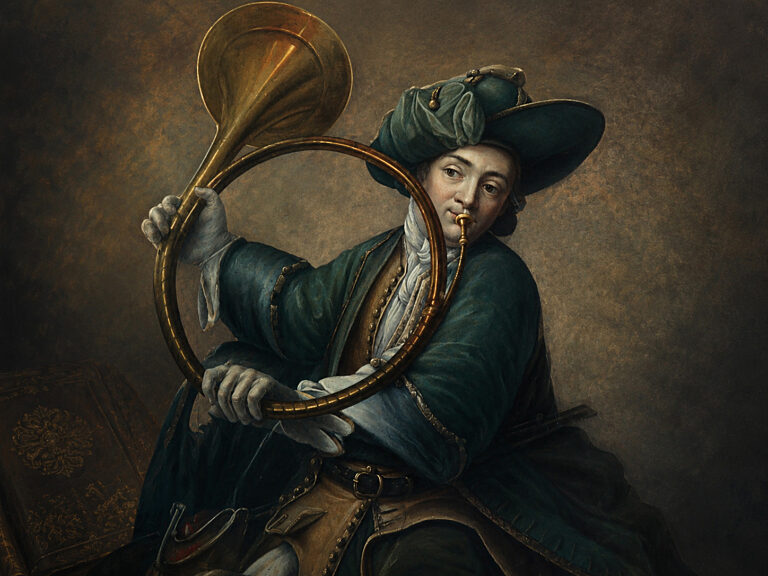
An unsigned portrait from the Dresden court links the rise of Bohemian horn playing to the ceremonial world of Baroque hunting culture.

By Kurt Janetzky

History Society Historical instruments Interpretation Sociology
No. 87 • 1994 Awaiting digitization

Part 1

Thomas Gschladt

An Historical Perspective of an 18th Century Trombonist

By J. Richard Raum
History
Anton Hansen (1877-1947) Free
No. 27 • 1979 Digitized

Part 1

Anton Hansen (1877-1947)

Father of trombone playing in Scandinavia

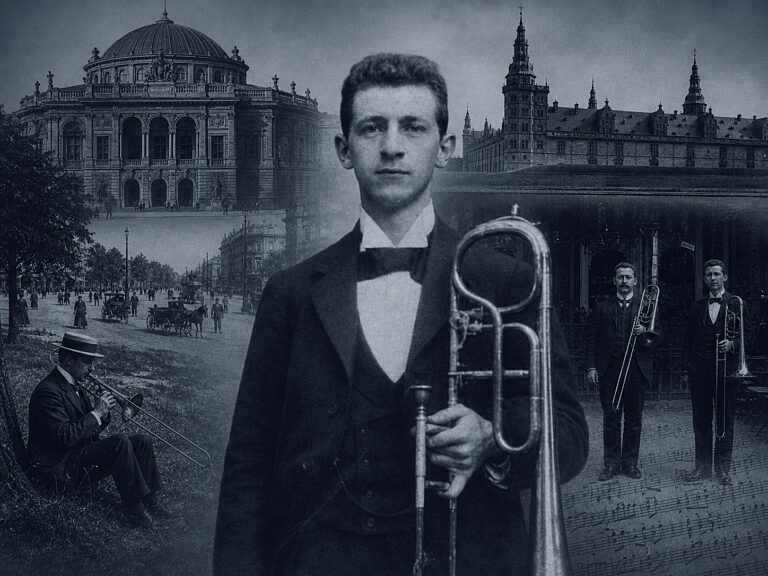
From Nørrebro cafés to the Royal Orchestra, Anton Hansen’s early years reveal the shift from valve to slide trombone in Scandinavian orchestras.

By Per Gade
History Professional life Orchestral playing Auditions
The trombone in Jazz and Popular Music Member
No. 51 • 1985 Digitized

Part 2

The trombone in Jazz and Popular Music

The classical Armstrong period (1927-1945)

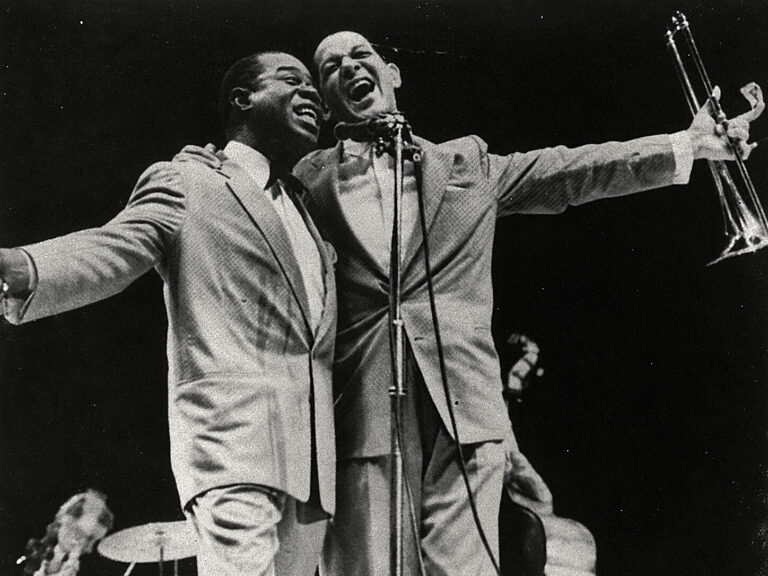
Jazz trombone changed rapidly between 1927 and 1945, as Armstrong’s influence, big-band playing and new techniques transformed both its language and sound.

By Michel Laplace

History Jazz
No. 71 • 1990 Awaiting digitization

Part 3

The arab Trumpet III (end) - The Art of Improvisation

The Art of Improvisation

By Nassim Maalouf

Report History
No. 74 • 1991 Awaiting digitization

Part 3

The Alto trombone

In the 18th Century Sacred Chamber Music from the Abbeys of Göttweig and Melk, Austria

By J. Richard Raum

History Repertoire
No. 74 • 1991 Awaiting digitization

Restoration of a beautiful bugle

By Herbert Heyde

History Equipment
No. 59 • 1987 Awaiting digitization

Pierre Vilhardin de Belleau, trumpeter to Louis XV

By Henry Parramon

History
No. 88 • 1994 Awaiting digitization

The trombone of Gustav Holst (1874-1934)

By Jeremy Dibb, Simon Hogg
History Repertoire
The Trumpet and the Cornet in Jazz and Popular Music Member
No. 44 • 1983 Digitized

Part 3

The Trumpet and the Cornet in Jazz and Popular Music

The pluralism of the so-called “modern” forms (1945 to the present)

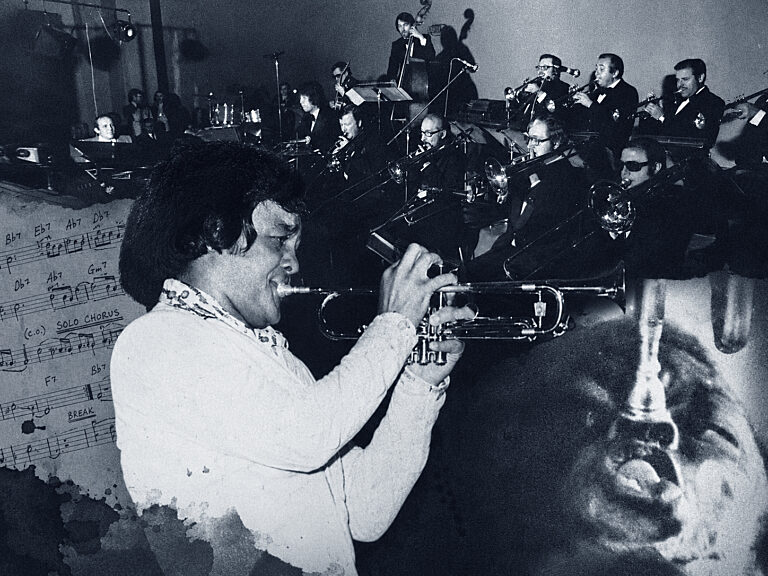
Bebop, Miles Davis and the rise of the flugelhorn mark a postwar jazz landscape in which trumpet playing splintered into competing sounds and ideals.

By Michel Laplace

History Equipment Jazz Improvisation Sound
No. 83 • 1993 Awaiting digitization

The Hunting horn of Jacques Du Fouilloux (XVIth cent.)

By Werner Flachs, Rainer Egger

History
No. 93 • 1996 Awaiting digitization

Discovery of the 'Turmsonaten' written in 1803

By Michael Kircheis
History Repertoire
Jabbo Smith Member
No. 49 • 1985 Digitized

Jabbo Smith

The Unrecognised Jazz Trumpeter

Overshadowed by Armstrong and later by Eldridge, Jabbo Smith emerges as a crucial trumpet innovator whose speed, range and phrasing anticipated modern jazz.

By Michel Laplace

History Jazz Improvisation
No. 86 • 1994 Awaiting digitization

Henri Selmer Paris

By Jean-Pierre Mathez

History Equipment
No. 116 • 2001 Awaiting digitization

Part 1

The ancestry of modern concert halls

By Sabina Pade
Report History Acoustics
Johann Ernst Altenburg (1736-1801) Member
No. 46 • 1984 Digitized

Johann Ernst Altenburg (1736-1801)

The last representative of the heroic art of the trumpeter and drummer

A trumpeter caught between a fading guild tradition and a changing musical world left a 1795 treatise that became an essential witness to a disappearing art.

By Arno Werner

History
No. 70 • 1990 Awaiting digitization

Brass instruments in the Museo de la Musica in Barcelona

By Beryl Kenyon De Pascual

History Equipment
No. 59 • 1987 Awaiting digitization

The early 19th-century invention-posthorn

By Albert Hiller

History Equipment
No. 68 • 1989 Awaiting digitization

Part 1

A brief survey of the historical evolution of our instruments

By Jean-Pierre Mathez

Report History
Loading…

Questions & Answers

How the Digital Edition works

What does the Digital Edition include?

The Digital Edition brings together the articles already digitized as searchable online texts—not simply as scans or PDF files—along with their original illustrations, notes, authorship, issue information, and available translations. Related-article suggestions currently include only this digitized material.

Are the digital articles identical to the originals?

We preserve the original text, language, illustrations, captions, footnotes, and editorial context as faithfully as possible. The presentation is adapted for comfortable online reading, and obvious transcription or scanning errors may be corrected. The substance and character of the published article remain unchanged.

Which languages are available?

Brass Bulletin was published in English, French, and German throughout its history. Italian and Spanish translations were added from issue No. 60 onward.

On the Italian and Spanish sites, articles from issues 1–59 are therefore shown in English by default.

How often are new articles added?

New articles are added almost daily, with approximately one complete issue digitized each week. The pace may vary depending on the preparation, image work, and editorial checking required.

Why aren’t all articles available digitally?

The complete Brass Bulletin collection contains 1,246 articles published between 1971 and 2003. The full index is already available online, allowing readers to discover every article in the collection, including those whose complete text has not yet been digitized.

Digitization began in February 2026. Each article is carefully prepared for online reading, checked, and connected to its issue, authors, subjects, and illustrations. At the current pace of digitization, the complete collection is expected to be available online by February 2028.

Why do some references mention articles that are not available yet?

References in the original articles are preserved even when the material they point to has not yet been digitized. This keeps the historical and editorial record intact. As more issues are added to the Digital Edition, an increasing number of these references will lead to articles that can be read online.

Can I suggest an article or report a transcription error?

Yes. If there is an article you would particularly like to see digitized, or if you notice a possible transcription error or missing detail, please contact us. Reader feedback helps us improve the Digital Edition and prioritize useful connections within the archive.

How can I support Brass Bulletin?

Your support helps fund the preparation, verification, and online publication of the complete collection.

Subscribe to the Digital Edition

Prefer to support us without subscribing?

Make a donation

How is the digitization progressing?

We’re gradually making the Brass Bulletin available online, article by article. You can read newly digitized articles as soon as they’re ready, even before an entire issue is complete.

Visit our Digitization Roadmap to browse recent additions and see estimated availability for upcoming issues. These estimates follow our recent pace and may change.

Search Brass Bulletin.