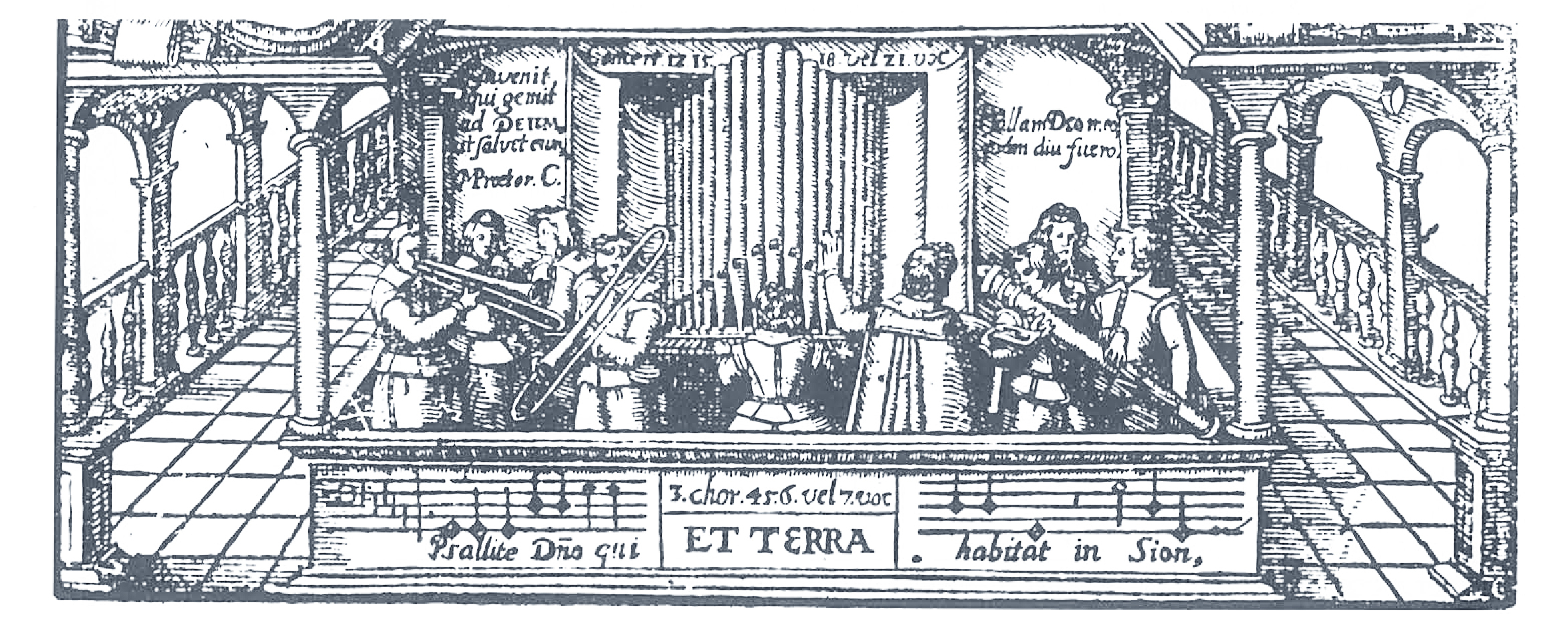
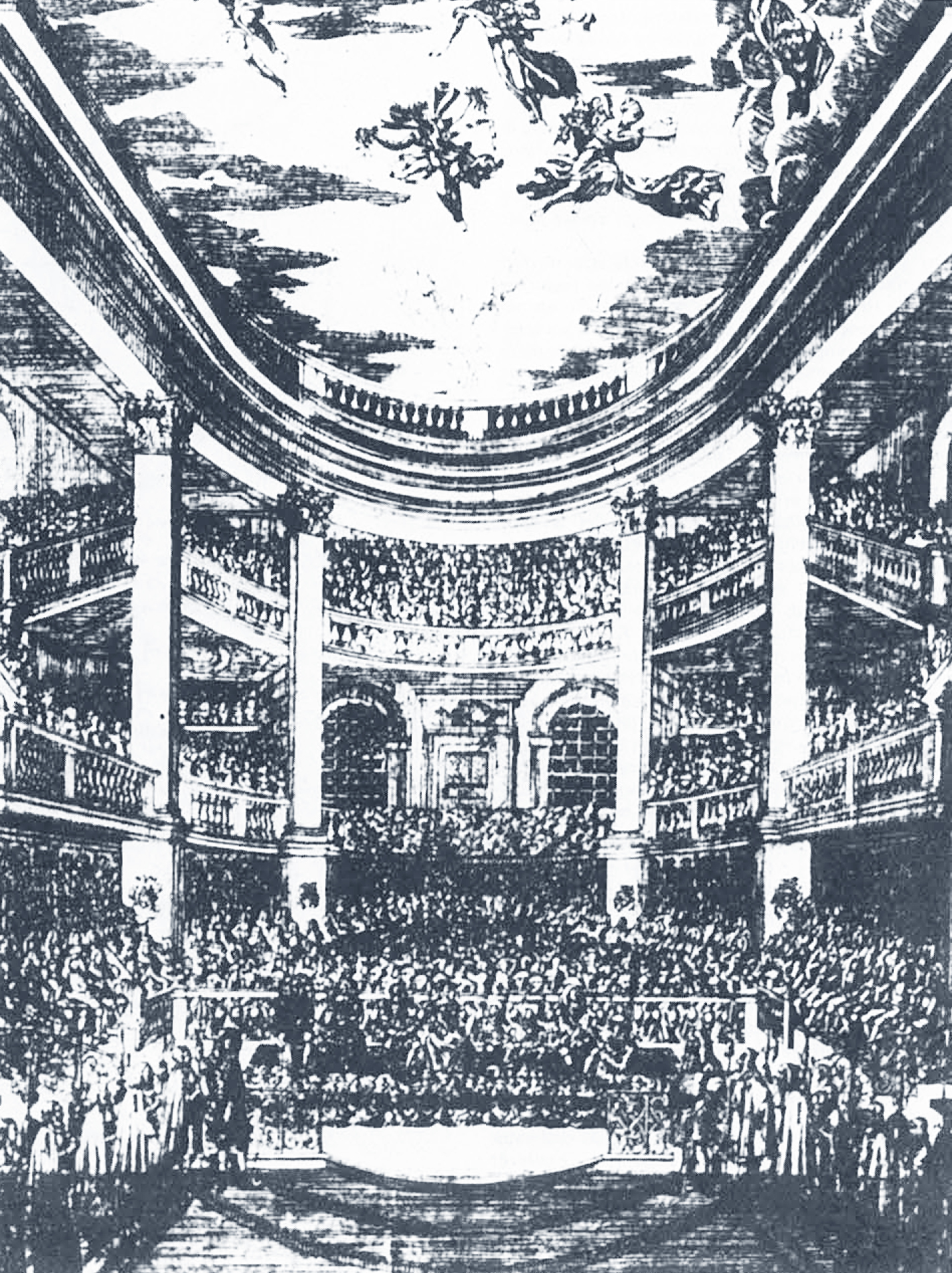
2. Dresden’s first opera house. Inaugurated on the 27th January 1667. Built by Wolf Casper v. Klengel. In this opera house the first trombone section of the orchestra also played.
Andreas Winkler and Friedrich von Westhof were already at this time members of the orchestra for 40 years. In the register of 1654 Andreas Winkler is listed as an instrumentalist and Fr. v. Westhof as lutenist. On page 31 Friedrich v. Westhof is described thus: born in Lübeck in 1611. He was a cavalry captain in the service of Gustav Adolph, came to Dresden impoverished through adverse circumstances where he found the above post. Later he exchanged the lute for the trombone and died in 1694. So this trombonist was still in active service in the orchestra at the advanced age of over 80. In the orchestral registers of the whole 18th century there is no mention of any trombones. Only with the appearance of the romantic orchestra, at the time of Carl Maria von Weber, do 3 trombones find a firm place in the orchestra. Still at the time of Richard Wagner the first trombonist in the court orchestra played only alto trombone. In his reform plan: “Concerning the royal orchestra: from the 1st March 1846 Richard Wagner applied for the acquisition of a tenor trombone for the 1st trombonist for the following reasons: ‘… the alto trombone is not sufficient in respect of its compass, and the alto trombonist is therefore often compelled to leave whole passages out or to play them an octave higher. A tenor trombone must therefore be put at the disposal of the alto trombonist, apart from his usual instrument’.” As a result the trombone section of 2 tenors and 1 bass trombone which is to be found in all present day orchestras found a firm place in the orchestra. It is worth mentioning in connection with this that tradition has an important place amongst the trombonists of the Staatskapelle: in every performance of the opera “The Flying Dutchman” there are on the music stands still the hand written original parts with the entry of the “First performance on 2. January 1843 under conductor Richard Wagner” (ill. 4, 5 and 6). There is one further trombonist I would like to talk about who lived at the turn of the century: Eugen Reiche. His concerto Nr. 2 in A major belongs to the classical romantic concertos of trombone literature.
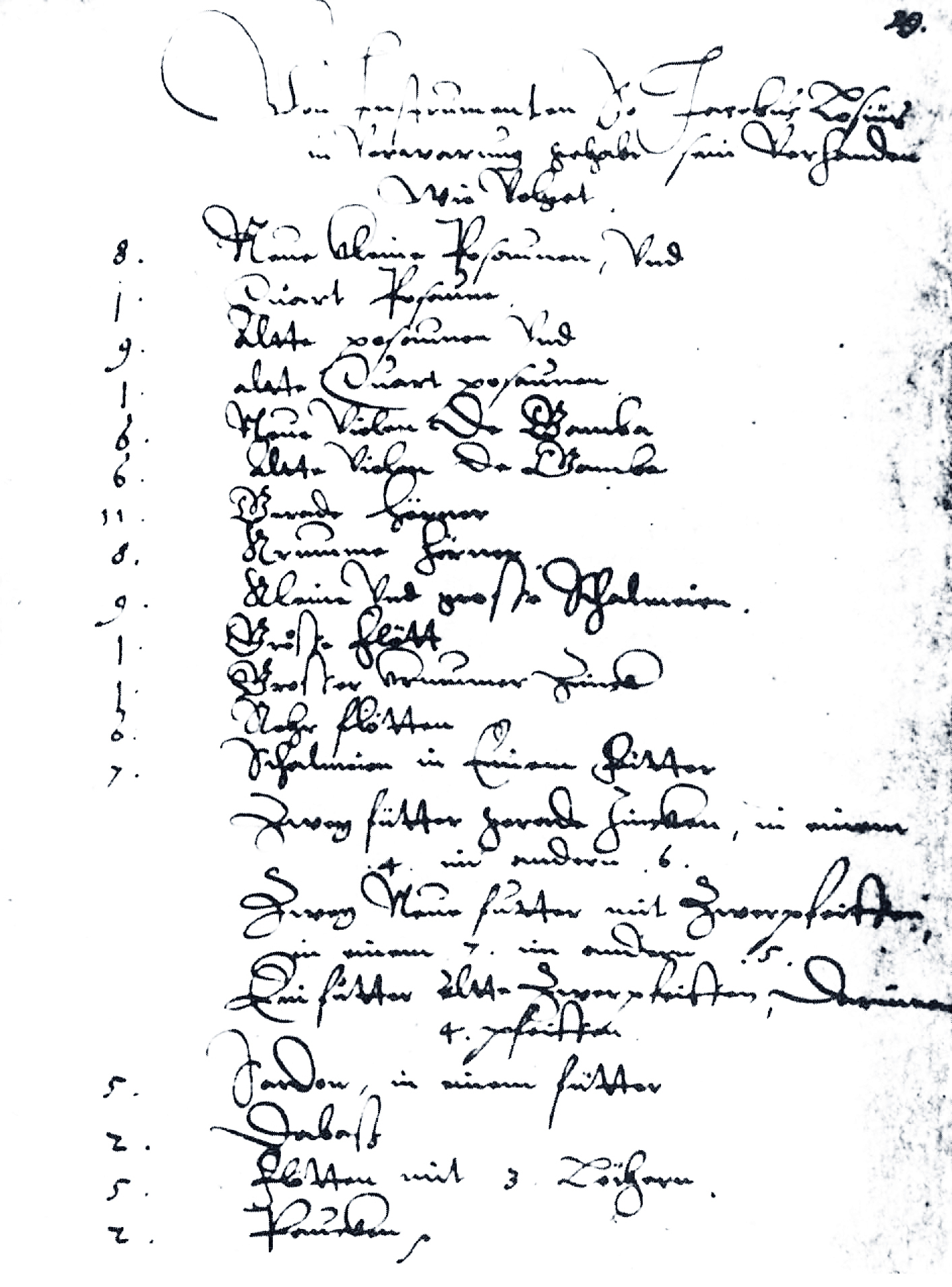
3. The first instrument inventory of the Dresden orchestra of 1593. The first four items: 8 new small trombones and 1 quart (bass) trombone, 9 old trombones, 1 old quart trombone. The other brass instruments listed are: 11 straight horns, 8 curved horns. NB: During this period of time only the term: vocalist or instrumentalist is written after the names in the register of the orchestra. M. Fürstenau mentions in addition that at this time an instrumentalist had to master several instruments. M. Fürstenau: “One would think that an orchestra like this would demand more persons, however these instruments were never played together in the ensemble, but at the most a few together, as the composer wished at a particular time; only the members of the orchestra had to be able to play several at once.”
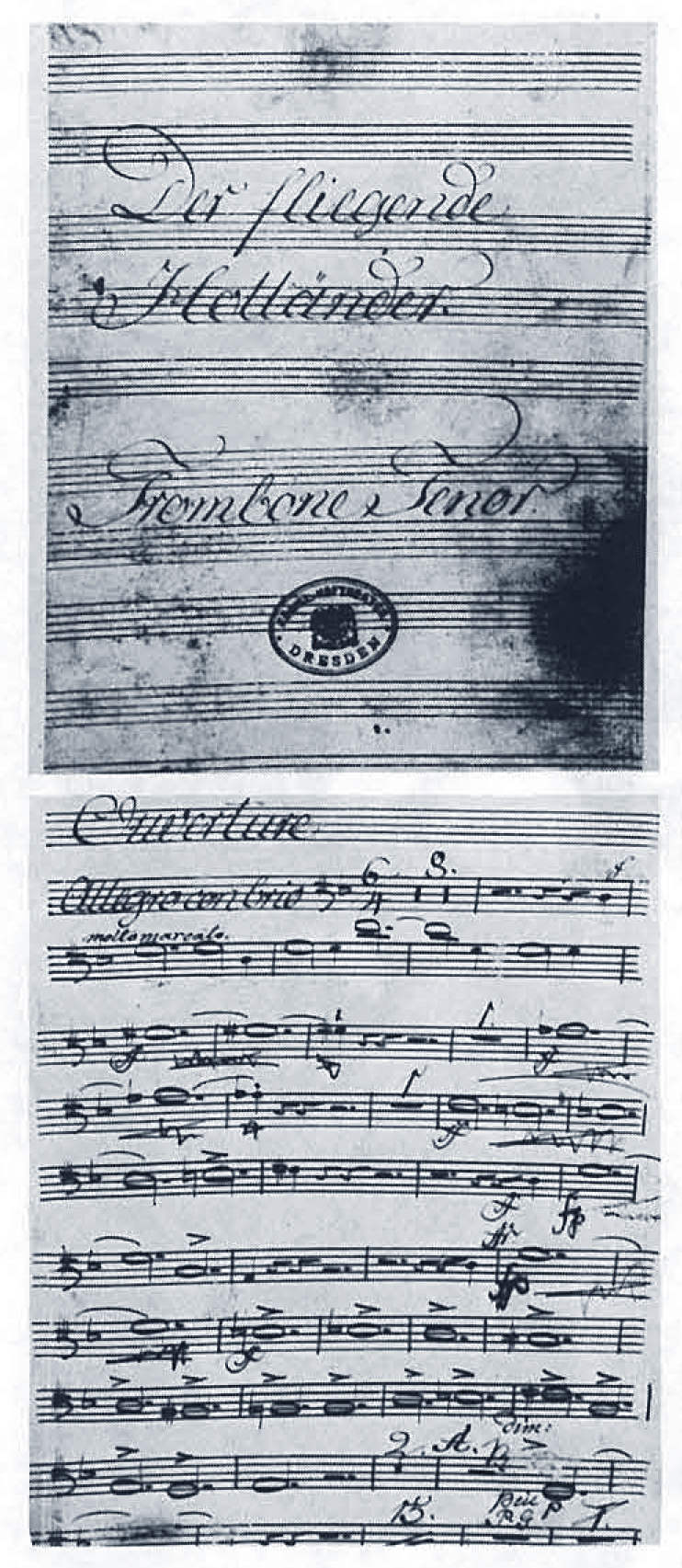
4. - 5. The handwritten parts for the trombones at the time of the first performance of the opera: “The Flying Dutchman” by Wagner. They are on the stands of the trombonists in every performance of the opera, even today.
There is very little known about Eugen Reiche himself. By chance I met years ago a brother of the composer, at that time already over 80 years old. He sent me the following letter about Eugen Reiche:
My brother Eugen Reiche, born in April 1878, was born in Deuben near Dresden [now Freital]. For a short time he learned to be a woodcarver. However he was advised against it because this profession was not considered modern any more. Afterwards he tried his hand as a jobbing mason. This profession didn’t appeal to him either. Then he went to Bad Schandau to dedicate himself to music which had fascinated him. Later he went from there to the West Germany of today as trombonist. After a considerable time he asked his father to procure a foreign passport for Petersburg. Father was shocked at the idea but nevertheless fulfilled his wish. Afterwards my brother departed immediately. He was lucky and was immediately engaged in the zoological garden orchestra, then in the opera, afterwards as professor at the music academy of St. Petersburg. He spent his first long holiday in 1913 in Freital. There he also played his concerto. Both my brothers Oskar and Arno also played. Eugen played double bass excellently and played the tuba very well too. Now time has passed and we haven’t heard anything from him for many years now.
Otto Reiche
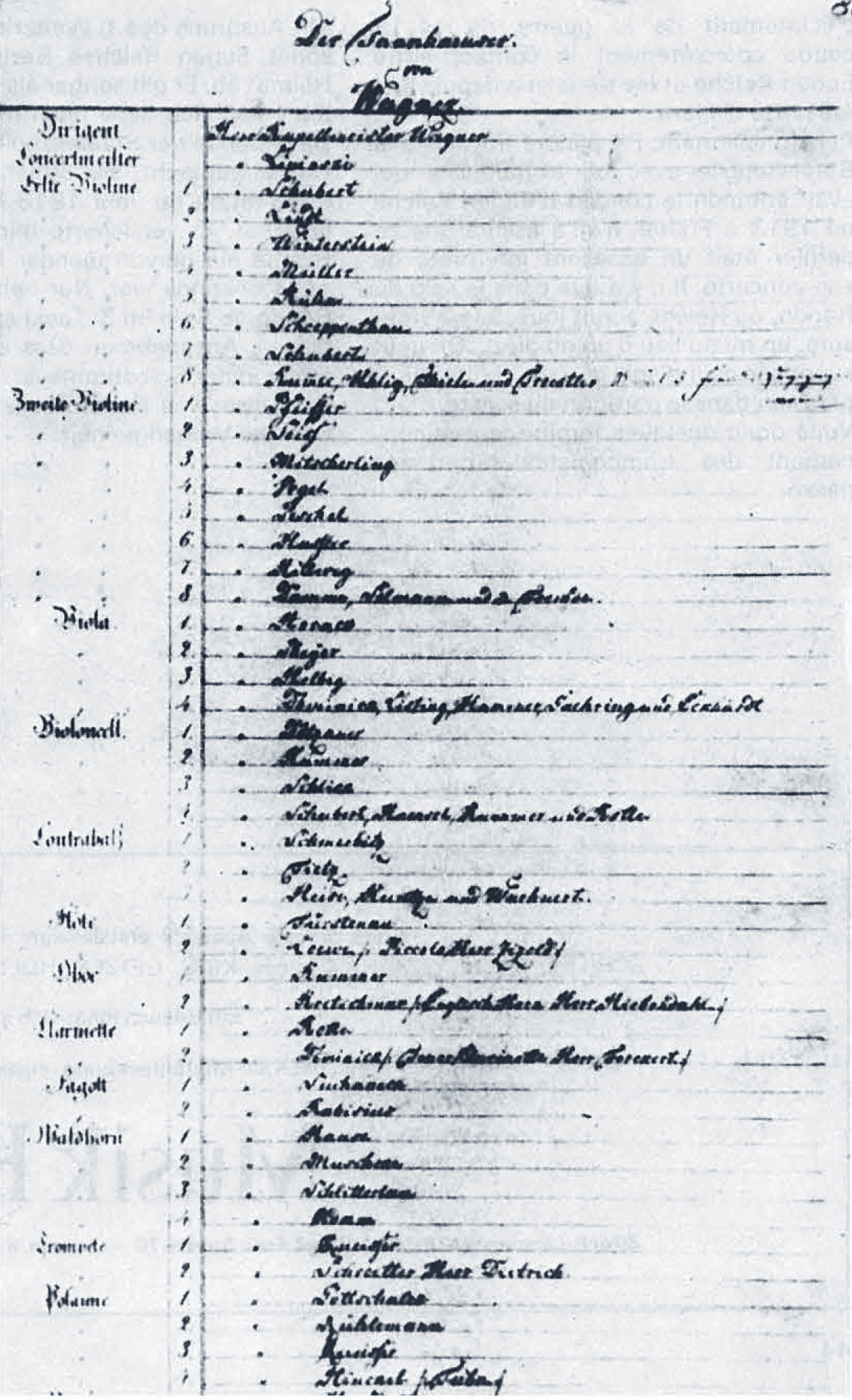
6. List of services of the royal orchestra at the time of the first performance of the opera “Tannhäuser” by Wagner in 1845 with the first 3 Tannhäuser trombonists. As the brass section are listed: Horn: Mr. Haase, Muschcke, Schlitterlau, Adam. Trumpet: Mr. Queißer, Schreitter, Districk. Trombone: Mr. Gottschalck, Rühlemann, Qußer. Mr. Hinckel — Tuba. The tuba player was borrowed at this time from a military band stationed in Dresden. Richard Wagner only applied for a permanent post for this instrument in 1846. The annual salary of the trombonists in 1846 amounted to: Alto trombone — 200 Thaler, Tenor trombone — 200 Thaler, Bass trombone — 300 Thaler. As there was only one bass trombone scored in various performances, this musician received 100 Thaler more annual pay.
With the outbreak of the First World War Eugen Reiche’s connections with his home were broken off and since then he is considered as missing. I personally have played with another trombonist in the Staatskapelle who heard Eugen Reiche’s interpretation in 1913 in Freital. He assured me that Eugen Reiche was a superb performer of his concerto, except that Reiche played an e instead of a c-sharp in the third bar of the rondo, from the solo entry. Presumably this is a printing error in the solo part.
This is then a reminiscence of trombonists of the past.