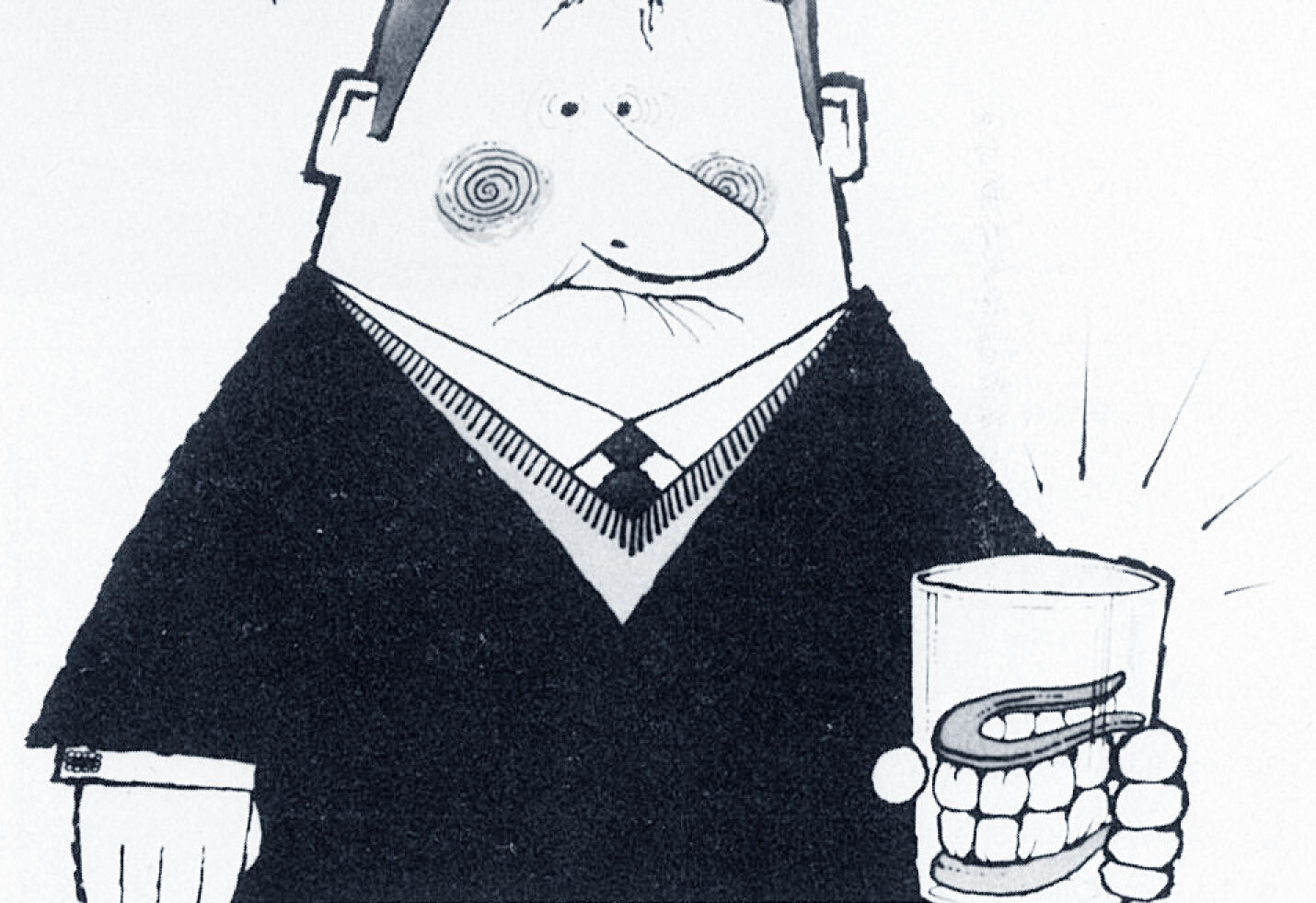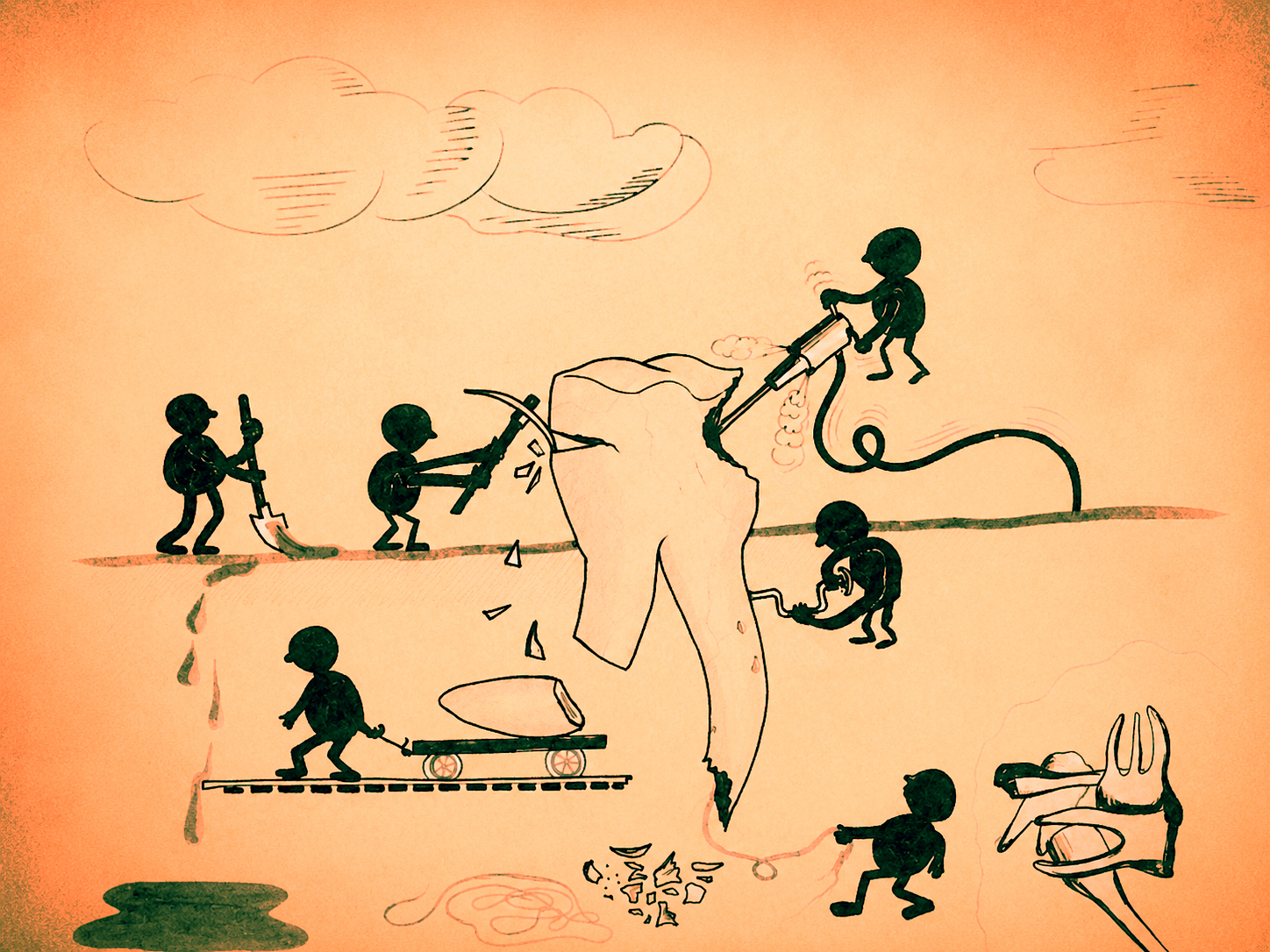
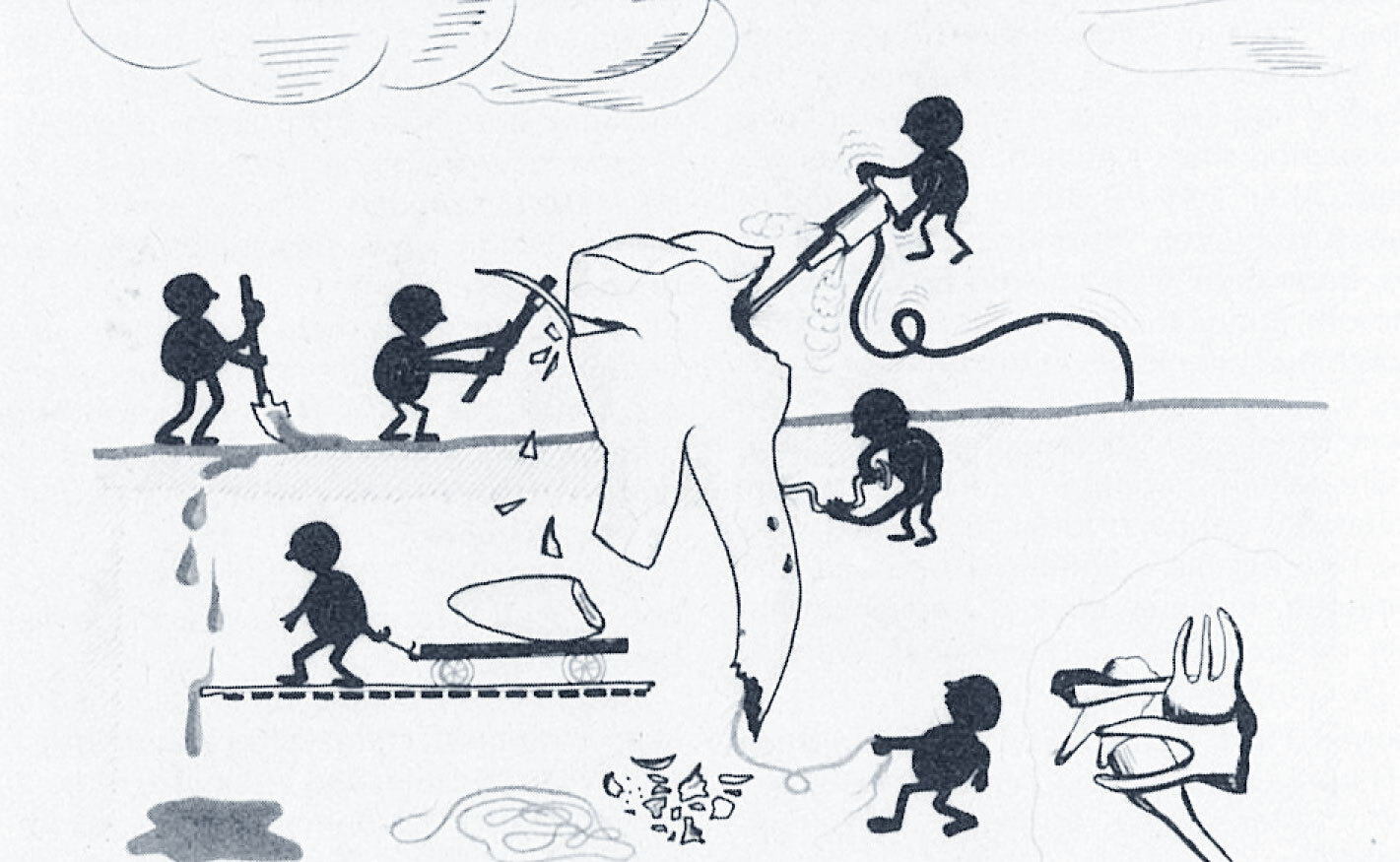
An idiotic opinion is held by the ignorant masses, namely that frequent brushing of the teeth and gums uses and hurts them. These people will one day discover with dismay that their teeth are spoiled beyond repair, whilst it was just the contrary they were aiming at. One must gather information at a reliable source and one must keep one’s teeth, in fact one’s entire person, clean. This will promote good health.
Another, Arnim, writes in an article about progress of methods to prevent dental illness (1967):
“It is clear that members of a profession dedicated to the repair and replacing of defective teeth, are reluctant to engage themselves in an ‘impracticable’ programme of prevention...”
Now what is done in our country (Switzerland) in this field?
I will not dwell here upon the prophylactic measures taken in a general way like fluorisation of salt and water or the (rather slow) introduction of collective tooth brushing in schools. What I mean is: What are the dentists’ instructions to their patients? Do they sacrifice enough time to explain the different points, problems and dangers to them?

Michel G. Corti
Really if you come to consider it: our teeth are held in place in a most ingenious way. Teeth are created to cut, tear, crunch and chew an infinite variety of food. To fulfil their task it is imminent that the teeth should be strong and yet mounted in a flexible way so as to cushion the hard shocks. This is acquired by the way roots are placed in the jaw: they are closely adapted to the bone but not part of it. The roots are surrounded by the so-called paradentosal membranes (thin layers of tissue) through which thousands of minute fibres pass to attach the roots to the bone. This delicate mechanism is covered and protected by the gums that also serve to keep everything in its place.
It is of course highly important that the gums should be adjusted closely to the teeth, lest food particles or other matter remain stuck between the two. Healthy gums are firm to touch and of a pink colour. When inflamed they are red and swollen. If the gums bleed when brushed, it is a sign of irritation and congestion which means that they no longer are able to fulfil their task as defenders against maladies. When the gums withdraw from the teeth or do not fit closely anymore, all kinds of matter and germs will settle in the pouches thus formed. The result of inflamed gums is invariably paradentosis. The accumulation of deposit in the pouches gradually hardens and becomes tartar which is as hard as cement and cannot be removed by the brush. The inflammation progressing, first the gums and then the paradental membranes are destroyed — then the bone is attacked and the roots of the teeth are badly damaged by the infection: the teeth are no longer firmly embedded and finally they are lost.
Doctor S. Ramfjord, professor at the Michigan University Dental School, observed that the first signs of a disease of the gums appear already towards the end of childhood or the beginning of adolescence. He writes:
Generally there is no pain, so most people do not even know that they suffer from the disease until it has become so bad that it is practically impossible to do anything about it.

What can one do to keep the gums healthy?
- Most important: have your teeth looked after by the dentist regularly, at least twice a year. Ask him to examine not only your teeth but also your gums. Cooperate with him doing all that is necessary to prevent the starting of the disease. Ask him to show you the right way to brush your teeth thoroughly, massaging your gums at the same time to keep them healthy. He will then also show you how to clean the places which your brush cannot reach. In fact, it has been proved that appropriate brushing alone reduces the diseases of the gums by 6.6%, whilst additional cleaning of the space between the teeth causes a reduction of 23.6%.
- Have tartar removed regularly. If your gums are swollen, inflamed or if they bleed easily — take it as a sign that they are diseased. Even in spite of brushing your teeth correctly, you can be almost sure that tartar will be formed under the gums and if not every bit of it is removed regularly and with the greatest care, it is to be considered a great danger. The dentist or hygienist should remove tartar before it causes irreparable damage. The longer you wait the more complicated and costly the treatment of the diseased gums will be.
- Have immediately repaired anything that could impair your gums. With some people damage of the gums can be caused by badly done repair work: ill-fitting crowns and amalgams or left-open space between the teeth which will unbalance the whole dental system. Others again will need surgery to correct the shape of the gums and to eliminate the pouches grown between the teeth and the gums. Last but not least: it is the dentist’s duty to point out the possible relation between certain general illnesses (f.i. poor functioning of the thyroid or diabetes) and diseases of the gums.
Professor Glickman, Boston, USA, states:
Neglect is the main cause of diseases of the gums. Neglect of the healthy mouth — thus allowing the disease to start; neglect of the disease in its early stage — thus allowing the destruction of the tissues supporting the teeth; and neglect of the mouth under treatment — thus allowing a relapse of the disease.
The moral is clear: by taking minute care of your mouth and teeth, keeping them clean and in good repair, you will be able to enjoy your teeth as long as you live.