7 min. read
Problems of teaching methods in brass instruction
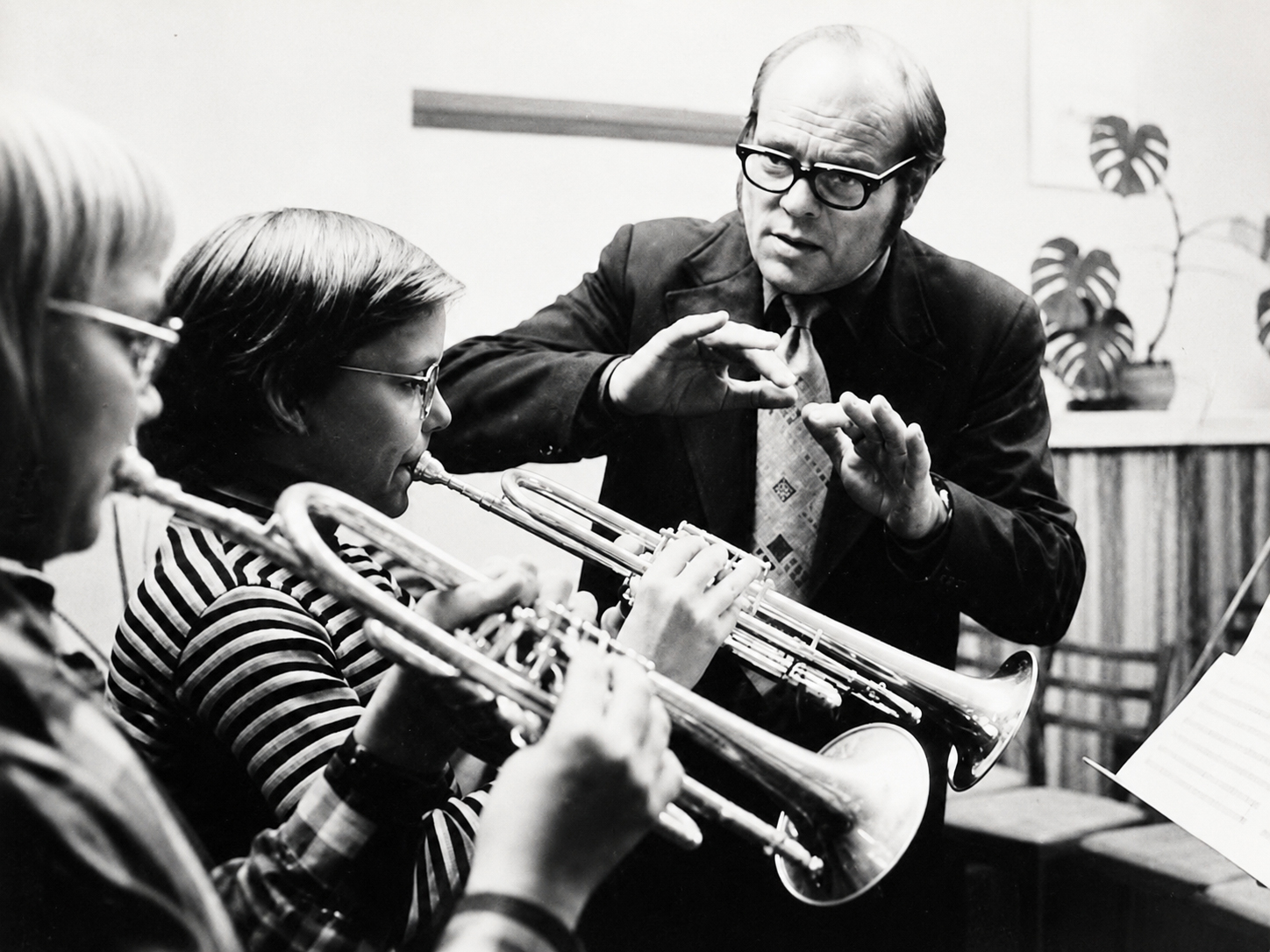
There is hardly one problem of the theory and practice of teaching which has been emphasized so much as the correct formulation of instruction. Nowadays the questions and problems to do with teaching methods of brass training have become so extensive, due to more recent knowledge acquired about the anatomical, physiological and psychological conditioning factors, that we are compelled to discuss and analyse them constantly.
There will always be varying ability amongst wind players, due to the fact that each and every one of us has a different constitution, which is determined by the anatomical and physiological factors involved. In this way I was repeatedly able to discover amongst music school pupils, students of music and professional players that the success so greatly desired did not materialise because of the inadequate constitutional aptitude for a particular instrument.
From the point of view of perspective, therefore, the greatest possible attention should be paid to the early perception of those endowed with musical talent who form the rising generation of brass players, nurtured by continuous and purposeful work in the early stages, great patience (particularly in the first years of tuition) and specific help in order that they do full justice to their task over as long a period as possible.
Due to a generous training system in the GDR, where the early discovery of talented wind players is not left to chance or to the individual to figure it out for himself, a purposeful development of talent is guaranteed by closest collaboration with medical men, music school teachers and the staff of specialist schools and music academies.
As a result, there are at the moment about 3500 brass students being trained in our music schools. At all the music schools the pupils have the opportunity of taking part in existing orchestras, instrumental groups and solo ensembles. Regularly every two years, a "meeting of young talents" takes place, when the best instrumentalists can measure their achievements. Apart from this, each area of the GDR has a district band with its own training system.
The way things have developed shows that the music schools form an important connecting link between the early discovery of talented pupils up to the entrance examination for professional study at one of the specialist schools or music academies, beyond the instruction of amateurs for the diverse orchestral and chamber music groups.
Brass Bulletin 19, III / 1977 pages 51–58
All content is protected by copyright © Brass Bulletin 1977–2026