Scoperte per gli ottonisti, una volta al mese. Iscriviti alla nostra newsletter gratuita →

5 min di lettura

Questo articolo è gratuito.

Parte 7 – Fine

How and why I became a musician

Questo articolo è in inglese. Italiano disponibile dal numero 60.

How and why I became a musician

Edouard Gros

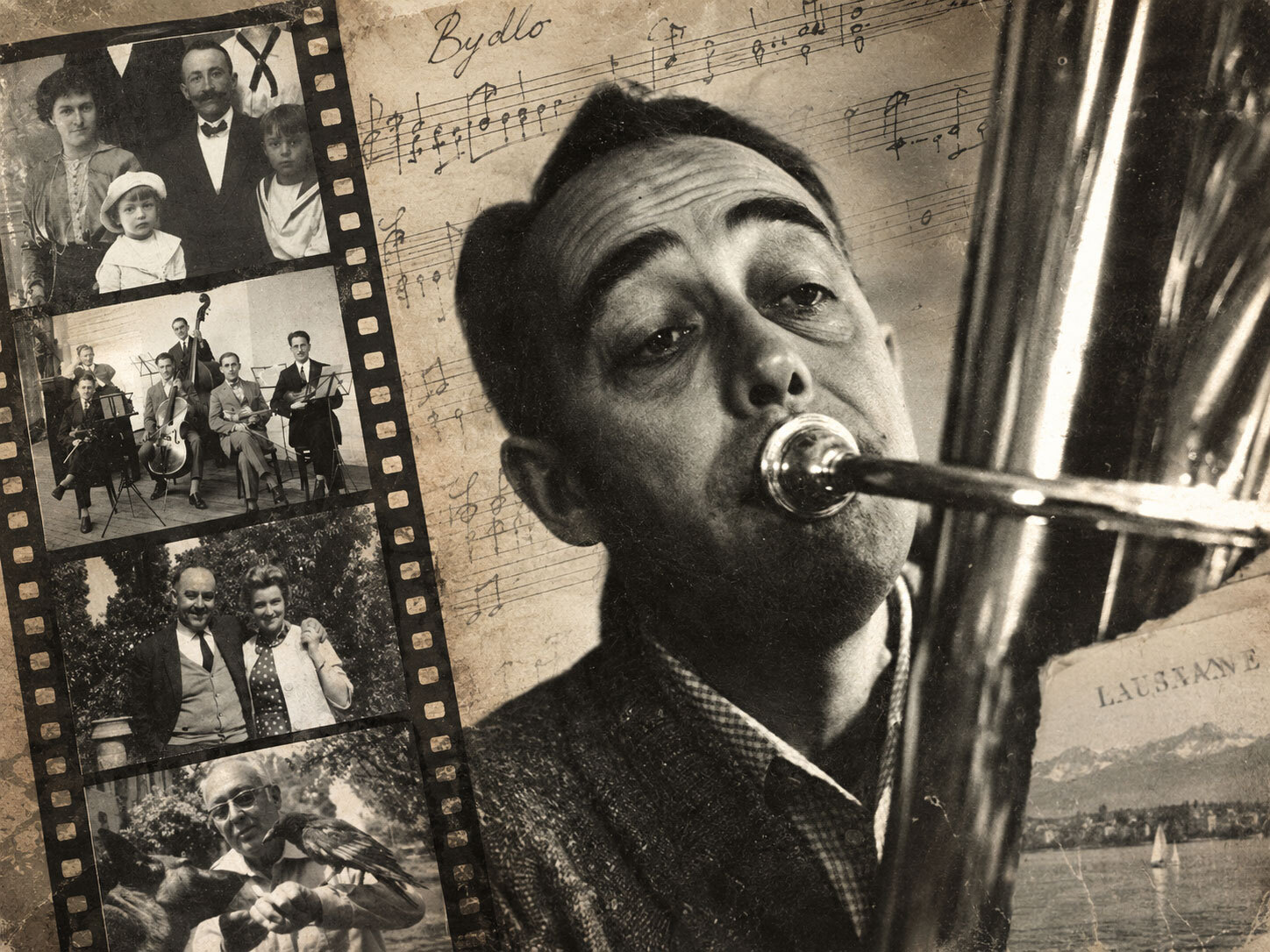
The time has come for us to take our leave of our friend Edouard Gros, the grand old man of the tuba. Clearly the brief episodes he has entrusted to us cannot convey completely the richness of a full and successful life but they have enabled us to understand the tenderness, humour and talent of an orchestral musician. Our final meeting will be in the next issues — for some mischievous anecdotes.

At the beginning of 1942 the Suisse Romande Orchestra still could not give its members their daily bread (far less butter) all year. This was the normal state of affairs for seventy out of a hundred players. Despite the promises nothing had changed and we still just had to get by and find work during six interminable summer months.

Accompanying artists

Whether by luck or good guidance, I was fortunate enough to be taken on at the Geneva Kursaal, which, unlike the one in Montreux, had not closed but had specialised in variety shows. Robert Echenard, one of the OSR’s prestigious solo violins, was the conductor during the summer and he preferred maid-of-all-work musicians to pure “straight men”. And for good reason! Accompanying singers, dancers, jugglers, balancing acts, illusionists, mimes, ventriloquists, high-wire acts, acrobats and what have you took some skill as these artistes usually turned up with the most meagre orchestral material, almost always falling to bits, incomplete, even non-existant. So we had to make do and that’s why that work required from the players a good ear and even a good memory as well as skill. Yes, memory, because it was quite common for an artist to have no music at all and to say, “Accompany me in such and such a number. I haven’t got it but I’m sure you know it!” With a few exceptions it always worked. The programme changed weekly, with an international star given top billing. France sent her sacred monsters and we discussed the most recent events with them: Field-Marshal Montgomery was having a battle of wits with Rommel, the Desert Fox; the French navy had scuttled itself in Toulon harbour; and Marshal Pétain reigned over a free France which wasn’t going to stay that way much longer. After the show we would meet in the Kursaal cellars, where the cook, an understanding fellow, served up sumptuous ham sandwiches — with no ration coupons, if you please. We drank a glass of ordinary red wine along with the artists, who liked to come and join us. I remember Maurice Chevalier, known as Mômô, Edith Piaf, Lucienne Boyer, Claude Dauphin and his brother Jaboune; The Café du Commerce did a roaring trade when they were in town. Everyone had his own view of how things were being handled but meanwhile the British were not waiting for the results of our cogitations, for almost every night their passing twin-engined bombers would set off the wailing of the sirens. A heavy silence would descend, as if by magic, and as soon as the all-clear sounded everyone would hurry home, happy to feel safe. Those months playing variety shows are among the happiest memories of my far-off youth. The work was all the more enjoyable for the fact that from my seat I could see the whole stage and some incredibly funny things went on there.

Brass Bulletin image

Tuba every day

Anyway, despite this rather carefree and somewhat free and easy existence and despite often coming home late (Well of course! The sirens! I mean the air-raid sirens!) I still didn’t forget to practise the tuba hard. Every day I sacrificed several hours to long notes, crescendo and diminuendo, exercises transposed from the Arban trumpet tutor and orchestral excerpts, which requires that I say — today, 45 years too late — a sincere thank you to my neighbours, who never protested although this practice had only the most remote connection with what is generally described as music! Longinotti came to my house and I went to his; he criticised, suggested, advised and even had a blow, much to the dismay of his wife Lucy, who would take refuge in the adjoining kitchen amid the din of the pots and pans hanging along one wall, which started to jump for joy when we reached certain critical frequencies.

Ansermet hears me

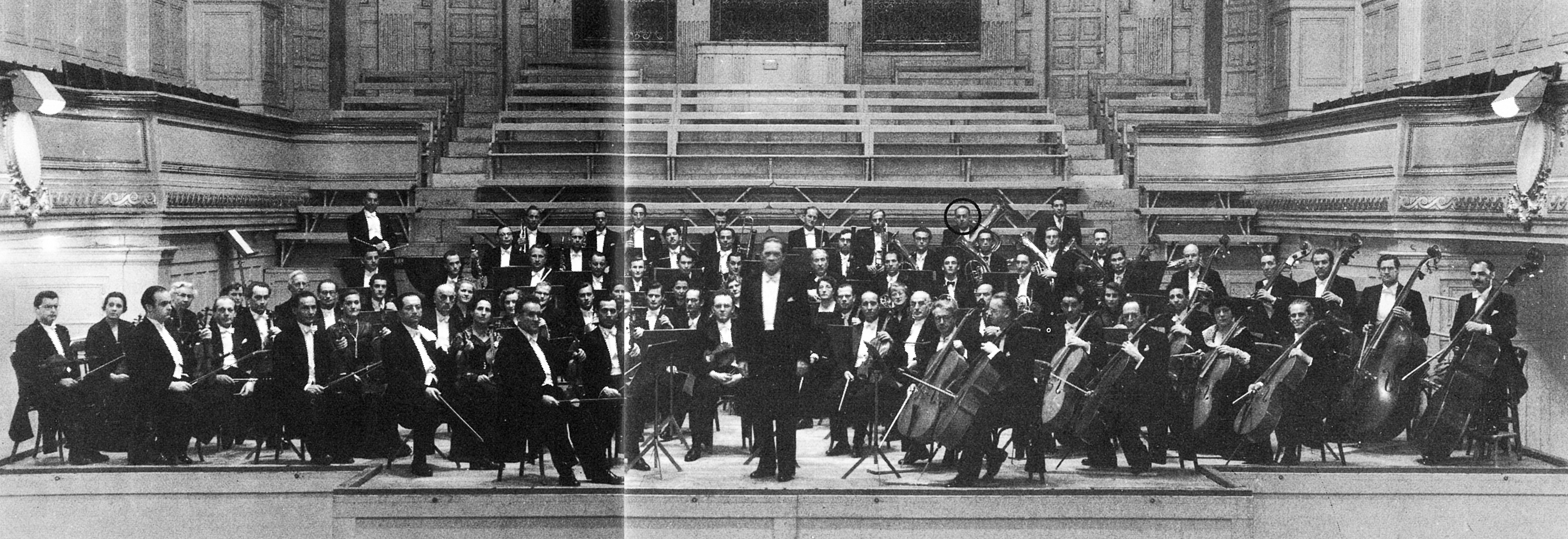
Although this practice was intensive, it did not make me confident of being up to the standard of a good symphony orchestra tuba player. Who better to tell me that than my boss, Ernest Ansermet himself?

So he very kindly arranged a meeting with me at his house, where I arrived with — in addition to my tuba — the most important orchestral passages (Bydlo, Petrushka, Fantastic Symphony, Faust Overture) as well as a transcription of a Bach cello suite. Anxious not to miss anything I erred on the side of safety by economising on dynamics, which my boss did not omit to point out to me, although with a good humour I did not know he had. And then he launched into one of his inimitable speeches.

What can I say, Gros? When you have tooth-ache, you pull the tooth! The OSR tuba chair will be yours in no time. But with the whole of France occupied it’s difficult for me to send L. [the wine-bibber] home just like that. All the French players in the orchestra would have it in for me.

This was when I had to remind him of the purpose of my visit, namely: approval or disapproval of this new direction in my life, not an attempt to steal anyone’s job.
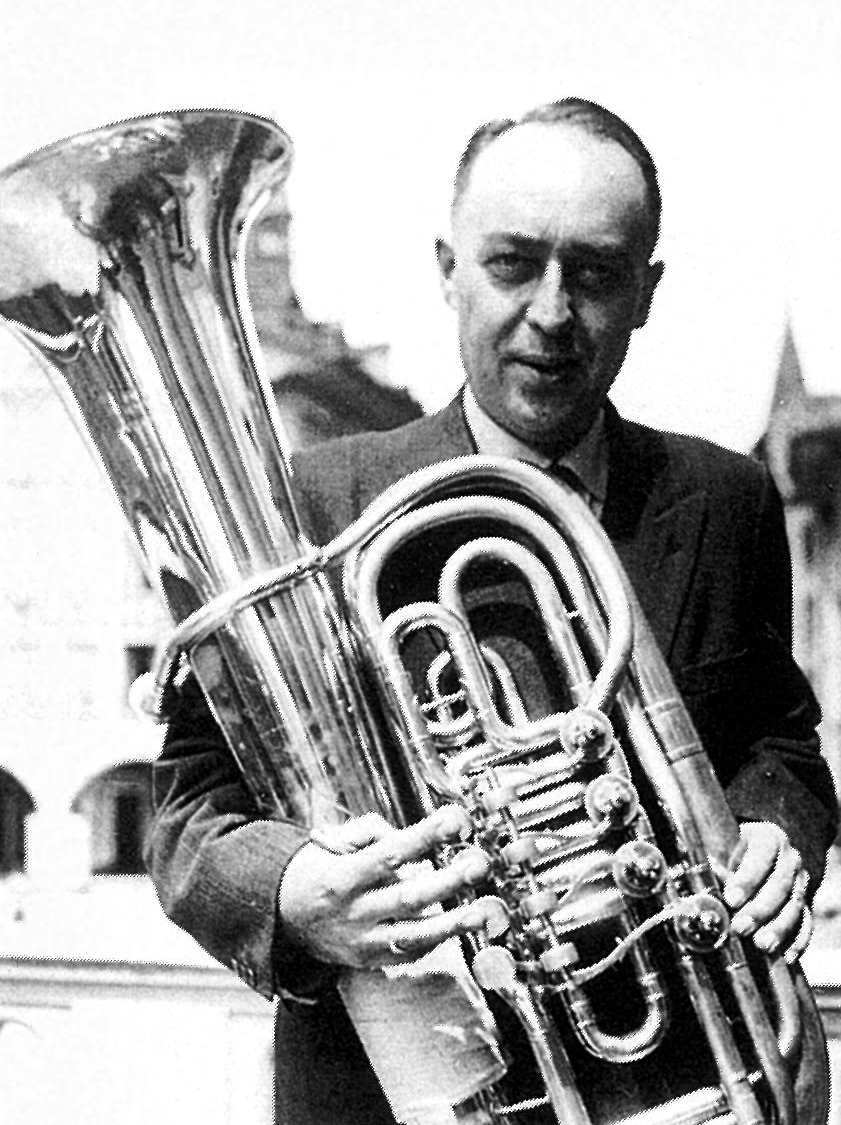
Edouard Gros

Edouard Gros

The road to Berne

I went home feeling reassured, proud, happy and a bit above myself. Very shortly after that decisive interview I learned that the Berne Symphony Orchestra was advertising the bass tuba job. As soon as I had applied and got my invitation, I went to Berne, to the conservatoire where the conductors Luc Balmer and Walter Kägi had me play, by way of sight-reading, the very same old passages which you know by heart anyway. With my retreat to Geneva safe I could allow myself the luxury (rare in such circumstances) of playing without nerves — and I won.

For the first time in my life I was to have an annual contract with paid holiday and — get this — salary guaranteed in the event of military service. There was also a retirement fund (embryonic, it is true) whereas the very mention of such a thing in Geneva would have been unthinkable. And my father, the double-bass player? Remember, the man who wanted his son to be a civil servant, taken care of for life? How happy he was going to be! You can forgive his being so keen on security if you remember that in his day life for restaurant, hotel, cinema and even symphony orchestra musicians was not a bowl of cherries. The words “holidays”, “paid leave” and “sickness” were not in their vocabulary. That’s why Dad could only count on one day, one single day of paid leave a year — Christmas Day! But — to justify this generosity and to prevent this free time from being ill used the orchestra in question was asked to give a concert for the patients of the Lausanne canton hospital on Christmas Day! Charity to order and, at the same time, excellent publicity for the generous employers. It was quite a system and that’s why Dad really did work 365 days a year.

I nearly forgot to mention that my wife’s family was going to be just as reassured as my musician father! These good people had been most upset when their daughter married a mountebank; our day-to-day existence was beyond their comprehension.

And that, finally, is how my career — uncertain, sometimes so difficult, but so often exciting — ended, which also means the end of this story since you now know, dear readers, as you were promised, “How and why I became a musician”.

I was to have the pleasure of playing with the most prestigious conductors and soloists. Weingartner, Furtwängler, Karajan, Cortot, Casals, Isaac Stern, Menuhin, Pierre Fournier — they are all there in my fond memories. During my 32 years in Berne deputy work often took me to Geneva, of course, but also to Zurich and to Basle, where dear old Mr. Backhaus had died. All that helped to make life a little more comfortable and the international music festival in Lucerne enabled me to meet and socialise with the best musicians in our little country. As for now, every day I give thanks to my father, who had the good sense to buy a bit of vineyard in 1914 right beside the most beautiful lake in the world. That’s where I live in peace and quiet with the roses and vegetables which my dog enjoys helping me to grow. An old E♭ bass planted at the edge of the garden makes the passers-by say, “Look, a flowering trombone!”

Brass Bulletin 56, IV / 1986 pagine 39–43

Tutti i contenuti sono protetti dal diritto d’autore © Brass Bulletin 1986–2026

Condividi questo articolo

Facebook LinkedIn
Loading…

Domande e risposte

Come funziona l’edizione digitale

Che cosa comprende l’edizione digitale?

L’edizione digitale riunisce gli articoli già digitalizzati sotto forma di testi leggibili e ricercabili online — non semplicemente come scansioni o file PDF — insieme alle illustrazioni originali, alle note, agli autori, alle informazioni sul numero della rivista e alle traduzioni disponibili. I suggerimenti di articoli correlati comprendono attualmente solo questo materiale digitalizzato.

Gli articoli digitali sono identici agli originali?

Conserviamo il più fedelmente possibile il testo originale, la lingua, le illustrazioni, le didascalie, le note e il contesto editoriale. La presentazione viene adattata per una lettura confortevole online e gli evidenti errori di trascrizione o scansione possono essere corretti. Il contenuto e il carattere dell’articolo pubblicato rimangono invariati.

Quali lingue sono disponibili?

Brass Bulletin è stato pubblicato in inglese, francese e tedesco nel corso di tutta la sua storia. Le traduzioni italiane e spagnole sono state aggiunte a partire dal numero 60. Sui siti italiano e spagnolo, gli articoli dei numeri da 1 a 59 vengono quindi mostrati in inglese per impostazione predefinita.

Con quale frequenza vengono aggiunti nuovi articoli?

Nuovi articoli vengono aggiunti quasi ogni giorno, con circa un numero completo digitalizzato ogni settimana. Il ritmo può variare in base al lavoro di preparazione, elaborazione delle immagini e verifica editoriale necessario.

Perché non tutti gli articoli sono disponibili in formato digitale?

La collezione completa di Brass Bulletin comprende 1.246 articoli pubblicati tra il 1971 e il 2003. L’indice completo è già disponibile online e consente di scoprire tutti gli articoli della collezione, compresi quelli il cui testo integrale non è ancora stato digitalizzato.

La digitalizzazione è iniziata nel febbraio 2026. Ogni articolo viene accuratamente preparato per la lettura online, verificato e collegato al relativo numero, agli autori, agli argomenti e alle illustrazioni. Al ritmo attuale di digitalizzazione, la collezione completa dovrebbe essere disponibile online entro febbraio 2028.

Perché alcuni riferimenti citano articoli che non sono ancora disponibili?

I riferimenti presenti negli articoli originali vengono conservati anche quando il materiale a cui rimandano non è ancora stato digitalizzato. In questo modo si preserva l’integrità storica ed editoriale della rivista. Man mano che nuovi numeri vengono aggiunti all’edizione digitale, un numero crescente di questi riferimenti condurrà ad articoli leggibili online.

Posso suggerire un articolo o segnalare un errore di trascrizione?

Sì. Se desiderate che un determinato articolo venga digitalizzato, oppure se notate un possibile errore di trascrizione o un’informazione mancante, contattateci. I riscontri dei lettori ci aiutano a migliorare l’edizione digitale e a stabilire priorità utili all’interno dell’archivio.

Come posso sostenere Brass Bulletin?

Il vostro sostegno contribuisce a finanziare la preparazione, la verifica e la pubblicazione online dell’intera collezione.

Abbonati all’Edizione digitale

Preferite sostenerci senza abbonarvi?

Fate una donazione

Come procede la digitalizzazione?

Stiamo rendendo Brass Bulletin disponibile online gradualmente, articolo per articolo. Potete leggere gli articoli appena digitalizzati non appena sono pronti, anche prima che un intero numero sia completato.

Consultate il nostro calendario di digitalizzazione per scoprire le ultime aggiunte e le date di disponibilità stimate dei prossimi numeri. Le stime si basano sul nostro ritmo recente e possono cambiare.

Cerca in Brass Bulletin.