Rendete Brass Bulletin disponibile nella vostra università, nel vostro conservatorio o nella vostra biblioteca Scoprite l’accesso istituzionale

7 min di lettura

The attack
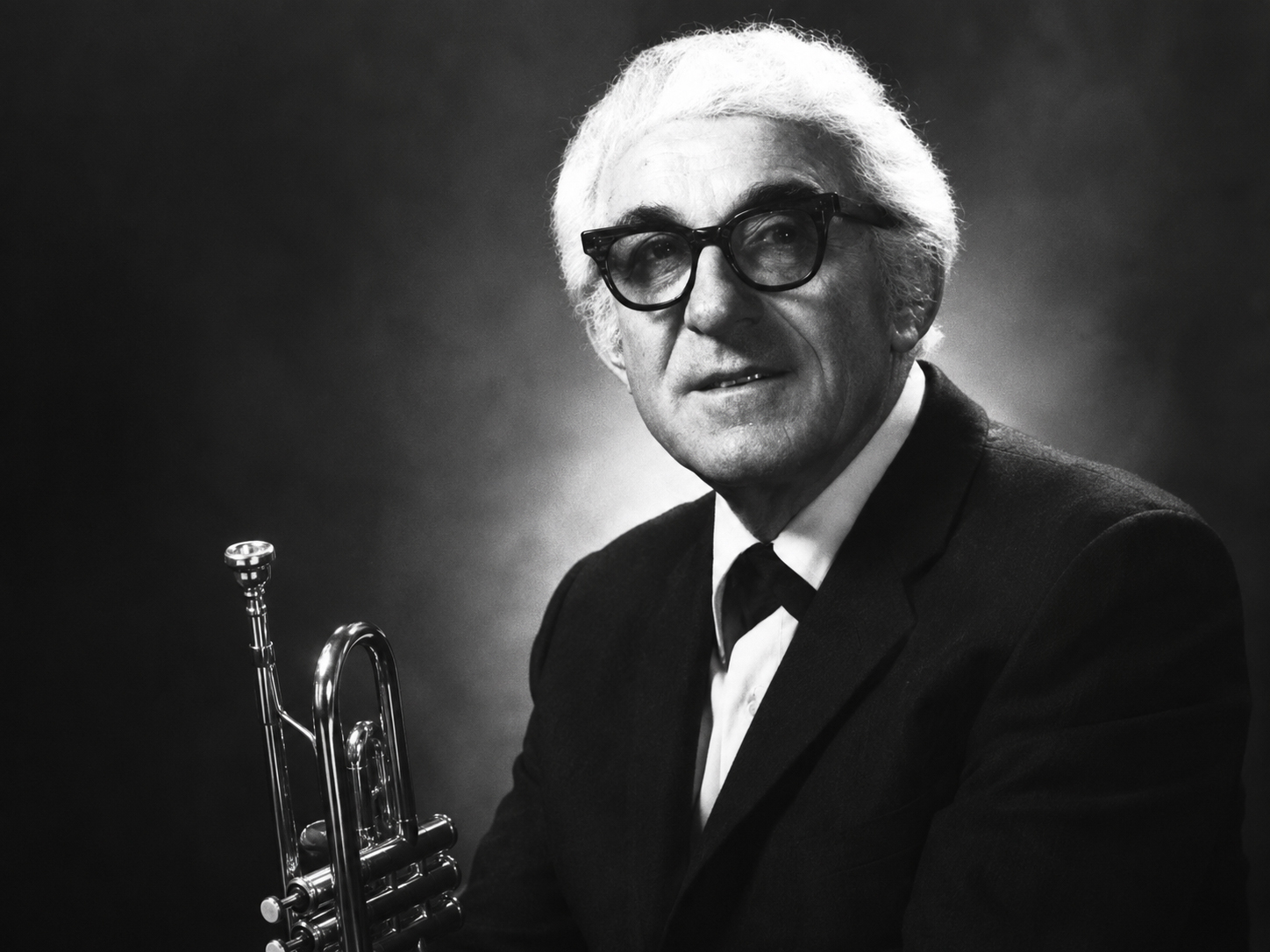
Precision often begins with doing less, not more—a principle Louis Davidson places at the heart of trumpet playing with surprising practical consequences.
The attack

Louis Davidson

Since all aspects of playing the trumpet are inextricably bound to the attack, it is logical that this be the first subject dealt with.

The importance of a good attack cannot be emphasized enough. Whether it be slurring, tonguing, high notes, low notes, a fortissimo, a pianissimo, each of these starts with that first note — the attack. It is the one technique above all others that must be as natural, as uncomplicated, and as much a reflex action to the player as breathing or walking. This can be most readily achieved by keeping in mind that the less fuss and preparation there is before attacking a note, high or low, loud or soft, the more natural and secure that attack will be. Before inhaling, preparatory to attacking a note, the lips should assume, for one moment, the posture of complete repose in order to counter any tendency, conscious or otherwise, to pre-set the tension of the lips for the particular note to be attacked.

A good attack by definition is one in which the note starts freely, without hesitation, without force, with purity of sound, with immediacy and presence, with no hint of a "hiss", and obviously, of course, with no trace of a split tone. To achieve this requires the coordination and synchronization of the three basic elements of the attack — the lips, the breath, and the tongue. Should the timing of any one of them be remiss, the result will be a bad attack.

Though the point of contact of the tongue may vary slightly with each player, the general area will be somewhat at the juncture of the upper teeth and gum line. The tongue should never be held in a fixed position at this point of contact before releasing for the attack but should, rather, be used much in the manner of a tympanist striking his drum-head softly with the mallet — a short downward and upward motion of the mallet corresponding to the short forward and retracting movement of the tongue. It is not this forward movement which starts the note, but rather the retraction of the tongue which releases the air and activates the vibration of the lips.

While there are some excellent players who attack and tongue between the teeth, they are the exception rather than the rule. The position of the tongue upon retraction will be different with each of the three syllables — "taa," "too," "tee," (for low, medium, and high registers). With the "taa" the tongue will arch in the lower part of the mouth, like a bowl held upright; with the "too" the tongue will flatten in the center of the mouth; with the "tee" the tongue will arch in the upper part of the mouth, somewhat in the manner of an inverted bowl. This is merely mentioned in passing as some players may be unsure as to whether they are proceeding correctly on finding the tongue in different positions upon retraction. The most important thing is that the point of contact of the tongue must always be the same regardless of range (high or low), volume (loud or soft), or degree of the articulation (hard or soft).

The correct sensation of timing in the attack can be ascertained, at first, by going through the motions of making attacks without the mouthpiece or trumpet and by simply practicing the coordination of the three basic elements of the attack — the breath, the tongue and the lips. When a feeling of naturalness in making attacks has been arrived at in this manner, one should begin to practice attacks with the mouthpiece alone. Again calling attention to the importance of the timing factor in the attack the following steps must be strictly observed:

Continue reading

Accedi all’edizione digitale completa.

Brass Bulletin 41, I / 1983 pagine 16–19

Tutti i contenuti sono protetti dal diritto d’autore © Brass Bulletin 1983–2026

Condividi questo articolo

Facebook LinkedIn
Loading…

Domande e risposte

Come funziona l’edizione digitale

Che cosa comprende l’edizione digitale?

L’edizione digitale riunisce gli articoli già digitalizzati sotto forma di testi leggibili e ricercabili online — non semplicemente come scansioni o file PDF — insieme alle illustrazioni originali, alle note, agli autori, alle informazioni sul numero della rivista e alle traduzioni disponibili. I suggerimenti di articoli correlati comprendono attualmente solo questo materiale digitalizzato.

Gli articoli digitali sono identici agli originali?

Conserviamo il più fedelmente possibile il testo originale, la lingua, le illustrazioni, le didascalie, le note e il contesto editoriale. La presentazione viene adattata per una lettura confortevole online e gli evidenti errori di trascrizione o scansione possono essere corretti. Il contenuto e il carattere dell’articolo pubblicato rimangono invariati.

Quali lingue sono disponibili?

Brass Bulletin è stato pubblicato in inglese, francese e tedesco nel corso di tutta la sua storia. Le traduzioni italiane e spagnole sono state aggiunte a partire dal numero 60. Sui siti italiano e spagnolo, gli articoli dei numeri da 1 a 59 vengono quindi mostrati in inglese per impostazione predefinita.

Con quale frequenza vengono aggiunti nuovi articoli?

Nuovi articoli vengono aggiunti quasi ogni giorno, con circa un numero completo digitalizzato ogni settimana. Il ritmo può variare in base al lavoro di preparazione, elaborazione delle immagini e verifica editoriale necessario.

Perché non tutti gli articoli sono disponibili in formato digitale?

La collezione completa di Brass Bulletin comprende 1.246 articoli pubblicati tra il 1971 e il 2003. L’indice completo è già disponibile online e consente di scoprire tutti gli articoli della collezione, compresi quelli il cui testo integrale non è ancora stato digitalizzato.

La digitalizzazione è iniziata nel febbraio 2026. Ogni articolo viene accuratamente preparato per la lettura online, verificato e collegato al relativo numero, agli autori, agli argomenti e alle illustrazioni. Al ritmo attuale di digitalizzazione, la collezione completa dovrebbe essere disponibile online entro febbraio 2028.

Perché alcuni riferimenti citano articoli che non sono ancora disponibili?

I riferimenti presenti negli articoli originali vengono conservati anche quando il materiale a cui rimandano non è ancora stato digitalizzato. In questo modo si preserva l’integrità storica ed editoriale della rivista. Man mano che nuovi numeri vengono aggiunti all’edizione digitale, un numero crescente di questi riferimenti condurrà ad articoli leggibili online.

Posso suggerire un articolo o segnalare un errore di trascrizione?

Sì. Se desiderate che un determinato articolo venga digitalizzato, oppure se notate un possibile errore di trascrizione o un’informazione mancante, contattateci. I riscontri dei lettori ci aiutano a migliorare l’edizione digitale e a stabilire priorità utili all’interno dell’archivio.

Come posso sostenere Brass Bulletin?

Il vostro sostegno contribuisce a finanziare la preparazione, la verifica e la pubblicazione online dell’intera collezione.

Abbonati all’Edizione digitale

Preferite sostenerci senza abbonarvi?

Fate una donazione

Come procede la digitalizzazione?

Stiamo rendendo Brass Bulletin disponibile online gradualmente, articolo per articolo. Potete leggere gli articoli appena digitalizzati non appena sono pronti, anche prima che un intero numero sia completato.

Consultate il nostro calendario di digitalizzazione per scoprire le ultime aggiunte e le date di disponibilità stimate dei prossimi numeri. Le stime si basano sul nostro ritmo recente e possono cambiare.

Cerca in Brass Bulletin.