Indice completo degli articoli
Consulta gli articoli di Brass Bulletin pubblicati dal 1971. Cerca per tema, soggetto, strumento, autore, serie o numero, con nuovi contenuti aggiunti man mano che cresce l’edizione digitale.
Le traduzioni originali in italiano sono state introdotte nell’edizione cartacea di Brass Bulletin a partire dal n. 60. Man mano che la digitalizzazione raggiungerà questi numeri, gli articoli saranno disponibili anche in italiano.
 Gratuito
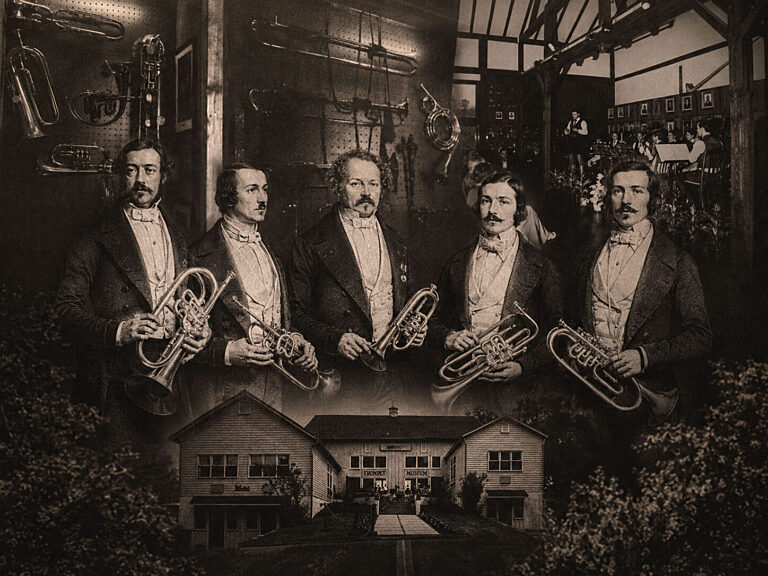
The Streitwieser Foundation Historic Trumpet Museum
A private collection built through one musician's lifelong search became an unexpected center for brass history, where every instrument carries a story beyond its display.
Di Sue Scott
A Fluegelhorn solo' wood-cut from a drawing [1881]'
Di J. Schliessmann
 Gratuito
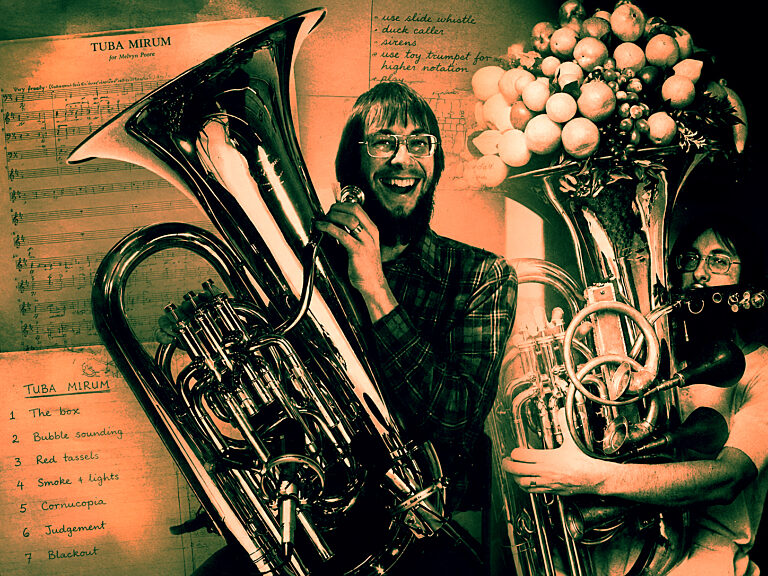
Melvyn Poore
Tuba britannica
A tuba becomes a laboratory for circular breathing, reeds, strange mutes and music theatre as Melvyn Poore pushes beyond the orchestral role assigned to it.
Di Thomas Aitken
The Brass College of French Switzerland (CCSR)
Di Jean-Pierre Mathez
Brass studies in Australia
As international performers, seminars and teachers reached Australia in the late 1970s, a geographically isolated brass scene began finding its own direction.
Di David O'Meara
Jon Sass
A giant tuba, a giant on the tuba
Di Jean-Pierre Mathez
 Membro
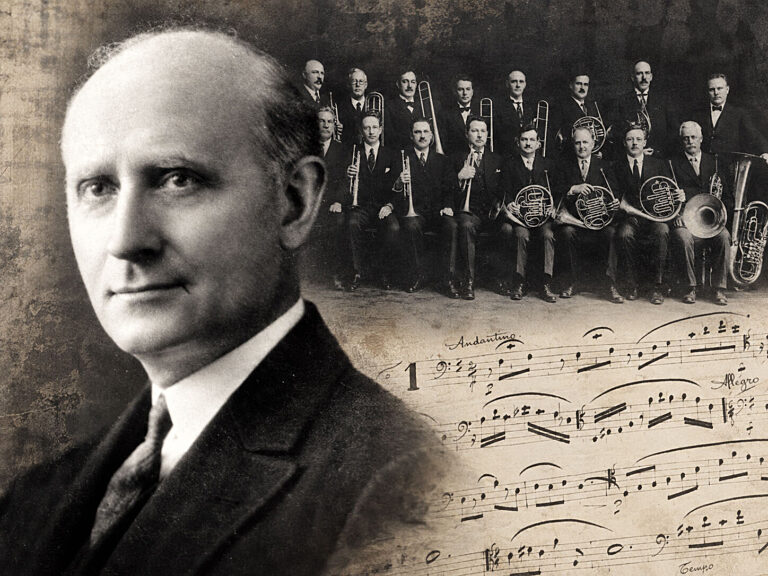
Joannès Rochut (1881-1952)
Trombonist of the Boston Symphony Orchestra
Behind a cornerstone of trombone teaching lies Rochut’s path between Paris and Boston, lost manuscripts, orchestral life and the enduring Bordogni legacy.
Di David Fetter
Maurice André
New directions
Di Jean-Pierre Mathez
Editorial
Di Jean-Pierre Mathez
 Gratuito
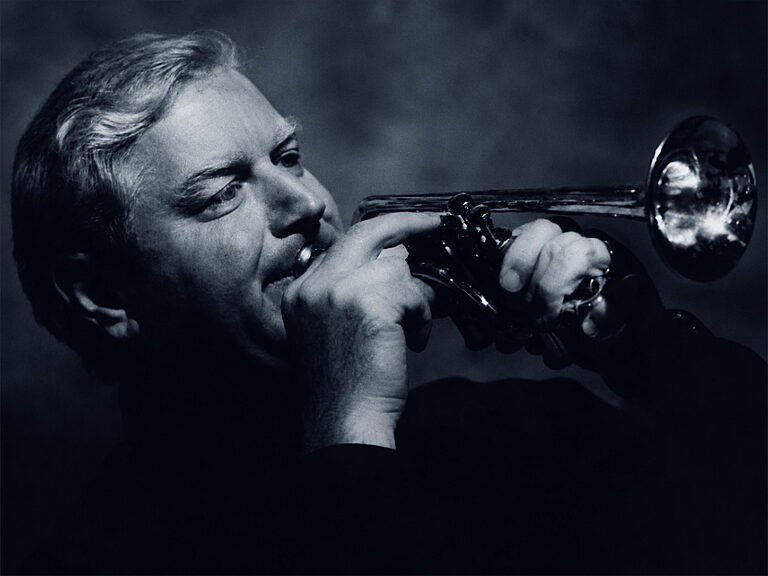
ASA-Method, ASA-Technic
Virtuosity grows from disciplined work on scales, articulation and reading, arguing that consistent fundamentals matter more than chasing the upper register.
Di Rolf Quinque
Thoughts on Competitions in Music
Di Frøydis Ree Wekre
Gratuito
ASA-Method
From Bach’s clarino tradition to modern piccolo trumpet playing, extreme high-register technique is tied here to breath support, pressure control and disciplined endurance.
Di Rolf Quinque
Epsilon - Epsival - 1998
5th Annual Brass & Percussion Festival (France)
Di Jean-Pierre Mathez
Musikmesse - Frankfurt
Di Jean-Pierre Mathez
International Trumpet Guild 25th Anniversary Conference - May 24-27, 2000
Di Jean-Pierre Mathez
Meeting Louie: Miami 1960
Di Irving Bush
 Membro
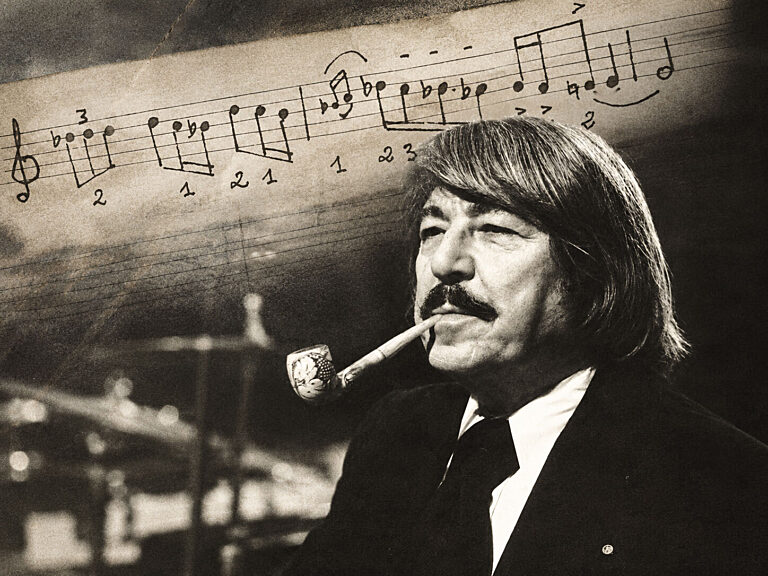
Maurice Ravel and the new trombone
Dance-band trombonists reshaped orchestral expectations in the 1920s and 30s, leaving their mark on Ravel’s Boléro and a generation of players.
Di Michel Laplace
 Membro
Parte 2
Music in an American Frontier Communal Society
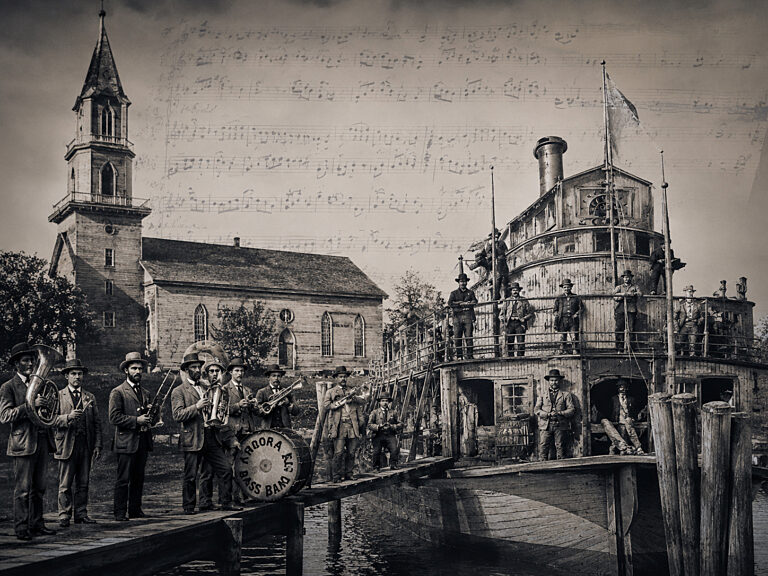
Aurora Colony
Music shaped daily life in Aurora’s communal colony, from civic ceremonies and political events to touring brass bands that carried its identity across the American West.
Di Deborah M. Olsen
Dieter Otto
A passionate craftman
Di Jean-Pierre Mathez
 Gratuito
Parte 1
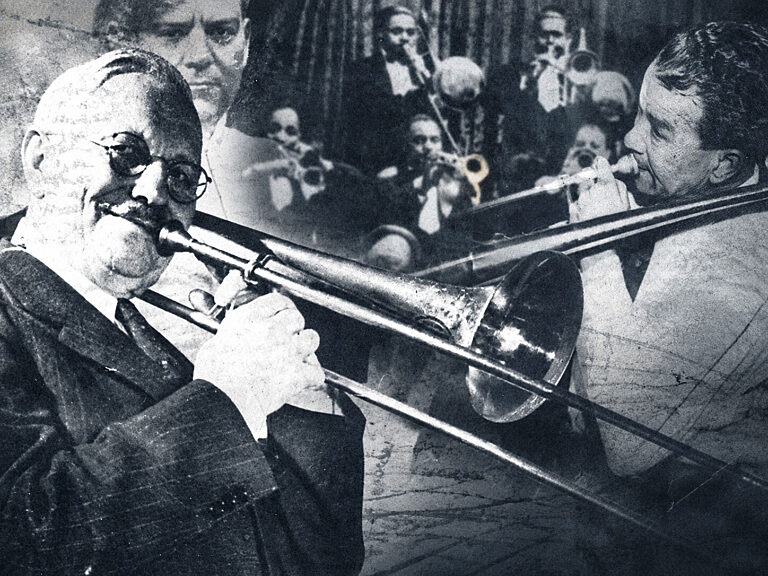
The trombone in Jazz and Popular Music
Jazz did not invent the modern trombone: early virtuosos, New Orleans players and changing techniques reveal a more complex path toward flexibility and legato.
Di Michel Laplace
 Gratuito
Editorial
A wealth of Baroque music lies dormant in libraries, caught between historical instrument names, technical demands, and the competing claims of horn and trumpet players.
Di Jean-Pierre Mathez
 Membro
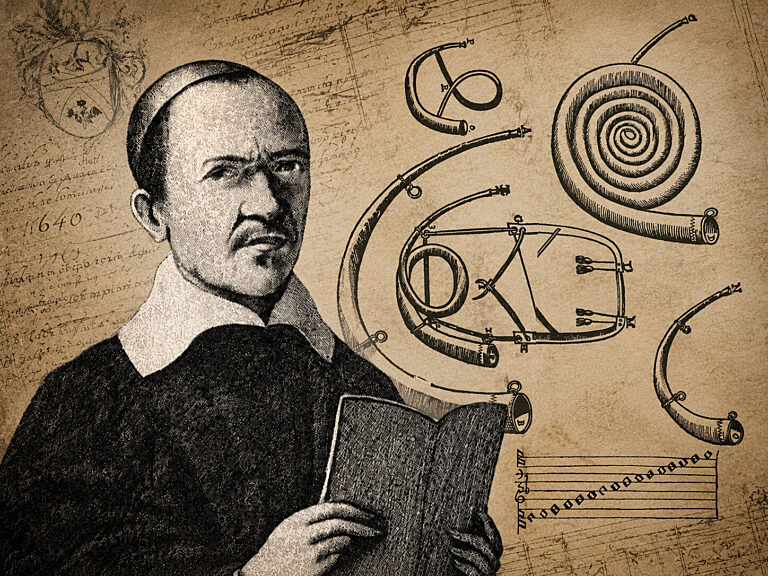
On hunting horns and other similar instruments
Aus Pierre Trichets Traité des Instruments de Musique (um 1640)
I admit that hunting horns, horns, buccines, trumpets and bugles have no holes in their outline, no more than do trumpets and sackbuts. This does not prevent them from being polyphonic, however, and changing the sounds. Yet some consider that all these names are synonymous and mean almost the same thing among Frenchmen, as did cornu, lituus and buccina among the Romans, as some have thought. It is true that Festus believed the lituus to be a kind of small buccina and that Lipsius¹ (de mil. Ro., book 4) said that people did not at first distinguish between buccina and cornett, but that later they did so distinguish, as larger and more curved brass cornett were made. The buccina, according to the same author, was at first nothing other than an ox horn: et a bene nomen sumpsit, ut instrumentum quod bubus canit. Isidore draws the etymology from buccina a voce quasi vocinam dicas. Varro, however, believes it is so called because, when sounded, it sings “booboo”. Panciroll, explaining the shape of the buccina, also mentions the reason for its name in these words: usurpabant buccinas circa orificium, per quod vox immittebatur, angustas: in ima vero parte, ex qua sonus egreditur latas: erantque oblongae ad similitudinem buccini, quod purpurae genus est, unde et causa nomini.One of our French writers says that the huntsmen’s horn is not that which is used today but one of ivory or of horn; for the huntsmen of antiquity used only horns while the modern instruments are all of bronze. I readily grant that horns were formerly made but of horn and ivory, yet there is no doubt but that today they are made of other materials. Julio della Scala² (l. l. poët. c. 20 p. 78) gives evidence of it and says the Germans make them from boxwood but they are different from those used in the hunt: Nunc cornua germani e busco efficta multis foraminibus inflant magno spiritu non sine gratia et decore, praesertim in nocturnis festivitatibus. Vocem namque humanam imprimis imitantur, eamque vehementer contentam. Varro says that cornu a curvore dictum fuit. But Fungerus derives this word from the Greek kéras, or from the Hebrew, which is written almost the same.The first origin of the hunting horn lies in the fact that shepherds used to call their flocks by means of its sound; in this connection Columella wrote that the beasts must be accustomed to return to their pen at the sound of the buccina. Huntsmen then used it to call their dogs and their falcons, from whence it is called huchet [from the French hucher, “to call” — Ed.] as well as cornet. La Boderie gives us a charming description of the use of this in his poem:The more his horn the huntsman sounds,The more do run and call his hounds;It imitates the trumpet shrill,Sounds now the quarry, now the kill.Sometimes one finds huntsmen so skilful that they can play on their horns as many different sounds as on a trumpet; Le Fouilloux has discussed this so fully in his book on hunting that there is no need to speak further of it.
Di Pierre Trichet
Toulon 1995
International trombone competition
Di Roland Schnohrk
 Gratuito
The Trumpet
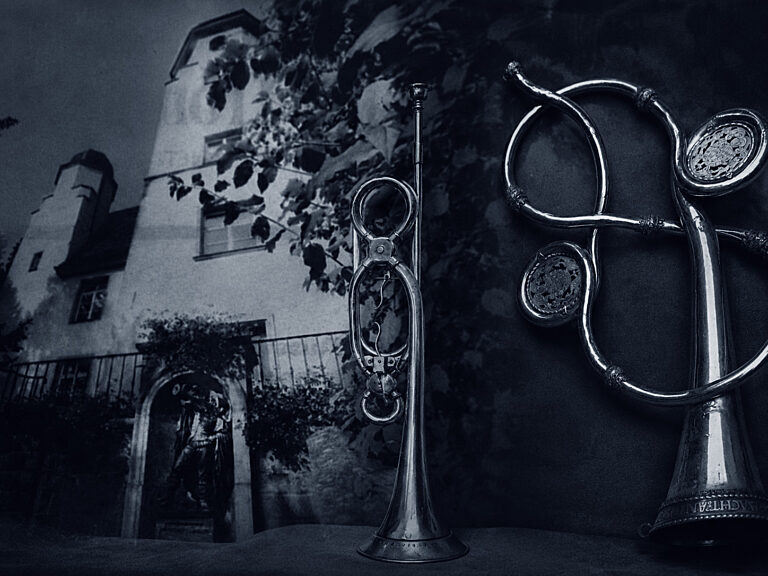
An exhibition at the Trumpeter's Castel in Bad Säckingen
Natural trumpets from Verona, Nürnberg and Vienna framed a 1979 gathering in Säckingen linking Baroque practice, collecting culture and modern playing.
Di Kurt Janetzky