Rendete Brass Bulletin disponibile nella vostra università, nel vostro conservatorio o nella vostra biblioteca Scoprite l’accesso istituzionale

3 min di lettura

ASA-Method

ASA-Method

This work of mine on minimum pressure playing is intended to show not only the student but also the beginner and the amateur the correct and shortest way to controlled (relaxed) playing. Many orchestral trumpet players who want to change from the so-called pressure method to a controlled (relaxed) embouchure will also find valuable tips. I am certainly neither the first nor the only person to express his views on this problem of minimum pressure playing. As early as the time of Bach, with clarino playing at its greatest, it was a current topic. It was thought about, written about and puzzled over even then. There was no ideal solution but, as we know from old documents, there were trumpet players who certainly had a special technique. In his "Tonkünstler Lexikon 1732" Johann Walther writes of a player, "... Who could have sung like a bird up into the high register without difficulty". But there are some bad points too. Gottfried Reiche, one of Bach's favourite trumpeters, once said, "... several also used the mute to cover the screaming sound". We can therefore be quite sure that even in Baroque times, just as today, there were few trumpet players who could play the high notes that occur in the works of J.S. Bach (2nd Brandenburg Concerto), F.X. Richter or Michael Haydn, to name only a few composers. But our present knowledge of the individual stages of development, methods and knowledge of a physical nature make it possible to pass on to a wide range of interested parties a playing technique which enables one to play in the high register, even up to double high C (as the Americans say).

Naturally this requires a special playing technique. The modern literature, jazz and not least of all piccolo trumpet playing (Baroque music) make such a technique indispensable.

There is of course literature on the subject: tutors, descriptions of the embouchure etc., which differ substantially from one another on important points and without a suitable teacher do more harm than good. Some of these publications get to the heart of the problem but almost always fail to provide a systematically constructed method, which is so exceptionally important for someone studying an instrument. Others on the other hand give some players the impression that one can play entirely without pressure. There is no such thing as "non-press", often wrongly described as non-pressure; one can only say minimum pressure. Of course the pressure of the mouthpiece on the lips should be as little as possible. Then by means of purposeful practice higher registers can be reached with progressive pressure.

The difference between this work of mine and previous ones of its type lies in the fact that I place physical and physiological mastery of the instrument in the foreground and not only talk about the embouchure in the usual sense (connection between lips and mouthpiece) but describe the systematic construction of the whole complex. This includes first of all generating energy by means of continuous support and pushing through by the diaphragm, a most important part of my method. For only perfect teamwork: support — abdominal muscles — diaphragm breathing — diaphragm pressure on the one hand and cheeks — lips — tongue — face muscles on the other, will guarantee an easy high register, endurance and security.

Making people aware of these processes is of fundamental importance. A student's technical progress and also his musical progress depend primarily on the efficiency of his embouchure. Only a phenomenal mastery and control of the physical and physiological structure makes possible the constant and disciplined practice that will sooner or later lead to success.

Let me emphasise, therefore, that the only people to bring this playing technique to complete maturity and perfection will be those who regard the necessary training with much patience and discipline as a task to be performed conscientiously.

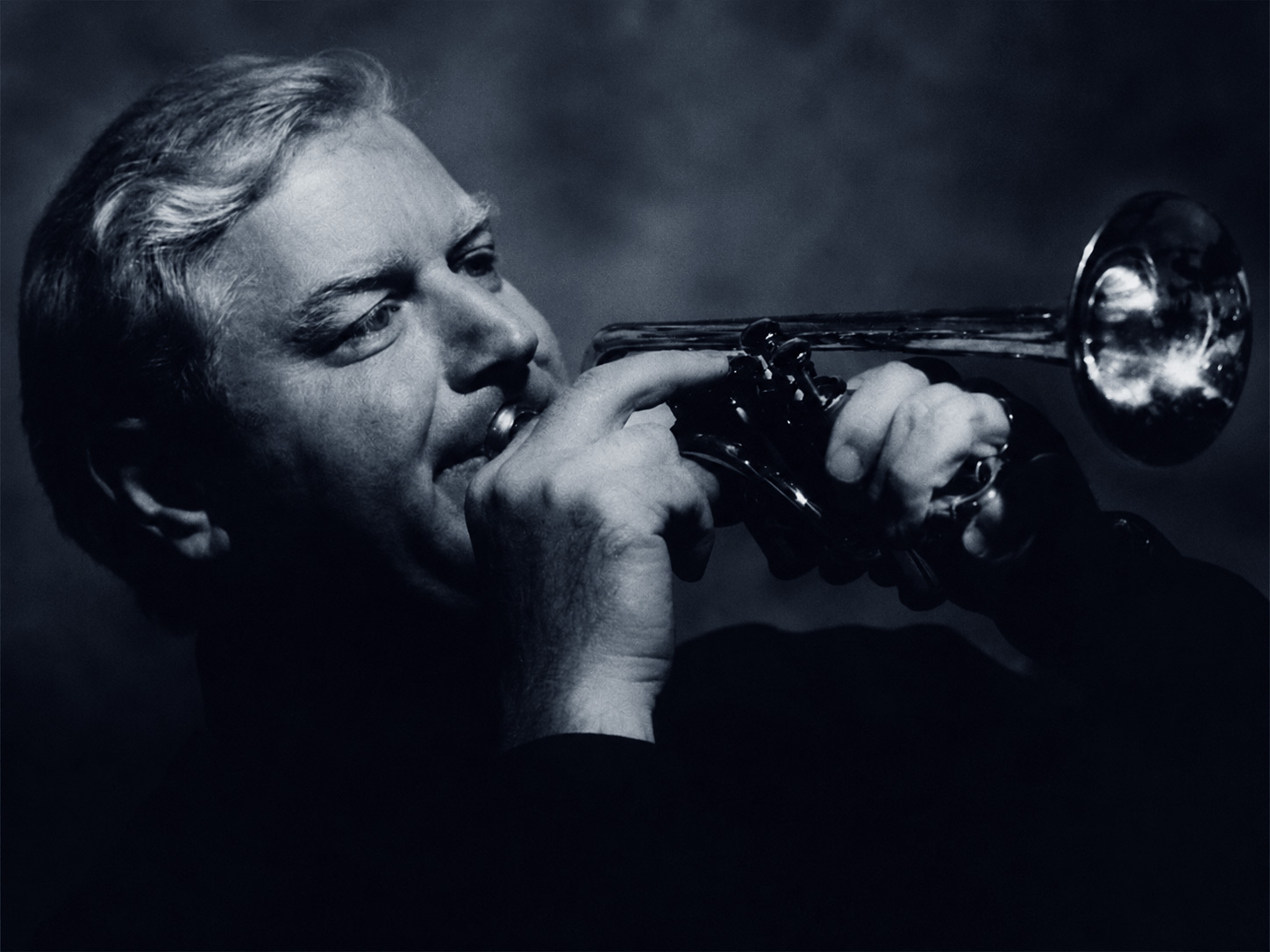
Rolf Quinque is certainly one of the most renowned trumpeters of the 20th century. He will go down in musical history as having accomplished the most amazing feats in the high register of the trumpet (ordinary or piccolo), not only in recordings, like many specialists, but in live performances! He has played and still plays the perilous 2nd Brandenburg Concerto of J.S. Bach with astonishing security (he cannot remember how many times...). What is more, he is the only trumpeter of our age to have mastered in live performance the splendid but awesome Concerto of F.X. Richter (more than 40 public concerts) and the Concerto of Michael Haydn (ditto). He gave the first performance, and has made several public performances and recordings, of the trumpet part of "Vexilla Regis" by Hans Zender, which all trumpet-players specialising in the extreme high register had refused to play, declaring it quite unplayable!

Yes, Rolf Quinque is a virtuoso of the impossible who also has the talent and sensitivity of a real musician.

The "ASA" method which he has written and which Editions BIM is now publishing at the beginning of 1980 is the outcome of the profound reflections he has made on taking up composers' challenges.

His explanatory text is clear, and stripped of all unnecessary thoughts.

Herewith we publish the Preface of his ASA Method (Atmung = breathing, Stütze = support, Ansatz = embouchure).

The Editors

Brass Bulletin 29, I / 1980 pagine 19–22

Tutti i contenuti sono protetti dal diritto d’autore © Brass Bulletin 1980–2026

Condividi questo articolo

Facebook LinkedIn
Loading…

Domande e risposte

Come funziona l’edizione digitale

Che cosa comprende l’edizione digitale?

L’edizione digitale riunisce gli articoli già digitalizzati sotto forma di testi leggibili e ricercabili online — non semplicemente come scansioni o file PDF — insieme alle illustrazioni originali, alle note, agli autori, alle informazioni sul numero della rivista e alle traduzioni disponibili. I suggerimenti di articoli correlati comprendono attualmente solo questo materiale digitalizzato.

Gli articoli digitali sono identici agli originali?

Conserviamo il più fedelmente possibile il testo originale, la lingua, le illustrazioni, le didascalie, le note e il contesto editoriale. La presentazione viene adattata per una lettura confortevole online e gli evidenti errori di trascrizione o scansione possono essere corretti. Il contenuto e il carattere dell’articolo pubblicato rimangono invariati.

Quali lingue sono disponibili?

Brass Bulletin è stato pubblicato in inglese, francese e tedesco nel corso di tutta la sua storia. Le traduzioni italiane e spagnole sono state aggiunte a partire dal numero 60. Sui siti italiano e spagnolo, gli articoli dei numeri da 1 a 59 vengono quindi mostrati in inglese per impostazione predefinita.

Con quale frequenza vengono aggiunti nuovi articoli?

Nuovi articoli vengono aggiunti quasi ogni giorno, con circa un numero completo digitalizzato ogni settimana. Il ritmo può variare in base al lavoro di preparazione, elaborazione delle immagini e verifica editoriale necessario.

Perché non tutti gli articoli sono disponibili in formato digitale?

La collezione completa di Brass Bulletin comprende 1.246 articoli pubblicati tra il 1971 e il 2003. L’indice completo è già disponibile online e consente di scoprire tutti gli articoli della collezione, compresi quelli il cui testo integrale non è ancora stato digitalizzato.

La digitalizzazione è iniziata nel febbraio 2026. Ogni articolo viene accuratamente preparato per la lettura online, verificato e collegato al relativo numero, agli autori, agli argomenti e alle illustrazioni. Al ritmo attuale di digitalizzazione, la collezione completa dovrebbe essere disponibile online entro febbraio 2028.

Perché alcuni riferimenti citano articoli che non sono ancora disponibili?

I riferimenti presenti negli articoli originali vengono conservati anche quando il materiale a cui rimandano non è ancora stato digitalizzato. In questo modo si preserva l’integrità storica ed editoriale della rivista. Man mano che nuovi numeri vengono aggiunti all’edizione digitale, un numero crescente di questi riferimenti condurrà ad articoli leggibili online.

Posso suggerire un articolo o segnalare un errore di trascrizione?

Sì. Se desiderate che un determinato articolo venga digitalizzato, oppure se notate un possibile errore di trascrizione o un’informazione mancante, contattateci. I riscontri dei lettori ci aiutano a migliorare l’edizione digitale e a stabilire priorità utili all’interno dell’archivio.

Come posso sostenere Brass Bulletin?

Il vostro sostegno contribuisce a finanziare la preparazione, la verifica e la pubblicazione online dell’intera collezione.

Abbonati all’Edizione digitale

Preferite sostenerci senza abbonarvi?

Fate una donazione

Come procede la digitalizzazione?

Stiamo rendendo Brass Bulletin disponibile online gradualmente, articolo per articolo. Potete leggere gli articoli appena digitalizzati non appena sono pronti, anche prima che un intero numero sia completato.

Consultate il nostro calendario di digitalizzazione per scoprire le ultime aggiunte e le date di disponibilità stimate dei prossimi numeri. Le stime si basano sul nostro ritmo recente e possono cambiare.

Cerca in Brass Bulletin.