Ofrezca Brass Bulletin en su universidad, conservatorio o biblioteca Descubra el acceso institucional

4 min de lectura

Editorial

A Midsummer Night's Dream

Editorial

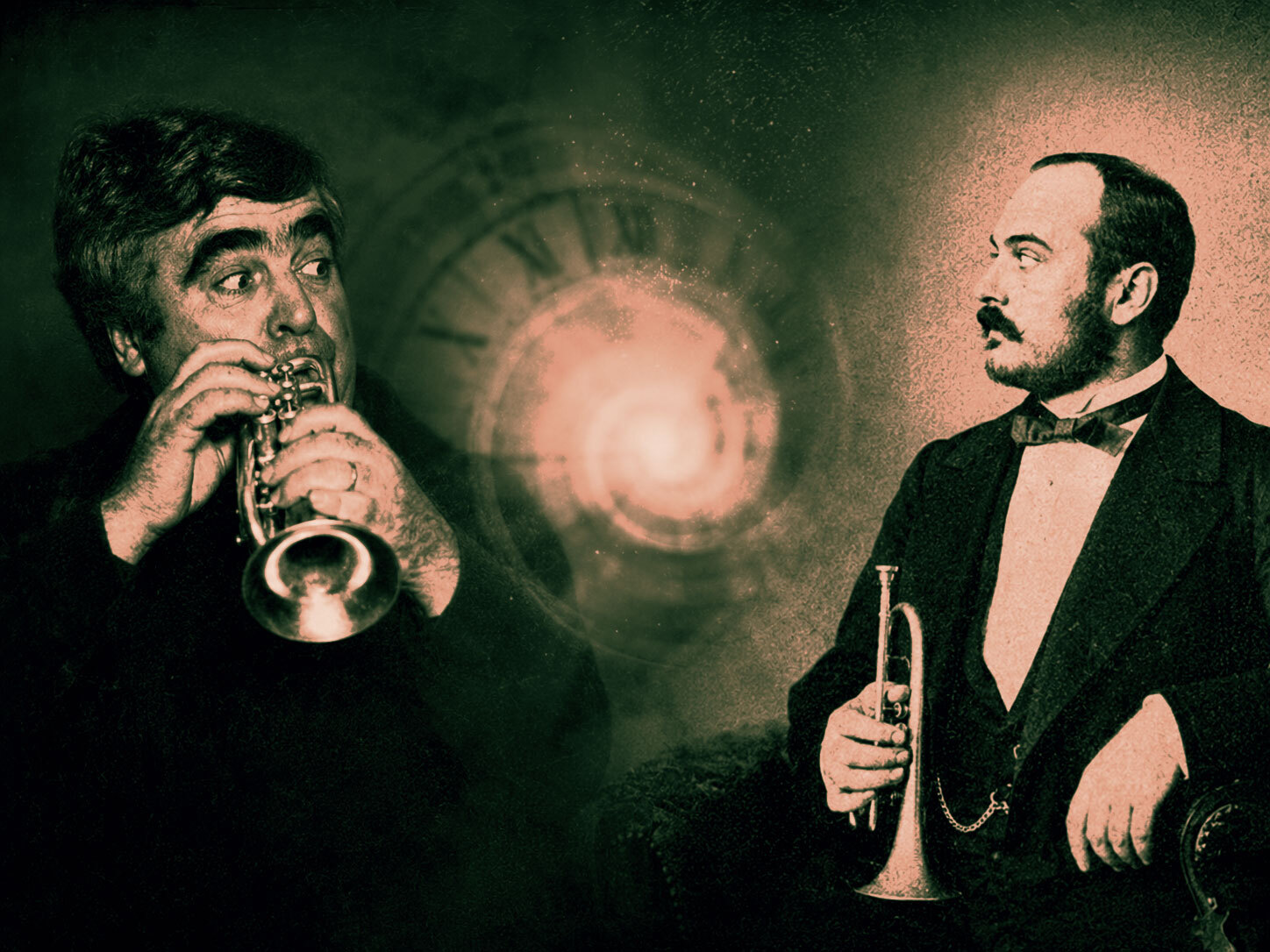
The other night, sleeping lightly on account of the summer heat, I noticed a gentle tapping at my front door. I threw on my dressing gown and cautiously opened the door a crack. Imagine my amazement when I found myself face to face with the great cornet virtuoso Jean-Baptiste Arban.¹

– Maestro! You, here? Now? Please, come in.

– Thank you, my friend. I am so tired; I have had a exhausting journey. You wouldn’t by any chance have a spot of oil for my valves, would you? They’re completely dried out and jammed. I can’t play anything but bugle calls.

– Of course! Here’s some; this is good. Keep the bottle. But pardon my curiosity: how does it come about that you are here?

– In my present circumstances I am cut off from the rest of the world and I no longer get any news from the brass world, in which, as you know, I used to be very active. My doctor prescribed a reincarnation cure and I took advantage of it to come and visit you since they say that, thanks to your magazine, you are one of the best informed people nowadays.

– Oh, maestro, you’re too kind...

– Well, that’s what they’re saying on the other side. Tell me, is my tutor still selling?

– Don’t worry, maestro, you are still number one in the brass tutor hit parade and that’s not likely to change. In any case there’s a real resurgence of interest in the cornet solos which you made famous from Lisbon to St. Petersburg.

– Well, that’s nice! Yes, those were the good old days...

Arban’s eyes filled with sadness. He seemed very tired. We sat down in the sitting room. Clearly tense and worried, he ran his eye over my stereo system, my piles of LP’s and compact discs, cassettes, video recorder and TV. I put on a record to calm his nerves while I went down to the cellar to fetch a bottle of hundred-year-old Vosne-Romanée.

When I came back, Arban had his hands to his head, his eyes starting from their sockets.

– This is incredible playing, he muttered. Who is it?

– It is one of the disciples of the great French school whose prestige you assured. It is our great Maurice André. He is playing the Tartini concerto.

– Tartini?

– Yes, Tartini, you know: it’s a transcription of the violin concerto.

– It’s early music, isn’t it?

– ...

– What instrument is he playing?

– It’s a four-valve Selmer piccolo.

– Selmer picc...

We paused there in our discussion and listened to the rest of the concerto in silence. Then I turned off the record player and opened the bottle. Great excitement showed in Arban’s eyes when he saw the year: 1884. Slightly apprehensive, I tasted the precious contents: intact, sublime, as round and rich as the sound of a Sax cornet. Arban, who had been staring at something at the other end of the room, suddenly looked straight at me.

– I must be going, but please, tell me briefly what’s happening in the brass world this year.

– I don’t know where to start, maestro... After an absence of eleven years, Miles Davis came back to the Montreux Jazz Festival. Two concerts, a fee of 100’000 Swiss francs ($ 40’000), a wild success — which he obtained with his back to his admirers — an incredible feat for a 58-year-old trumpet player who has had considerable health problems. Michel Becquet and his Paris Trombone Quartet are up and running thanks to perfectionism and musicality unusual on these instruments. Peter Hirsbrunner delivered sixty tubas, said to be worth their weight in gold all over the world, in just the first six months of the year! All the big instrument makers are perfecting their instruments with technological improvements while craftsmen continue to meet the most exacting demands of our greatest virtuosos. The Second World Brass Congress took place in Bloomington, Indiana, USA. Most of the 1500 participants suffered brass indigestion, the menu being incredibly rich (concerts, lectures, exhibitions, discussions etc.) and demanding a superhuman musical appetite. The skill of the trumpeter Doc Severinsen met with universal praise. It is difficult to see why such a musician is not better known in Europe.

Arban did not really seem to be listening. I felt that none of these names meant very much to him. Yet his questioning gaze persisted.

I went on — just to break the silence, which was becoming unbearable.

– The horn player Hermann Baumann and the trumpeter Roger Delmotte (whose talent and teaching skills seem at last to be gaining recognition) are ubiquitous at courses and concerts in Europe. All over the world brass players are busy at seminar, summer school and festivals. They’re crazy, these brass players, the way they work.

Arban suddenly snapped out of his somnolent state.

– They are right! Absolutely right! Keep working while business is good! When I was young, we lived in a state of general indifference. Times were hard.

I refilled his glass, which he was holding delicately between his thumb and forefinger, as the upper middle classes know how to do. He raised his ring finger conspicuously to show a large ring set with an impressive diamond.

– Go on, please.

– In America the principal chairs in the big orchestras are the scene of unbelievable horse trading. They tear each other apart fighting over them. The Budapest competition has enabled young trumpeters from east and west to get the measure of one another. Guy Touvron’s brass quintet is celebrating its tenth anniversary...

I was racking my brains. What else is there to tell you? There are so many things going on everywhere, I could never tell you everything.

Arban raised his glass and tasted the wine like an expert. He blinked, confirming for me that he appreciated it. Suddenly a little of the precious liquid escaped from the left hand corner of his mouth and fell, staining his white shirt front so that it looked as if he had been hit by a burst of machine-gun fire. He stood up uncertainly and walked slowly to the door.

– Excuse me, I don’t feel very well. I think I should go.

– I enjoyed your visit very much, maestro. Will you come again?

– I don’t think so. It was an exceptional, indeed a unique opportunity. Things have really changed and I am afraid that my tutor and my solos will find favour again only if there is a brief reversal of fashion. Thank you for the wine. It tasted perfect. I am happy to hear that the brass world is getting along not too badly. And this Maurice André — isn’t that his name? — what an artist! If you see him, give him my respects and tell him how I admire him!

His face went white. He held out his hand, abnormally cold and hard, then turned his back resolutely and walked out into the night, staggering.

All that was left in the sitting room was a Vosne-Romanée bottle, the year effaced by the moisture. It was empty, as were the two glasses beside it.

Who can make sense of this unlikely story? I wonder!

¹ Jean-Baptiste Arban was born in Lyon in 1825 and is said to have died in Paris in 1889. However this nocturnal visit (21st July 1984) casts doubt on all these data.

Brass Bulletin 47, III / 1984 páginas 7–10

Todo el contenido está protegido por derechos de autor © Brass Bulletin 1984–2026

Compartir este artículo

Facebook LinkedIn
Cargando…

Preguntas y respuestas

Cómo funciona la edición digital

¿Qué incluye la edición digital?

La edición digital reúne los artículos ya digitalizados como textos legibles y consultables en línea —no simplemente como escaneos o archivos PDF— junto con sus ilustraciones originales, notas, autoría, información del número y traducciones disponibles. Las sugerencias de artículos relacionados incluyen actualmente solo este material digitalizado.

¿Los artículos digitales son idénticos a los originales?

Conservamos con la mayor fidelidad posible el texto original, el idioma, las ilustraciones, los pies de imagen, las notas y el contexto editorial. La presentación se adapta para facilitar la lectura en línea y pueden corregirse errores evidentes de transcripción o escaneado. El contenido y el carácter del artículo publicado permanecen inalterados.

¿Qué idiomas están disponibles?

Brass Bulletin se publicó en inglés, francés y alemán a lo largo de toda su historia. Las traducciones al italiano y al español se añadieron a partir del número 60. Por este motivo, en los sitios italiano y español los artículos de los números 1 a 59 se muestran en inglés de forma predeterminada.

¿Con qué frecuencia se añaden nuevos artículos?

Se añaden nuevos artículos casi a diario, con aproximadamente un número completo digitalizado cada semana. El ritmo puede variar según el trabajo de preparación, tratamiento de imágenes y revisión editorial necesario.

¿Por qué no están disponibles todos los artículos en formato digital?

La colección completa de Brass Bulletin contiene 1.246 artículos publicados entre 1971 y 2003. El índice completo ya está disponible en línea y permite descubrir todos los artículos de la colección, incluidos aquellos cuyo texto íntegro todavía no ha sido digitalizado.

La digitalización comenzó en febrero de 2026. Cada artículo se prepara cuidadosamente para la lectura en línea, se revisa y se vincula con su número, sus autores, sus temas y sus ilustraciones. Al ritmo actual de digitalización, se prevé que la colección completa esté disponible en línea en febrero de 2028.

¿Por qué algunas referencias mencionan artículos que todavía no están disponibles?

Las referencias de los artículos originales se conservan aunque el material al que remiten aún no haya sido digitalizado. De este modo se mantiene intacto el contexto histórico y editorial. A medida que se incorporen más números a la edición digital, un número creciente de estas referencias conducirá a artículos que podrán leerse en línea.

¿Puedo sugerir un artículo o informar de un error de transcripción?

Sí. Si hay algún artículo que le gustaría especialmente ver digitalizado, o si detecta un posible error de transcripción o algún dato que falta, póngase en contacto con nosotros. Los comentarios de los lectores nos ayudan a mejorar la edición digital y a establecer prioridades útiles dentro del archivo.

¿Cómo puedo apoyar a Brass Bulletin?

Su apoyo ayuda a financiar la preparación, verificación y publicación en línea de la colección completa.

Suscríbase a la Edición Digital

¿Prefiere apoyarnos sin suscribirse?

Haga una donación

¿Cómo avanza la digitalización?

Estamos poniendo Brass Bulletin a disposición de los lectores en línea, artículo por artículo. Pueden leer los artículos recién digitalizados en cuanto estén listos, incluso antes de que se complete un número entero.

Consulten nuestro calendario de digitalización para descubrir las últimas novedades y las fechas estimadas de disponibilidad de los próximos números. Estas estimaciones se basan en nuestro ritmo reciente y pueden cambiar.

Busca en Brass Bulletin.