Ofrezca Brass Bulletin en su universidad, conservatorio o biblioteca Descubra el acceso institucional

3 min de lectura

Special Finland

A brief survey of the history of the Finnish brass music

Finland’s brass identity grew between Russian military traditions and Western orchestral models, turning competing influences into a distinctive national voice.
A brief survey of the history of the Finnish brass music

For geopolitical reasons the roots of the Finnish brass tradition can be found in two different places — the east and the west.

Eastern influence

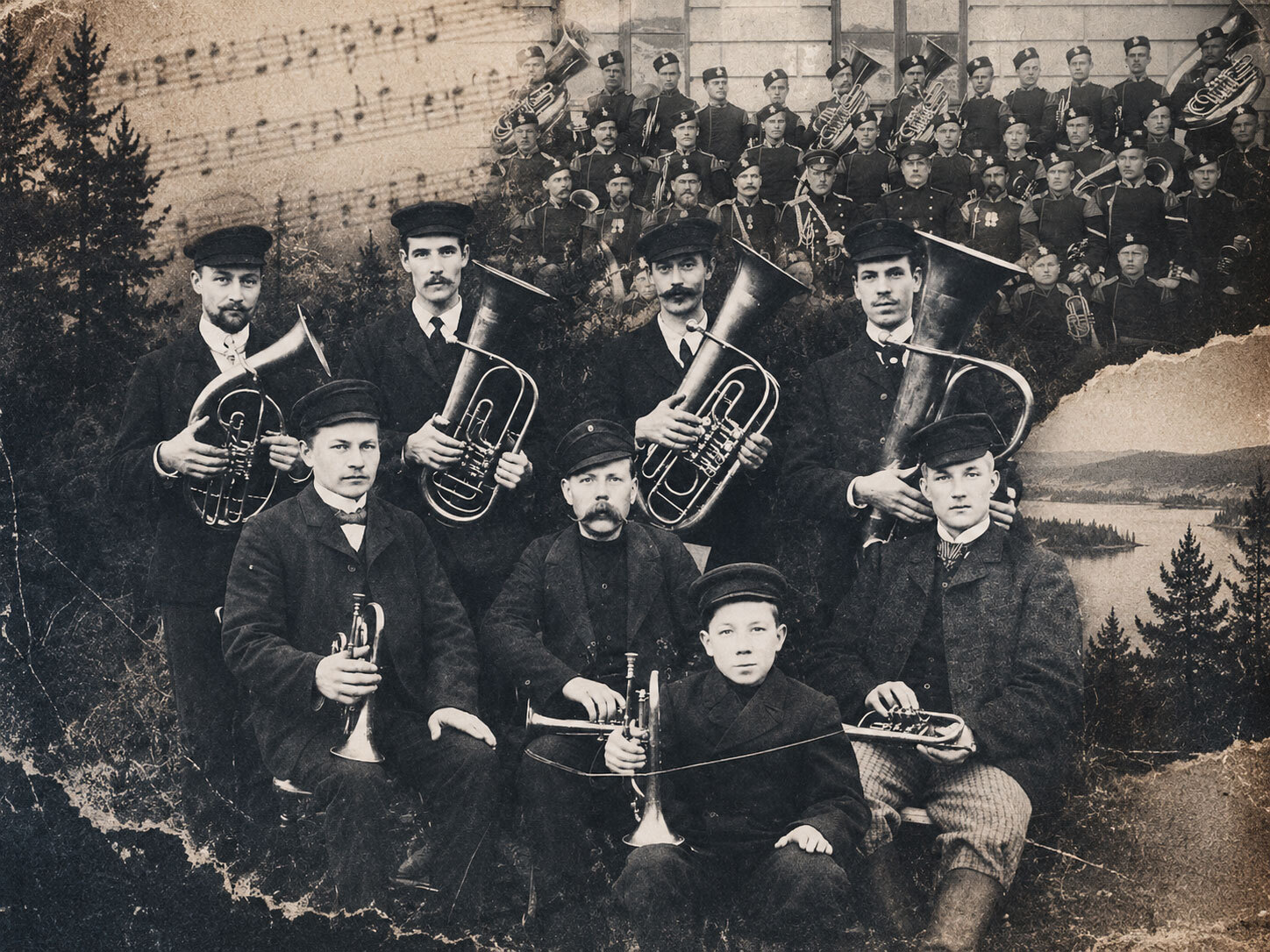
The instrumentation of the Finnish military band reached us from the east during the Russian occupation, as did the “horn septet”¹, now a characteristic brass grouping in Finland.

The defence forces of that time, as also various civilian organisations, workers’ and sportsmen’s clubs, voluntary fire brigades etc., adopted the horn septet. The repertoire consisted mainly of contemporary dance music — polkas, schottisches, waltzes, tangos and foxtrots — but sometimes “overtures” or other “more serious” art music was wanted at the beginning of a function.

A quite special style

Soon this combination developed a quite special style of playing. The modern septet has little in common with its Russian — or any Slav — ancestor: only one element of its repertoire, plaintive waltzes or romances, often performed as baritone solos. Apart from that the “east” is hardly to be heard, so much have repertoire and playing style changed over the years.

Today the horn septet can be considered a Finnish combination, probably not to be found anywhere else. Its “golden age” was of course before the Second World War, when there were no amplifiers. It is no exaggeration to say that the horn septet was a significant element of Finnish popular culture, despised by adherents of art music as much as dance bands in restaurants are today.

Audience’s taste change

The septet’s popularity began to wane after the Second War. The audience’s taste changed, amplifiers brought new line-ups, defence organisations were disbanded, workers’, sportsmen’s and firemen’s celebrations were not so popular; the septet had less and less opportunity to play.

With time the art of playing the E♭ cornet was almost lost; it was often replaced by the clarinet, and the tenor horn by the trombone, to achieve a more modern sound.

Revival

Yet the septet proved very durable. Professional players in symphony orchestras did their bit to protect the tradition, playing “something lighter” for relaxation.

The two best groups were: Solistiseitsikko Otava, which consisted of the brass from the Helsinki City Orchestra, and Solistiyhtye Imperial, a modern group consisting of members of the Finnish Radio Symphony Orchestra. The latter is still very popular and its conductor and arranger Erkki Karjalainen is one of the instructors at Lieksa Brass Week.

The old septet tradition is now experiencing a revival and the first septet contest will take place this summer. In addition to the traditional septet music the set pieces include arrangements of classical music. And so the septet, still with its own instrumentation of course, is becoming familiar with modern brass ensemble music.

Continue reading

Accede a la edición digital completa.

Brass Bulletin 53, I / 1986 páginas 52–55

Todo el contenido está protegido por derechos de autor © Brass Bulletin 1986–2026

Compartir este artículo

Facebook LinkedIn
Cargando…

Preguntas y respuestas

Cómo funciona la edición digital

¿Qué incluye la edición digital?

La edición digital reúne los artículos ya digitalizados como textos legibles y consultables en línea —no simplemente como escaneos o archivos PDF— junto con sus ilustraciones originales, notas, autoría, información del número y traducciones disponibles. Las sugerencias de artículos relacionados incluyen actualmente solo este material digitalizado.

¿Los artículos digitales son idénticos a los originales?

Conservamos con la mayor fidelidad posible el texto original, el idioma, las ilustraciones, los pies de imagen, las notas y el contexto editorial. La presentación se adapta para facilitar la lectura en línea y pueden corregirse errores evidentes de transcripción o escaneado. El contenido y el carácter del artículo publicado permanecen inalterados.

¿Qué idiomas están disponibles?

Brass Bulletin se publicó en inglés, francés y alemán a lo largo de toda su historia. Las traducciones al italiano y al español se añadieron a partir del número 60. Por este motivo, en los sitios italiano y español los artículos de los números 1 a 59 se muestran en inglés de forma predeterminada.

¿Con qué frecuencia se añaden nuevos artículos?

Se añaden nuevos artículos casi a diario, con aproximadamente un número completo digitalizado cada semana. El ritmo puede variar según el trabajo de preparación, tratamiento de imágenes y revisión editorial necesario.

¿Por qué no están disponibles todos los artículos en formato digital?

La colección completa de Brass Bulletin contiene 1.246 artículos publicados entre 1971 y 2003. El índice completo ya está disponible en línea y permite descubrir todos los artículos de la colección, incluidos aquellos cuyo texto íntegro todavía no ha sido digitalizado.

La digitalización comenzó en febrero de 2026. Cada artículo se prepara cuidadosamente para la lectura en línea, se revisa y se vincula con su número, sus autores, sus temas y sus ilustraciones. Al ritmo actual de digitalización, se prevé que la colección completa esté disponible en línea en febrero de 2028.

¿Por qué algunas referencias mencionan artículos que todavía no están disponibles?

Las referencias de los artículos originales se conservan aunque el material al que remiten aún no haya sido digitalizado. De este modo se mantiene intacto el contexto histórico y editorial. A medida que se incorporen más números a la edición digital, un número creciente de estas referencias conducirá a artículos que podrán leerse en línea.

¿Puedo sugerir un artículo o informar de un error de transcripción?

Sí. Si hay algún artículo que le gustaría especialmente ver digitalizado, o si detecta un posible error de transcripción o algún dato que falta, póngase en contacto con nosotros. Los comentarios de los lectores nos ayudan a mejorar la edición digital y a establecer prioridades útiles dentro del archivo.

¿Cómo puedo apoyar a Brass Bulletin?

Su apoyo ayuda a financiar la preparación, verificación y publicación en línea de la colección completa.

Suscríbase a la Edición Digital

¿Prefiere apoyarnos sin suscribirse?

Haga una donación

¿Cómo avanza la digitalización?

Estamos poniendo Brass Bulletin a disposición de los lectores en línea, artículo por artículo. Pueden leer los artículos recién digitalizados en cuanto estén listos, incluso antes de que se complete un número entero.

Consulten nuestro calendario de digitalización para descubrir las últimas novedades y las fechas estimadas de disponibilidad de los próximos números. Estas estimaciones se basan en nuestro ritmo reciente y pueden cambiar.

Busca en Brass Bulletin.