Ofrezca Brass Bulletin en su universidad, conservatorio o biblioteca Descubra el acceso institucional

8 min de lectura

The untimely demise of the ophicleide
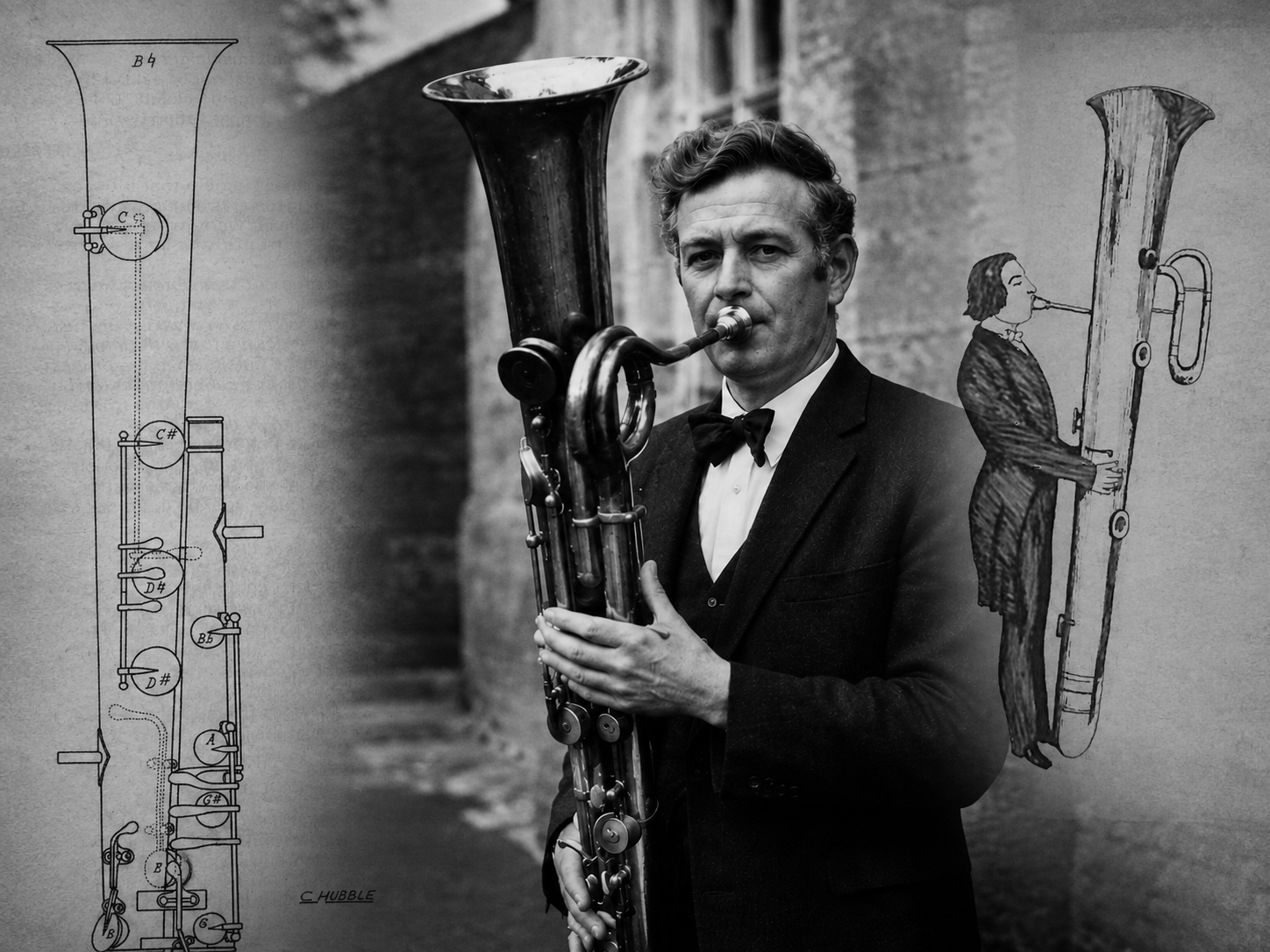
Once central to French orchestras, the ophicleide lost its place to the tuba—a disappearance shaped as much by institutions and repertoire as by sound.
The untimely demise of the ophicleide

The last and finest musical instrument of the family referred to as the “keyed brass” was the ophicleide, which flourished in its bass form during the greater part of the last century.

The brass instrument in C measures approximately 105 centimetres in height, but consists of two parallel tubes, one wide, one narrow, joined at the lower end. The upper section of the wide tube opens into a bell, whereas the narrow tube is fitted with a crook, sometimes coiled or in elliptical shape, tapering to a mouthpiece, which is similar to that of a euphonium. There are between nine and twelves keys, evenly spaced over the tubes.

Examples are usually in yellow brass, but red brass and silver-plated instruments are known. Occasionally noted are wooden instruments, and in this form they are generally called “serpent-cleides”.

The ophicleide was invented in 1817 by the Frenchman Halary and continuously perfected in both England and France until 1860 when MacFarlane, Newton and Carte patented their model with open-standing keys. By 1880, however, it was obsolescent in France, but survived rather longer in England.

Out of pure conjecture it is interesting to imagine the circumstances which would have permitted the instrument to remain an acceptable part of military and orchestral music.

A first consideration must be the contemporary criticism of the ophicleide, and whether these problems were insuperable.

I. Intonation

In the past it was always presumed that this was the ophicleide’s major shortcoming — a presumption which can only ridicule the sensibility of Victorian musicians and audiences. A good instrument, played by a competent musician is very highly acceptable. This has been proved recently by Alan Lumsden and others. The acclaim given to Ponder, Prospère, Caussinus and Hughes can scarcely be tempered with suspicions about intonation. The same cannot be said of the early valved instrument soloists, before the invention of compensating devices.

II. General timbre

It is of interest to note that most of the disparaging remarks about this aspect of the ophicleide were written after its demise, by people who probably never heard it.

This instrument was formerly much in vogue, but it has gradually and justly been put aside, as its croaking unmusical and false tones are to say the least, quite disagreeable. Employed in the orchestra it may auger as a substitute for the bass-trombone, but as a solo instrument it would be simply disgusting.

Thus wrote Professor Kling in the 1902 American edition of his “Modern Orchestration and Instrumentation”. He was, obviously, greatly in favour of the bass tuba:

This colossal instrument has replaced the ophicleide excellently.

The Berlioz comment about the bull escaped from its stall (in the Bennet edition of the treatise), which gave rise to the “chromatic bullock” quotation, is more of a condemnation of contemporary operatic composers who insisted on fast solo passages for the ophicleide, than a criticism of the instrument’s timbre.

Continue reading

Accede a la edición digital completa.

Brass Bulletin 43, III / 1983 páginas 10–17

Todo el contenido está protegido por derechos de autor © Brass Bulletin 1983–2026

Compartir este artículo

Facebook LinkedIn
Cargando…

Preguntas y respuestas

Cómo funciona la edición digital

¿Qué incluye la edición digital?

La edición digital reúne los artículos ya digitalizados como textos legibles y consultables en línea —no simplemente como escaneos o archivos PDF— junto con sus ilustraciones originales, notas, autoría, información del número y traducciones disponibles. Las sugerencias de artículos relacionados incluyen actualmente solo este material digitalizado.

¿Los artículos digitales son idénticos a los originales?

Conservamos con la mayor fidelidad posible el texto original, el idioma, las ilustraciones, los pies de imagen, las notas y el contexto editorial. La presentación se adapta para facilitar la lectura en línea y pueden corregirse errores evidentes de transcripción o escaneado. El contenido y el carácter del artículo publicado permanecen inalterados.

¿Qué idiomas están disponibles?

Brass Bulletin se publicó en inglés, francés y alemán a lo largo de toda su historia. Las traducciones al italiano y al español se añadieron a partir del número 60. Por este motivo, en los sitios italiano y español los artículos de los números 1 a 59 se muestran en inglés de forma predeterminada.

¿Con qué frecuencia se añaden nuevos artículos?

Se añaden nuevos artículos casi a diario, con aproximadamente un número completo digitalizado cada semana. El ritmo puede variar según el trabajo de preparación, tratamiento de imágenes y revisión editorial necesario.

¿Por qué no están disponibles todos los artículos en formato digital?

La colección completa de Brass Bulletin contiene 1.246 artículos publicados entre 1971 y 2003. El índice completo ya está disponible en línea y permite descubrir todos los artículos de la colección, incluidos aquellos cuyo texto íntegro todavía no ha sido digitalizado.

La digitalización comenzó en febrero de 2026. Cada artículo se prepara cuidadosamente para la lectura en línea, se revisa y se vincula con su número, sus autores, sus temas y sus ilustraciones. Al ritmo actual de digitalización, se prevé que la colección completa esté disponible en línea en febrero de 2028.

¿Por qué algunas referencias mencionan artículos que todavía no están disponibles?

Las referencias de los artículos originales se conservan aunque el material al que remiten aún no haya sido digitalizado. De este modo se mantiene intacto el contexto histórico y editorial. A medida que se incorporen más números a la edición digital, un número creciente de estas referencias conducirá a artículos que podrán leerse en línea.

¿Puedo sugerir un artículo o informar de un error de transcripción?

Sí. Si hay algún artículo que le gustaría especialmente ver digitalizado, o si detecta un posible error de transcripción o algún dato que falta, póngase en contacto con nosotros. Los comentarios de los lectores nos ayudan a mejorar la edición digital y a establecer prioridades útiles dentro del archivo.

¿Cómo puedo apoyar a Brass Bulletin?

Su apoyo ayuda a financiar la preparación, verificación y publicación en línea de la colección completa.

Suscríbase a la Edición Digital

¿Prefiere apoyarnos sin suscribirse?

Haga una donación

¿Cómo avanza la digitalización?

Estamos poniendo Brass Bulletin a disposición de los lectores en línea, artículo por artículo. Pueden leer los artículos recién digitalizados en cuanto estén listos, incluso antes de que se complete un número entero.

Consulten nuestro calendario de digitalización para descubrir las últimas novedades y las fechas estimadas de disponibilidad de los próximos números. Estas estimaciones se basan en nuestro ritmo reciente y pueden cambiar.

Busca en Brass Bulletin.