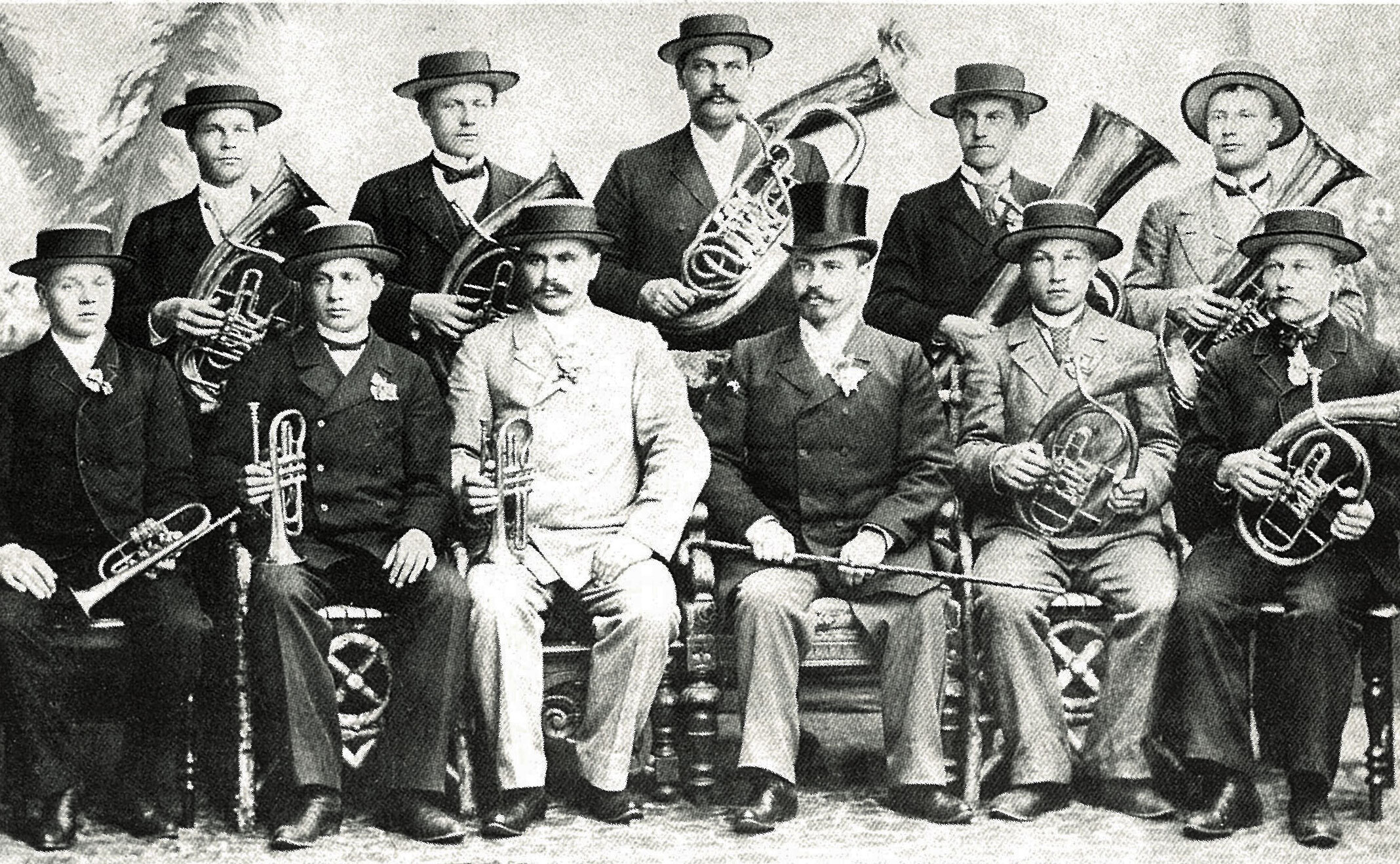
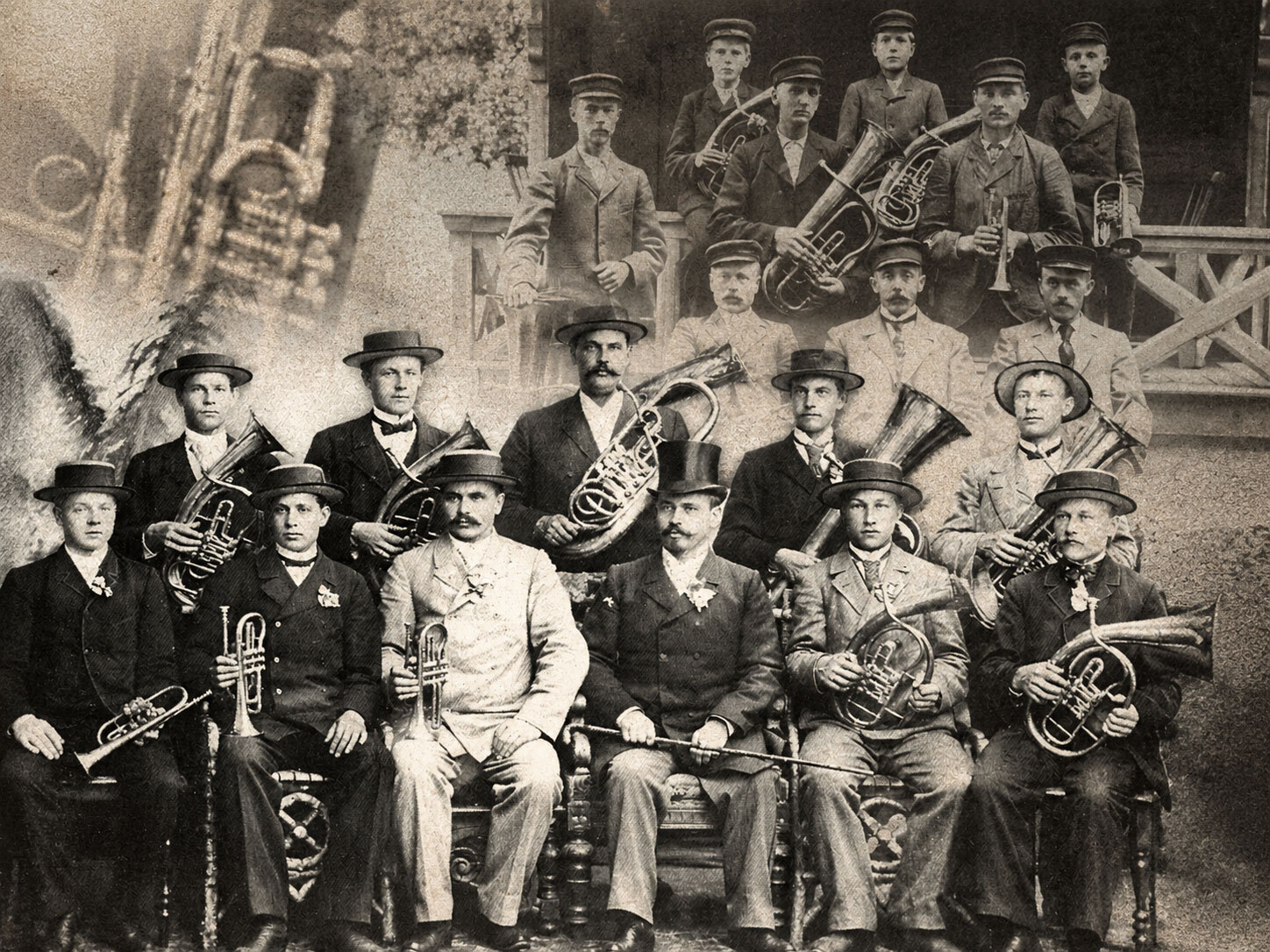
1895 - Characteristic ensemble (Porvoo)
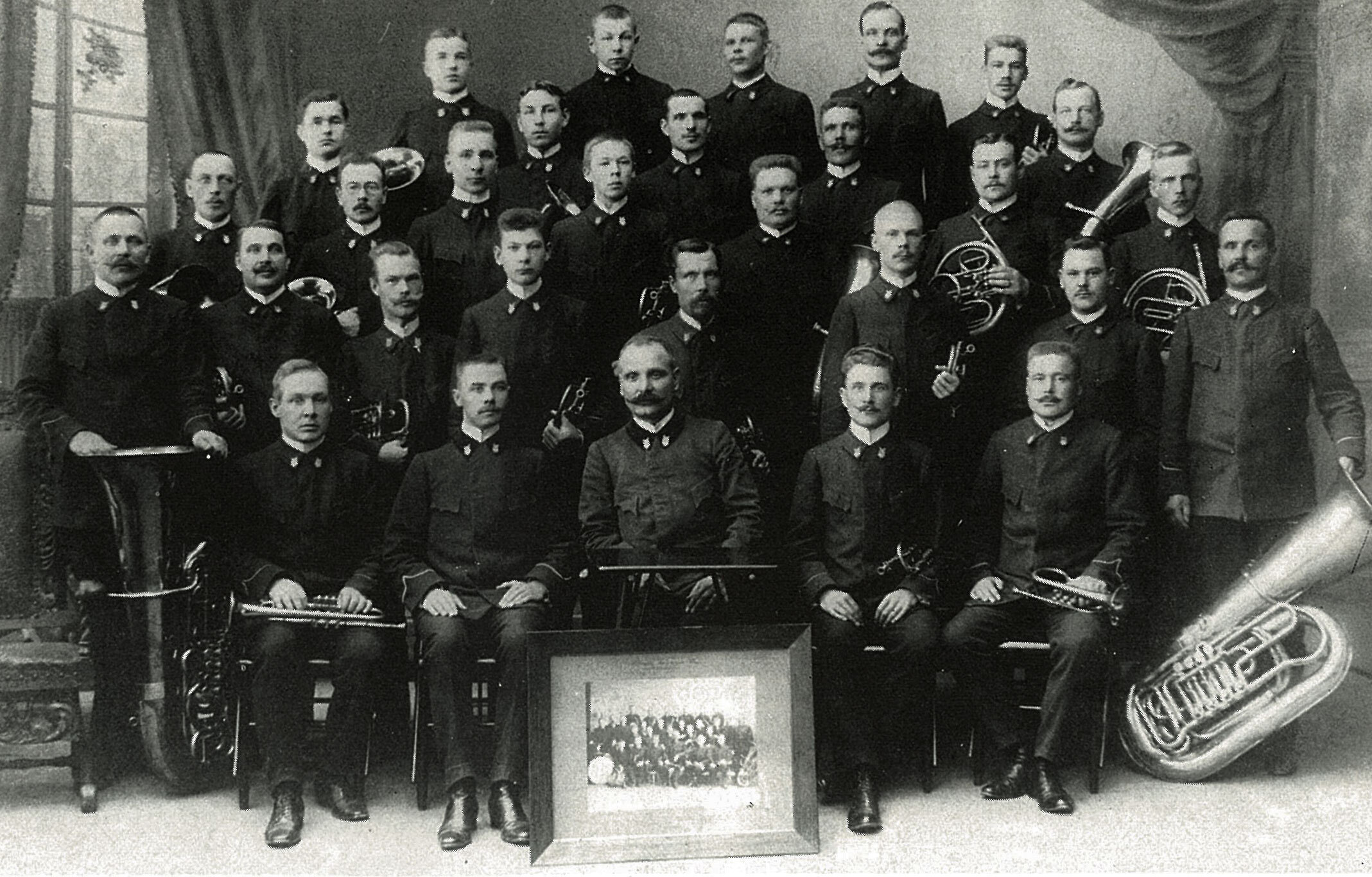
1902-3 - Military or para-military group
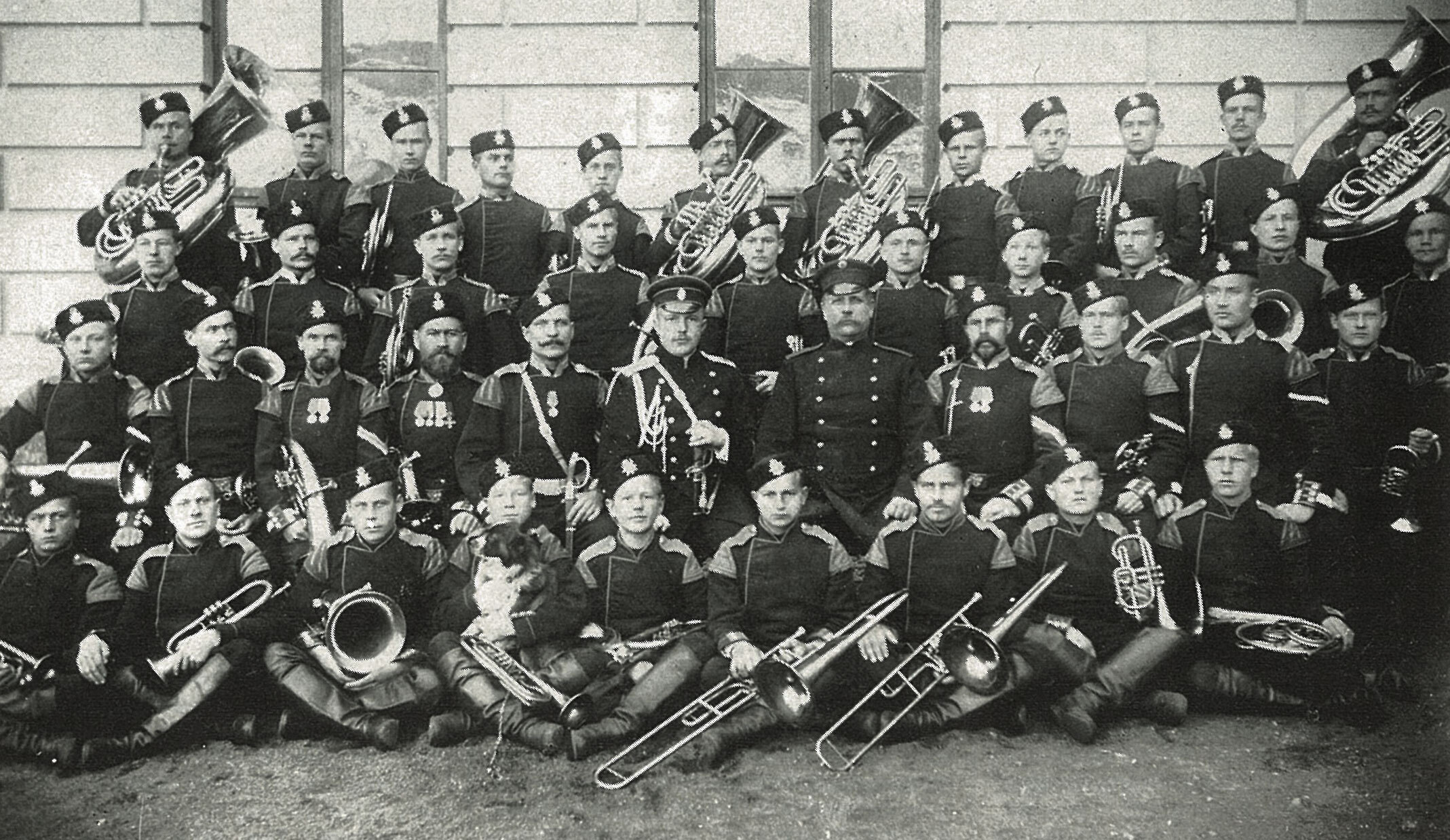
1902-3 - Military or para-military group
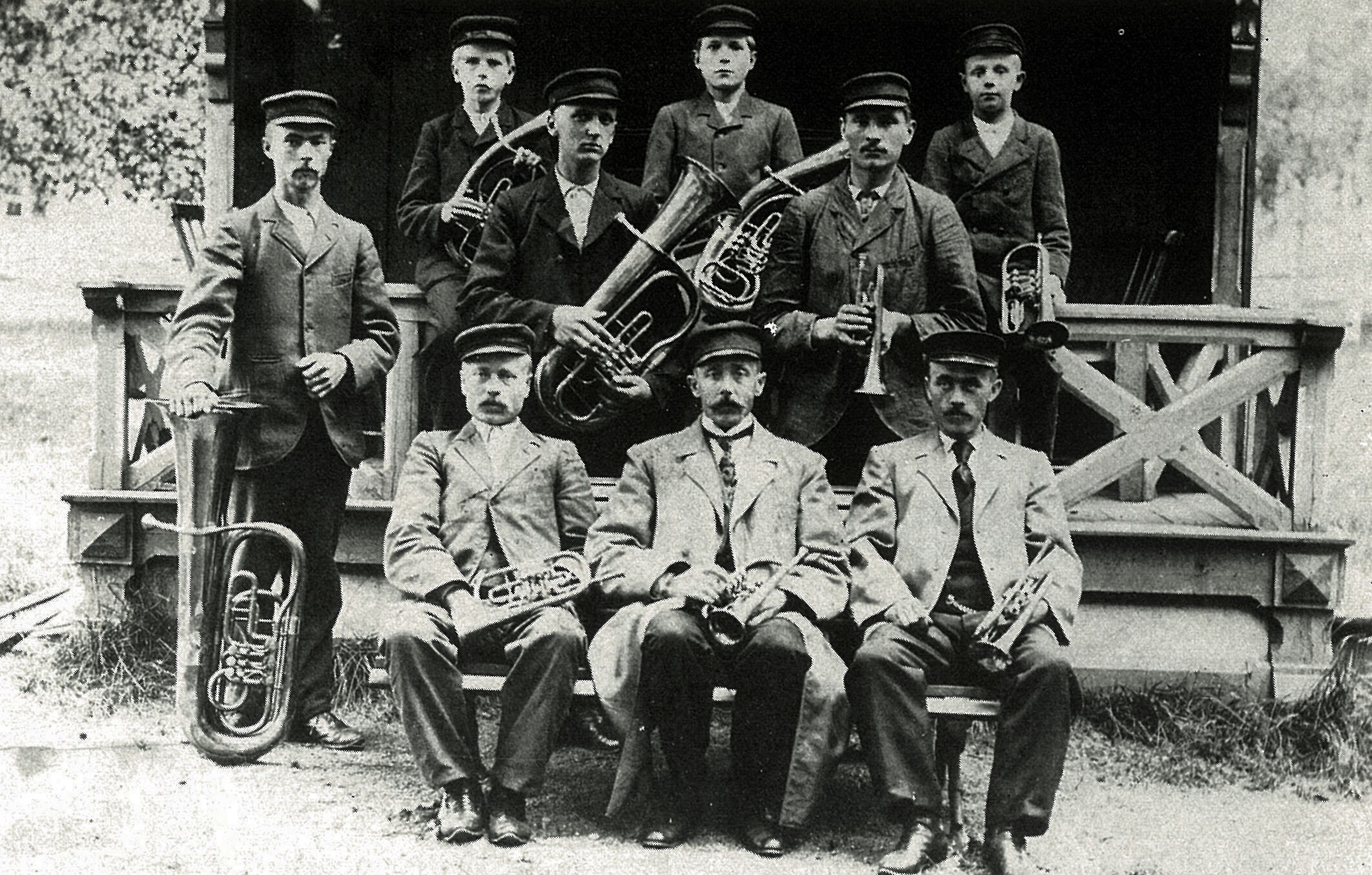
c. 1906 - In almost every village...
Revista para los músicos de metal
Por Holger Fransman
The usual instrumentation of the wind ensembles in the Grand Duchy of Finland under the Tsar of Russia was: flute, oboe, clarinet, bassoon, serpent, natural trumpet and hand horn.
In 1870 Tsar Alexander II decreed that the wind ensembles should be disbanded and converted into brass bands. The original instrumentation was: 1 E♭ cornet, 2 B♭ cornets, alto horn in E♭, tenor horn in B♭, baritone and tuba. Variations were tried at first but found to be unsatisfactory. The final imperial proclamation determining the official brass band instrumentation appeared in 1880.
The brass septet soon became very popular. Every town, large or small, had one. These seven basic instruments could of course be doubled if desired, and if players were available. One example is the charity concert given in Helsinki in 1891 on behalf of those wounded in the Russo-Turkish War of 1877-1878. The band consisted of 250 players, including 46 tubas, 30 E♭ cornets, 30 1st B♭ cornets and 30 2nd B♭ cornets as well as the altos, tenors, euphoniums and percussion. On the programme - the 1812 overture.
This exceptional enthusiasm for the brass continued even after Finland became independent and until 1926, when all the brass bands were systematically converted into wind bands.
1895 - Characteristic ensemble (Porvoo)
1902-3 - Military or para-military group
1902-3 - Military or para-military group
c. 1906 - In almost every village...
Brass Bulletin 53, I / 1986 páginas 49–51
Todo el contenido está protegido por derechos de autor © Brass Bulletin 1986–2026