Ofrezca Brass Bulletin en su universidad, conservatorio o biblioteca Descubra el acceso institucional

2 min de lectura

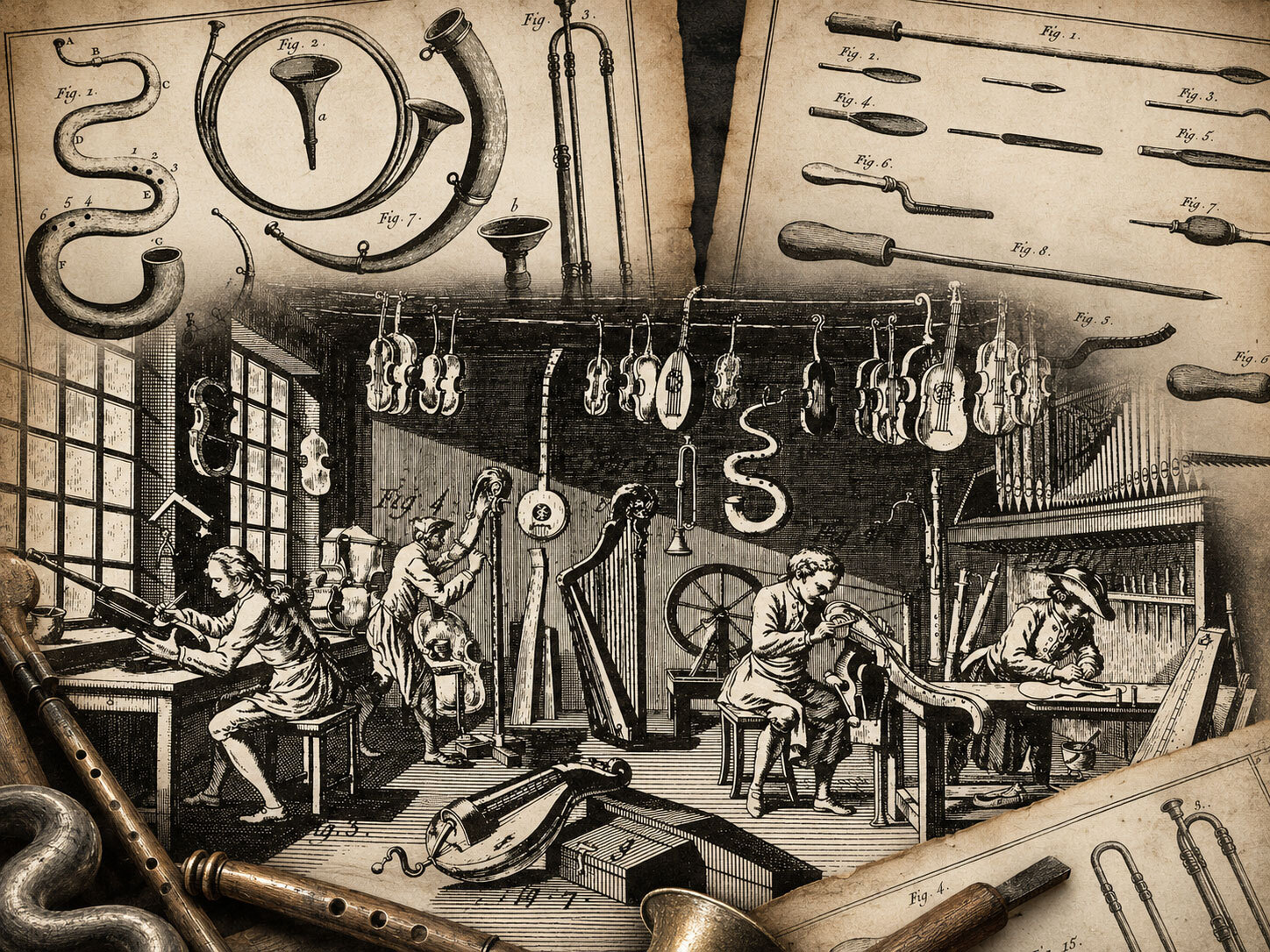
The Art of the Musical Instrument Maker

Encyclopédie méthodique — Paris 1795

Parte 1

Por Anonyme

The Art of the Musical Instrument Maker

This “Methodical encyclopedia — arts and crafts” was published in Paris in 1795. In 1984 Editions Minkoff of Geneva rescued from oblivion and published in facsimile Volume IV, which concerns particularly the “Art of the musical instrument maker” (ISBN 2-8266-0295-0). The author — anonymous, unfortunately — describes the instruments in irresistible style.

The text concerning our instruments will be divided up and reproduced, starting with this issue; illustrations from the original work will be included. The book also contains 36 pages (150-186) of “Vocabulary”. Some of these descriptions, written in the style of 200 years ago, are particularly helpful to us either by helping us to understand certain changes in meaning or because the old words which have changed are, strangely, more exact than those we use today. For example:

Trumpet: wind instrument; consisting of a cup-shaped mouthpiece, two arms which carry the air and bell which forms the end of the trumpet with a flared aperture.

Extract 1¹

Musical instruments are devices invented and arranged by the art of the instrument maker to express sounds in the absence of voices, to imitate man’s naturel voice or to embellish and accompany it.

There are also instruments which create more noise than harmony, used for public summonses, and others which are used to maintain the courage of the troops on the march and in combat. Music written to be performed by devices of this sort is called instrumental.

[…]

2. Wind instruments, made to sound by means of the mouth, such as flutes, trumpet, oboes, bassoons, serpents etc. and by means of bellows, such as the various types of bagpipe [musette, chalemie, loure] and the organ.

[…]

Only here will we observe that each instrument has its own range, expression and character, with which the musician must be acquainted.

If he take the instrument beyond its true register, he will make it shrill, dull or harsh.
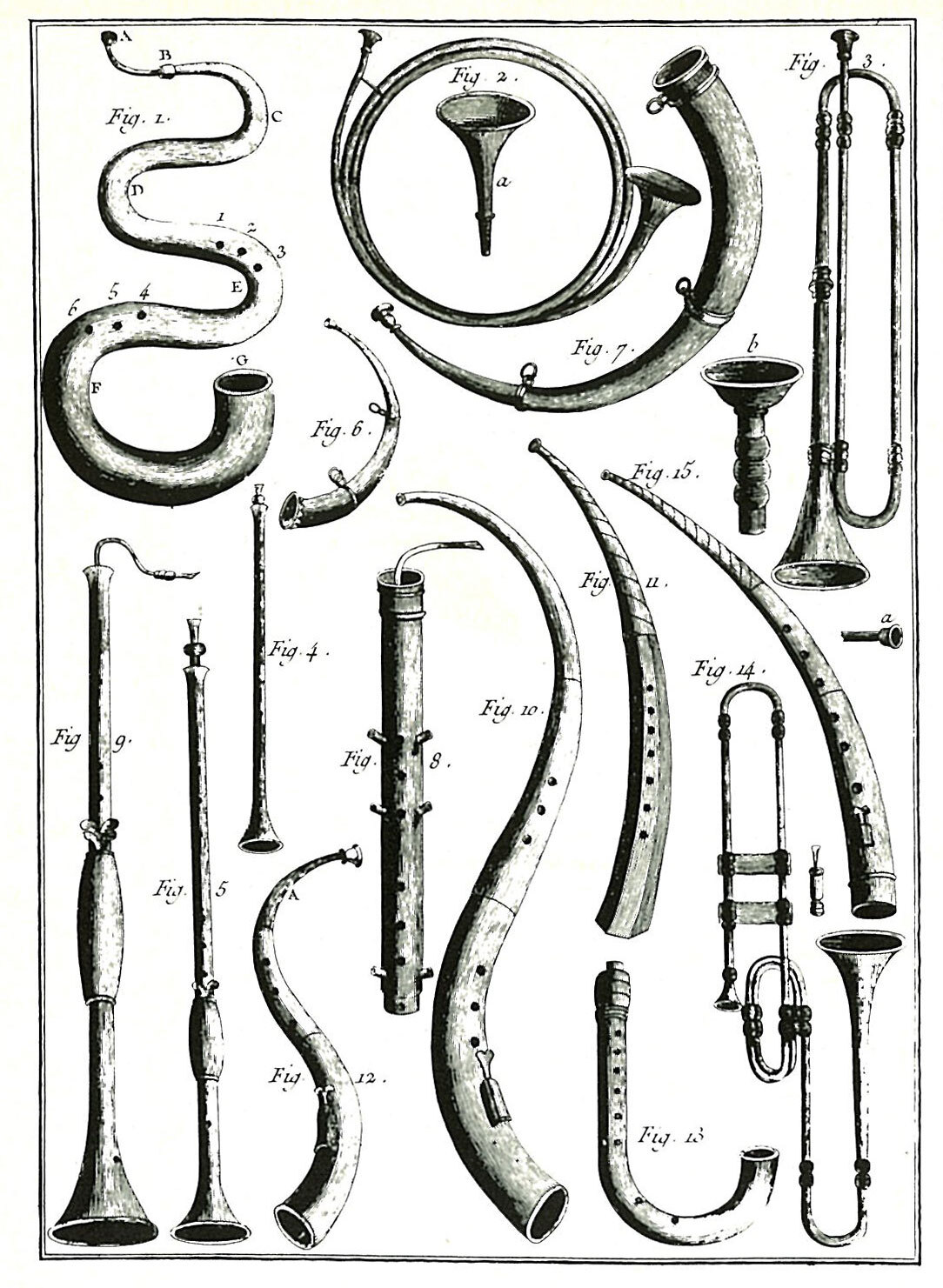
Musical Instruments, Ancient, Modern and Foreign; wind, cup-mouthpieces and reed instruments.
Musical Instruments, Ancient, Modern and Foreign; wind, cup-mouthpieces and reed instruments.

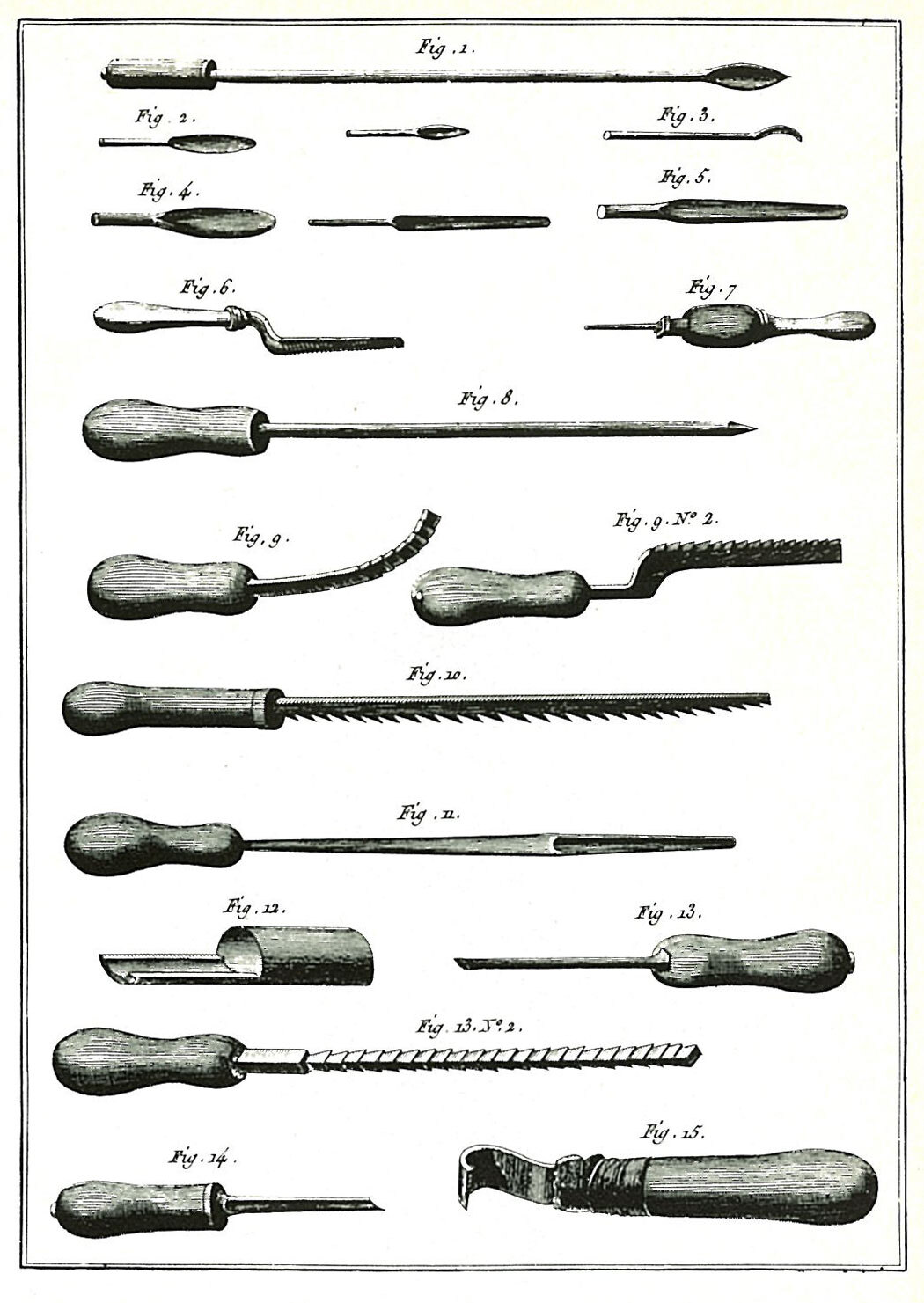
Instrument maker, tools involved in making wind instruments.

Instrument maker, tools involved in making wind instruments.

If he does not know its manner of expression, he will not use it in circumstances where it will have the greatest effect.

A most important part of a composer’s study is that of the character of the instruments. These are the voices through which he speaks to our ears.

But it is not enough to know each instrument by itself; he must also know the effect of their sounds combined with one another; sometimes a well placed horn note will suffice to produce the strongest feelings.

There is no phenomen in naturel and no passion nor feeling in man’s heart which cannot be imitated with instruments; but one cannot say that all are equally suited to all these imitations. If the high sounds of the piccolo flute are heard at times in the depiction of a tempest, they will give it great realism. The low, lugubrious sounds of the horns will give fearful notice of the arrival of ghosts and spirits. The notes of the stringed instruments must sometimes be sustained, sometimes plucked etc. [1]

Notes

¹ Our extracts contain the following symbols: the number of the page from which the extract is taken — [23]; phrases or paragraphs omitted — […].

Brass Bulletin 52, IV / 1985 páginas 57–59

Todo el contenido está protegido por derechos de autor © Brass Bulletin 1985–2026

Compartir este artículo

Facebook LinkedIn
Cargando…

Preguntas y respuestas

Cómo funciona la edición digital

¿Qué incluye la edición digital?

La edición digital reúne los artículos ya digitalizados como textos legibles y consultables en línea —no simplemente como escaneos o archivos PDF— junto con sus ilustraciones originales, notas, autoría, información del número y traducciones disponibles. Las sugerencias de artículos relacionados incluyen actualmente solo este material digitalizado.

¿Los artículos digitales son idénticos a los originales?

Conservamos con la mayor fidelidad posible el texto original, el idioma, las ilustraciones, los pies de imagen, las notas y el contexto editorial. La presentación se adapta para facilitar la lectura en línea y pueden corregirse errores evidentes de transcripción o escaneado. El contenido y el carácter del artículo publicado permanecen inalterados.

¿Qué idiomas están disponibles?

Brass Bulletin se publicó en inglés, francés y alemán a lo largo de toda su historia. Las traducciones al italiano y al español se añadieron a partir del número 60. Por este motivo, en los sitios italiano y español los artículos de los números 1 a 59 se muestran en inglés de forma predeterminada.

¿Con qué frecuencia se añaden nuevos artículos?

Se añaden nuevos artículos casi a diario, con aproximadamente un número completo digitalizado cada semana. El ritmo puede variar según el trabajo de preparación, tratamiento de imágenes y revisión editorial necesario.

¿Por qué no están disponibles todos los artículos en formato digital?

La colección completa de Brass Bulletin contiene 1.246 artículos publicados entre 1971 y 2003. El índice completo ya está disponible en línea y permite descubrir todos los artículos de la colección, incluidos aquellos cuyo texto íntegro todavía no ha sido digitalizado.

La digitalización comenzó en febrero de 2026. Cada artículo se prepara cuidadosamente para la lectura en línea, se revisa y se vincula con su número, sus autores, sus temas y sus ilustraciones. Al ritmo actual de digitalización, se prevé que la colección completa esté disponible en línea en febrero de 2028.

¿Por qué algunas referencias mencionan artículos que todavía no están disponibles?

Las referencias de los artículos originales se conservan aunque el material al que remiten aún no haya sido digitalizado. De este modo se mantiene intacto el contexto histórico y editorial. A medida que se incorporen más números a la edición digital, un número creciente de estas referencias conducirá a artículos que podrán leerse en línea.

¿Puedo sugerir un artículo o informar de un error de transcripción?

Sí. Si hay algún artículo que le gustaría especialmente ver digitalizado, o si detecta un posible error de transcripción o algún dato que falta, póngase en contacto con nosotros. Los comentarios de los lectores nos ayudan a mejorar la edición digital y a establecer prioridades útiles dentro del archivo.

¿Cómo puedo apoyar a Brass Bulletin?

Su apoyo ayuda a financiar la preparación, verificación y publicación en línea de la colección completa.

Suscríbase a la Edición Digital

¿Prefiere apoyarnos sin suscribirse?

Haga una donación

¿Cómo avanza la digitalización?

Estamos poniendo Brass Bulletin a disposición de los lectores en línea, artículo por artículo. Pueden leer los artículos recién digitalizados en cuanto estén listos, incluso antes de que se complete un número entero.

Consulten nuestro calendario de digitalización para descubrir las últimas novedades y las fechas estimadas de disponibilidad de los próximos números. Estas estimaciones se basan en nuestro ritmo reciente y pueden cambiar.

Busca en Brass Bulletin.