Rendete Brass Bulletin disponibile nella vostra università, nel vostro conservatorio o nella vostra biblioteca Scoprite l’accesso istituzionale

2 min di lettura

The Art of the Musical Instrument Maker

Encyclopédie méthodique — Paris 1795

Parte 1

Di Anonyme

The Art of the Musical Instrument Maker

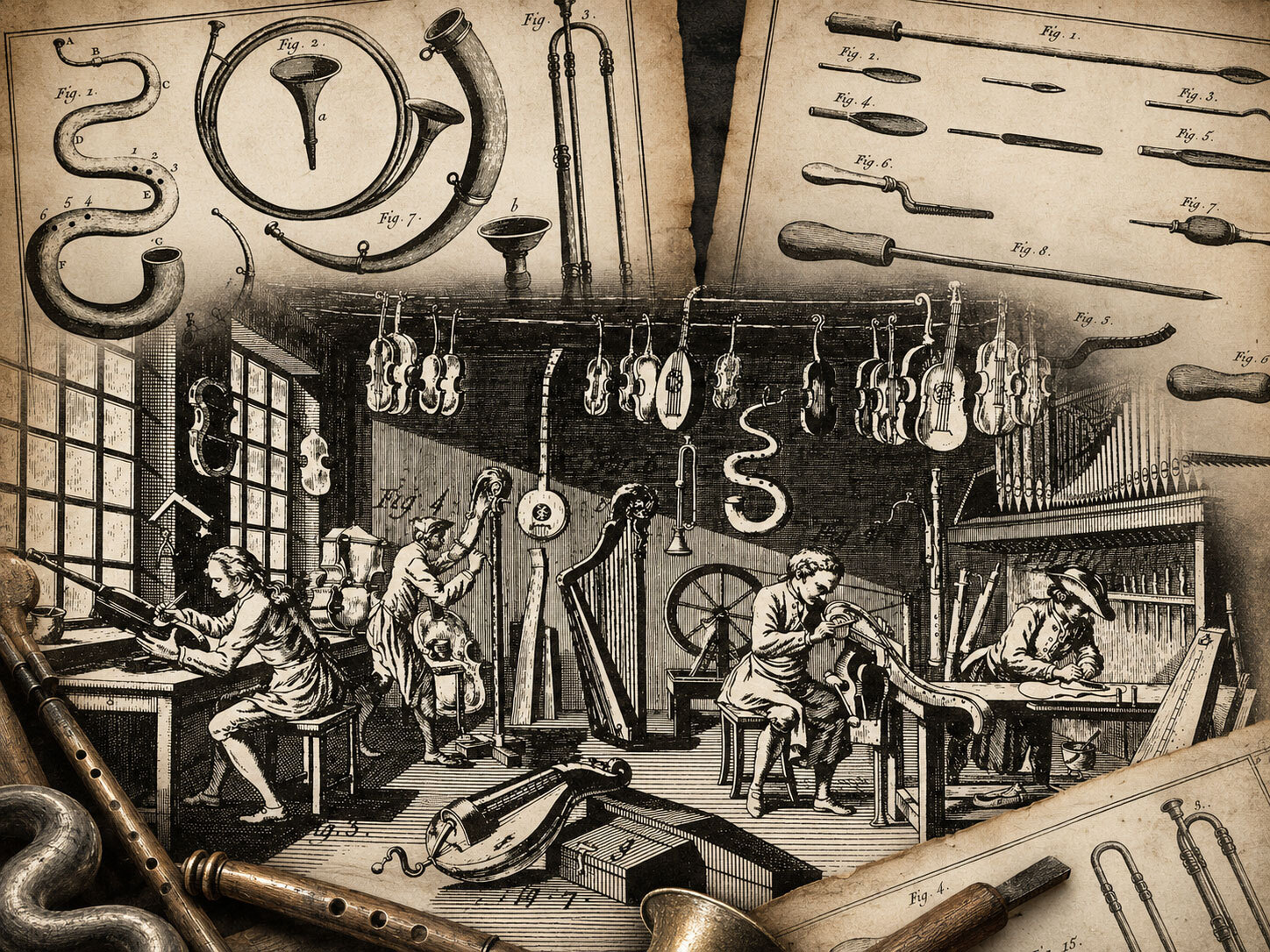
This “Methodical encyclopedia — arts and crafts” was published in Paris in 1795. In 1984 Editions Minkoff of Geneva rescued from oblivion and published in facsimile Volume IV, which concerns particularly the “Art of the musical instrument maker” (ISBN 2-8266-0295-0). The author — anonymous, unfortunately — describes the instruments in irresistible style.

The text concerning our instruments will be divided up and reproduced, starting with this issue; illustrations from the original work will be included. The book also contains 36 pages (150-186) of “Vocabulary”. Some of these descriptions, written in the style of 200 years ago, are particularly helpful to us either by helping us to understand certain changes in meaning or because the old words which have changed are, strangely, more exact than those we use today. For example:

Trumpet: wind instrument; consisting of a cup-shaped mouthpiece, two arms which carry the air and bell which forms the end of the trumpet with a flared aperture.

Extract 1¹

Musical instruments are devices invented and arranged by the art of the instrument maker to express sounds in the absence of voices, to imitate man’s naturel voice or to embellish and accompany it.

There are also instruments which create more noise than harmony, used for public summonses, and others which are used to maintain the courage of the troops on the march and in combat. Music written to be performed by devices of this sort is called instrumental.

[…]

2. Wind instruments, made to sound by means of the mouth, such as flutes, trumpet, oboes, bassoons, serpents etc. and by means of bellows, such as the various types of bagpipe [musette, chalemie, loure] and the organ.

[…]

Only here will we observe that each instrument has its own range, expression and character, with which the musician must be acquainted.

If he take the instrument beyond its true register, he will make it shrill, dull or harsh.
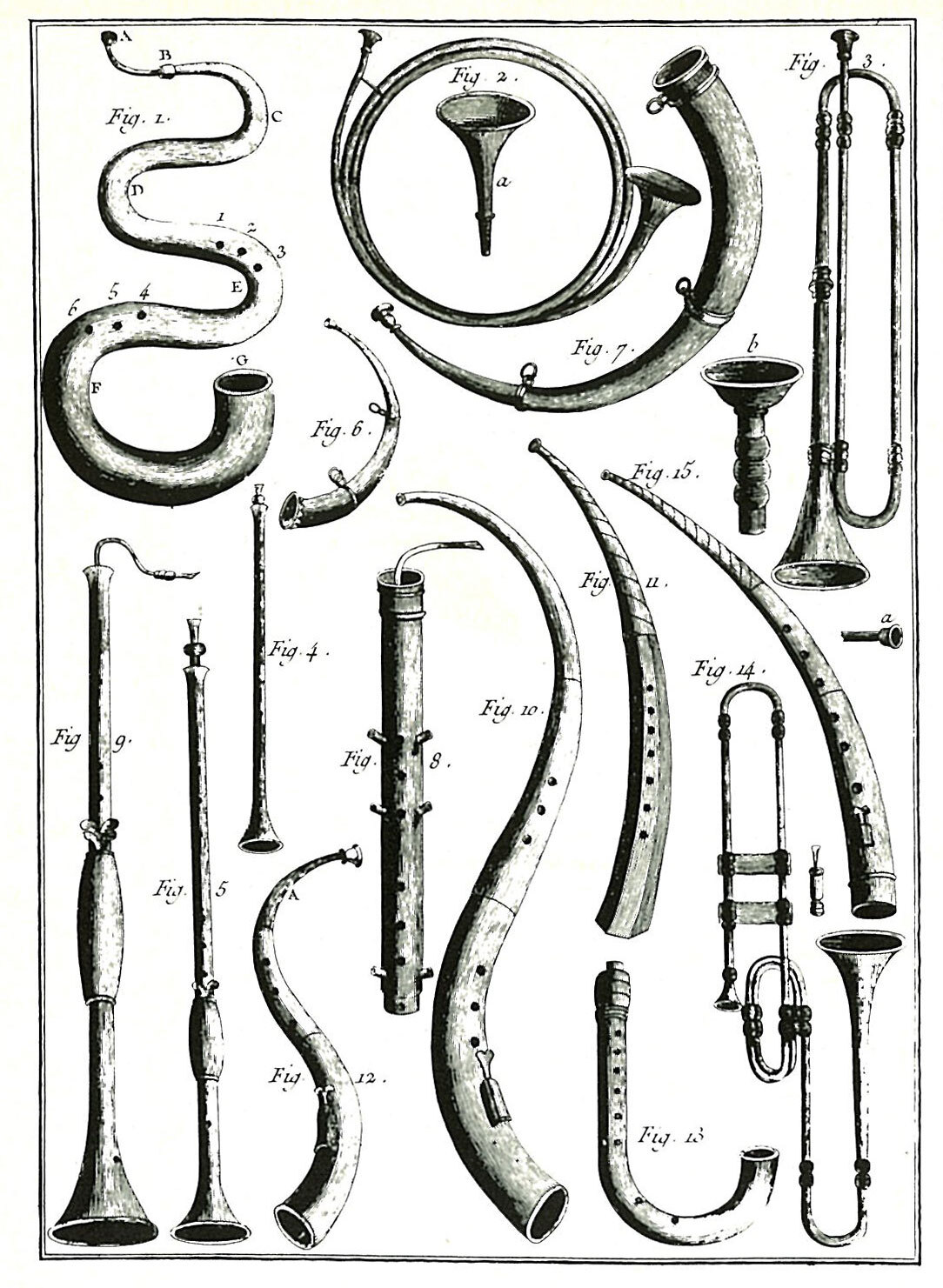
Musical Instruments, Ancient, Modern and Foreign; wind, cup-mouthpieces and reed instruments.
Musical Instruments, Ancient, Modern and Foreign; wind, cup-mouthpieces and reed instruments.

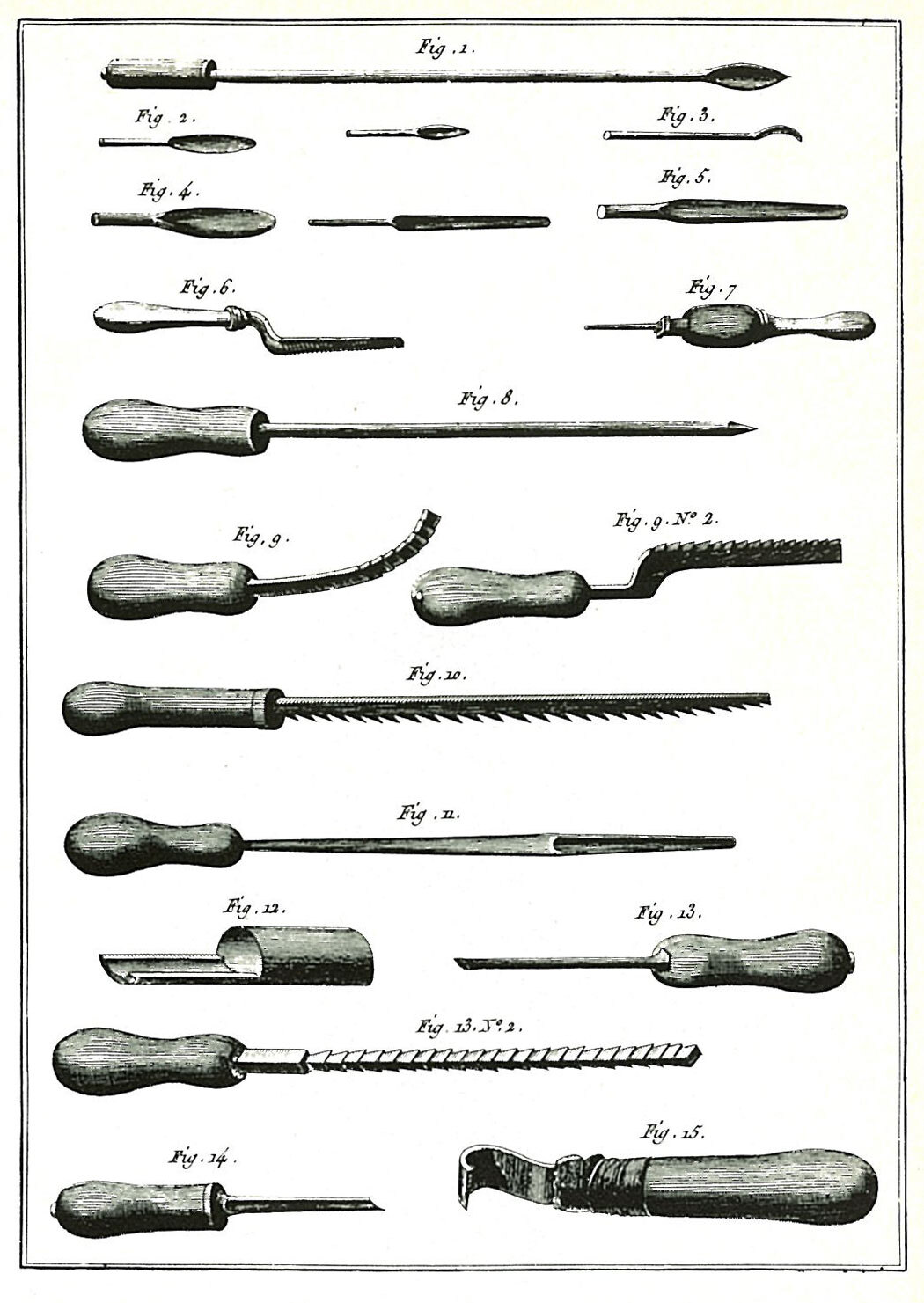
Instrument maker, tools involved in making wind instruments.

Instrument maker, tools involved in making wind instruments.

If he does not know its manner of expression, he will not use it in circumstances where it will have the greatest effect.

A most important part of a composer’s study is that of the character of the instruments. These are the voices through which he speaks to our ears.

But it is not enough to know each instrument by itself; he must also know the effect of their sounds combined with one another; sometimes a well placed horn note will suffice to produce the strongest feelings.

There is no phenomen in naturel and no passion nor feeling in man’s heart which cannot be imitated with instruments; but one cannot say that all are equally suited to all these imitations. If the high sounds of the piccolo flute are heard at times in the depiction of a tempest, they will give it great realism. The low, lugubrious sounds of the horns will give fearful notice of the arrival of ghosts and spirits. The notes of the stringed instruments must sometimes be sustained, sometimes plucked etc. [1]

Notes

¹ Our extracts contain the following symbols: the number of the page from which the extract is taken — [23]; phrases or paragraphs omitted — […].

Brass Bulletin 52, IV / 1985 pagine 57–59

Tutti i contenuti sono protetti dal diritto d’autore © Brass Bulletin 1985–2026

Condividi questo articolo

Facebook LinkedIn
Loading…

Domande e risposte

Come funziona l’edizione digitale

Che cosa comprende l’edizione digitale?

L’edizione digitale riunisce gli articoli già digitalizzati sotto forma di testi leggibili e ricercabili online — non semplicemente come scansioni o file PDF — insieme alle illustrazioni originali, alle note, agli autori, alle informazioni sul numero della rivista e alle traduzioni disponibili. I suggerimenti di articoli correlati comprendono attualmente solo questo materiale digitalizzato.

Gli articoli digitali sono identici agli originali?

Conserviamo il più fedelmente possibile il testo originale, la lingua, le illustrazioni, le didascalie, le note e il contesto editoriale. La presentazione viene adattata per una lettura confortevole online e gli evidenti errori di trascrizione o scansione possono essere corretti. Il contenuto e il carattere dell’articolo pubblicato rimangono invariati.

Quali lingue sono disponibili?

Brass Bulletin è stato pubblicato in inglese, francese e tedesco nel corso di tutta la sua storia. Le traduzioni italiane e spagnole sono state aggiunte a partire dal numero 60. Sui siti italiano e spagnolo, gli articoli dei numeri da 1 a 59 vengono quindi mostrati in inglese per impostazione predefinita.

Con quale frequenza vengono aggiunti nuovi articoli?

Nuovi articoli vengono aggiunti quasi ogni giorno, con circa un numero completo digitalizzato ogni settimana. Il ritmo può variare in base al lavoro di preparazione, elaborazione delle immagini e verifica editoriale necessario.

Perché non tutti gli articoli sono disponibili in formato digitale?

La collezione completa di Brass Bulletin comprende 1.246 articoli pubblicati tra il 1971 e il 2003. L’indice completo è già disponibile online e consente di scoprire tutti gli articoli della collezione, compresi quelli il cui testo integrale non è ancora stato digitalizzato.

La digitalizzazione è iniziata nel febbraio 2026. Ogni articolo viene accuratamente preparato per la lettura online, verificato e collegato al relativo numero, agli autori, agli argomenti e alle illustrazioni. Al ritmo attuale di digitalizzazione, la collezione completa dovrebbe essere disponibile online entro febbraio 2028.

Perché alcuni riferimenti citano articoli che non sono ancora disponibili?

I riferimenti presenti negli articoli originali vengono conservati anche quando il materiale a cui rimandano non è ancora stato digitalizzato. In questo modo si preserva l’integrità storica ed editoriale della rivista. Man mano che nuovi numeri vengono aggiunti all’edizione digitale, un numero crescente di questi riferimenti condurrà ad articoli leggibili online.

Posso suggerire un articolo o segnalare un errore di trascrizione?

Sì. Se desiderate che un determinato articolo venga digitalizzato, oppure se notate un possibile errore di trascrizione o un’informazione mancante, contattateci. I riscontri dei lettori ci aiutano a migliorare l’edizione digitale e a stabilire priorità utili all’interno dell’archivio.

Come posso sostenere Brass Bulletin?

Il vostro sostegno contribuisce a finanziare la preparazione, la verifica e la pubblicazione online dell’intera collezione.

Abbonati all’Edizione digitale

Preferite sostenerci senza abbonarvi?

Fate una donazione

Come procede la digitalizzazione?

Stiamo rendendo Brass Bulletin disponibile online gradualmente, articolo per articolo. Potete leggere gli articoli appena digitalizzati non appena sono pronti, anche prima che un intero numero sia completato.

Consultate il nostro calendario di digitalizzazione per scoprire le ultime aggiunte e le date di disponibilità stimate dei prossimi numeri. Le stime si basano sul nostro ritmo recente e possono cambiare.

Cerca in Brass Bulletin.