21 min de lectura
Conversation with Ludwig Güttler
Por Christian Blümel , Gerd Radeke
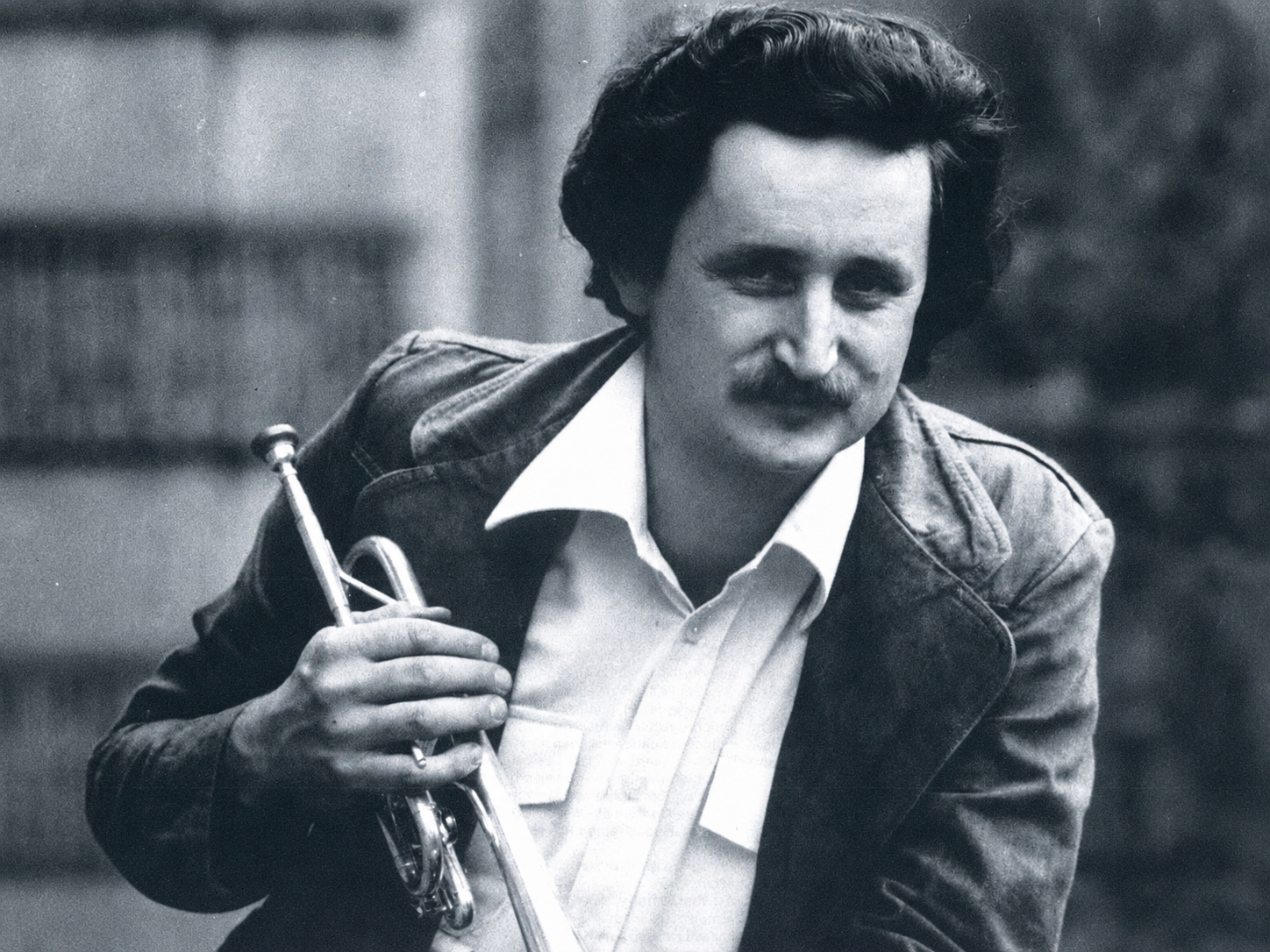
Ludwig Güttler
Conversation with Christian Blümel and Gerd Radeke (Münster) 27th September 1982
Ludwig Güttler plays currently with the Leipzig Bach Collegium which he founded in 1976. The brochure states that this group has set itself the task of “bringing back to life the old and largely forgotten style of ornamentation, extending it to improvisation” (i.e. in the music of Bach and his contemporaries) and thus “preventing early music from becoming a dusty museum exhibit” and combining “historical authenticity with the experience of present-day music-making”.
Question: What is your view of people who describe you as the Maurice André of the GDR? Would it not be more correct to see you as a mixture of Maurice André and Edward Tarr, considering the tasks you have set yourself in the authenticity of musical performance?
Answer: The description of myself as the Maurice André of the GDR I find flattering, but inappropriate. Of course I respect Maurice André greatly. Edward Tarr has been my model. The context of your question is that, here in West Germany, because of your good information services, you have had detailed information on Maurice André and Edward Tarr for a long time whereas I, without putting myself on a par with them, have only recently become known here.
Let me go a little further back, just to introduce myself. I have been playing the trumpet in Bach oratorios since 1958 when I was in my tenth year of school (I also took the Abitur, the German secondary school examinations, as I originally wanted to become an architect). I started “on trumpet” in 1957 after playing other brass instruments — horn and trombone — as well as cello, organ, piano and flute. My musical training began when I was five — with the accordion.
Q.: What was your next step with the trumpet?
A.: My first development as a trumpeter came mainly through the choral tradition of Saxony and in particular the mountain area of the Erzgebirge. You must realise that in every village of a reasonable size Bach’s “Christmas Oratorio” is performed annually (often using local forces). The next stage was that, after the “Christmas Oratorio” and the “Messiah”, I was asked to play Bach cantatas. For me this was an important widening of the repertoire when I think back to what trumpet concertos were in use then: the ancient edition of the Leopold Mozart (1930), the “big” Telemann concerto published in 1959 and the “small” one, the sonata, published in 1964, both by Sikorski, and a few copies of works we had from libraries.
Q.: Today you still play frequently in the combination trumpet and organ.
A.: Well, through the early sixties (I started studying in Leipzig in 1961) I tried various combinations, partly out of inner dissatisfaction, perhaps also because of an exaggerated view of my own abilities — as we brass players sometimes do. The opportunity to experiment, above all in suitable buildings — church buildings — with organ, soon followed. It is also quite clear that no trumpet player in Europe today can maintain that he has not been influenced by the brilliant career of Maurice André. That is undeniable.
Q.: How long have you played the piccolo trumpet?
A.: I first played small high-pitched trumpets in 1963-1964. Before that I had used exclusively C and D trumpets and occasionally a high F (Knodt instruments from Markneukirchen and Monke instruments from Cologne — I particularly remember an F trumpet which was very good!).
In the Markneukirchen instrument museum there is a high B♭ trumpet built around the turn of the century (it is really a flugelhorn in high B♭!). Willy Krug and I played the “2nd Brandenburg Concerto” on this trumpet in turn. We always had to borrow the instrument from the museum and there were plenty of attempts to make copies of it. To try and describe it I can only say that all the high B♭ trumpets I have come across since have had a narrower bore, all except a trumpet made by Mahillon in Brussels. As the Mahillon trumpet had a very wide bore, I really ought to call it a high B♭ flugelhorn too. It was my second favourite after the one I have just mentioned from the Markneukirchen instrument museum. There have always been attempts in Saxony to copy these little trumpets. You know that Markneukirchen and Klingenthal are well known names to people in Europe who deal with brass. Even members of the families of instrument makers who now live in southern Germany were born there. And when Adolph Scherbaum came to Leipzig several times in the late fifties, at first many people looked for technical and instrument-technical ways of imitating his phenomenal playing. There were direct copies and silhouettes of Scherbaum’s trumpet — everything from serious efforts to the merely anecdotal — we have seen it all before and we will see it all again!
Continue reading
Accede a la edición digital completa.
Brass Bulletin 44, IV / 1983 páginas 22–36
Todo el contenido está protegido por derechos de autor © Brass Bulletin 1983–2026