Ofrezca Brass Bulletin en su universidad, conservatorio o biblioteca Descubra el acceso institucional

4 min de lectura

Round the Horn

Hamburg 1982

Round the Horn

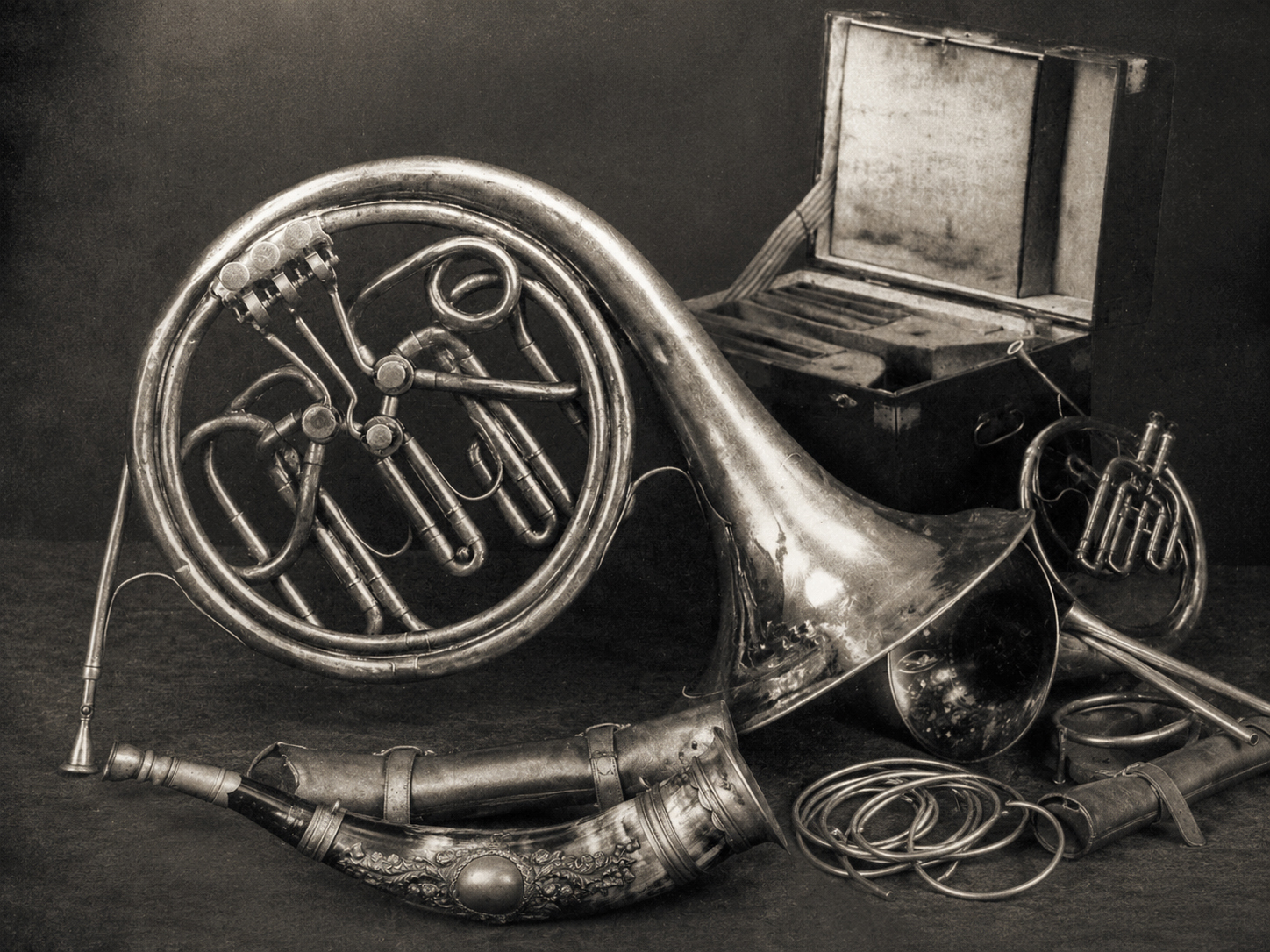
It was under this motto that the Hamburg Hunt Association displayed 150 horns and related instruments at their headquarters from 4th to 17th November 1982. Let us make it clear from the start — this exhibition was a sensation. Any visitor who was receptive and knew something about the subject could learn about everything connected with it, throughout every period of the horn’s development up to the present day.

To mark this exhibition, which is so important to art history, the German Gamekeepers’ Association has published a special booklet with a foreword by its new president, Dr. Gerhard Frank. The longest of the four articles is “From Hunting Horn to Orchestral Horn” by Dr. Kurt Birsack of Salzburg. With its numerous illustrations and its very thoroughly researched details on the construction of early horns this article conveys the high standards which the exhibitors set for themselves and for the visitors. The first article too, “On the History of the Hunting Horn” by the Hamburg huntsman and initiator of the whole event Manfred Hein, helps the reader to understand the exhibits from the early days of the horn in particular. Mention should also be made of “The Natural History of the Horn Sound” by Walter Onken of Hamburg, who discusses the physical laws of the natural harmonic series as well as the internal acoustics of the various horns. This most instructive article is also headed by the hand-drawn sketch of Goethe, reproduced here, which prompted many visitors to observe, “Well, why shouldn’t Goethe have made a mistake too?” until the soprano clef was pointed out and Goethe’s supposed mistake dispelled.

But now the exhibition itself. Using the catalogue (free), one could follow from age to age how various instruments were played, for example tone horns in Peru 1500 years ago, temple horns made from human upper-arm bones in Tibet, lurs in the Germanic lands in the Bronze Age and rams’ horns (the shofar, still in use today) in Israel. One could also see a modern copy of an oliphant — the horn used by Roland, the nephew of Charlemagne — transverse horns, antelope and deer horns from Africa, a signalling horn from Peru made from the tail of an armadillo, a wooden war trumpet from Brazil in the shape of a club, Tibetan temple trumpets and a Canadian elk caller made from engraved birch bark. These last exhibits are mostly from the 19th century.

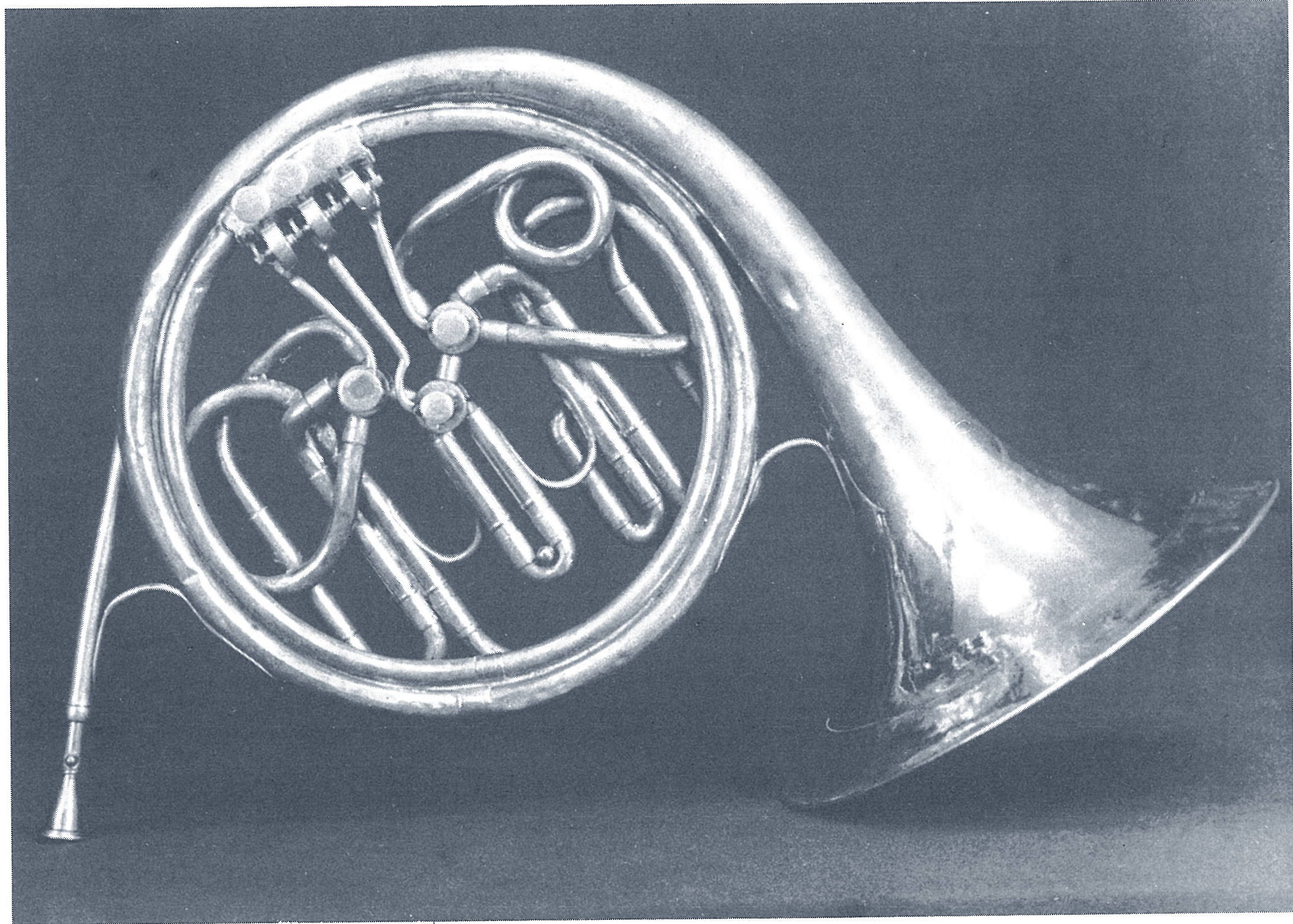
Concert-horn with rotary valves, by Riedl, Graslitz, ca 1875

Concert-horn with rotary valves, by Riedl, Graslitz, ca 1875

Hunting horns were particularly prominent. From the original 18th-century parforce horn in D, a single-coil Dampierre horn, to the delicate ladies’ hunting horn, worked in silver (England, 19th century), there was an abundance of parforce horns and trompes de chasse to be seen, from France, Germany and of course Bohemia. The way in which hunting-horn playing was preserved in Germany was shown by contemporary parforce horns, mostly from German workshops, Fürst Pless horns and an old half-moon horn from the Sauerland.
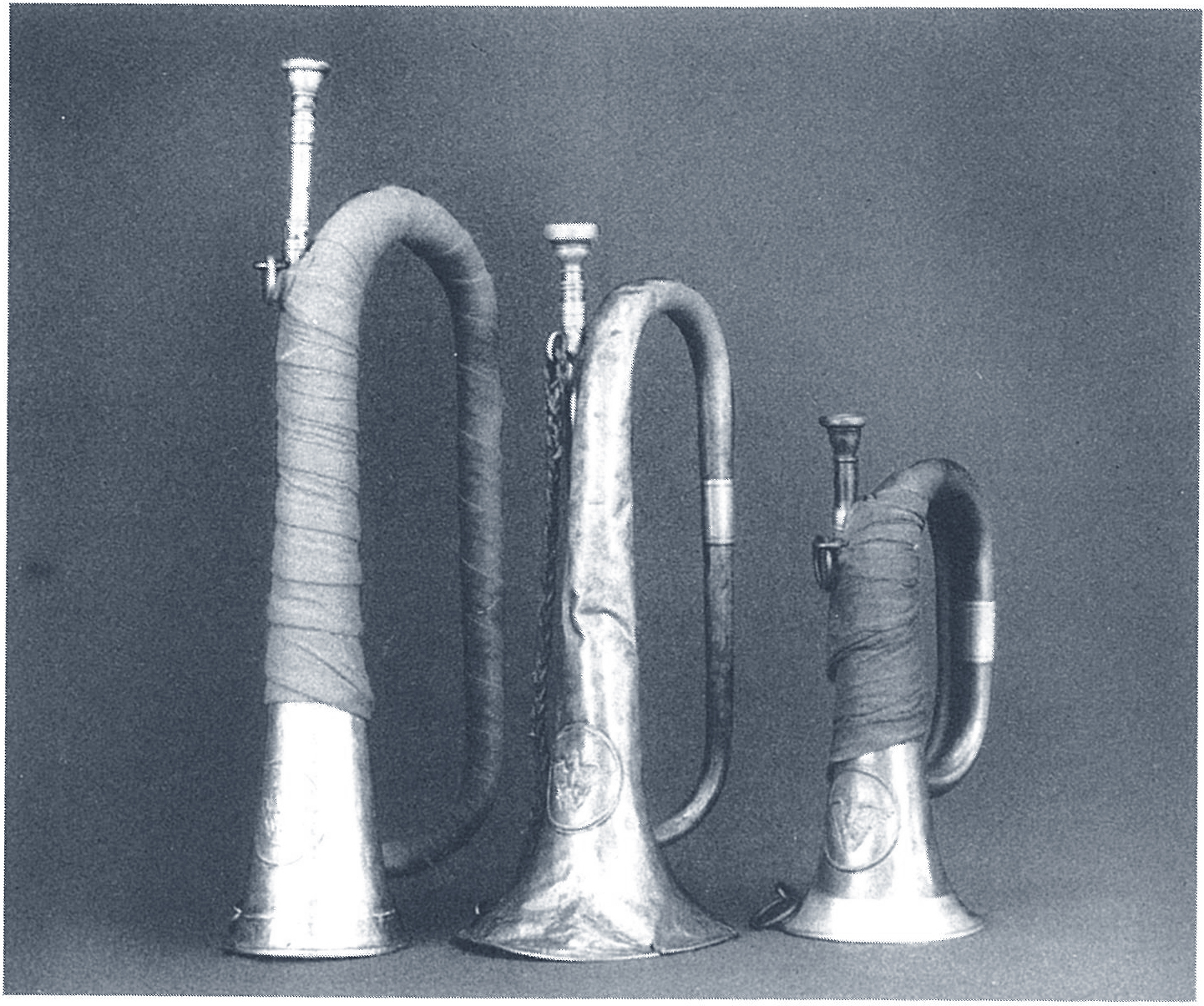
Development of the infantry bugle, Prussia, ca from 1840

Development of the infantry bugle, Prussia, ca from 1840

There were also, by way of curiosities, horns of the post, coach, fire brigade and infantry varieties and cavalry and fanfare trumpets from all over Europe. One of the coach horns carries the British royal coat of arms and comes originally from Buckingham Palace; it was a personal gift from Prince Philip to the present owner who made it available for display. Nor should we forget those horns with keys and finger holes, some of them slightly ridiculous, such as the fingerpipa (Sweden), the soprano cornetto, the corno muto, then the menacing serpent, a keyed horn in C and finally a monumental bass keyed horn, the ophicleide. Splendid old concert horns from around 1800 with wooden cases and up to seven crooks from France, Austria and Germany; a combination horn (1844) with two Stölzel valves; and a Viennese horn from the 19th century in a modern reconstruction by Yamaha: all these took us back to the beginnings of the concert horn. Modern instruments by Alexander and Finke and the interesting Hamburg Lehmann double horn, copied by Lindl in Brno, rounded off this section of the exhibition.
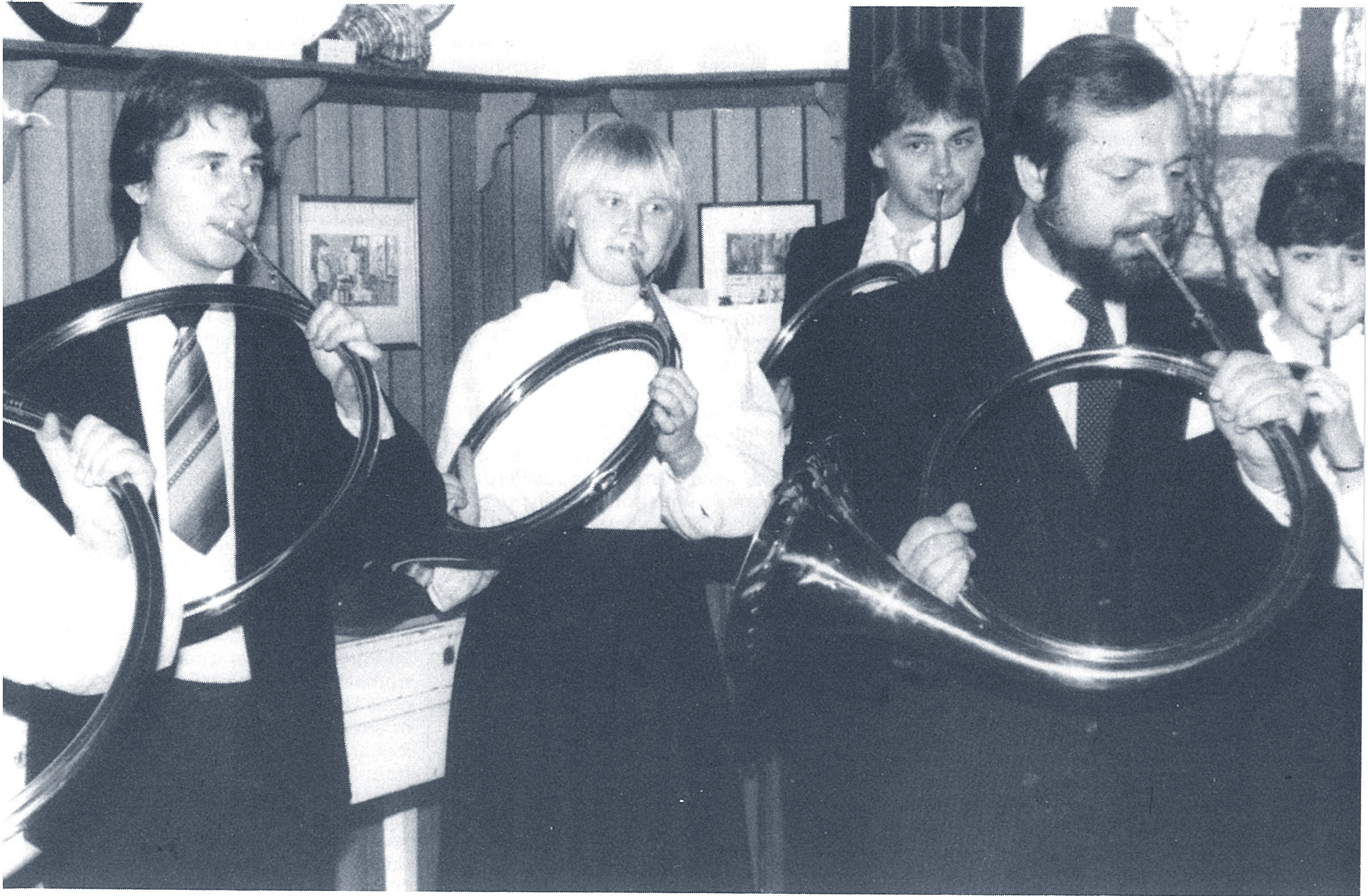
It was allowed to blow the old instruments (Michael Höltzel in front of young visitors).

It was allowed to blow the old instruments (Michael Höltzel in front of young visitors).

Special mention should be made of the Kuhlo horn, a circular flugelhorn in B♭, which had a small, but in my view very important place in this exhibition. This instrument of the German Posaunenchor, with its wonderfully soft sound, halfway between horn and trumpet, was once the soprano and alto instrument of the Posaunenchöre — a rare situation nowadays, alas, now that it has been driven out by the cheaper and correspondingly squeakier piston-valve trumpet.
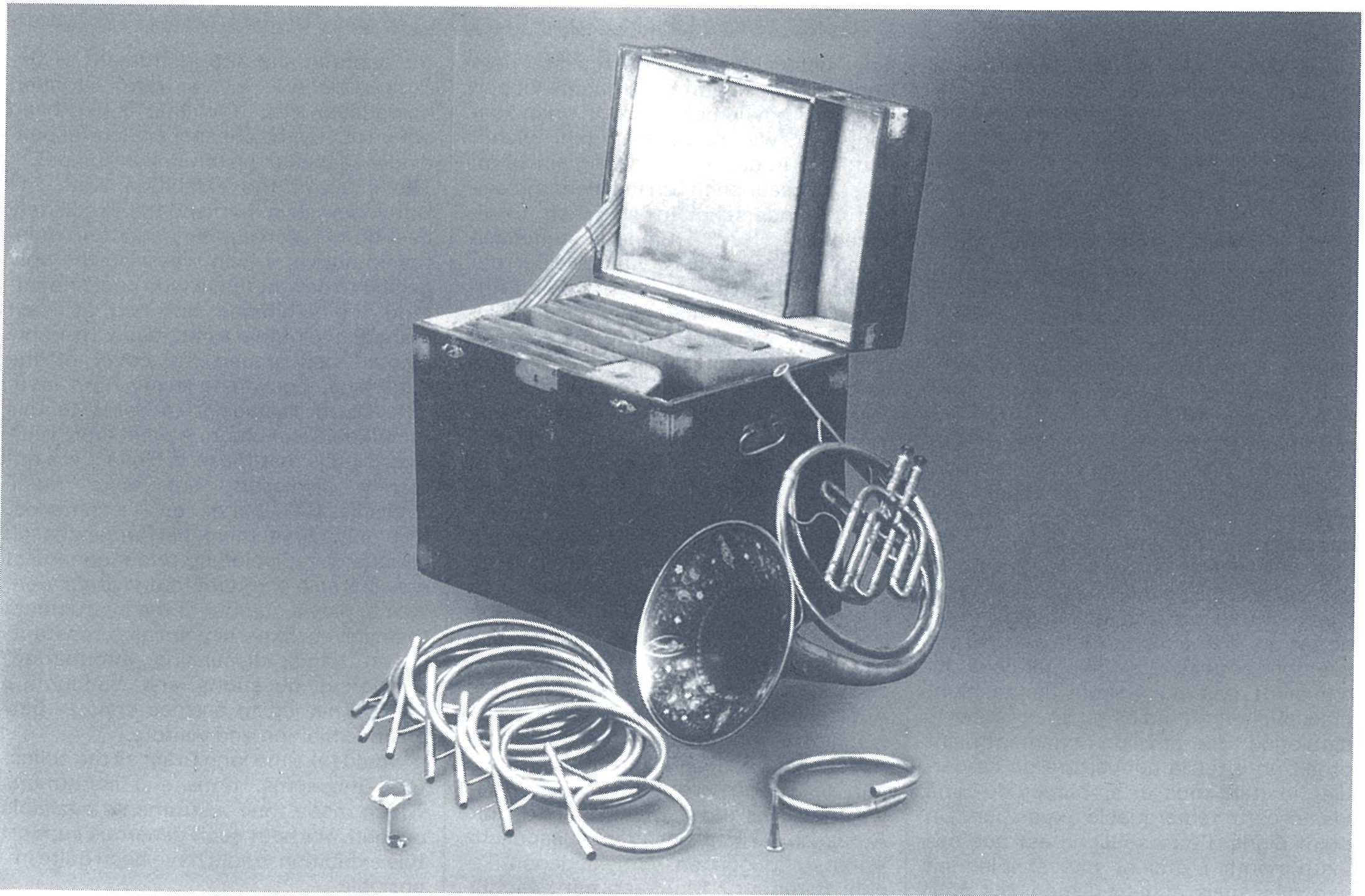
Concert-horn by Guichard, Paris, ca 1844

Concert-horn by Guichard, Paris, ca 1844

The stars of the exhibition were the Dutch porcelain horn and the exquisitely beautiful French combination horn mentioned above, which was also the only exhibit to delight those who could not attend the exhibition but had at least managed to obtain a catalogue. Its richly painted bell graced the cover of the catalogue, beckoning every horn lover who could manage it to come to this remarkable exhibition. A point worth emphasising is that these exhibits were not merely displayed, but were made available for “hands on” experience. Not only were there performances on various days, including two matinees of considerable standard, but visitors were able to play a number of the instruments themselves. Experts were also constantly on hand, dispensing information, answering questions and conducting tours. This led to a close contact between exhibition and visitors.
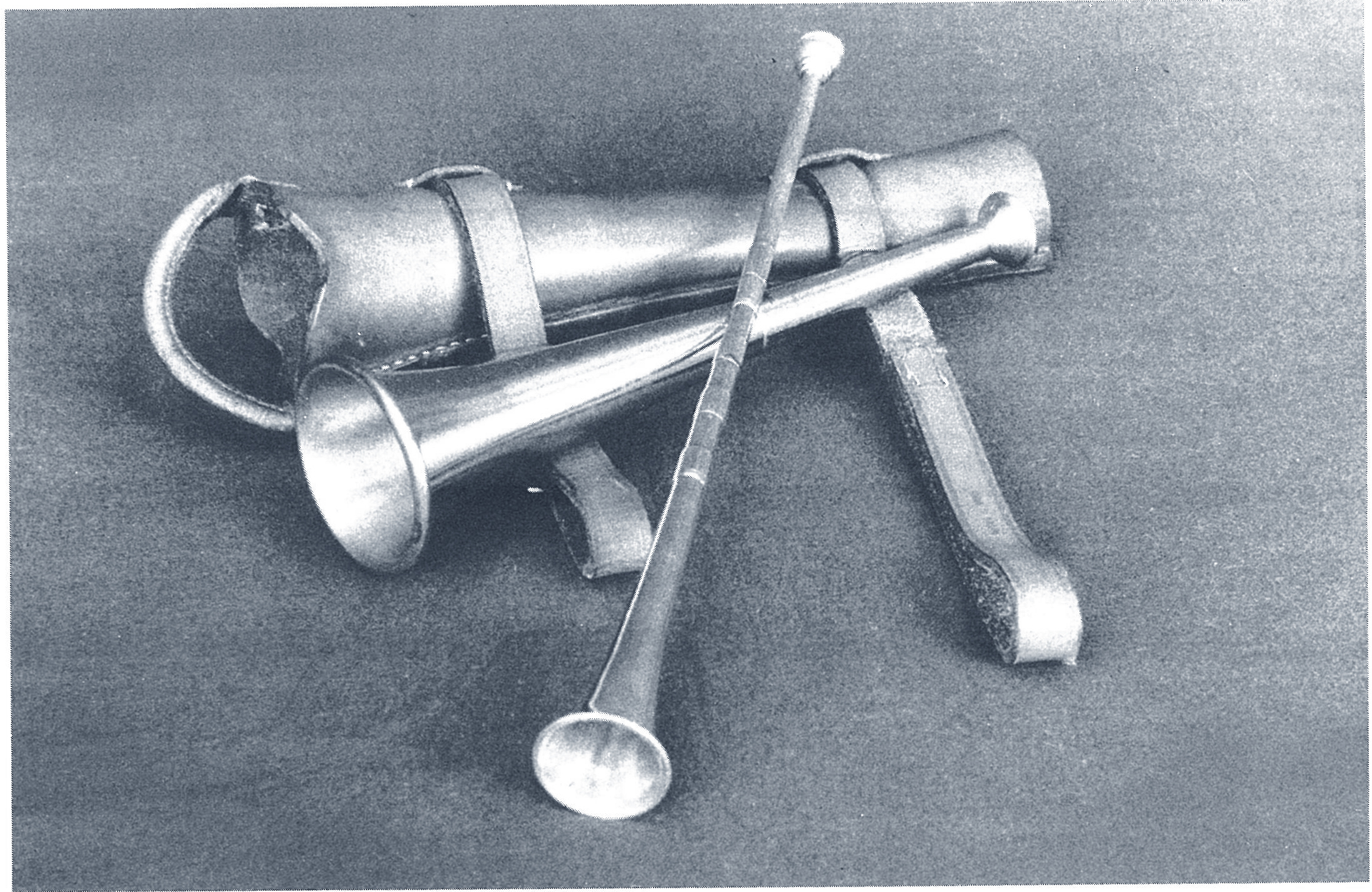
Hunting-horns (short) and Ladies hunting-horn (England)

Hunting-horns (short) and Ladies hunting-horn (England)

It would take too long to list all the collectors, museums, firms and institutions which made their instruments available on loan. Without such generous support this exhibition would have been quite impossible.
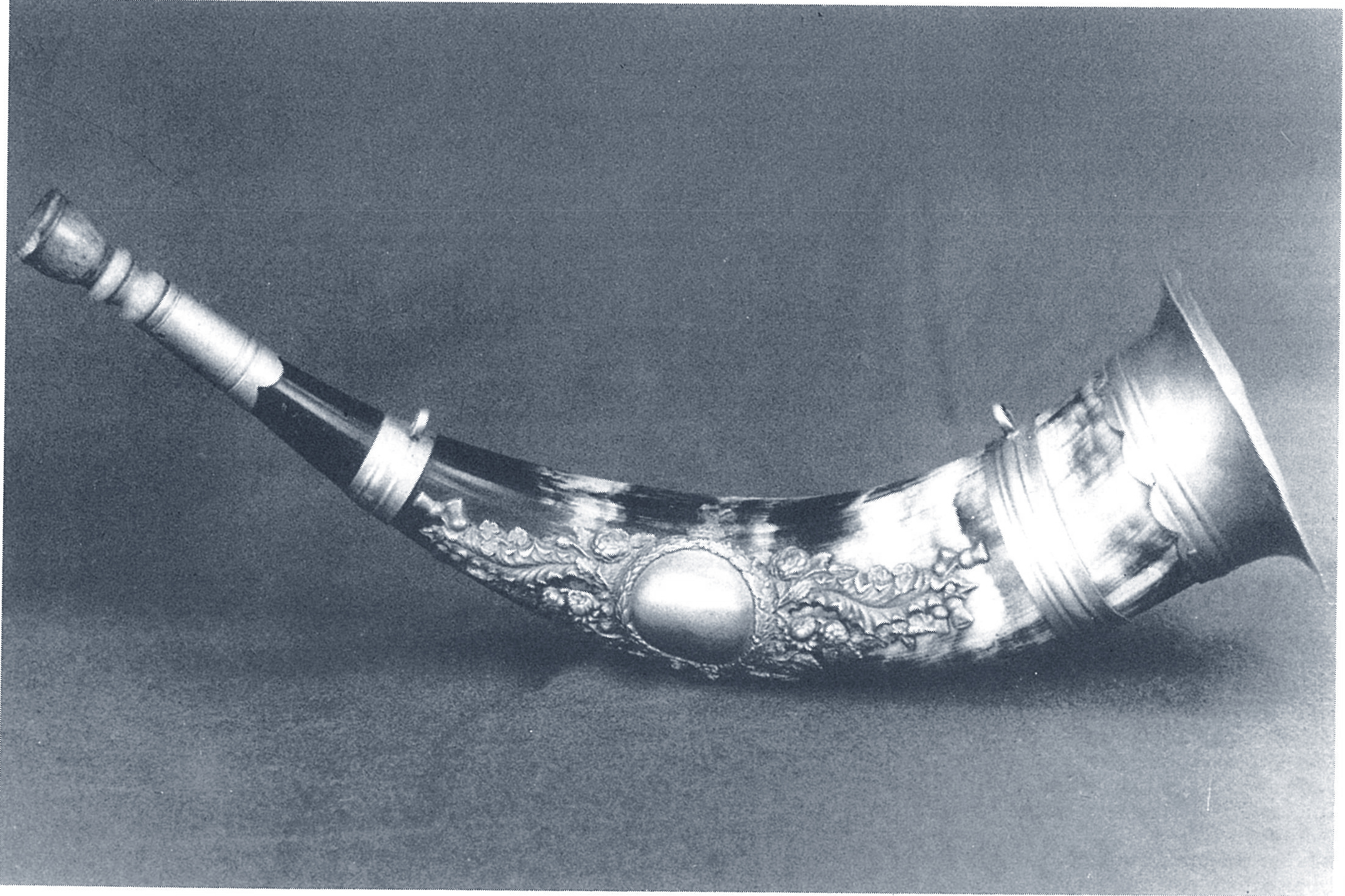
Buffalo-Horn with metallic bell and ornaments, England, around 1900

Buffalo-Horn with metallic bell and ornaments, England, around 1900

The really surprising thing is that a cultural and historical exhibition of such a high standard was organised not, as one might have expected, by experts on music, but by huntsmen. No-one would have thought that hunting-horn players (thought to number 40 000 in West Germany), who lead their own existence on the edge of the “brass world”, would have included experts of the kind necessary to plan and run such an event. I would like to express my appreciation to the Hamburg State Hunt Association as organisers, and to the German Gamekeepers’ Association as publishers of the special booklet.

Brass Bulletin 44, IV / 1983 páginas 16–21

Todo el contenido está protegido por derechos de autor © Brass Bulletin 1983–2026

Compartir este artículo

Facebook LinkedIn
Cargando…

Preguntas y respuestas

Cómo funciona la edición digital

¿Qué incluye la edición digital?

La edición digital reúne los artículos ya digitalizados como textos legibles y consultables en línea —no simplemente como escaneos o archivos PDF— junto con sus ilustraciones originales, notas, autoría, información del número y traducciones disponibles. Las sugerencias de artículos relacionados incluyen actualmente solo este material digitalizado.

¿Los artículos digitales son idénticos a los originales?

Conservamos con la mayor fidelidad posible el texto original, el idioma, las ilustraciones, los pies de imagen, las notas y el contexto editorial. La presentación se adapta para facilitar la lectura en línea y pueden corregirse errores evidentes de transcripción o escaneado. El contenido y el carácter del artículo publicado permanecen inalterados.

¿Qué idiomas están disponibles?

Brass Bulletin se publicó en inglés, francés y alemán a lo largo de toda su historia. Las traducciones al italiano y al español se añadieron a partir del número 60. Por este motivo, en los sitios italiano y español los artículos de los números 1 a 59 se muestran en inglés de forma predeterminada.

¿Con qué frecuencia se añaden nuevos artículos?

Se añaden nuevos artículos casi a diario, con aproximadamente un número completo digitalizado cada semana. El ritmo puede variar según el trabajo de preparación, tratamiento de imágenes y revisión editorial necesario.

¿Por qué no están disponibles todos los artículos en formato digital?

La colección completa de Brass Bulletin contiene 1.246 artículos publicados entre 1971 y 2003. El índice completo ya está disponible en línea y permite descubrir todos los artículos de la colección, incluidos aquellos cuyo texto íntegro todavía no ha sido digitalizado.

La digitalización comenzó en febrero de 2026. Cada artículo se prepara cuidadosamente para la lectura en línea, se revisa y se vincula con su número, sus autores, sus temas y sus ilustraciones. Al ritmo actual de digitalización, se prevé que la colección completa esté disponible en línea en febrero de 2028.

¿Por qué algunas referencias mencionan artículos que todavía no están disponibles?

Las referencias de los artículos originales se conservan aunque el material al que remiten aún no haya sido digitalizado. De este modo se mantiene intacto el contexto histórico y editorial. A medida que se incorporen más números a la edición digital, un número creciente de estas referencias conducirá a artículos que podrán leerse en línea.

¿Puedo sugerir un artículo o informar de un error de transcripción?

Sí. Si hay algún artículo que le gustaría especialmente ver digitalizado, o si detecta un posible error de transcripción o algún dato que falta, póngase en contacto con nosotros. Los comentarios de los lectores nos ayudan a mejorar la edición digital y a establecer prioridades útiles dentro del archivo.

¿Cómo puedo apoyar a Brass Bulletin?

Su apoyo ayuda a financiar la preparación, verificación y publicación en línea de la colección completa.

Suscríbase a la Edición Digital

¿Prefiere apoyarnos sin suscribirse?

Haga una donación

¿Cómo avanza la digitalización?

Estamos poniendo Brass Bulletin a disposición de los lectores en línea, artículo por artículo. Pueden leer los artículos recién digitalizados en cuanto estén listos, incluso antes de que se complete un número entero.

Consulten nuestro calendario de digitalización para descubrir las últimas novedades y las fechas estimadas de disponibilidad de los próximos números. Estas estimaciones se basan en nuestro ritmo reciente y pueden cambiar.

Busca en Brass Bulletin.