5 min de lectura
Brass Chamber Music in Hungary
Por Frigyes Varasdy
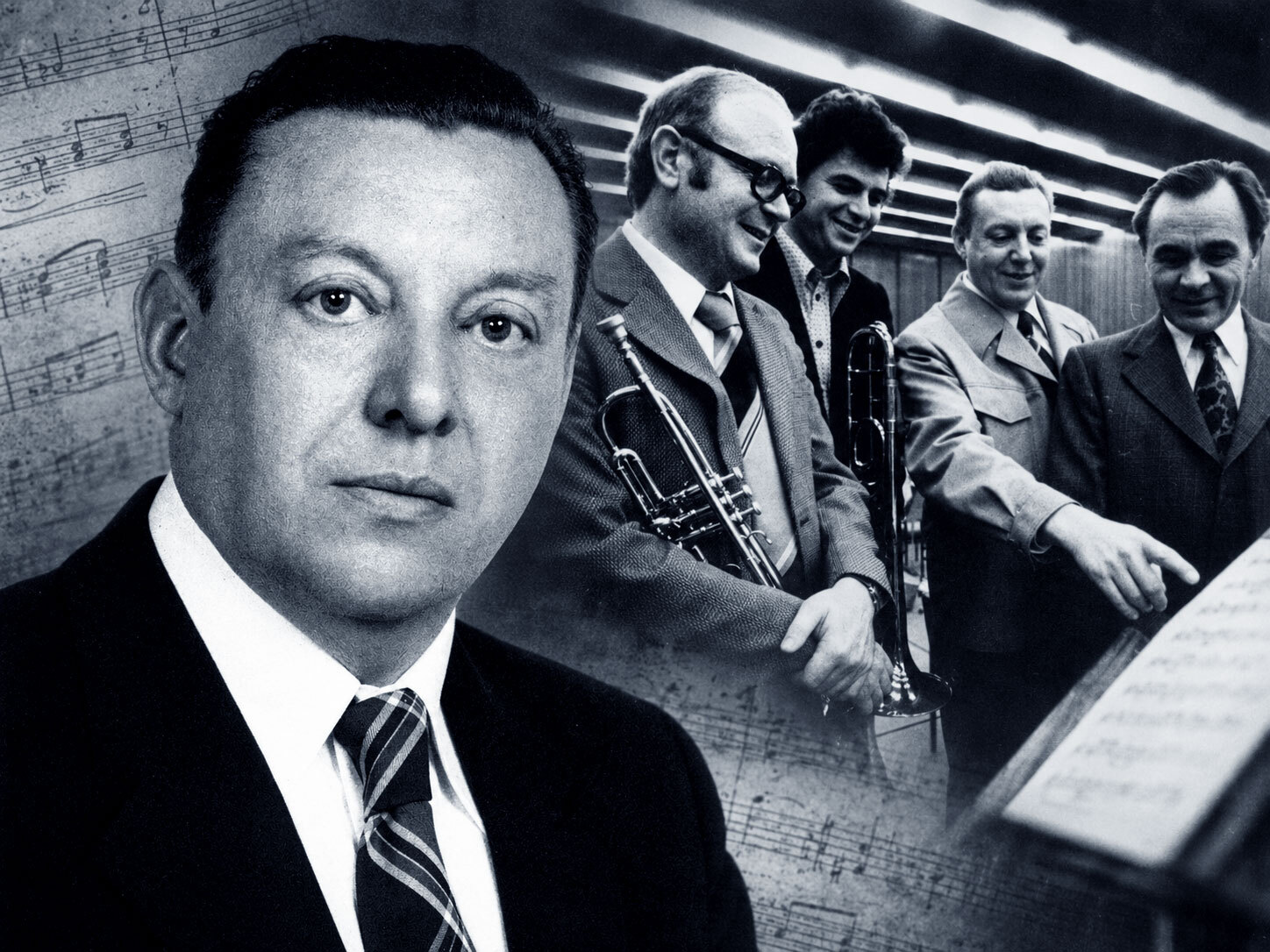
The Hungarian performer and teacher was born in 1930. He was a student of Imre Lubik at the Ferenc Liszt Academy of Music and has taught there since 1963.
He has been playing with top Hungarian orchestras for more than 30 years. He is a founding member of the Hungarian Brass Quartet. He also teaches brass chamber music at the Academy and at the Barcs Brass Chamber Music Camp. He has published several works: beginners’ trumpet, beginners’ chamber music, chamber music pieces, etc.
The Hungarian people settled in their present day area in the basin of the Carpathians, in 986 in the age of the great migrations. However, we have relics of local musical instruments from long before this age. Beside lake Balaton, excavation revealed a house dating from the Bronze Age, approximately 2000 BC, containing numerous articles. One of them is a tritone snail-horn. Two other similar snail-horns have been found here. These are the most ancient relics of wind instruments found in Hungary that are similar to brass instruments.
The Roman Empire extended into Hungary and many cities and garrisons were founded here. The excavation of these sites has continued throughout the last half century and one of the discoveries is a Roman tuba in almost perfect condition which is kept now in the Budapest National Museum (see page 49). Apart from these relics, numerous documents prove that the Hungarians used brass-type instruments when they were still in their migration phase. After occupying their new land, they kept on venturing westward, reaching St. Gallen, south of lake Constance, in 926 AD. So the chronicler writes of the Hungarians: “…Their outpost and spies signalled with bugle-call and shouts that there was an enemy nearby…”, and also, “…After the monastery was on fire, the Hungarians put their horns to silence, stopped their war-cries and left…”. This proves that the Hungarians used brass instruments already in the age of the great migrations.
Much information from later centuries shows that the Hungarians used brass instruments for purposes of religion and war just like western European people did at that time. An inventory of the abbey of Pannonhalma taken in the 11th century lists two horns, both of them silver, one gilded. There is a miniature in the prayer book of Saint Elizabeth of Hungary, dating from the 12th-13th century, which shows a contemporary orchestra. One of the five instruments in the picture is a horn. From the 14th century on, there was a gradual diversification in the function of trumpeters: some of them became court musicians, others took part in martial music. Their social status and their work were similar to those of trumpeters in western countries and so do not require a detailed description here. I would like, however, to recall a small episode illustrative of the age. Accounts of the wedding of king Mathias to Beatrix of Aragonia contain many remarks on the role of trumpeters. But even more interesting is that queen Beatrix brought along her favourite trombonist from Naples who suddenly died on Christmas eve. He was burried in Buda with great pomp, his trombone and favourite wind instruments being played on his catafalque.
Wind orchestras developed from trumpet ensembles within the army. We can speak of brass chamber music in our country only since 1948. It was then that my teacher who unfortunately died young, trumpeter Imre Lubik started his experiments. Only now, thirty years later, can we appreciate his brilliancy in that, though segregated from the rest of the world, he was able to recognize the importance of chamber music and tried to apply it to our instruments. His ensemble was the first brass chamber ensemble in our country. He transplanted his enthusiasm into his pupils so that we continued the work he had started.
Continue reading
Accede a la edición digital completa.
Brass Bulletin 48, IV / 1984 páginas 42–47
Todo el contenido está protegido por derechos de autor © Brass Bulletin 1984–2026