Rendete Brass Bulletin disponibile nella vostra università, nel vostro conservatorio o nella vostra biblioteca Scoprite l’accesso istituzionale

4 min di lettura

Harry James (1916-1983)

Young Man With A Horn
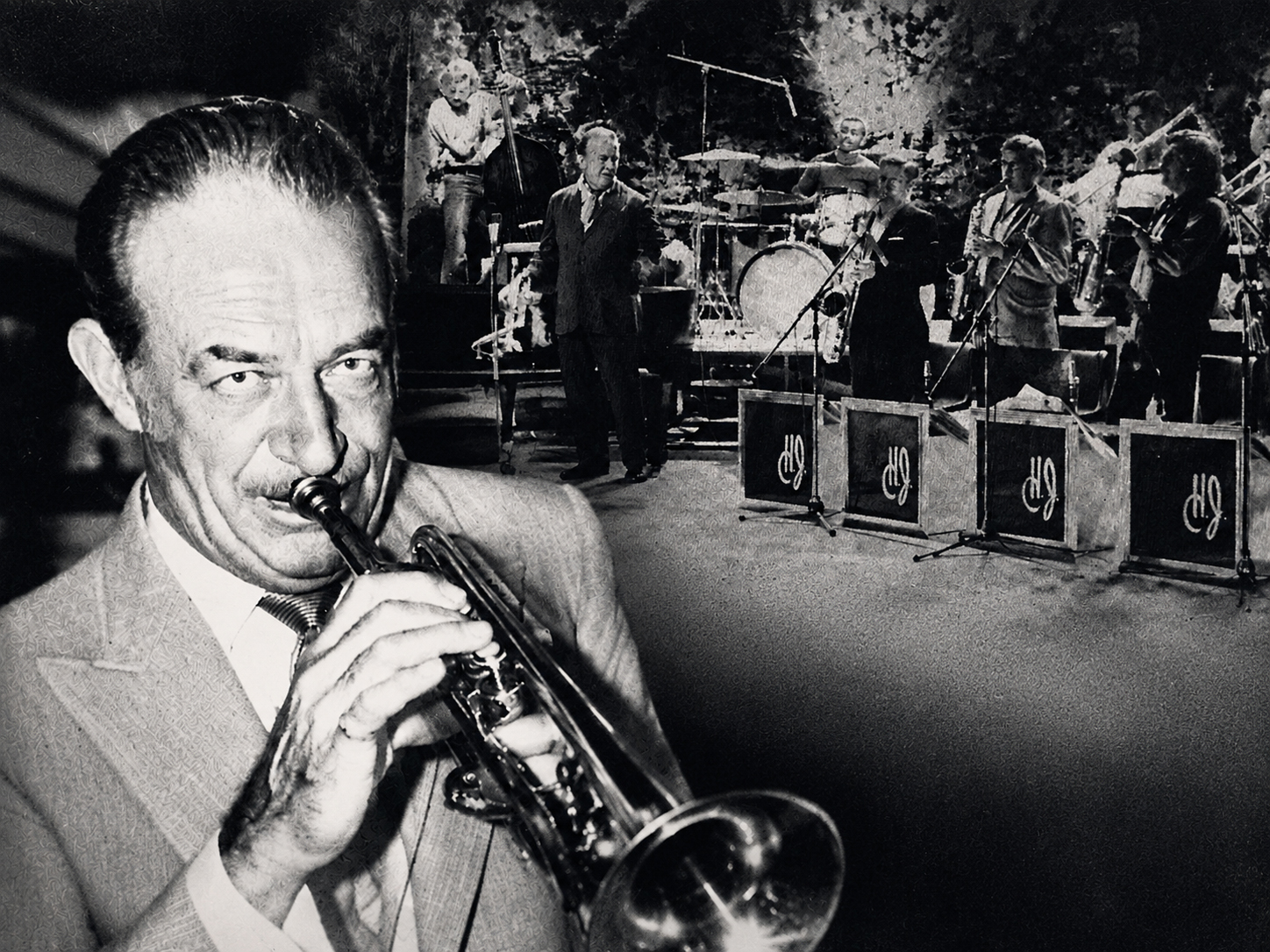
Harry James stood between jazz virtuosity and popular showmanship, turning the trumpet into a mass-audience voice without losing the respect of classical players.
Harry James (1916-1983)

Harry James

A curtain opens to reveal a trumpet bell whose music glows with fire... Harry James. A whole generation of listeners and trumpet players will long remember the man who introduced them to the charms of the “concert trumpet”, even to jazz. In this field of music there are both creators and “popularisers” (with no pejorative connotations), each with his own essential role to play. Harry assimilated jazz but he was best known as the star leading his own band, distilling a form of expression both seductive and accessible to the tastes of the white audience.

Harry was born into a family of musicians in the state of Georgia in 1916. His father Everette James, a circus musician from New Orleans, started him on drums when he was very young, then on trumpet when he was ten. Harry seems to have been a member of that generation which did not arrive at the trumpet via the cornet. His father moved to Beaumont, Texas, where he taught in school and gave private music lessons. This was when Harry first became the star of his high-school band. Although Everette slanted the boy prodigy’s education towards a “legitimate” career, the “young man with a horn” was drawn to jazz. In 1931 Louis Armstrong was drawing the crowds and bringing true recognition to the trumpet. That year Harry played for various local bands, including that of the violinist Joe Gill who took him to New Orleans. By 1932 he was professional and was clearly set on the path of dance music and jazz. His first job with a well known band came in 1935 when the phenomenon from Texas caught the attention of the drummer Ben Pollack. Harry stayed with Pollack for a year and, thanks to him, recorded his first solos (“Deep Elm”).

But what really made him familiar to a wide audience was when he joined clarinettist Benny Goodman’s very popular band (January 1937 to December 1938). The trumpet section was one of the most famous in the history of jazz and light music: Harry James, Ziggy Elman and Chris Griffin!

In 1937 the black players Lionel Hampton and Teddy Wilson invited him to sessions where he proved to be an excellent jazz player, very close to the black style¹. On 16th January 1938 he took part in the legendary Goodman concert in Carnegie Hall. Surely everyone has heard Harry’s virtuoso playing in “Sing, Sing, Sing”? Despite the talent of Bunny Berigan, his greatest rival, Harry continued to climb and in 1939 he was rated number one in all the polls. This led to his recording on 11th January 1939 with the Metronome All-Stars, a group intended to reassemble the favourite players of the readers of the magazine “Metronome”: Bunny Berigan, Sonny Dunham and Harry James on trumpet; Tommy Dorsey and Jack Teagarden on trombone! A whole era when syncopation was in the hands of the greatest brass virtuosos, regardless of style — the Golden Age! Yet Harry remained clear-headed, as the drummer Jo Jones relates: “In a poll conducted by one of the big magazines (“Down Beat”) they offered Harry James the Oscar. He refused it and said, ‘Take that back and give it to Louis Armstrong’...”

In 1939 Harry started to look around: he recorded “Ciribiribin” which shows jazz influence in the phrasing combined with almost “classical” features. (Ex. 1)

Continue reading

Accedi all’edizione digitale completa.

Brass Bulletin 45, I / 1984 pagine 14–17

Tutti i contenuti sono protetti dal diritto d’autore © Brass Bulletin 1984–2026

Condividi questo articolo

Facebook LinkedIn
Loading…

Domande e risposte

Come funziona l’edizione digitale

Che cosa comprende l’edizione digitale?

L’edizione digitale riunisce gli articoli già digitalizzati sotto forma di testi leggibili e ricercabili online — non semplicemente come scansioni o file PDF — insieme alle illustrazioni originali, alle note, agli autori, alle informazioni sul numero della rivista e alle traduzioni disponibili. I suggerimenti di articoli correlati comprendono attualmente solo questo materiale digitalizzato.

Gli articoli digitali sono identici agli originali?

Conserviamo il più fedelmente possibile il testo originale, la lingua, le illustrazioni, le didascalie, le note e il contesto editoriale. La presentazione viene adattata per una lettura confortevole online e gli evidenti errori di trascrizione o scansione possono essere corretti. Il contenuto e il carattere dell’articolo pubblicato rimangono invariati.

Quali lingue sono disponibili?

Brass Bulletin è stato pubblicato in inglese, francese e tedesco nel corso di tutta la sua storia. Le traduzioni italiane e spagnole sono state aggiunte a partire dal numero 60. Sui siti italiano e spagnolo, gli articoli dei numeri da 1 a 59 vengono quindi mostrati in inglese per impostazione predefinita.

Con quale frequenza vengono aggiunti nuovi articoli?

Nuovi articoli vengono aggiunti quasi ogni giorno, con circa un numero completo digitalizzato ogni settimana. Il ritmo può variare in base al lavoro di preparazione, elaborazione delle immagini e verifica editoriale necessario.

Perché non tutti gli articoli sono disponibili in formato digitale?

La collezione completa di Brass Bulletin comprende 1.246 articoli pubblicati tra il 1971 e il 2003. L’indice completo è già disponibile online e consente di scoprire tutti gli articoli della collezione, compresi quelli il cui testo integrale non è ancora stato digitalizzato.

La digitalizzazione è iniziata nel febbraio 2026. Ogni articolo viene accuratamente preparato per la lettura online, verificato e collegato al relativo numero, agli autori, agli argomenti e alle illustrazioni. Al ritmo attuale di digitalizzazione, la collezione completa dovrebbe essere disponibile online entro febbraio 2028.

Perché alcuni riferimenti citano articoli che non sono ancora disponibili?

I riferimenti presenti negli articoli originali vengono conservati anche quando il materiale a cui rimandano non è ancora stato digitalizzato. In questo modo si preserva l’integrità storica ed editoriale della rivista. Man mano che nuovi numeri vengono aggiunti all’edizione digitale, un numero crescente di questi riferimenti condurrà ad articoli leggibili online.

Posso suggerire un articolo o segnalare un errore di trascrizione?

Sì. Se desiderate che un determinato articolo venga digitalizzato, oppure se notate un possibile errore di trascrizione o un’informazione mancante, contattateci. I riscontri dei lettori ci aiutano a migliorare l’edizione digitale e a stabilire priorità utili all’interno dell’archivio.

Come posso sostenere Brass Bulletin?

Il vostro sostegno contribuisce a finanziare la preparazione, la verifica e la pubblicazione online dell’intera collezione.

Abbonati all’Edizione digitale

Preferite sostenerci senza abbonarvi?

Fate una donazione

Come procede la digitalizzazione?

Stiamo rendendo Brass Bulletin disponibile online gradualmente, articolo per articolo. Potete leggere gli articoli appena digitalizzati non appena sono pronti, anche prima che un intero numero sia completato.

Consultate il nostro calendario di digitalizzazione per scoprire le ultime aggiunte e le date di disponibilità stimate dei prossimi numeri. Le stime si basano sul nostro ritmo recente e possono cambiare.

Cerca in Brass Bulletin.