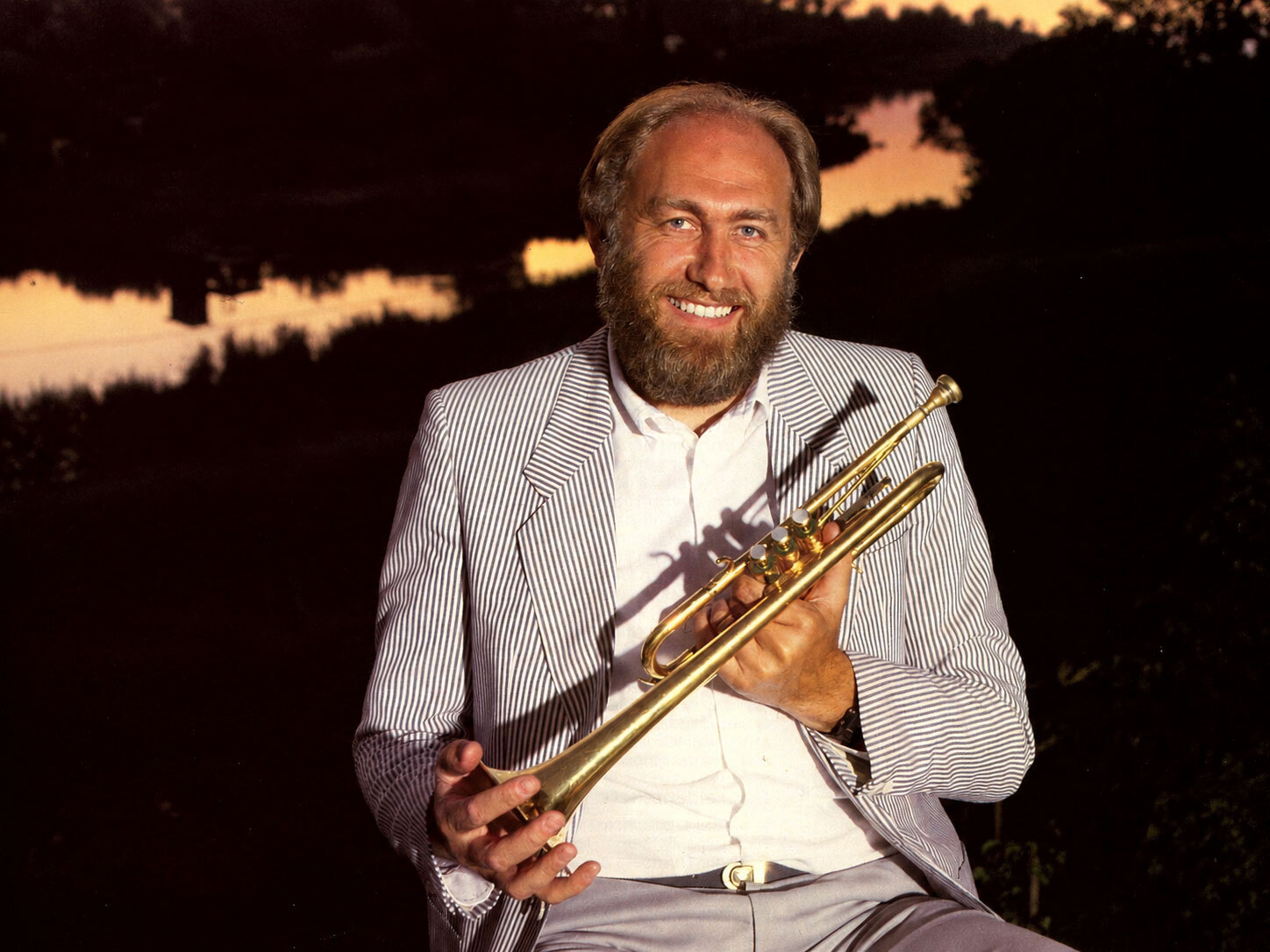
Passionate love of the trumpet
In the event, he carried the day. For one thing, I should imagine, his fanaticism, his passionate love of the trumpet, his avowed bias for that instrument must have struck a chord in his listeners. This addiction and dedication to the instrument must also be familiar for the readers of BRASS BULLETIN. Clearly, in Geiger’s eyes and ears, the trumpet is the equal of any other instrument, vying with the violin in lyricism and in legato playing, challenging even the human voice. His listeners surely loved him for telling them how unjust he thought it was that the trumpet — along with the rest of the orchestra — should be banished to the pit, out of sight of the audience as if it was anything to be ashamed of and the stage was monopolised by the singers. He dreamed of a theatre, he said, where the situation was reversed: singers in the pit, the trumpet in all its glory on stage... And while he has not been able to realise this dream, he has done the next best thing: he has asked a friend to arrange a "Toccata" by Martini for voices and percussion providing accompaniment for the soaring solo of the trumpet.
His audience must have loved Geiger also for his catholic tastes and for his adventurous spirit, too. Noted for his advocacy of contemporary music (he has played just about every trumpet composition written in Hungary today, and has premiered a fair number) he is just as at home in pre-classical music as in jazzed-up arrangements and, indeed, straight pop music.
The list of Geiger’s assets includes his perseverance. He is never one to give up after a few setbacks once he has set his mind on something. For example: he recorded for Hungarian Radio one of his long-time favourites, Beethoven’s "Romance" in F major. The tape was eventually rejected by the committee apparently because the chairman, a violinist, found such an arrangement distasteful. No match for the violin. Geiger, having invested much of his time in preparing the piece, refused to admit defeat. He persuaded one of his friends to change the style and the instrumentation — and, with this newly fashioned accompaniment, Geiger recorded the piece once again. It was submitted to a different jury, responsible for recordings of light music, and was passed. Geiger got his way.
He decided to challenge the violin
The incident must have irked him no end for he decided to challenge the violin in close combat. This time, his vehicle was an old war horse of violin literature: Wieniawsky’s "Kurowiak". The solo is played alternately by the violin and the trumpet and much to the credit of Geiger, the duel ends in a draw... For the present writer anyway.
For sixteen years now, Geiger has been first trumpet of the Hungarian Radio Symphony Orchestra. He has left the opera pit for the radio studio — but then the orchestra does give many public concerts and so, of course, does the Modern Brass Ensemble. What with concerto appearances, tours in Hungary and abroad, György Geiger has enough on his hands to keep him busy.
A remarkably modest person
If you talk him face to face (which is difficult, strictly speaking, because of his enormous height), he strikes you as a remarkably modest person. If he is conscious of what he is worth, he keeps it to himself. If anything, he is shy rather than conceited and his shyness is devoid of aloofness or unapproachability. You may easily embarrass him by quoting to him reviews like the one in the September 1984 issue of the I.T.G. Journal: «Geiger, after settling on to two stacked chairs, proceeded to dazzle his listeners with Mendez-like facility, Severinesque range and a lyricism that alluded to Maurice André».