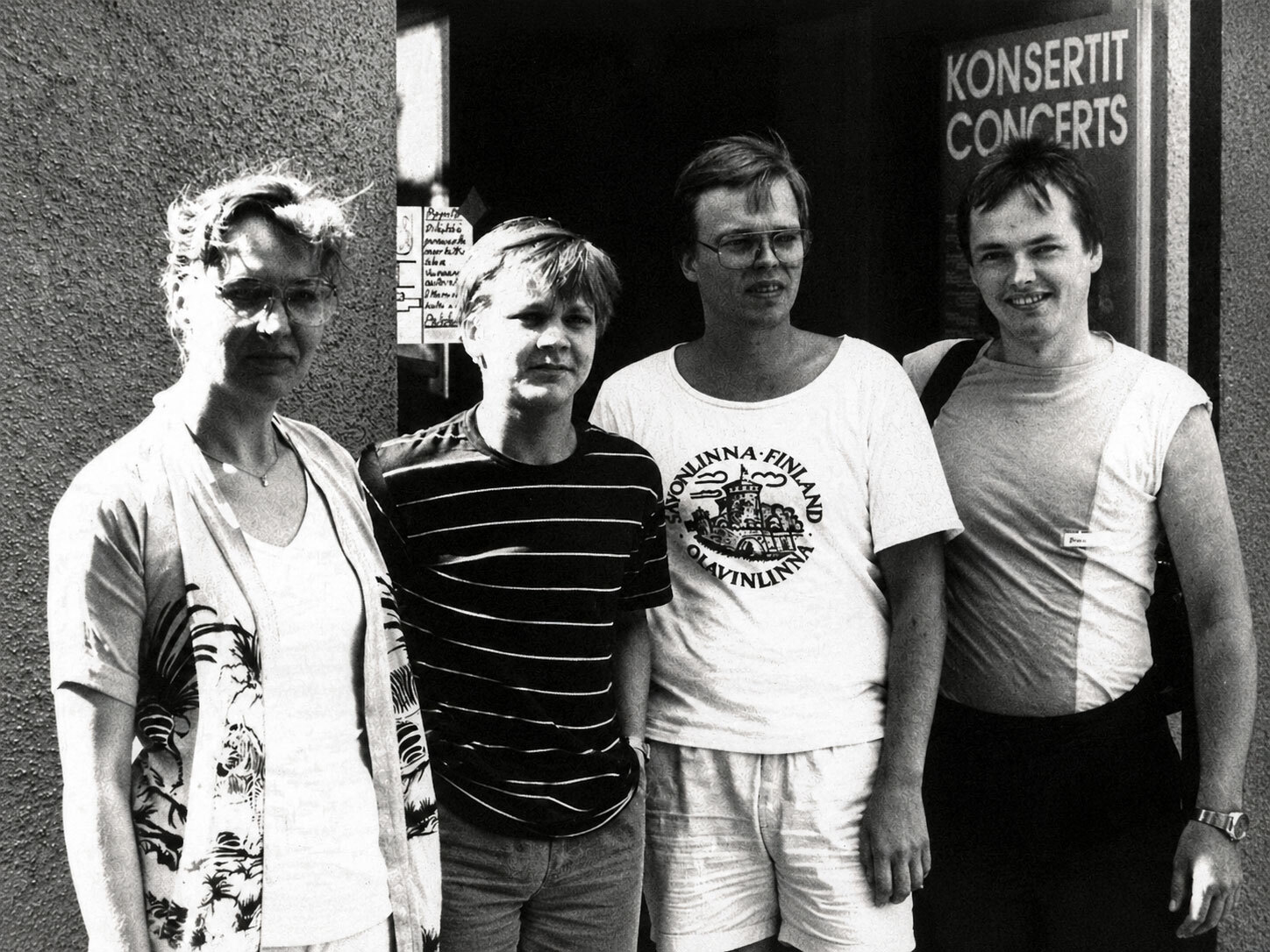
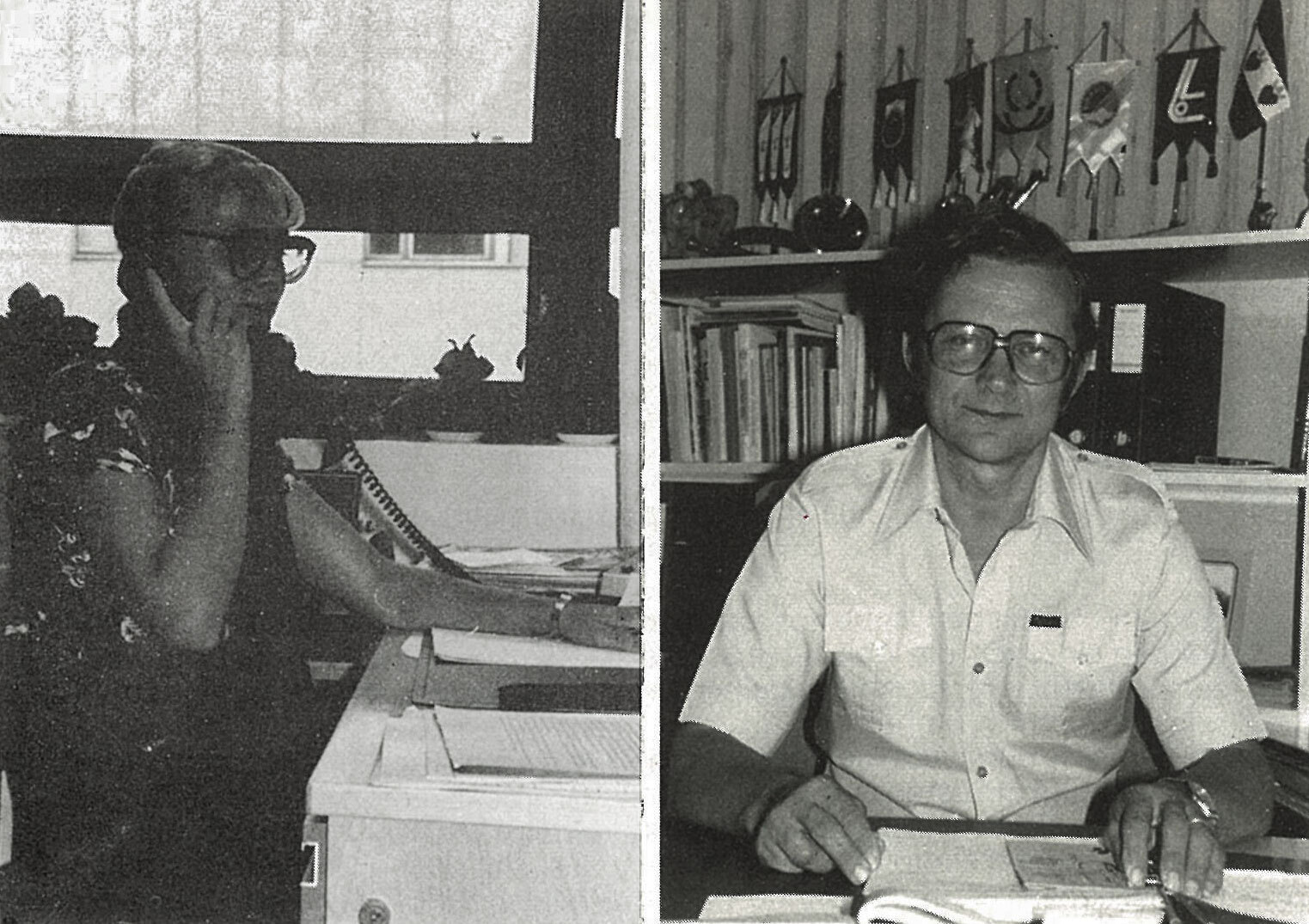
Anni Muikku, Erkki Eskelinen
Lieksa Brass Week
The chamber music festival in Kuhmo, a small town near Lieksa, has acquired international renown.
— So why not try something similar here in Lieksa? wondered Erkki Eskelinen, director of the Lieksa area music school (500 students and forty teachers covering all instruments).
From a distance he watched Kuhmo’s extraordinary development, noted mistakes to avoid and set about creating in Lieksa an infrastructure favourable to his plans (the town with its surrounding area has a population of 19'000).
In 1979 plans were made to develop tourism in the Lieksa area. Erkki Eskelinen took part as musical representative, collaborating with Anni Muikku, then secretary for tourism. The idea of Lieksa Brass Week was born and it turned into reality in 1980.
For the event the town provided a subsidy, the music school premises and some secretaries. Officials of the Finnish brass guilds immediately supported the project, offered professional staff (soloists, teachers, chamber music specialists etc.) and made it possible to set up international contacts. The development of the Lieksa Brass Week since then has been spectacular.
In 1982 the Finnish government, realising the quality and determination of the initiative, the international exposure it produced and the high musical standard, made the undertaking official and provided further subsidy.
Since then the Sibelius Academy of Music in Helsinki, mindful of the prominence of the event, has organised and collaborated as well as financing the masterclasses.
The Pioneers
Simo Kanerva (trombone), Timo Mäkinen (trumpet), Erkki Karjalainen (trumpet), Timo Ronkainen (horn) and Pertti Kulku (trumpet) are in a sense the pioneers of Erkki Eskelinen’s initiative.
— In Finland everybody knows everybody. As soon as Erkki Eskelinen had launched his plan, he phoned us in Helsinki because he knew we had experience of teaching and of chamber music. The trumpet and horn guilds had already been founded and had already invited foreign players as guests (especially the horns).
In Lieksa everything was thrown together and the little town has become the brass capital of Finland, the official venue for their exchanges and professional contacts, the welcoming point where their foreign colleagues come to add their international point of view.
Basic Aims
The main goal of the Lieksa Brass Week is to promote and develop chamber music in Finland to the highest possible level. The organisers try to invite great foreign players so as to offer as wide a range of models as possible to the students and the Finnish teachers leading them in Lieksa. Foreign students are welcome but their presence is not the organisers’ main preoccupation.
Plans
The cost of the course is very low, to encourage applications, but the number of participants (about 100) and teachers (about fifteen) cannot be increased. Economic resources and infrastructure are still limited. In the future, therefore, we must expect to see fees more in line with the lavish teaching resources.
The basic formula will remain, with some effort to change the "menu" so as to incorporate new ideas. 1986, for example, will feature jazz. Also under consideration is an annual brass competition (one instrument per year) with the possibility of an international section if the competition proves successful.
Erkki Eskelinen is also concerned to find the right formula to have these concerts better patronised by the local audience and the tourists. In addition to the self-financing benefit, this kind of popular following would be a happy addition to the reputation of these events. Fortunately there is some sign that this is starting to happen.
Apart from the prestigious players guesting in Lieksa there are brass bands or concert bands from Germany, Britain and elsewhere who give enjoyable popular open-air concerts for the pleasure of those who like this medium — of whom there are many in Finland.
The initiative of Erkki Eskelinen and the team which surrounds him is exemplary and deserves a visit, the more so since this is an area of exceptional beauty. It is a place where holidays and a professional refresher course go hand in hand.
Two key addresses:
Lieksa Brass Week
Koski-Jaakonkatu 4
SF-81700 Lieksa
☎ 75-20359
City Tourist Office
PL 41
SF-81701 Lieksa
☎ 75-20500
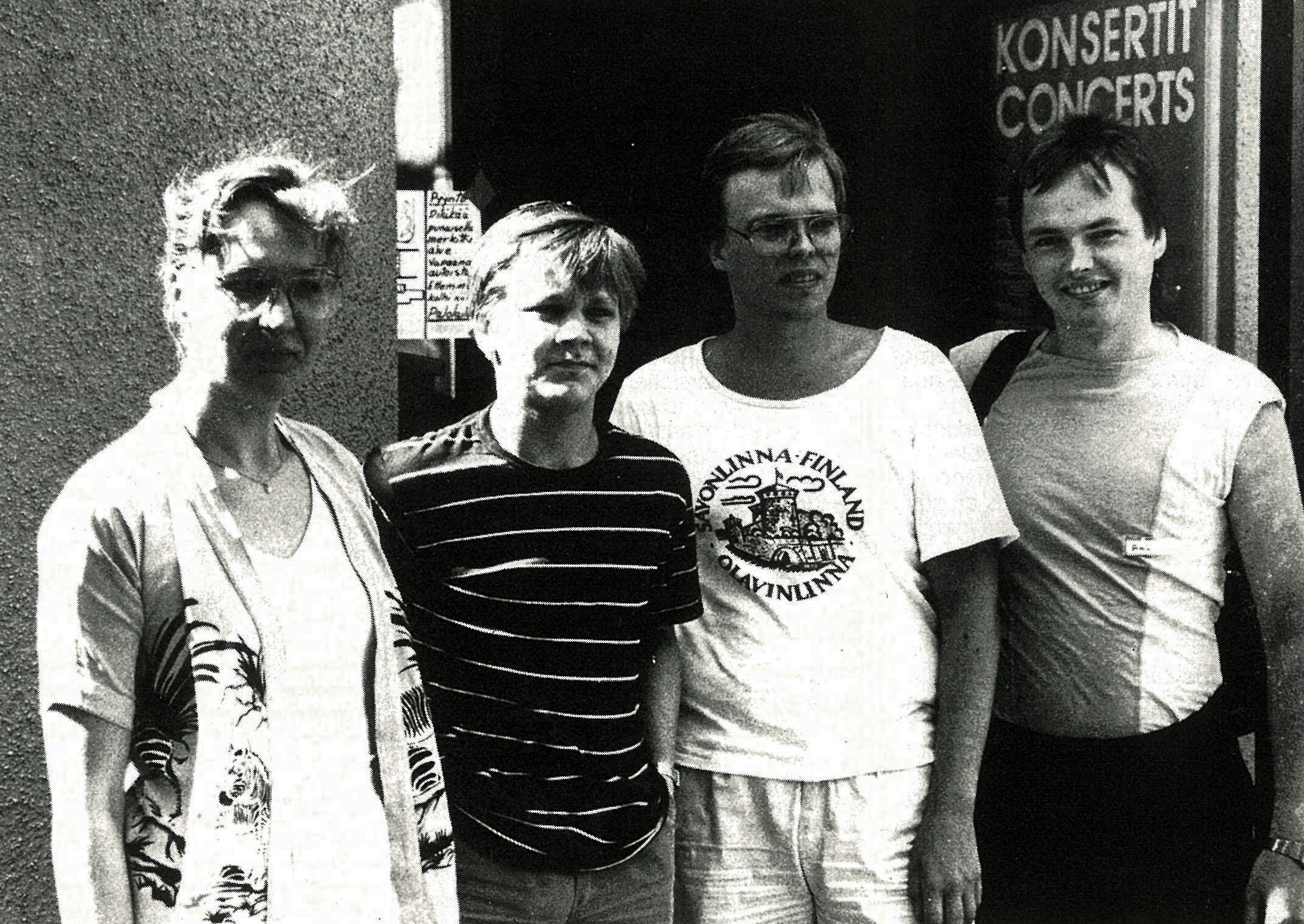
Leena Heikkilä, Pasi Pirinen, Juha Salmela, Aki Välimäki
Conversation
What does the Lieksa Brass Week 1985 mean to young Finnish musicians?
I put this question to:
Aki Välimäki (AV), second time at Lieksa, 1st trumpet in the Helsinki Symphony Orchestra;
Pasi Pirinen (PP), trumpet, third time, sixteen years old, student at the Sibelius Academy in Helsinki;
Leena Heikkilä (LH), fifth time, 3rd horn in the Kuopio Symphony Orchestra and teacher;
Juha Salmela (JS), tuba, fourth time, student in Raimo Pesonen’s professional class at the Sibelius Academy.
LH: Lieksa is different every year!
AV: Lots of things happen here, perhaps even too many. I really enjoyed the master classes and I’ve learned a lot. Technical and musical problems are always clearly presented and well studied.
At first the students were timid, overawed. What struck me about the teachers this year (1985) is that they put us at our ease; everyone wanted to play.
Guy Touvron’s unfortunate absence forced us into discovering Richard Giangiulio, who has delighted all of us.
Lieksa Brass Week is the most important summer event for Finnish brass players; they can meet foreign colleagues here. Nowadays technique is being well analysed all over the world but what’s important for us here is the different musical approach which our foreign colleagues bring and which forces us to think.
The average standard of the participants has increased considerably in the last ten years.
LH: I think it was very clever to invite a brass quintet. The range of instruments was complete for chamber music and masterclasses.
PP: It was very interesting that the guests this year were French.
JS: Above all it’s the players’ personalities that are different. The technical and musical topics are always much the same. The French players in the Guy Touvron quintet seem to emphasise sensitive and subtle musicality.
LH: Yes, for example, Michel Molinaro presented a French work and the French way of approaching it and playing it.
JS: It’s exciting to go from one concept to another. The Scottish trumpet player John Miller comes to Lieksa regularly to work with us in different groups — chamber music or orchestral sections. We match up the parts and discuss styles.
LH: All that is very positive but — and we have discussed this among the students — there is almost too much to learn and too little time.
PP: Personally I really like the masterclasses. They raise problems which everyone can observe and study.
LH: That’s true, but for me the private lessons are much more effective.
BRASS BULLETIN: How does your situation compare with that of brass players from other countries or, to put it another way, how do you make these comparisons?
PP: The foreign teachers’ views are essential. Mr. Giangiulio, for example, assured us that our standards were the same as in other countries and that our problems are the same as elsewhere. But we are so timid...
LH: From that point of view the Lieksa meetings have greatly stiffened our resolve. We’re grateful to Erkki Eskelinen for that.
Structure of musical education in Finland
There are about a hundred music schools, distributed around the country, maintained by the local authorities, providing elementary and intermediate instruction.
For pupils who continue their studies (from age sixteen and upwards) and who seek a teaching diploma (to teach in the music schools just mentioned, for example) there are ten national music colleges: Helsinki, Joensuu (for orchestral musicians), Kokkola (for orchestral musicians), Turku, Lahti, Jyväskylä, Tampere, Kuopio, Oulu and Pietarsaari (instruction in Swedish).
Advanced professional training is available only at the Sibelius Academy in Helsinki. This institution was founded (privately) in 1882 and taken over by the government in 1980. It now has between 700 and 800 students and 250 teachers.
Separate from this civilian structure is the Helsinki Military Music Academy, which has long been prominent in the brass field.
Finland has an excellent musical education system, extending throughout the country.