Las traducciones originales al español de Brass Bulletin comienzan con el n.º 60.
Brass Bulletin 45, I / 1984 página 31–33 · 2 min de lectura

The Polyphonic Trombone

A suggested notation system

The Polyphonic Trombone

There is a tendency in modern composition to treat even purely melodic instruments in a polyphonic way. With brass instruments this does not so much mean so-called multiphonics as rather an attempt to differentiate the various components of sound production in such a way that, within the framework of actual monophony, there occurs a polyphony of line. For the simplest case of this differentiation we need look no further than the rhythmically independent use of two different types of vibrato (lips + slide or slide + diaphragm). If this kind of combination occurs only occasionally, it is not difficult to indicate it by means of additions to standard notation. The situation changes, however, once conscious and continuous use of polyphonic combinations becomes the basis of composition, and thus also of performance.

A special notation system becomes indispensable as soon as the sounding of overtones and the moving of the slide are required to produce, rhythmically, two separate parts. If specific slide positions cannot be assumed when specific overtones are being sounded, then absolute pitches cannot be notated. The two components of sound production must therefore be kept completely separate. The following is a suggested system of notation:

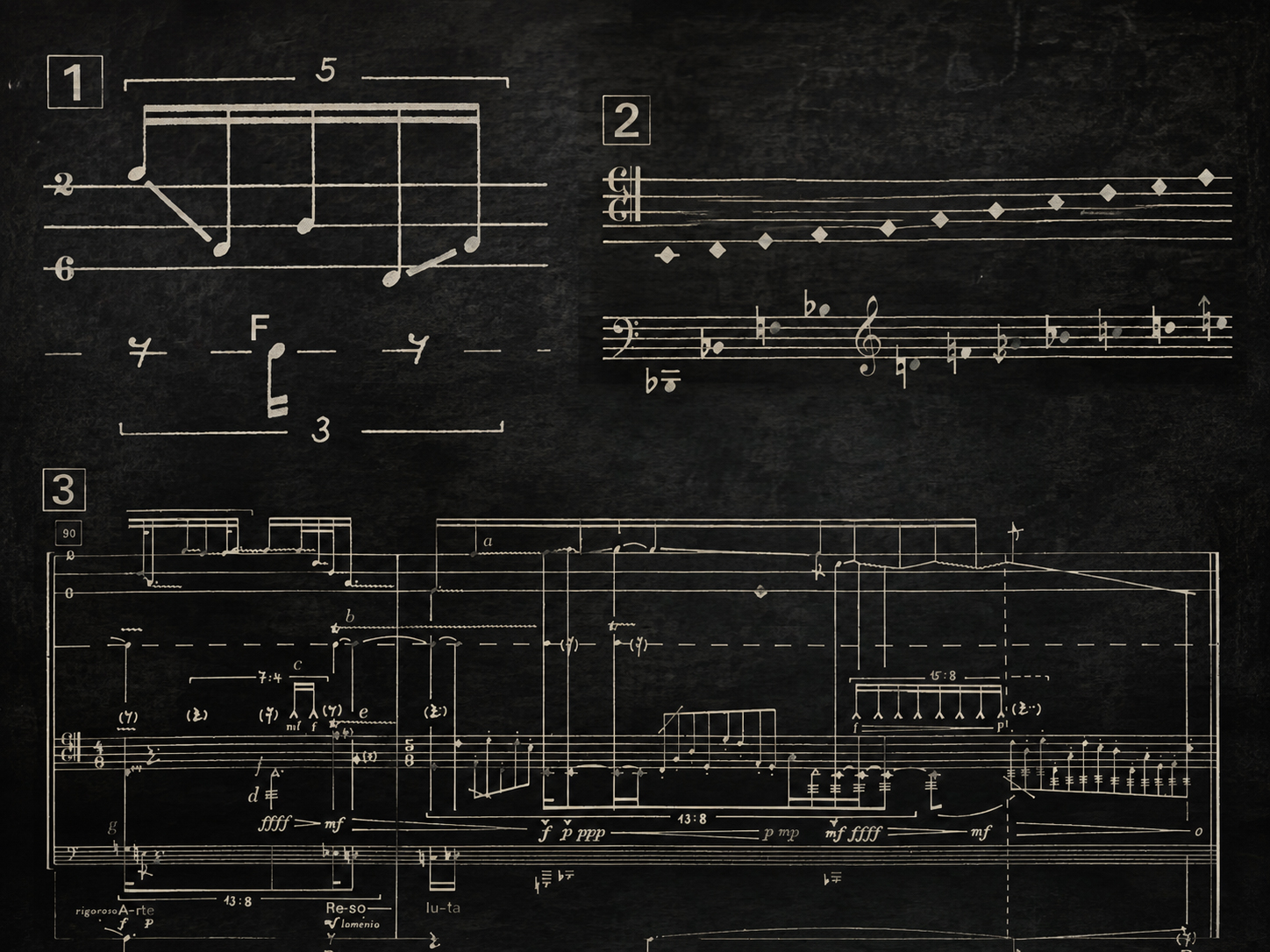
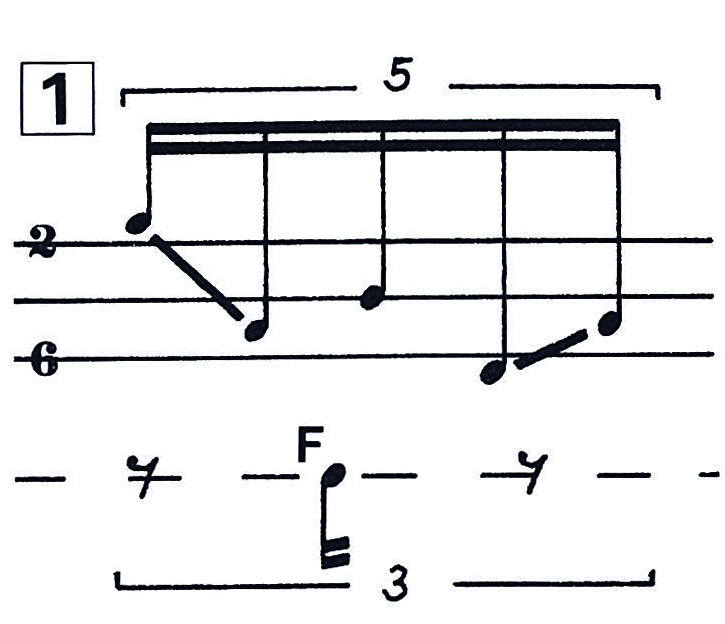
A) For the slide a three-line stave is introduced, on which positions and changes of position can be shown in a rhythmically fixed (or graphically illustrative) way. The use of the dash to indicate glissando makes it possible to distinguish between “normal”, fast movement and continuous transition. If the valves are to be used independently of the slide, this will be shown on a dotted leger line below this stave.¹ (Ex. 1)

Example 1

Example 1

B) The stave for the overtones lies below the stave for the slide. It is a good idea to retain the standard five-line stave but to use it only to notate overtone relationships. As a standard solution I suggest starting with pedal B♭ and fitting the overtones into the stave in such a way that the eighth partial above pedal B♭ (i.e: C in the treble stave) fits on to the line which is normally C in the tenor stave. A reversed tenor clef will indicate this procedure; in addition, to show that this indicates only relative pitch, dependent on the slide position, a rhombic note-shape is used. (Ex. 2)
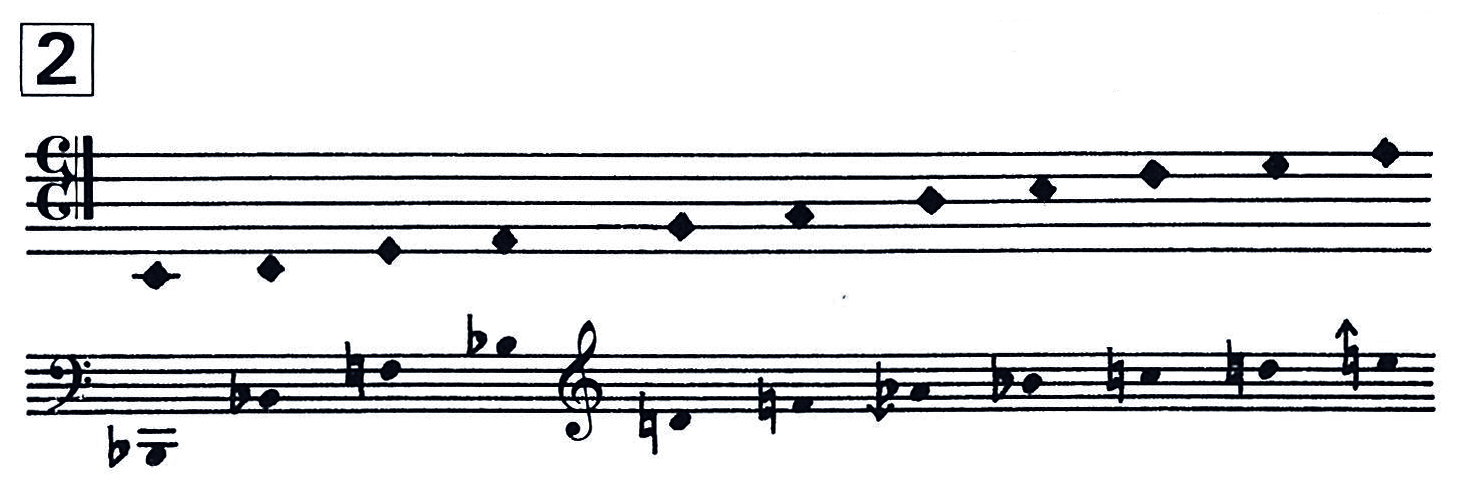
Example 2

Example 2

Combining these two staves now makes it possible to notate clearly anything which it is technically possible to play. In addition a small stave carrying cue-notes can be used at appropriate points to provide help by indicating the absolute pitch at a given moment. Further instructions can easily be integrated into this basic system. As a rule care should be taken to incorporate anything affecting lips and breathing into stave B and anything affecting movements into stave A. Specifically, this means that the following belong to A:

a) slide vibrato,
b) use of the valves (valve trills);

and the following to B:

c) diaphragm vibrato,
d) flutter-tonguing,
e) lip trills (between overtones),
f) blowing sounds,
g) singing into the instrument (notated on the cue-note stave).

The use of any other leger lines should be avoided as far as possible. Where these are unavoidable — to indicate rhythmically independent use of a mute mounted on a stand, (h), for example — they can easily be introduced above or below the main staves.

The final example — two bars from my composition “Cercar” (1983) for trombone solo — shows that the notation system suggested here ensures a comprehensible presentation even in quite complex situations.² (The small letters refer to the playing techniques listed above.) (Ex. 3)
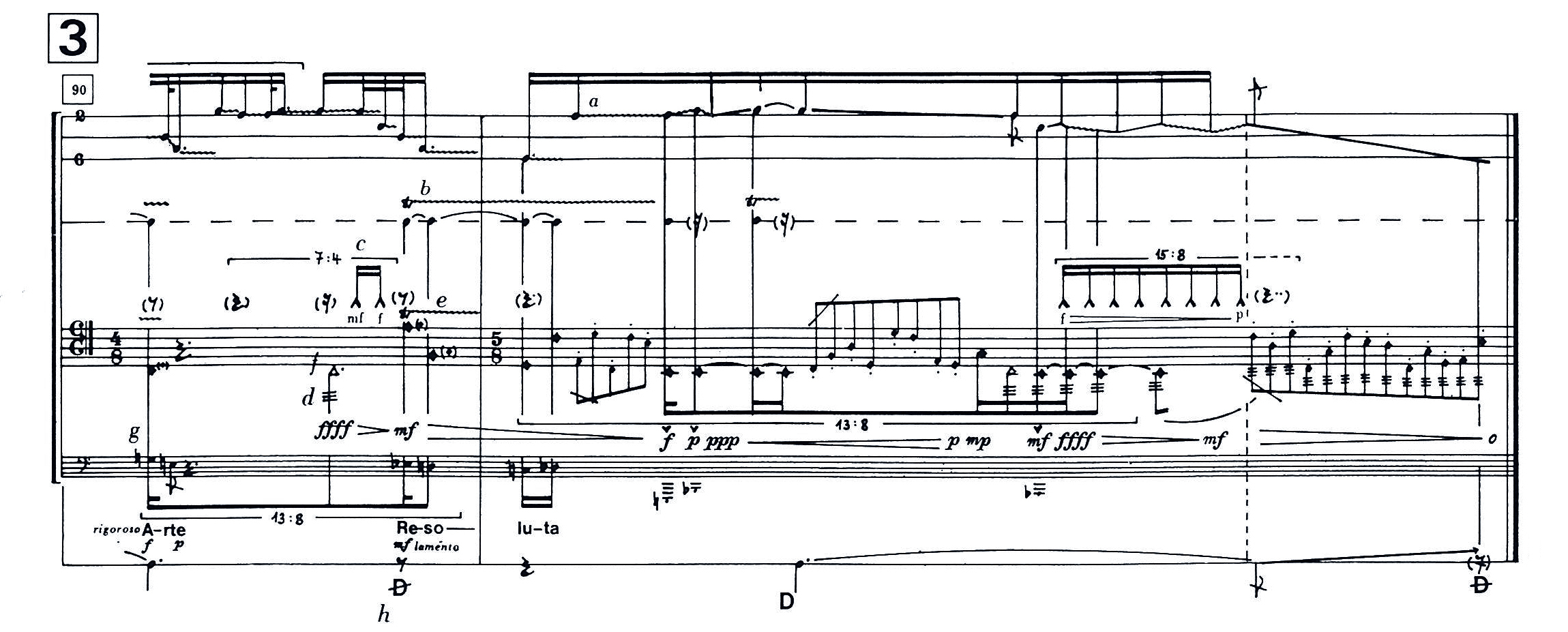
Example 3

Example 3

Notes

¹ When independent use of valve(s) and slide is required, the composer must state whether he requires B♭, F or E positions.

² “Cercar” for trombone, and also “Am Ende des Kanons” for trombone and organ, which uses some of the same material, have been published by Gerig (Cologne). The above excerpt is reproduced by kind permission of the publisher.

Todo el contenido está protegido por derechos de autor © Brass Bulletin 1984–2026

Compartir este artículo

Facebook LinkedIn
Cargando…

Busca en el archivo de Brass Bulletin.