Attrezzatura
126 articoli disponibili online
 Gratuito
300 Years of the Horn in Bohemia
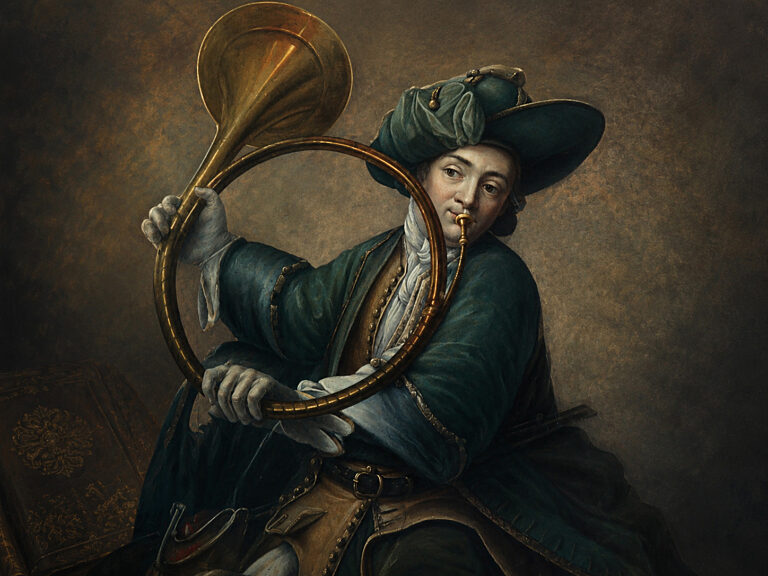
An unsigned portrait from the Dresden court links the rise of Bohemian horn playing to the ceremonial world of Baroque hunting culture.
Di Kurt Janetzky
 Membro
Parte 4
Instrument Makers in USA
Lawson Horns
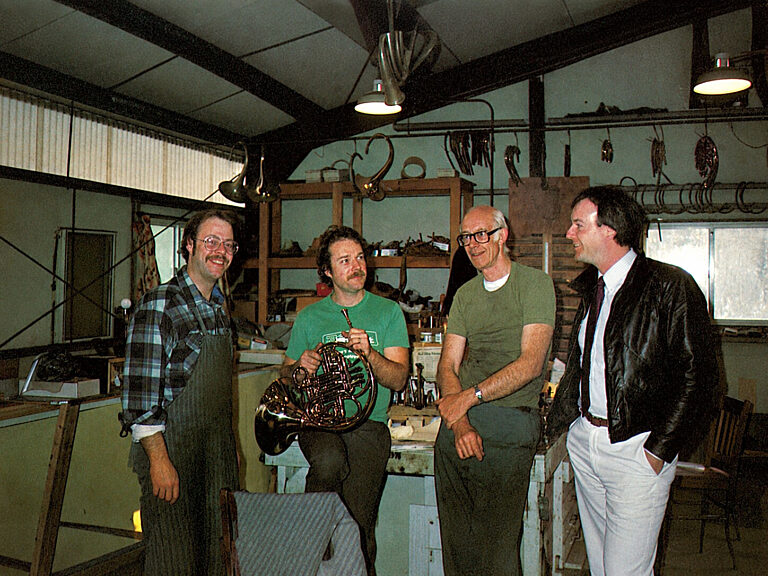
Walter Lawson built horns by testing alloys, valves and leadpipes with unusual precision, while keeping craftsmanship, musicians and acoustics closely connected.
Di Stephan Suter
 Gratuito
Piston or rotary valve system?
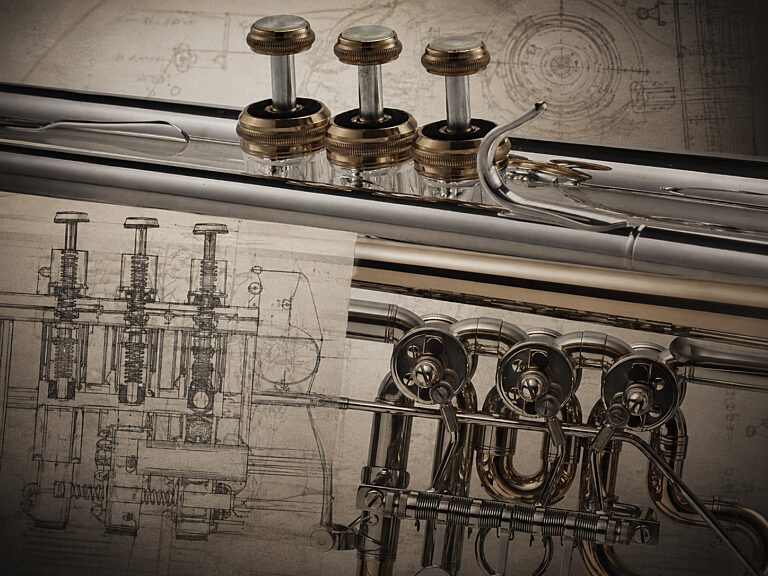
Pistons or rotary valves: which system is superior? Simplicity and silence vs mechanical complexity—an ongoing debate among brass players.
Di Robert Ischer
Service to customers
Buying is easy—servicing is not. Robert Ischer exposes the hidden crisis of spare parts and aftercare, urging musicians to demand real accountability from makers.
Di Robert Ischer
 Membro
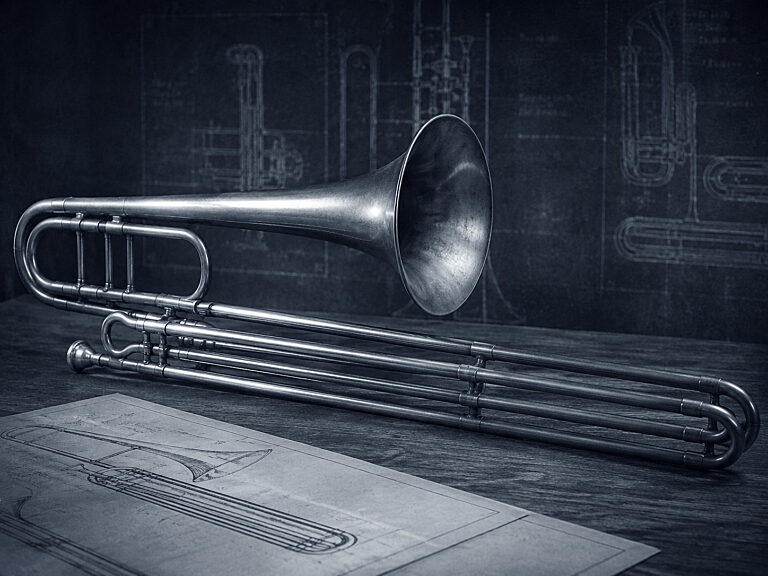
The trombone with 6 independent valves
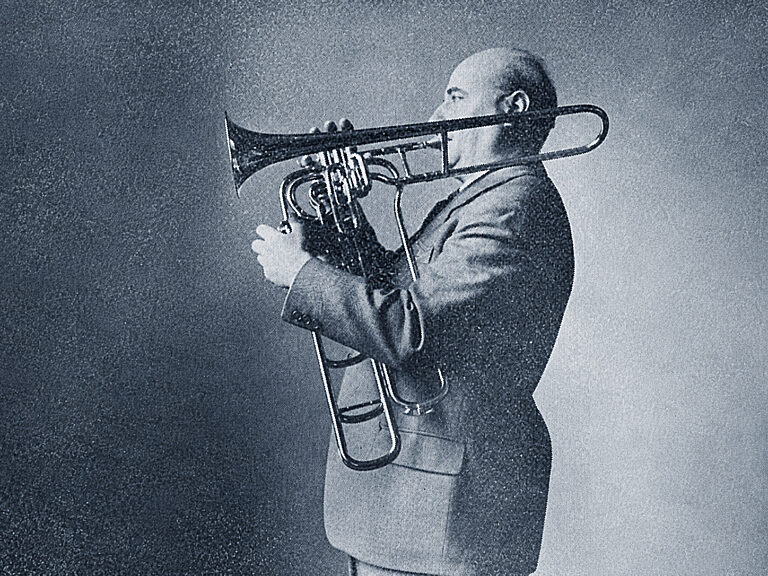
Technical analysis of the trombone with six independent valves, examining its mechanics, extended range and potential for new repertoire.
Di Edmond Leloir
 Gratuito
The double-slide trombone
museum-piece with a future?
As virtuosity reshaped 20th-century brass playing, Boris G. Manzora argued that the forgotten double-slide trombone could redefine technique and range.
Di Boris G. Manzora
Reflections on the horn
Francis Orval reflects on horn playing, discussing tone production, breathing and the influence of French and German traditions on sound and style.
Di Francis Orval
 Gratuito
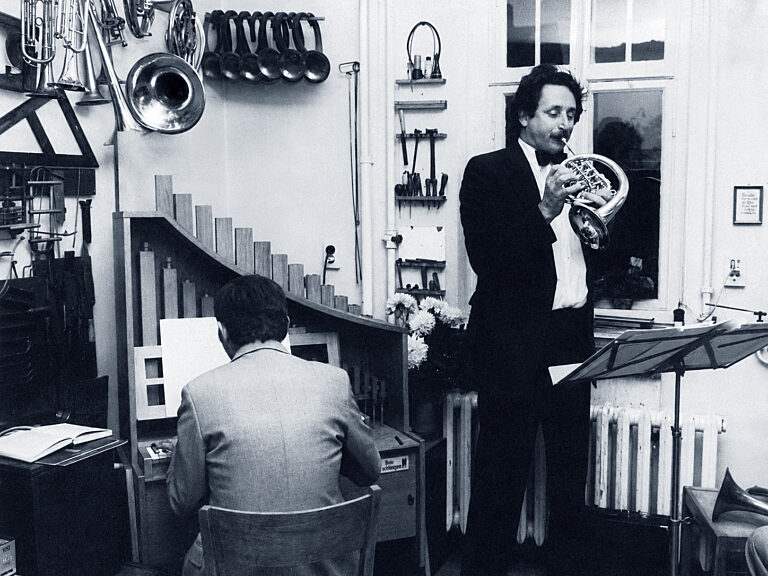
A modern corno da caccia
Bach’s highest horn parts expose a divide between historical sound and modern technique, prompting Friedbert Syhre and Ludwig Güttler to rethink the instrument itself.
Di Werner Wolf
 Membro
On hunting horns and other similar instruments
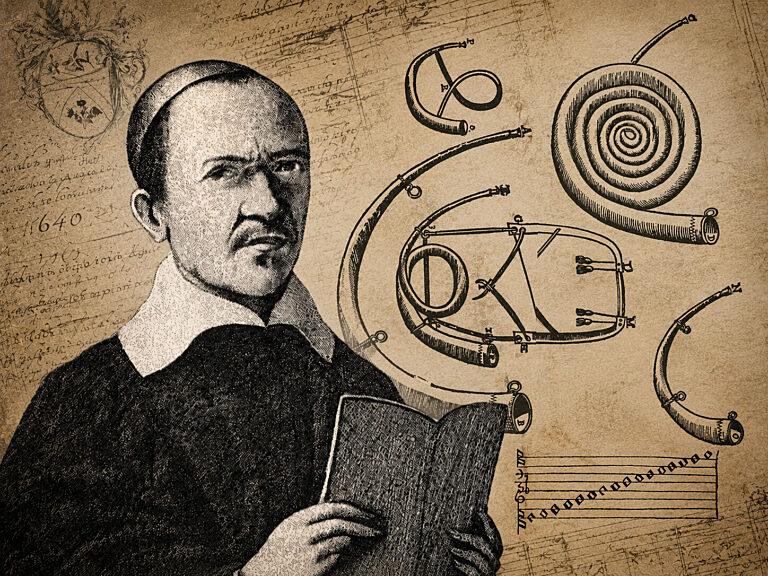
Aus Pierre Trichets Traité des Instruments de Musique (um 1640)
I admit that hunting horns, horns, buccines, trumpets and bugles have no holes in their outline, no more than do trumpets and sackbuts. This does not prevent them from being polyphonic, however, and changing the sounds. Yet some consider that all these names are synonymous and mean almost the same thing among Frenchmen, as did cornu, lituus and buccina among the Romans, as some have thought. It is true that Festus believed the lituus to be a kind of small buccina and that Lipsius¹ (de mil. Ro., book 4) said that people did not at first distinguish between buccina and cornett, but that later they did so distinguish, as larger and more curved brass cornett were made. The buccina, according to the same author, was at first nothing other than an ox horn: et a bene nomen sumpsit, ut instrumentum quod bubus canit. Isidore draws the etymology from buccina a voce quasi vocinam dicas. Varro, however, believes it is so called because, when sounded, it sings “booboo”. Panciroll, explaining the shape of the buccina, also mentions the reason for its name in these words: usurpabant buccinas circa orificium, per quod vox immittebatur, angustas: in ima vero parte, ex qua sonus egreditur latas: erantque oblongae ad similitudinem buccini, quod purpurae genus est, unde et causa nomini.One of our French writers says that the huntsmen’s horn is not that which is used today but one of ivory or of horn; for the huntsmen of antiquity used only horns while the modern instruments are all of bronze. I readily grant that horns were formerly made but of horn and ivory, yet there is no doubt but that today they are made of other materials. Julio della Scala² (l. l. poët. c. 20 p. 78) gives evidence of it and says the Germans make them from boxwood but they are different from those used in the hunt: Nunc cornua germani e busco efficta multis foraminibus inflant magno spiritu non sine gratia et decore, praesertim in nocturnis festivitatibus. Vocem namque humanam imprimis imitantur, eamque vehementer contentam. Varro says that cornu a curvore dictum fuit. But Fungerus derives this word from the Greek kéras, or from the Hebrew, which is written almost the same.The first origin of the hunting horn lies in the fact that shepherds used to call their flocks by means of its sound; in this connection Columella wrote that the beasts must be accustomed to return to their pen at the sound of the buccina. Huntsmen then used it to call their dogs and their falcons, from whence it is called huchet [from the French hucher, “to call” — Ed.] as well as cornet. La Boderie gives us a charming description of the use of this in his poem:The more his horn the huntsman sounds,The more do run and call his hounds;It imitates the trumpet shrill,Sounds now the quarry, now the kill.Sometimes one finds huntsmen so skilful that they can play on their horns as many different sounds as on a trumpet; Le Fouilloux has discussed this so fully in his book on hunting that there is no need to speak further of it.
Di Pierre Trichet
 Gratuito
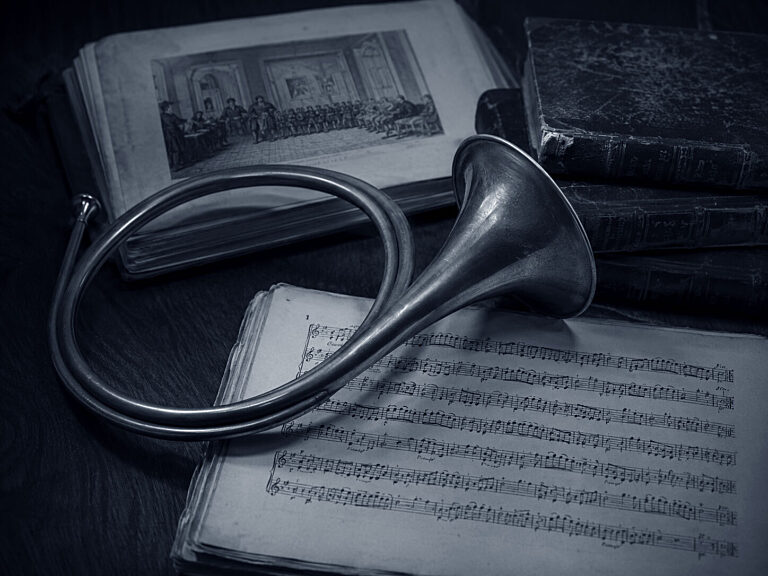
The hunting horn
Long-held beliefs about the French hunting horn are challenged as forgotten playing practices and Baroque traditions reshape its early history and repertoire.
Di Jacques Poncet
 Membro
Parte 4
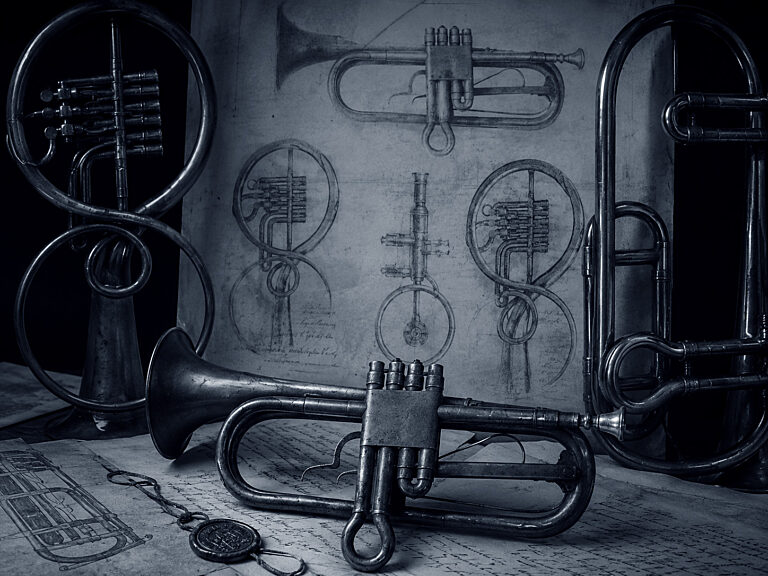
On the early history of valves and valve instruments in Germany (1814-1833)
Poverty, patents and workshop rivalries shaped the first German valve instruments, from Blühmel and Stoelzel to the Vienna and Mainz systems.
Di Herbert Heyde