Rendete Brass Bulletin disponibile nella vostra università, nel vostro conservatorio o nella vostra biblioteca Scoprite l’accesso istituzionale

3 min di lettura

Piston or rotary valve system?

Piston or rotary valve system?

When, at the beginning of the 19th century, a mechanical system was invented that allowed brass instruments to play the full chromatic scale, it caused a great uproar. The battle between advocates of the old natural instruments and proponents of the new valve system was fierce. Since those heroic days, however, the mechanical system has proved its superiority, and the question has shifted from the valve system’s «to be or not to be» to «which system is best?». Let us therefore consider the two main systems and compare their advantages and disadvantages:

1. The piston valve system:
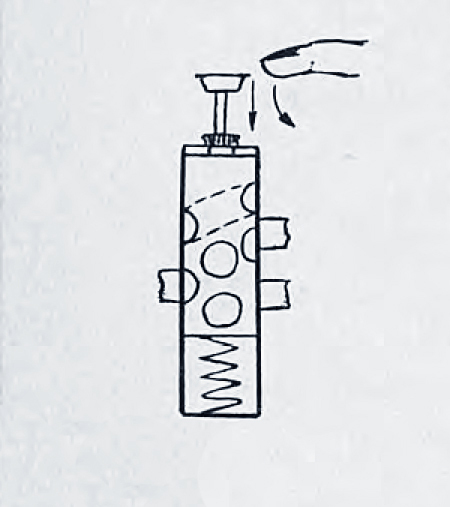
A long cylinder is traversed by three tubes, each leading to a crook. By pressing down the valve (the piston), the air is directed through the chosen crook and added to the air column of the instrument. When the valve is released, the piston returns to its original position by means of a spring. The finger action on the piston is direct.

Fig. A
Fig. A

2. The rotary valve system:
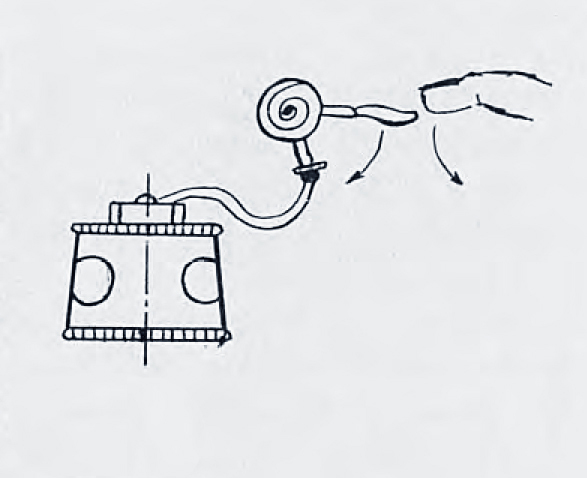
The cylinder has the form of a truncated cone and is traversed by two tubes. By pressing a lever, the cone is rotated a quarter turn around its axis. When the lever is released, the cone returns automatically to its original position by means of a spiral spring enclosed in a small cylinder.

In some instruments, a system of four small axes and a transmission bar is required to transfer the motion of the vertical lever to the horizontal main axis. In others (see Fig. B), a simple string mechanism suffices. In both cases, the finger action is indirect.
Brass Bulletin gallery image
Fig. B
Brass Bulletin gallery image
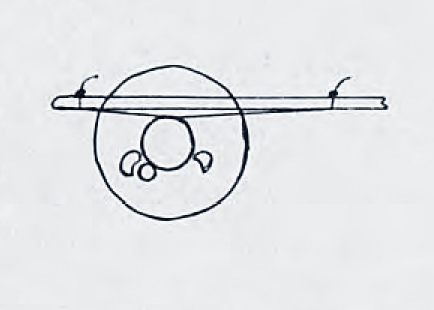
Fig. C

A disadvantage of the piston system is the relatively long travel of the piston. In trumpets it varies between 0.48 and 0.64 inches; in tubas it can reach as much as 1.04 inches.

An advantage of the rotary valve system is that the player can shorten or lengthen the lever travel by adjusting the finger’s position relative to the axis. The disadvantage, however, is that more force is required for shorter travel. On the other hand, the motion ranges of finger and lever are inversely related.

Wear of the piston and its casing is inevitable. After some years of use, both (and the small cotter pin, if present) will be worn. This process can be delayed by coating the piston with a thick layer of chromium — provided that the surface is perfectly smooth and free of even the smallest imperfections.

With the rotary valve system, only the end of the cone is subject to wear, which may cause some play. This can be compensated by adjusting the cone position. However, this more complex system has another serious drawback: when a valve is used, several parts are involved (the cylinder and its four axes), which inevitably produces noise — not only mechanical noise but also sympathetic vibration.

String transmission is simple and silent, but it shares the same disadvantage as shoelaces: the string will inevitably break at the most inconvenient moment.

In the case of mechanical problems, the piston system is clearly preferable. Usually, issues can be resolved simply by disassembling, cleaning, and lubricating. Achieving the same result with a rotary valve system requires a screwdriver, a pin remover, a small hammer — and a good deal of patience and calm.

Personally, I prefer the piston system for its simplicity and quiet operation, despite its inevitable wear. It would be interesting, however, to hear the experiences and opinions of other brass players — especially tubists, who more than anyone must deal with the issues of piston travel and mechanical noise in their instruments.

Brass Bulletin 13, I / 1976 pagine 55–58

Tutti i contenuti sono protetti dal diritto d’autore © Brass Bulletin 1976–2026

Condividi questo articolo

Facebook LinkedIn
Loading…

Domande e risposte

Come funziona l’edizione digitale

Che cosa comprende l’edizione digitale?

L’edizione digitale riunisce gli articoli già digitalizzati sotto forma di testi leggibili e ricercabili online — non semplicemente come scansioni o file PDF — insieme alle illustrazioni originali, alle note, agli autori, alle informazioni sul numero della rivista e alle traduzioni disponibili. I suggerimenti di articoli correlati comprendono attualmente solo questo materiale digitalizzato.

Gli articoli digitali sono identici agli originali?

Conserviamo il più fedelmente possibile il testo originale, la lingua, le illustrazioni, le didascalie, le note e il contesto editoriale. La presentazione viene adattata per una lettura confortevole online e gli evidenti errori di trascrizione o scansione possono essere corretti. Il contenuto e il carattere dell’articolo pubblicato rimangono invariati.

Quali lingue sono disponibili?

Brass Bulletin è stato pubblicato in inglese, francese e tedesco nel corso di tutta la sua storia. Le traduzioni italiane e spagnole sono state aggiunte a partire dal numero 60. Sui siti italiano e spagnolo, gli articoli dei numeri da 1 a 59 vengono quindi mostrati in inglese per impostazione predefinita.

Con quale frequenza vengono aggiunti nuovi articoli?

Nuovi articoli vengono aggiunti quasi ogni giorno, con circa un numero completo digitalizzato ogni settimana. Il ritmo può variare in base al lavoro di preparazione, elaborazione delle immagini e verifica editoriale necessario.

Perché non tutti gli articoli sono disponibili in formato digitale?

La collezione completa di Brass Bulletin comprende 1.246 articoli pubblicati tra il 1971 e il 2003. L’indice completo è già disponibile online e consente di scoprire tutti gli articoli della collezione, compresi quelli il cui testo integrale non è ancora stato digitalizzato.

La digitalizzazione è iniziata nel febbraio 2026. Ogni articolo viene accuratamente preparato per la lettura online, verificato e collegato al relativo numero, agli autori, agli argomenti e alle illustrazioni. Al ritmo attuale di digitalizzazione, la collezione completa dovrebbe essere disponibile online entro febbraio 2028.

Perché alcuni riferimenti citano articoli che non sono ancora disponibili?

I riferimenti presenti negli articoli originali vengono conservati anche quando il materiale a cui rimandano non è ancora stato digitalizzato. In questo modo si preserva l’integrità storica ed editoriale della rivista. Man mano che nuovi numeri vengono aggiunti all’edizione digitale, un numero crescente di questi riferimenti condurrà ad articoli leggibili online.

Posso suggerire un articolo o segnalare un errore di trascrizione?

Sì. Se desiderate che un determinato articolo venga digitalizzato, oppure se notate un possibile errore di trascrizione o un’informazione mancante, contattateci. I riscontri dei lettori ci aiutano a migliorare l’edizione digitale e a stabilire priorità utili all’interno dell’archivio.

Come posso sostenere Brass Bulletin?

Il vostro sostegno contribuisce a finanziare la preparazione, la verifica e la pubblicazione online dell’intera collezione.

Abbonati all’Edizione digitale

Preferite sostenerci senza abbonarvi?

Fate una donazione

Come procede la digitalizzazione?

Stiamo rendendo Brass Bulletin disponibile online gradualmente, articolo per articolo. Potete leggere gli articoli appena digitalizzati non appena sono pronti, anche prima che un intero numero sia completato.

Consultate il nostro calendario di digitalizzazione per scoprire le ultime aggiunte e le date di disponibilità stimate dei prossimi numeri. Le stime si basano sul nostro ritmo recente e possono cambiare.

Cerca in Brass Bulletin.