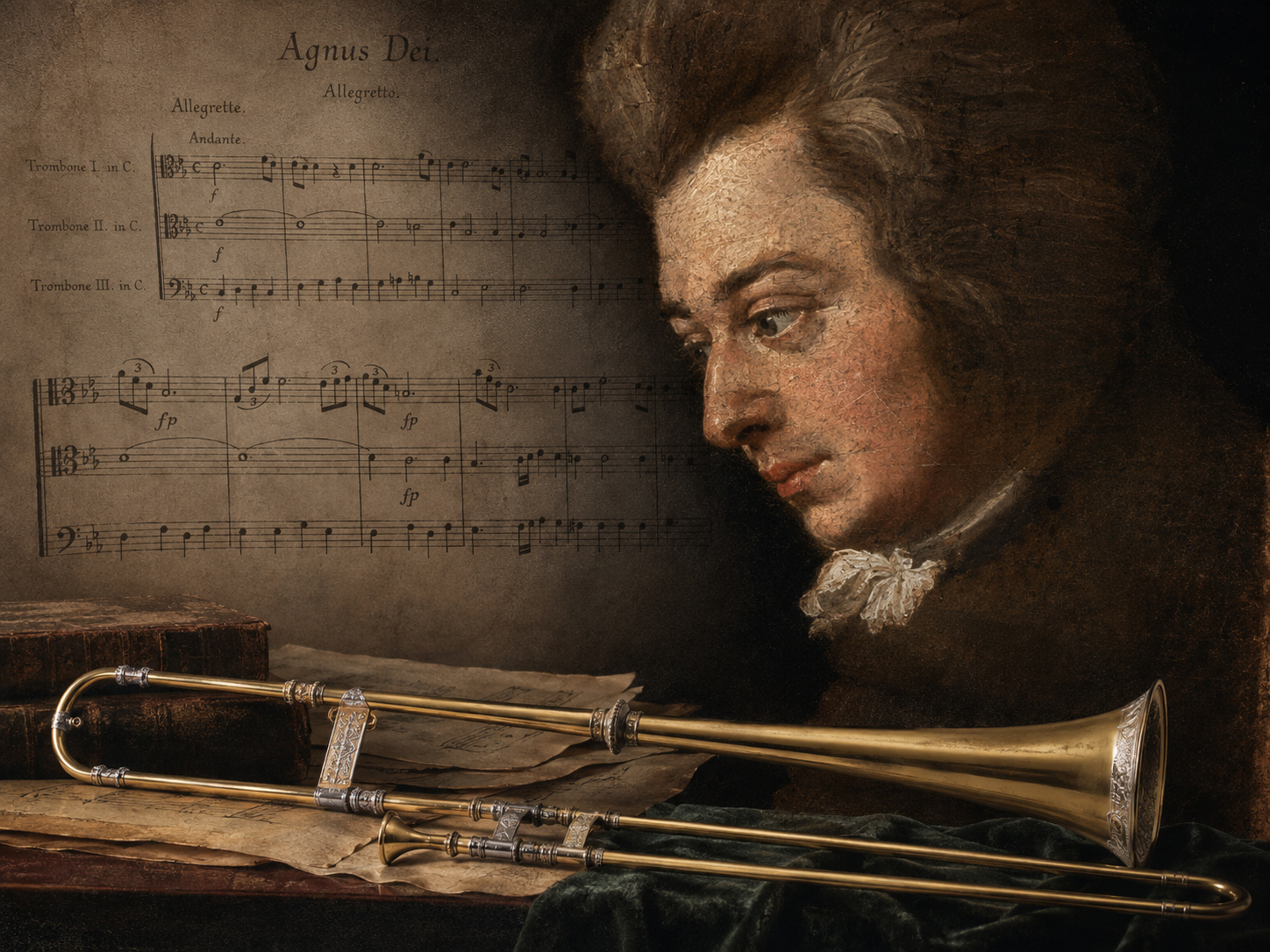
Le traduzioni italiane originali di Brass Bulletin iniziano con il n. 60.

3 min di lettura

The Trombone in the Sacred Works of W. A. Mozart

The Trombone in the Sacred Works of W. A. Mozart

Of all the brass instruments, Wolfgang Amadeus Mozart seems to have written most prolifically for the horn. The four horn concertos, the concert rondo and the horn quintet are considered, even today, to be at the heart of the horn repertoire. Yet the horn parts in Mozart’s symphonic works are generally without particular interest. Whereas the concertos were written for a brilliant virtuoso hand-horn technique, the symphonic horn parts were conceived harmonically requiring almost exclusively natural horn notes.

At that period the trombone was the only chromatic brass instrument and was used more often in sacred works. For this reason a detailed look at Mozart’s trombone parts is of particular interest. The tenor trombone solo in the “Tuba mirum” in his “Requiem” is very well known and indeed quite unique in the repertoire, but is not the only example of Mozart’s use of the trombone in this way, as will be shown later.

Mozart used the trombones mostly in a group to support the vocal parts. The choirs of the eighteenth century were not large; that of the Salzburg church, which was one of the largest, had approximately 28 singers. Thus the trombones were really needed to reinforce the choir and maintain proper balance with the orchestra. In many of his sacred works it is normal for him to double the alto, tenor and bass voices of the choir with trombones, without their having individual parts: «The music of the Salzburg church kept Baroque tradition until the first half of the nineteenth century. In this tradition three trombones are added to play with the choir in tutti colla parte.» Preface to the new Mozart edition (Bärenreiter, Kassel).

In most of Mozart’s manuscripts trombones are not specified. He specifies trombones only when they are to play a different figure or a different rhythm from that of the choir. The existence of original trombone parts allows us to consider the inclusion of trombones in most of Mozart’s sacred works authentic.

Nowadays the doubling of the three lower voices of the choir by trombones is somewhat problematic. Choirs today are much larger and can provide their own weight of sound. In addition, at that time the trombone parts were played on alto, tenor and bass trombones, which were of different sizes and provided different tone colours. The instruments that are used today are essentially alike and therefore provide the same timbre. They differ from their predecessors in their tube diameter and bell size — two factors largely influencing the sound.

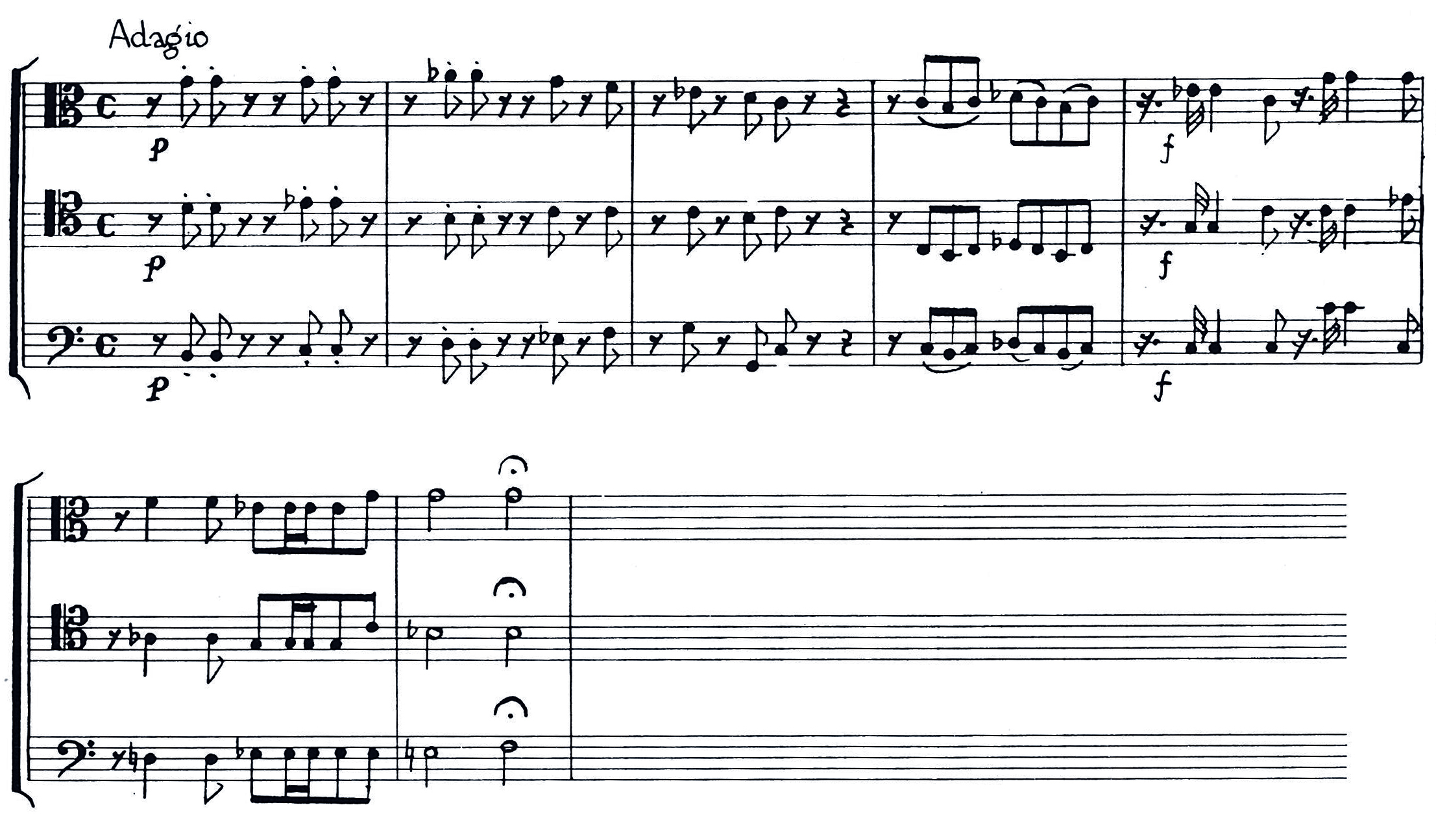
The following is the beginning of the “Tremendum” in the “Litaniae” K. 243. The trombones play an accompanying figure in staccato-piano (bars 1-3) alternating with a choir tutti colla parte (bars 4-7):

Brass Bulletin image

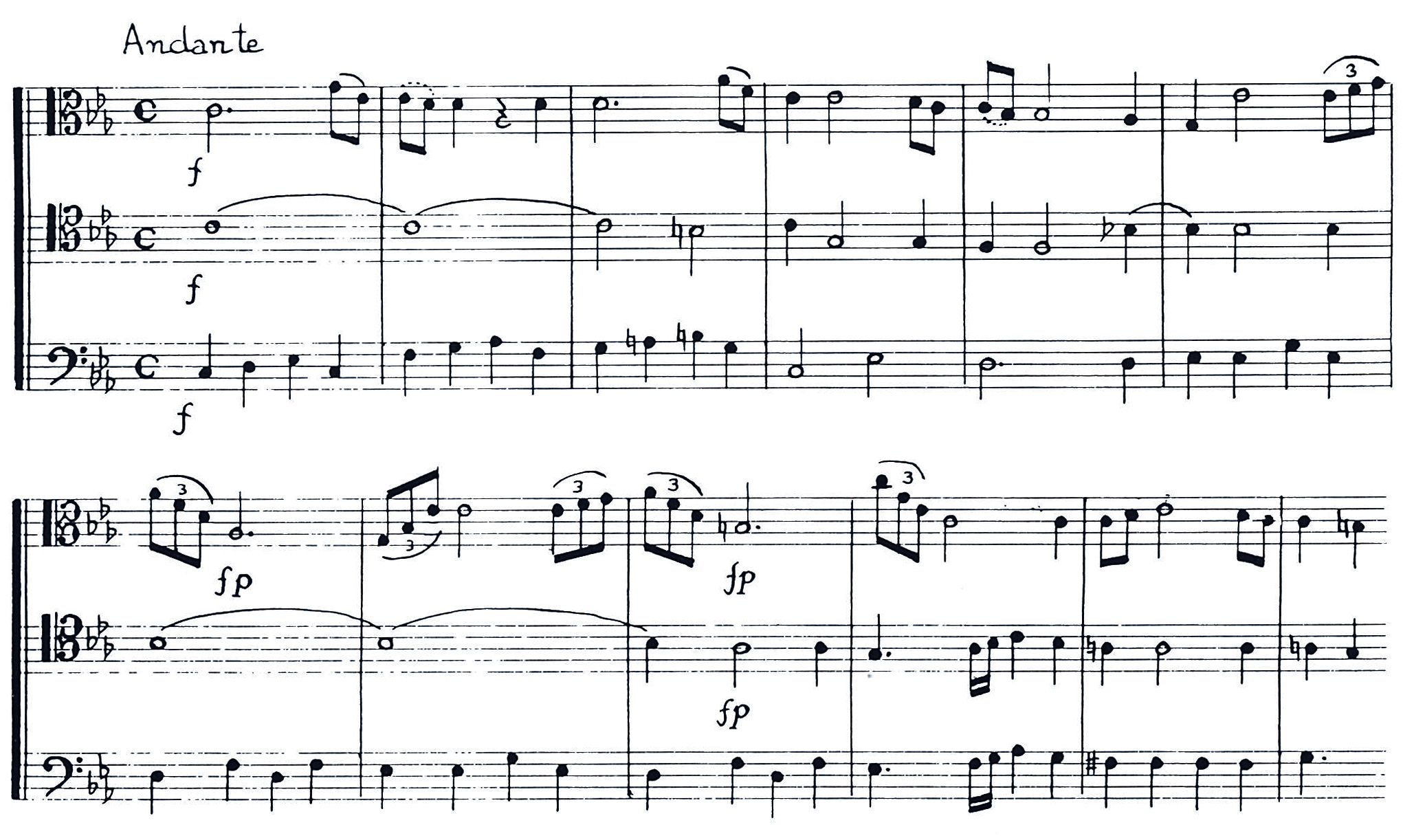
Mozart also used the trombone in a different way. In a few places in his sacred works trombones are given solo parts as a group. An example of this kind is the introduction to the “Agnus Dei” of the Mass in C minor K. 139:
Brass Bulletin image

Other examples of this kind can be found in different places of Mozart’s sacred works.

The use of one trombone as a solo instrument is an exception in Mozart’s sacred works. The tenor trombone solo in the “Tuba Mirum” of his “Requiem” is explained by the translation of the latin word “Tuba” as “Posaune” (trombone) in German.

We would like to conclude by citing another trombone solo from a lesser known work: “Die Schuldigkeit des ersten Gebotes” (The Obligation of the first Commandement) K. 35. To understand the background to this work one needs to know more about Mozart in Salzburg. Salzburg during the reign of its Prince Archbishop Markus Sittikus was a centre of music and art where there were singers and players of high quality and many works were created.

It was in March 1766 that an oratorio, written by an eleven-year-old boy, was played for the first time. The circumstances in which Mozart wrote this work are not clear. Some accounts tell of how Mozart wrote this oratorio under strict surveillance since the Archbishop was not convinced of the boy’s composing talent. Modern research has shown that in fact it was another piece (“Funeral Music” K. 42) that was written under these conditions in one week. The Oratorio must have taken much more time to compose.

The oratorio was in three parts of which only the first, composed by the young Mozart, survived. The other two parts (by M. Haydn and the organist Adlgasser) are lost. The text is abstract and the voice roles represent: Worldliness, Justice, Mercy, The Christian Spirit and Christian.

Mozart was influenced by the long musical tradition at the Salzburg Archiepiscopal court. His arias are structurally influenced by the model of his father Leopold and the alto trombone solo is probably the result of his studying the works of Johann Ernst Eberlin — because Eberlin used the alto trombone as a solo instrument in several of his oratorios.

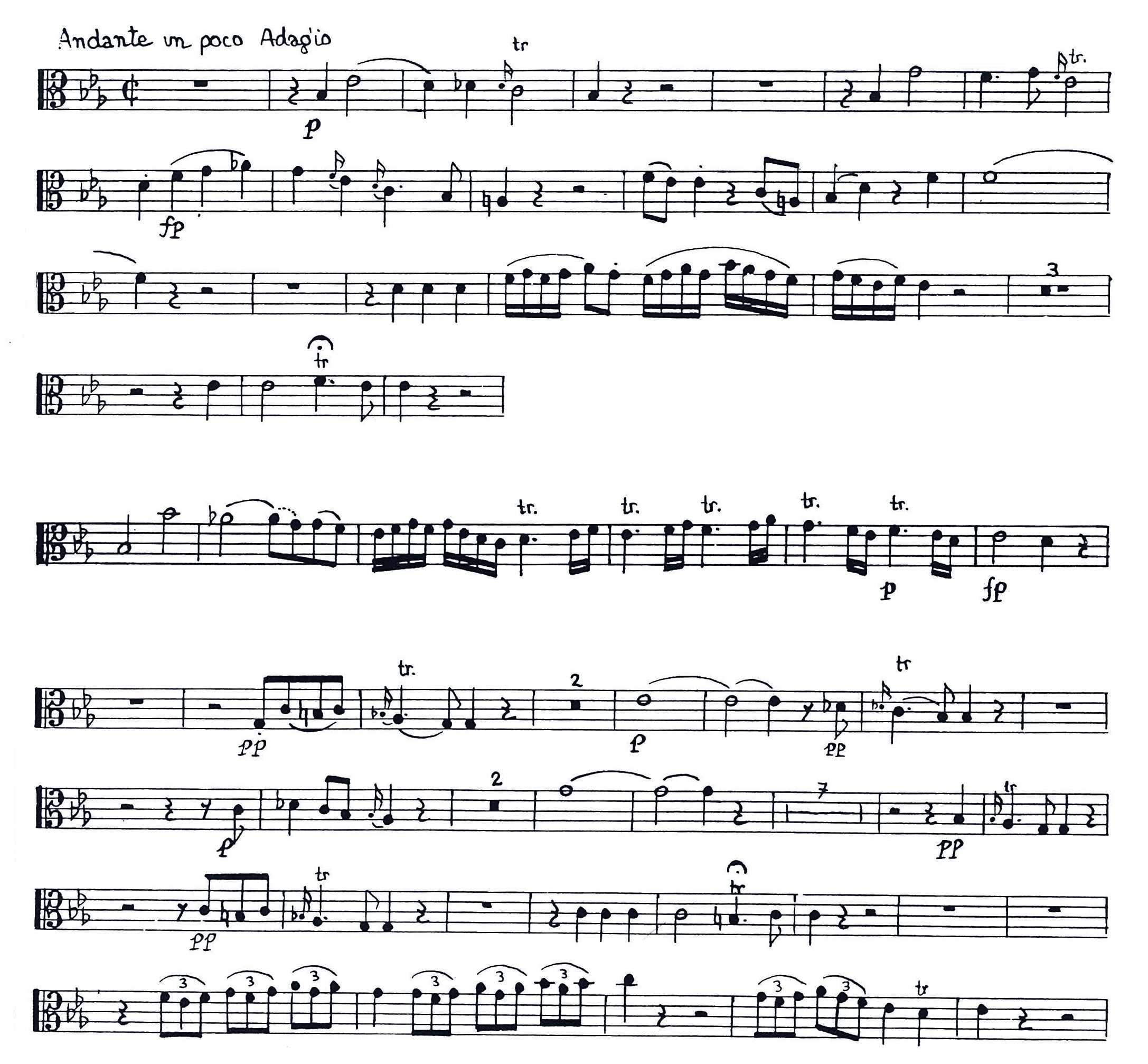
The aria (No. 5) with the trombone solo is scored for tenor voice (Christian) and strings (two violins and two violas) with continuo (violoncello and bass). The high tessitura of the trombone part and the alto clef lead to the supposition that the part was played on the alto trombone, probably by Thomas Gschlatt. The trombone plays in a slow-moving style with many trills, giving us an idea of the technical facility of the trombonist at that period. Several cadenzas for the trombone alone or with the tenor are included — something which is common in concertos but exceptional in a sacred work.
Brass Bulletin image

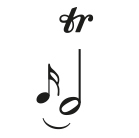
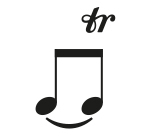
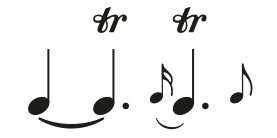
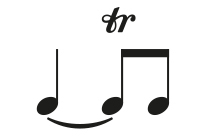
Trills are to be performed as follow: Music example 1 and Music example 2 are performed Music example 3 and Music example 4 is performed Music example 5
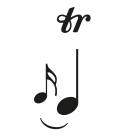
Suggestions for the cadenzas are to be found in the Bärenreiter edition of Mozart’s works.

Bibliography
W. A. Mozart, Neue Ausgabe sämtlicher Werke, Serie I: Geistliche Gesangwerke (Bärenreiter, Kassel)

Brass Bulletin 46, II / 1984 pagine 31–35

Tutti i contenuti sono protetti dal diritto d’autore © Brass Bulletin 1984–2026

Condividi questo articolo

Facebook LinkedIn
Loading…

Domande e risposte

Come funziona l’edizione digitale

Che cosa comprende l’edizione digitale?

L’edizione digitale riunisce gli articoli già digitalizzati sotto forma di testi leggibili e ricercabili online — non semplicemente come scansioni o file PDF — insieme alle illustrazioni originali, alle note, agli autori, alle informazioni sul numero della rivista e alle traduzioni disponibili. I suggerimenti di articoli correlati comprendono attualmente solo questo materiale digitalizzato.

Gli articoli digitali sono identici agli originali?

Conserviamo il più fedelmente possibile il testo originale, la lingua, le illustrazioni, le didascalie, le note e il contesto editoriale. La presentazione viene adattata per una lettura confortevole online e gli evidenti errori di trascrizione o scansione possono essere corretti. Il contenuto e il carattere dell’articolo pubblicato rimangono invariati.

Quali lingue sono disponibili?

Brass Bulletin è stato pubblicato in inglese, francese e tedesco nel corso di tutta la sua storia. Le traduzioni italiane e spagnole sono state aggiunte a partire dal numero 60. Sui siti italiano e spagnolo, gli articoli dei numeri da 1 a 59 vengono quindi mostrati in inglese per impostazione predefinita.

Con quale frequenza vengono aggiunti nuovi articoli?

Nuovi articoli vengono aggiunti quasi ogni giorno, con circa un numero completo digitalizzato ogni settimana. Il ritmo può variare in base al lavoro di preparazione, elaborazione delle immagini e verifica editoriale necessario.

Perché non tutti gli articoli sono disponibili in formato digitale?

La collezione completa di Brass Bulletin comprende 1.246 articoli pubblicati tra il 1971 e il 2003. L’indice completo è già disponibile online e consente di scoprire tutti gli articoli della collezione, compresi quelli il cui testo integrale non è ancora stato digitalizzato.

La digitalizzazione è iniziata nel febbraio 2026. Ogni articolo viene accuratamente preparato per la lettura online, verificato e collegato al relativo numero, agli autori, agli argomenti e alle illustrazioni. Al ritmo attuale di digitalizzazione, la collezione completa dovrebbe essere disponibile online entro febbraio 2028.

Perché alcuni riferimenti citano articoli che non sono ancora disponibili?

I riferimenti presenti negli articoli originali vengono conservati anche quando il materiale a cui rimandano non è ancora stato digitalizzato. In questo modo si preserva l’integrità storica ed editoriale della rivista. Man mano che nuovi numeri vengono aggiunti all’edizione digitale, un numero crescente di questi riferimenti condurrà ad articoli leggibili online.

Posso suggerire un articolo o segnalare un errore di trascrizione?

Sì. Se desiderate che un determinato articolo venga digitalizzato, oppure se notate un possibile errore di trascrizione o un’informazione mancante, contattateci. I riscontri dei lettori ci aiutano a migliorare l’edizione digitale e a stabilire priorità utili all’interno dell’archivio.

Come posso sostenere Brass Bulletin?

Il vostro sostegno contribuisce a finanziare la preparazione, la verifica e la pubblicazione online dell’intera collezione.

Abbonati all’Edizione digitale

Preferite sostenerci senza abbonarvi?

Fate una donazione

Cerca in Brass Bulletin.