4 min di lettura
Meir Rimon
Portrait and conversation
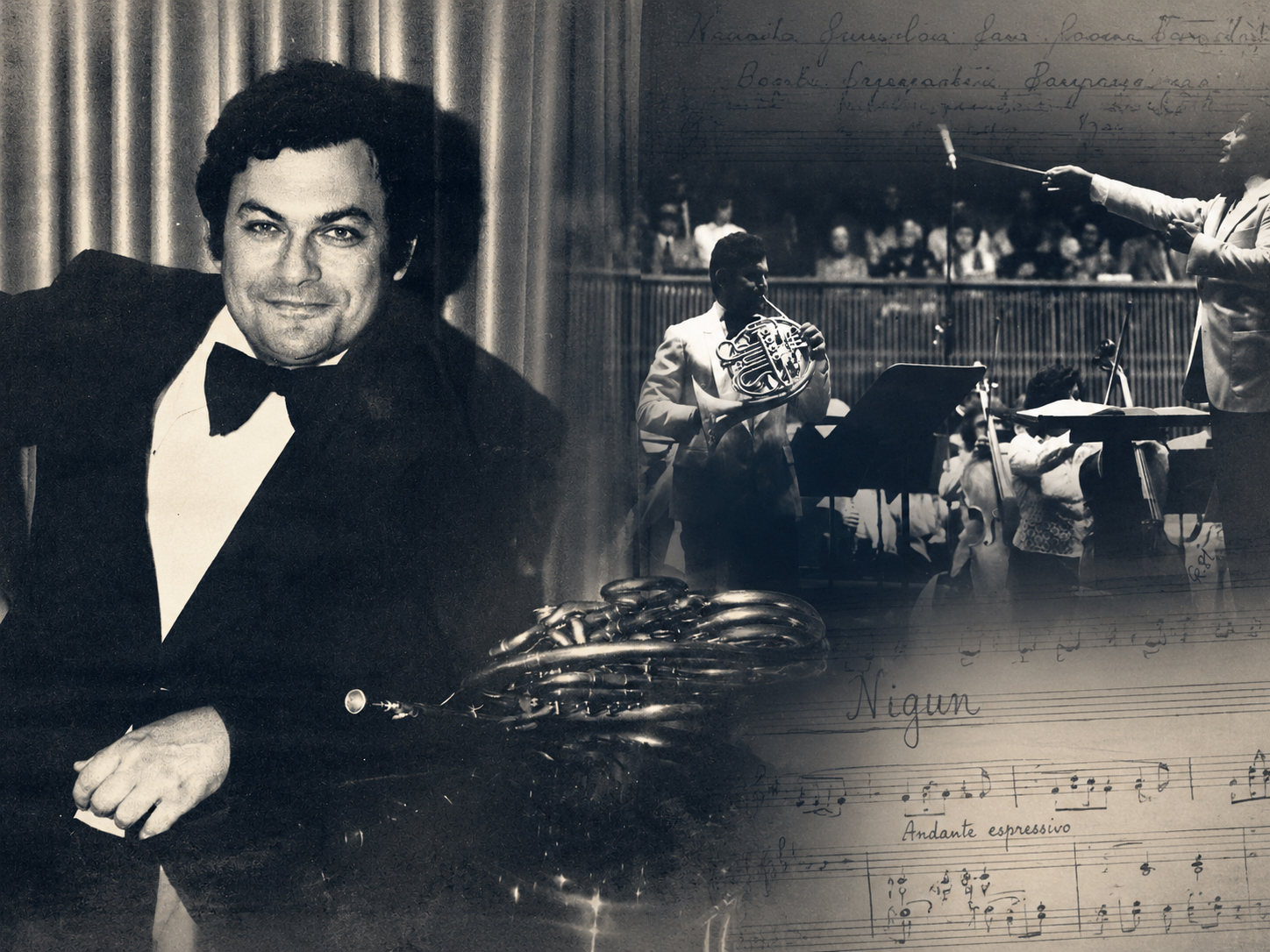
Meir Rimon
The enthusiasm of the principal horn of the Israel Philharmonic Orchestra for the horn and horn playing is irresistible and infectious. When the orchestra recently was on tour in Japan, Meir Rimon met with a group of Japanese horn players. Shortly thereafter the Secretary of the International Horn Society received twenty new applications for membership from Japan.
He began his musical studies with the violin in 1952 at the age of six. In 1957 his family emigrated from Vilna, Lithuania via Poland to Israel. He continued his violin studies there until age 17, when he was faced with the mandatory three years in the army. As it happened, the conductor of the youth orchestra was also the conductor of the army band, and promised to accept him if he took up a brass instrument.
So, not knowing much about it, I got an F horn and went to study with Horst Salomon, first horn of the IPO. After six months I went into the army band. Horn playing was very easy for me in those days. Now it’s very difficult. It just seemed easy playing only single notes after those difficult violin concertos with so many black notes. I also liked the horn because I had to practice less. You know, with violin you have to practice for hours and hours. On horn there is a physical limit, you cannot practice as much. And I liked the sound. That’s what captivated me. My teacher gave me the love for the horn. In lessons we would play duets, trios, quartets... horn players like to get together.
After playing just 3 1/2 years, Rimon auditioned for fourth horn in the radio orchestra and got the job (“The standard was low, let’s face it”). He was soon promoted to second horn, but he left to study abroad when he won a scholarship from the Israel-American Culture Foundation. Thus began his interest and studies of the horn styles of many countries. His second teacher in Israel had been Pierre del Vescovo; the scholarship led him to studies with Alan Civil of England and Jan Bos of Holland.
Then I went to the Munich Competition in 1969. There I found out actually how far behind I was in horn playing. But I was there really to hear and learn from all the others. I made many good friends among those fantastic players — Frøydis, Bob Rouch, Dennis Tilsher, Johannes Ritzkowski.
He made a tour of Scandinavia, meeting Ib Lanzky-Otto in Stockholm and Ingbert Michelsen in Copenhagen.
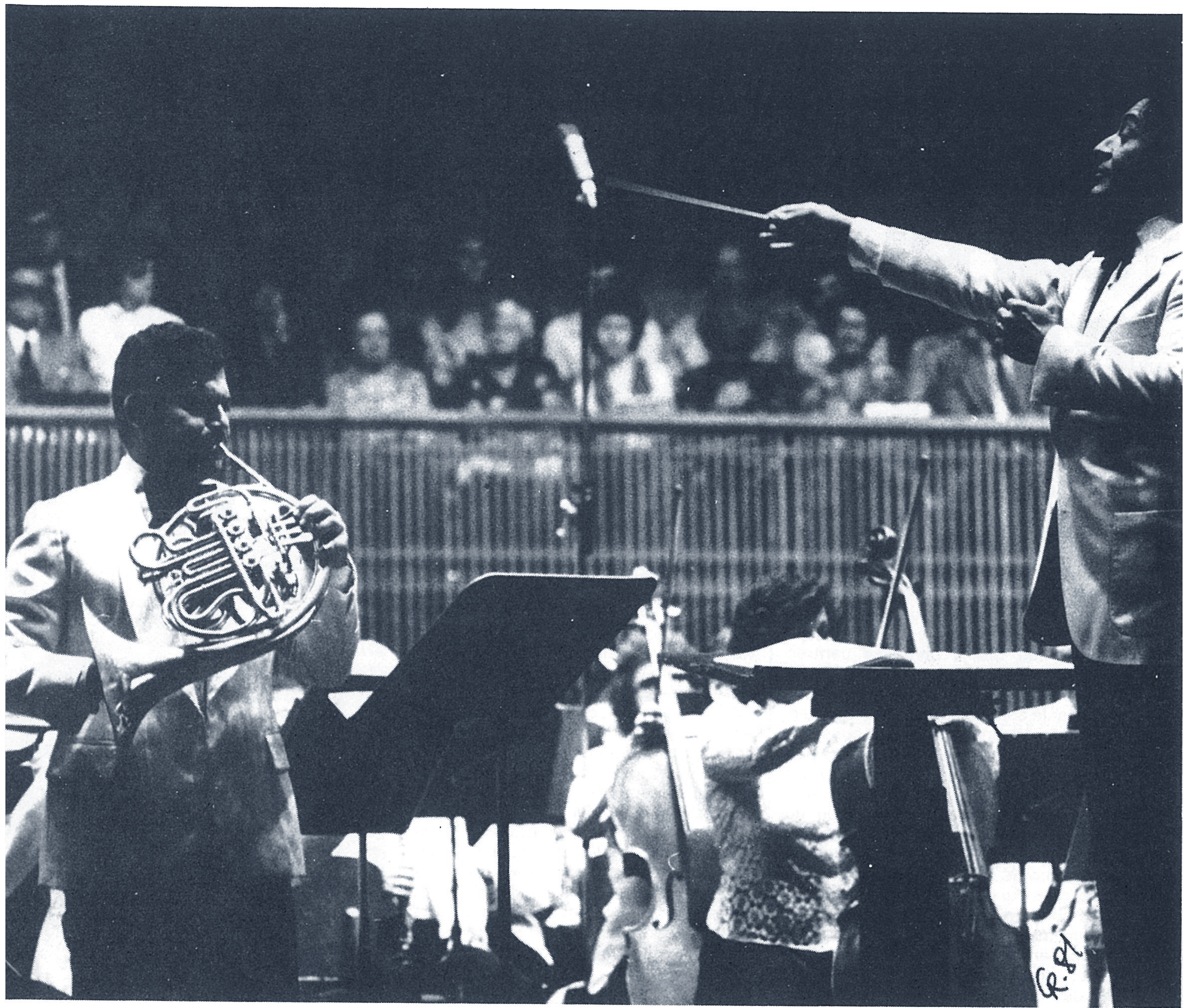
Meir Rimon & Maestro Zubin Mehta (Oct. 1982) during R. Glier performance in Tel-Aviv with Israel Philharmonic
Twenty horn players took the audition for associate first horn for the IPO in 1970, and
I think I was not the most qualified of those, technically, but musically they liked me and saw some potential in me. I got the job... and realized there was so much to learn.
Meir Rimon has always thought there was much more to learn about the horn, and even after beginning as a full-time musician with a major orchestra, he was still pursuing further studies. In 1972 he sought out Hermann Baumann for three weeks of lessons. In 1973 was another master class given by Baumann in Essen. In 1974 came a first contact with one school of American horn playing when Myron Bloom of Cleveland visited Israel. The association with Bloom led to a chance to play and record with the Marlboro Music Festival in 1975 (and later in 1977 and 1978). Typically, Rimon also took a month extra to meet and play with members of the Cleveland and Chicago Symphony orchestras.
It was easier to play with the Chicago section for me, because I was using an Alexander single B♭ horn at the time. The Cleveland players were using Conn 8D’s. In Chicago they played Schmidts, and that was more my sound.”
Brass Bulletin 46, II / 1984 pagine 36–41
Tutti i contenuti sono protetti dal diritto d’autore © Brass Bulletin 1984–2026