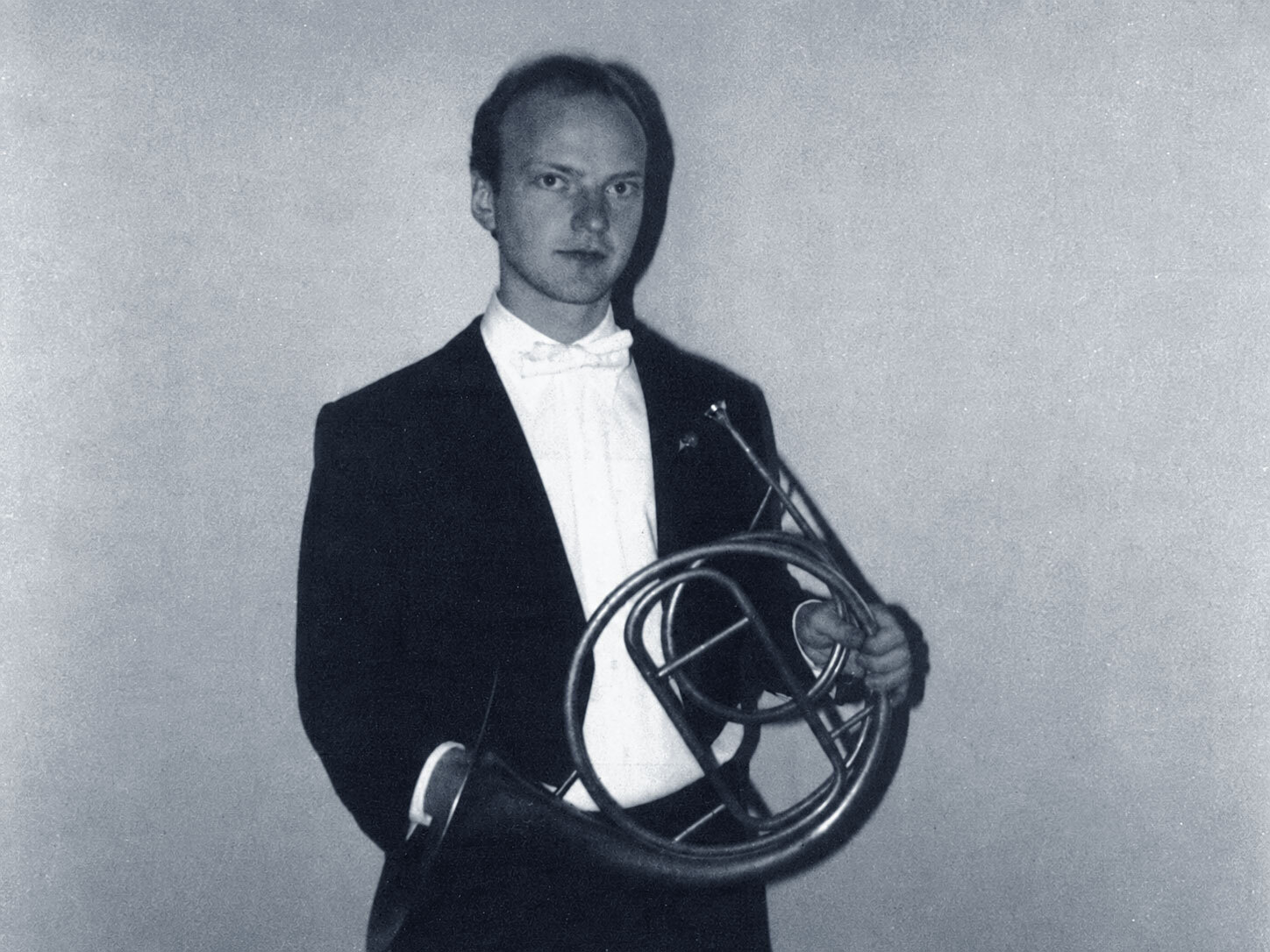
M.T. Do you know what Mozart and (the contemporary Swiss composer) Kelterborn have without doubt in common? They both display in their compositions the same enthusiasm for the horn of their respective eras. One can ask such a question as “Wouldn’t Mozart have used the horn differently if it had been more ‘modern’?”, but there is no point to it — things were the way they were. You might as well ask what Leonardo da Vinci might have done if he had had a photocopy machine.
B.B. Don’t you run into the danger of ignoring progress?
T.M. One must of course appreciate the contemporary. However, I would speak less of “progress” than “development”; ie things have changed with the times. A look to the past should not be taken as a step backwards. It is a look to increase our scope; it broadens our horizons and furthers our knowledge.
B.B. Does the study of natural horn have advantages or disadvantages for playing technique?
T.M. By the promotion of concentration on such basics as embouchure, breathing, right hand use (stopping techniques), I see only advantages. I also believe that study of the classical natural horn is the most direct path to lyric playing.
The reason to study natural horn today is that this instrument is simply, in every respect, worth the study.