Ofrezca Brass Bulletin en su universidad, conservatorio o biblioteca Descubra el acceso institucional

4 min de lectura

Mouthpiece pressure in Horn Playing

Graduation project in technical method

Long before sensors entered the practice room, one horn student measured embouchure pressure by hand, challenging assumptions that still shape brass pedagogy.
Mouthpiece pressure in Horn Playing

Introduction

In the autumn of 1977, when I started to study horn at music college in Augsburg, a number of rumours were circulating about ‘‘miracle horn players’’ (particularly in the United States) who were said to be able to play without any mouthpiece pressure. This refers to the force with which the mouthpiece is pressed against the player’s lips, a force exercised on the instrument by the player’s left arm. My teacher at the time, Georg Schmiedt from Augsburg, always said he could not believe this and that every player needed a certain amount of pressure, at least enough to provide a seal between mouthpiece and lips. My present teacher, Professor Gottfried Langenstein from Würzburg, is of almost exactly the same opinion. It must be said of course that there really are horn players who can lay their instrument down, on a piano for example, and, without touching it with their hands, and thus for all practical purposes without pressure, play top C. (I have heard that Peter Damm from East Germany can do this, for example.) Of course a single note is not an orchestral passage, far less a whole concert. I also feel that a note played like this will neither sound full and round nor be playable in fortissimo. I have consulted the following tutors to see what they had to say about pressure:

  1. Hermann Neuling: Grosse Hornschule (no information on pressure)
  2. Oscar Franz: Waldhornschule (no information on pressure)
  3. Fritz Huth: Schule für Horn (no information on pressure)
  4. Otakar Tvrdy and Vladimir Kubat: Schule für Waldhorn (no information on pressure)
  5. Michael Höltzel: Hornschule (Professor Höltzel writes: ‘‘Excessive pressure with the arm should be avoided by using the lip and mouth muscles as well as diaphragm support.’’)
  6. Philip Farkas: The Art of French-Horn Playing. The Art of Brass Playing. (Professor Farkas is one of the few teachers who has really dealt thoroughly with the problem of pressure in horn playing. To reproduce all his writings on the subject here would be excessive but they may be summed up briefly as follows: ‘‘A certain amount of pressure in playing the horn is unavoidable. It should be kept as low as possible, however, otherwise the player will tire too quickly and the lip muscles may be damaged.’’)

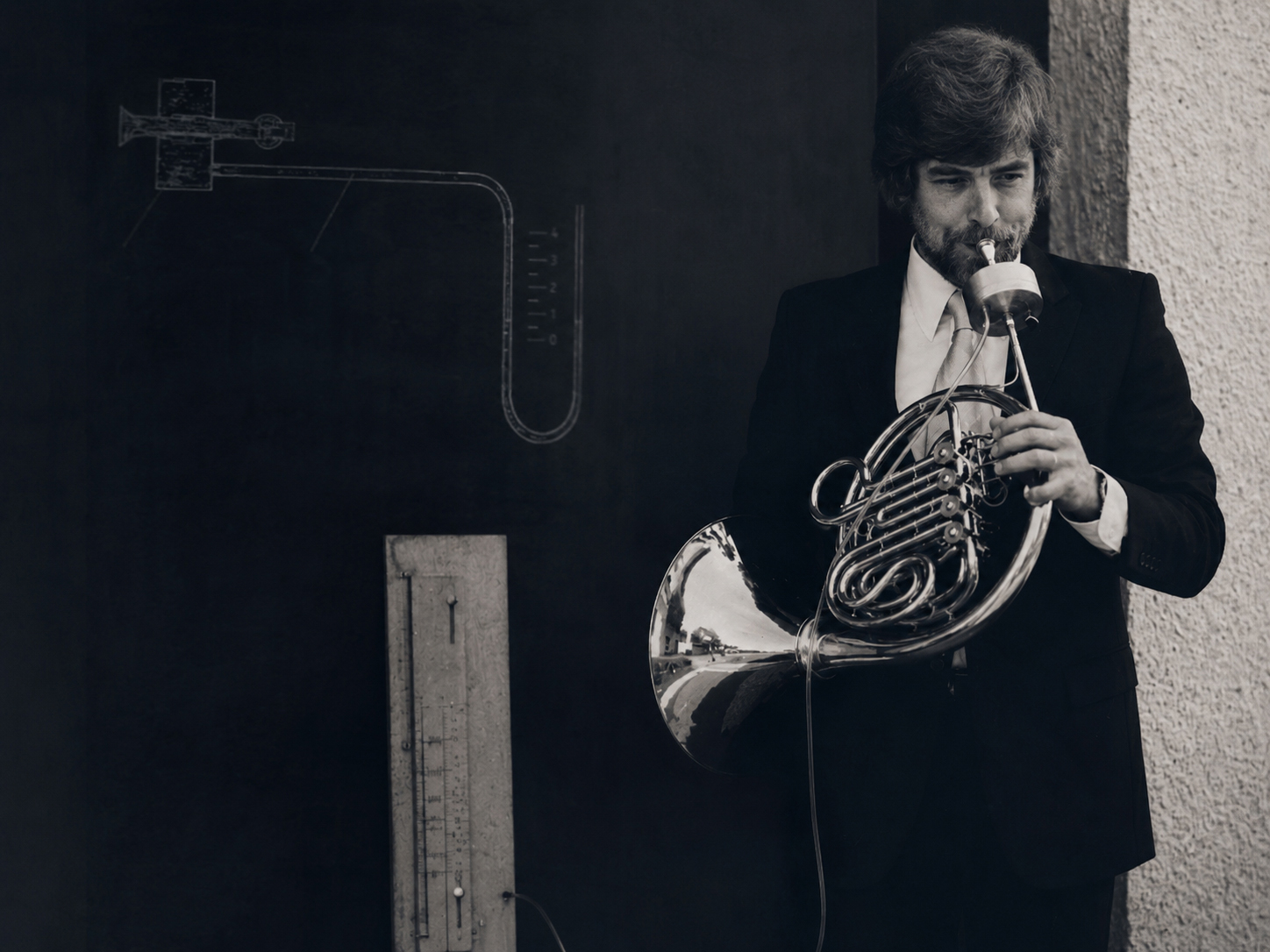
So — much is said and written about this pressure, but what is ‘‘a lot of pressure’’ and what is ‘‘little pressure’’? Ever since I began to study I have been thinking of ways of making this force visible. I recently succeeded in personally developing and building a device which shows fairly accurately (in grammes-force) how much force is used in playing certain pitches, volumes, slurs and staccato exercises on the horn. I then made up a test sheet containing almost the complete compass, the volume levels and several effects of the horn. With my device and my test sheet I then tested a selection of people (teachers, students and beginners) and displayed the results in diagram form. I consulted music colleges in Cologne, Munich and Würzburg. My aim in taking these measurements was to obtain comparative values and so be able to draw inferences about possible effects of excessive or inadequate embouchure pressure.

Continue reading

Accede a la edición digital completa.

Brass Bulletin 40, IV / 1982 páginas 27–31

Todo el contenido está protegido por derechos de autor © Brass Bulletin 1982–2026

Compartir este artículo

Facebook LinkedIn
Cargando…

Preguntas y respuestas

Cómo funciona la edición digital

¿Qué incluye la edición digital?

La edición digital reúne los artículos ya digitalizados como textos legibles y consultables en línea —no simplemente como escaneos o archivos PDF— junto con sus ilustraciones originales, notas, autoría, información del número y traducciones disponibles. Las sugerencias de artículos relacionados incluyen actualmente solo este material digitalizado.

¿Los artículos digitales son idénticos a los originales?

Conservamos con la mayor fidelidad posible el texto original, el idioma, las ilustraciones, los pies de imagen, las notas y el contexto editorial. La presentación se adapta para facilitar la lectura en línea y pueden corregirse errores evidentes de transcripción o escaneado. El contenido y el carácter del artículo publicado permanecen inalterados.

¿Qué idiomas están disponibles?

Brass Bulletin se publicó en inglés, francés y alemán a lo largo de toda su historia. Las traducciones al italiano y al español se añadieron a partir del número 60. Por este motivo, en los sitios italiano y español los artículos de los números 1 a 59 se muestran en inglés de forma predeterminada.

¿Con qué frecuencia se añaden nuevos artículos?

Se añaden nuevos artículos casi a diario, con aproximadamente un número completo digitalizado cada semana. El ritmo puede variar según el trabajo de preparación, tratamiento de imágenes y revisión editorial necesario.

¿Por qué no están disponibles todos los artículos en formato digital?

La colección completa de Brass Bulletin contiene 1.246 artículos publicados entre 1971 y 2003. El índice completo ya está disponible en línea y permite descubrir todos los artículos de la colección, incluidos aquellos cuyo texto íntegro todavía no ha sido digitalizado.

La digitalización comenzó en febrero de 2026. Cada artículo se prepara cuidadosamente para la lectura en línea, se revisa y se vincula con su número, sus autores, sus temas y sus ilustraciones. Al ritmo actual de digitalización, se prevé que la colección completa esté disponible en línea en febrero de 2028.

¿Por qué algunas referencias mencionan artículos que todavía no están disponibles?

Las referencias de los artículos originales se conservan aunque el material al que remiten aún no haya sido digitalizado. De este modo se mantiene intacto el contexto histórico y editorial. A medida que se incorporen más números a la edición digital, un número creciente de estas referencias conducirá a artículos que podrán leerse en línea.

¿Puedo sugerir un artículo o informar de un error de transcripción?

Sí. Si hay algún artículo que le gustaría especialmente ver digitalizado, o si detecta un posible error de transcripción o algún dato que falta, póngase en contacto con nosotros. Los comentarios de los lectores nos ayudan a mejorar la edición digital y a establecer prioridades útiles dentro del archivo.

¿Cómo puedo apoyar a Brass Bulletin?

Su apoyo ayuda a financiar la preparación, verificación y publicación en línea de la colección completa.

Suscríbase a la Edición Digital

¿Prefiere apoyarnos sin suscribirse?

Haga una donación

¿Cómo avanza la digitalización?

Estamos poniendo Brass Bulletin a disposición de los lectores en línea, artículo por artículo. Pueden leer los artículos recién digitalizados en cuanto estén listos, incluso antes de que se complete un número entero.

Consulten nuestro calendario de digitalización para descubrir las últimas novedades y las fechas estimadas de disponibilidad de los próximos números. Estas estimaciones se basan en nuestro ritmo reciente y pueden cambiar.

Busca en Brass Bulletin.