Ofrezca Brass Bulletin en su universidad, conservatorio o biblioteca Descubra el acceso institucional

4 min de lectura

A guide to commercial tuba playing in the Los Angeles area

A guide to commercial tuba playing in the Los Angeles area

If one plans to become a commercial player, he must prepare carefully and thoroughly. A solid tuba foundation, with great emphasis on tone production and technique is an absolute necessity. A good rule to follow would be to prepare oneself for a symphony position. With this concrete preparation, the acquiring of the other aspects of commercial playing could be accomplished. Some of these other aspects include, an outstanding sight reading ability, a good feel for time and rhythm, a knowledge of jazz and rock styles, a fair ability to play ad-lib jazz and rock solos, and being able to play with a "Click Track" (metronome). The keys to good commercial playing are, listening, flexibility, time, and sight reading.

The type of tuba one uses in commercial work is very important. I feel the main considerations in selecting a tuba should include the following: a very centered tone (easier to get on the mike), quick and easy response throughout the registers, workable intonation. My basic tuba (used for most work) is a Model 185-5U CC Mirafone. For extremely high parts, I use a Mirafone F tuba.

The types of commercial jobs where tubas are used include, movie and television film scoring, radio and television commercials, records, and live television variety shows. However, eighty to eighty-five percent of employment for commercial tuba players occur in the motion picture, television film area. Some of the television programs that used tuba consistently in 1977 were: Baa Baa Black Sheep, Wonder Woman, How the West Was Won, Hanna-Barbera Cartoons, Charlie's Angels, CHiPs, and Hulk.

Two major motion pictures actually used the tuba as one of the main characters of the story. They were, the shark in "Jaws", and the mothership in "Close Encounters of the Third Kind". Other motion pictures where the tuba was used frequently last year included, "The Car", "Smokey and the Bandit", "MacArthur", "The World's Greatest Lover", "High Anxiety", "The Betsy", and "Demon Seed".

There are a few types of other commercial tuba jobs in the Los Angeles area, such as, band work at Disneyland and other amusement parks, but basically the opportunities are very limited. Tuba use in the commercial field in the Los Angeles area has made tremendous progress in the last five years. The myth, that the tuba is a "limited ability" instrument has all but disappeared. Composers are writing more and more challenging parts that require really outstanding tubists to play the parts. The instrument is being used in ways that seemed impossible a few years ago.

However, there still remains a "big" problem to be resolved. The problem being, to use the tuba much more often in studio orchestras. The tuba is still being used more on an occasional basis than a regular basis. For example, for every ten television shows scored, the tuba will be used approximately once. In movie scoring, the average is slightly better, but still way behind the use of other brass instruments.

Because of the inconsistency of work, the opportunities for new players to break in are very, very limited. Until more consistent work is available, supply will greatly outnumber demand. Hopefully, this situation will change for the better in the next few years.

In summary, to become a top commercial tuba player, one must be thoroughly prepared. A good sense of rhythm along with outstanding sight reading ability is essential. A medium bore tuba with a centered sound seems to work best for recording work. All types of commercial jobs in Los Angeles use tuba, but unfortunately on a limited basis. Opportunities for work are sparse at the moment, but I feel this situation will really change for the better in years to come. Keep preparing and practicing, because you never know when the opportunity for employment will be available.
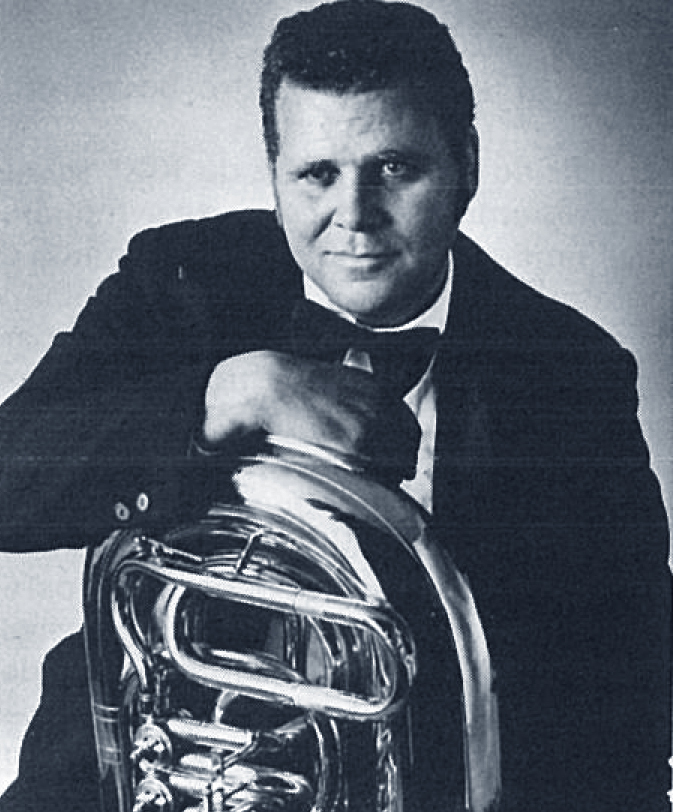
Tommy Johnson

Tommy Johnson

About

Tommy Johnson, a native of Los Angeles, is clearly the most sought after tubist of the Hollywood studio scene. His tuba playing may very well be the most widely heard in the world through the electronic media and films. Since his emergence in the studio community the tuba has become more frequently used to some degree. But what is far more important is the remarkable change in the way in which it is used. The film and television scores in which Mr. Johnson has been significantly featured are far too numerous to mention.

This article was written in 1973 for a special issue of The Instrumentalist, which featured the tuba in conjunction with the First International Tuba Symposium held at the University of Indiana in Bloomington, Indiana, U.S.A. Unfortunately, this article was not one of the several that was published in that issue. This article has been revised to better suit the situation of 1979, but it remains essentially the same as the original.

Brass Bulletin 25, I / 1979 páginas 56–58

Todo el contenido está protegido por derechos de autor © Brass Bulletin 1979–2026

Compartir este artículo

Facebook LinkedIn
Cargando…

Preguntas y respuestas

Cómo funciona la edición digital

¿Qué incluye la edición digital?

La edición digital reúne los artículos ya digitalizados como textos legibles y consultables en línea —no simplemente como escaneos o archivos PDF— junto con sus ilustraciones originales, notas, autoría, información del número y traducciones disponibles. Las sugerencias de artículos relacionados incluyen actualmente solo este material digitalizado.

¿Los artículos digitales son idénticos a los originales?

Conservamos con la mayor fidelidad posible el texto original, el idioma, las ilustraciones, los pies de imagen, las notas y el contexto editorial. La presentación se adapta para facilitar la lectura en línea y pueden corregirse errores evidentes de transcripción o escaneado. El contenido y el carácter del artículo publicado permanecen inalterados.

¿Qué idiomas están disponibles?

Brass Bulletin se publicó en inglés, francés y alemán a lo largo de toda su historia. Las traducciones al italiano y al español se añadieron a partir del número 60. Por este motivo, en los sitios italiano y español los artículos de los números 1 a 59 se muestran en inglés de forma predeterminada.

¿Con qué frecuencia se añaden nuevos artículos?

Se añaden nuevos artículos casi a diario, con aproximadamente un número completo digitalizado cada semana. El ritmo puede variar según el trabajo de preparación, tratamiento de imágenes y revisión editorial necesario.

¿Por qué no están disponibles todos los artículos en formato digital?

La colección completa de Brass Bulletin contiene 1.246 artículos publicados entre 1971 y 2003. El índice completo ya está disponible en línea y permite descubrir todos los artículos de la colección, incluidos aquellos cuyo texto íntegro todavía no ha sido digitalizado.

La digitalización comenzó en febrero de 2026. Cada artículo se prepara cuidadosamente para la lectura en línea, se revisa y se vincula con su número, sus autores, sus temas y sus ilustraciones. Al ritmo actual de digitalización, se prevé que la colección completa esté disponible en línea en febrero de 2028.

¿Por qué algunas referencias mencionan artículos que todavía no están disponibles?

Las referencias de los artículos originales se conservan aunque el material al que remiten aún no haya sido digitalizado. De este modo se mantiene intacto el contexto histórico y editorial. A medida que se incorporen más números a la edición digital, un número creciente de estas referencias conducirá a artículos que podrán leerse en línea.

¿Puedo sugerir un artículo o informar de un error de transcripción?

Sí. Si hay algún artículo que le gustaría especialmente ver digitalizado, o si detecta un posible error de transcripción o algún dato que falta, póngase en contacto con nosotros. Los comentarios de los lectores nos ayudan a mejorar la edición digital y a establecer prioridades útiles dentro del archivo.

¿Cómo puedo apoyar a Brass Bulletin?

Su apoyo ayuda a financiar la preparación, verificación y publicación en línea de la colección completa.

Suscríbase a la Edición Digital

¿Prefiere apoyarnos sin suscribirse?

Haga una donación

¿Cómo avanza la digitalización?

Estamos poniendo Brass Bulletin a disposición de los lectores en línea, artículo por artículo. Pueden leer los artículos recién digitalizados en cuanto estén listos, incluso antes de que se complete un número entero.

Consulten nuestro calendario de digitalización para descubrir las últimas novedades y las fechas estimadas de disponibilidad de los próximos números. Estas estimaciones se basan en nuestro ritmo reciente y pueden cambiar.

Busca en Brass Bulletin.