6 min. read
Russian music and musicians before 1700
with special regard to Brass Music
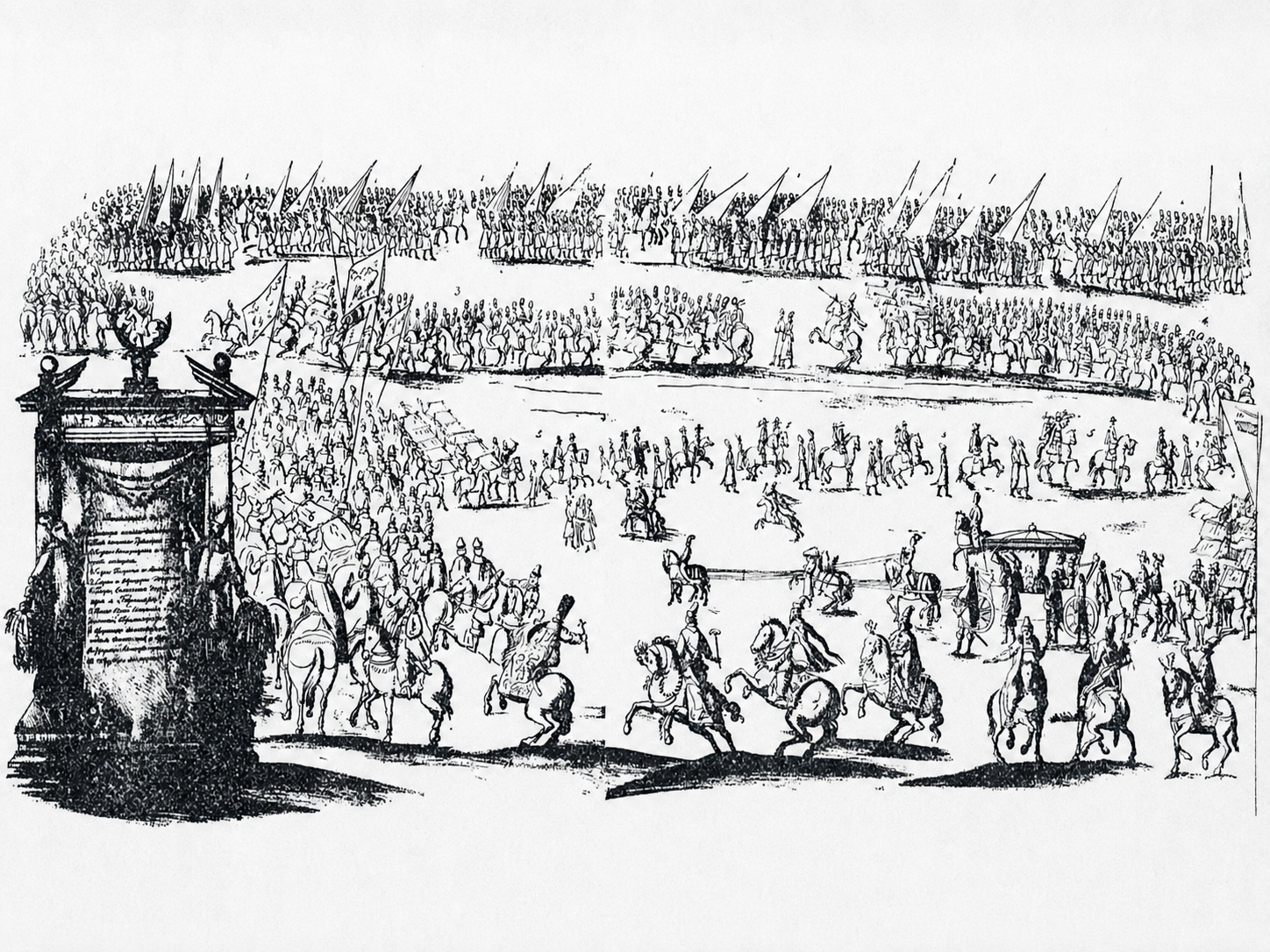
Christian F. D. Schubart, Swabian poet and singer at the end of the 18th century, wrote in his book «Ideas on the aesthetics of musical art»: «Russian national music has, as one can easily imagine, a rather wild and crude character... Such music sung by the Cossacks surely must have sounded quite horrible and it is difficult to understand that the Russian girls could possibly be charmed by it.»
Schubart's opinion seems more invented than based on information, since until 1790 there was practically no possibility for anyone living in the German-speaking countries to get acquainted with music from Russia. Let us consider the different possibilities of musical contact in the 16th and 17th century, i.e. in the times of Senfl, Orlando Di Lasso and Buxtehude:
- Encounters with musicians
- Written music
- Travel reports
- Illustrations
1. Vagrant musicians were the most efficacious musical mediators in the late Middle Ages. They travelled and wandered from one place to the other in wide areas, performing their songs and dances and exchanging melodies and instruments with colleagues from other countries. To get into Russia, however, was, it seems, impossible. In the 14th century some musicians – in the wake of crusades – got as far as the Baltic countries, where they introduced trumpets, fifes and drums f.i. in Reval and even the elegant «clavichordium» in Wilna. But the court in Moscow was reigned by the popes, who disapproved of and forbade music-making and the presence of musicians. It was only in 1586 that musical instruments from the West were introduced to the Moscow court: Ambassador Sir Jerome Horsey brought Tsarina Irina «organs and virginals» as a present from Queen Elisabeth I. The Tsarina was delighted. A chronicler from Moscow reports: «... never seeing nor hearing the like before, (she) wondered and delighted at the loud and musical sound thereof. Thousands of people resorted and stayed about the palace to hear the same».
Brass Bulletin 7, I / 1974 pages 65–74
All content is protected by copyright © Brass Bulletin 1974–2026