Pierre Trichet
5 articoli di Pierre Trichet
Brass Bulletin 45 - 1 / 1984
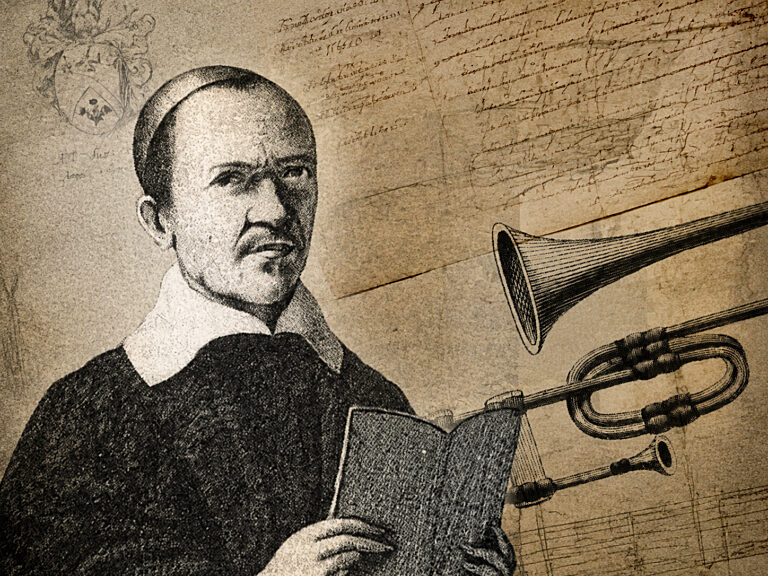
Trichet, Pierre
On the Sackbut or Harmonic Trumpet
A seventeenth-century description of the sackbut captures its moving slide, chromatic freedom and bass role at a moment when the instrument was still being defined.
pp. 10–12
Brass Bulletin No 45 · 1984
Trombone· Storia· Equipaggiamento· Strumenti storici
Brass Bulletin 46 - 2 / 1984
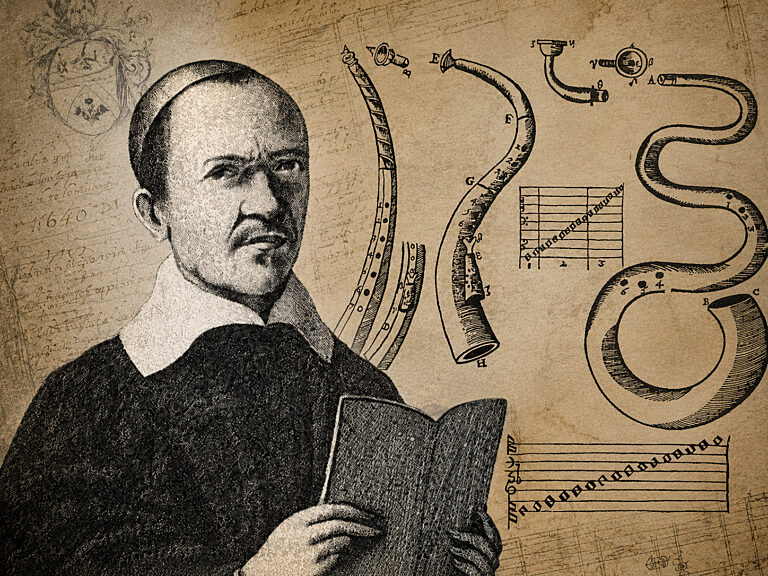
Trichet, Pierre
On the Cornett and Serpent
From Pierre Trichet’s Traité des Instruments de Musique (c. 1640)
Written around 1640, Pierre Trichet’s Traité des Instruments de Musique preserves a firsthand account of the cornett and serpent in musical life and construction.
pp. 12–15
Brass Bulletin No 46 · 1984
Cornetto· Serpentone· Storia· Equipaggiamento· Strumenti storici
Brass Bulletin 47 - 3 / 1984
Trichet, Pierre
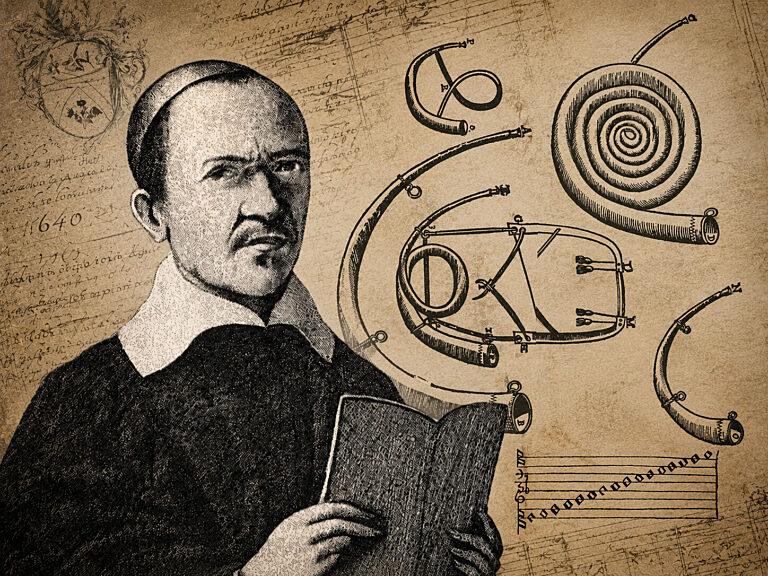
On hunting horns and other similar instruments
Aus Pierre Trichets Traité des Instruments de Musique (um 1640)
I admit that hunting horns, horns, buccines, trumpets and bugles have no holes in their outline, no more than do trumpets and sackbuts. This does not prevent them from being polyphonic, however, and changing the sounds. Yet some consider that all these names are synonymous and mean almost the same thing among Frenchmen, as did cornu, lituus and buccina among the Romans, as some have thought. It is true that Festus believed the lituus to be a kind of small buccina and that Lipsius¹ (de mil. Ro., book 4) said that people did not at first distinguish between buccina and cornett, but that later they did so distinguish, as larger and more curved brass cornett were made. The buccina, according to the same author, was at first nothing other than an ox horn: et a bene nomen sumpsit, ut instrumentum quod bubus canit. Isidore draws the etymology from buccina a voce quasi vocinam dicas. Varro, however, believes it is so called because, when sounded, it sings “booboo”. Panciroll, explaining the shape of the buccina, also mentions the reason for its name in these words: usurpabant buccinas circa orificium, per quod vox immittebatur, angustas: in ima vero parte, ex qua sonus egreditur latas: erantque oblongae ad similitudinem buccini, quod purpurae genus est, unde et causa nomini.One of our French writers says that the huntsmen’s horn is not that which is used today but one of ivory or of horn; for the huntsmen of antiquity used only horns while the modern instruments are all of bronze. I readily grant that horns were formerly made but of horn and ivory, yet there is no doubt but that today they are made of other materials. Julio della Scala² (l. l. poët. c. 20 p. 78) gives evidence of it and says the Germans make them from boxwood but they are different from those used in the hunt: Nunc cornua germani e busco efficta multis foraminibus inflant magno spiritu non sine gratia et decore, praesertim in nocturnis festivitatibus. Vocem namque humanam imprimis imitantur, eamque vehementer contentam. Varro says that cornu a curvore dictum fuit. But Fungerus derives this word from the Greek kéras, or from the Hebrew, which is written almost the same.The first origin of the hunting horn lies in the fact that shepherds used to call their flocks by means of its sound; in this connection Columella wrote that the beasts must be accustomed to return to their pen at the sound of the buccina. Huntsmen then used it to call their dogs and their falcons, from whence it is called huchet [from the French hucher, “to call” — Ed.] as well as cornet. La Boderie gives us a charming description of the use of this in his poem:The more his horn the huntsman sounds,The more do run and call his hounds;It imitates the trumpet shrill,Sounds now the quarry, now the kill.Sometimes one finds huntsmen so skilful that they can play on their horns as many different sounds as on a trumpet; Le Fouilloux has discussed this so fully in his book on hunting that there is no need to speak further of it.
pp. 51–54
Brass Bulletin No 47 · 1984
Corno· Storia· Equipaggiamento· Strumenti storici
Brass Bulletin 48 - 4 / 1984
Trichet, Pierre
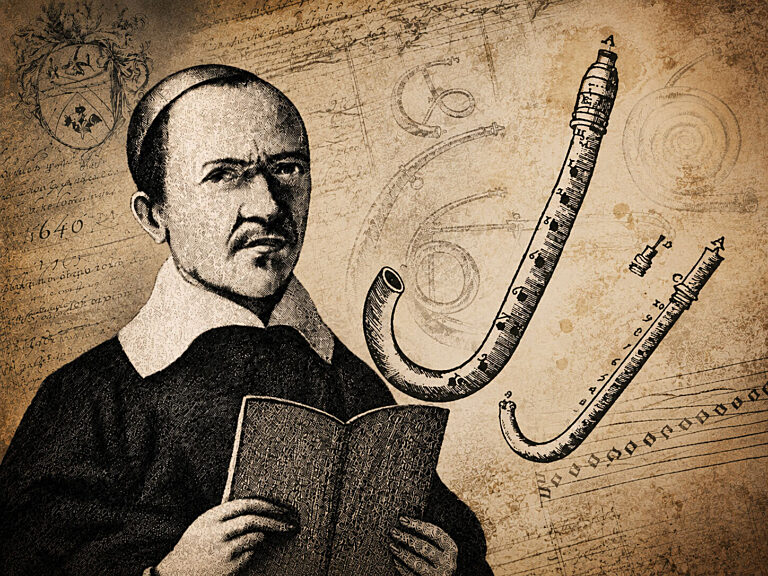
On the Crumhorn
From Pierre Trichet’s Traité des Instruments de Musique (c. 1640)
A seventeenth-century crumhorn leads from Roman lituus and alpine horns to reeds, finger holes and keys, exposing an unexpected family of curved instruments.
pp. 71–73
Brass Bulletin No 48 · 1984
Storia· Equipaggiamento· Strumenti storici
Brass Bulletin 49 - 1 / 1985
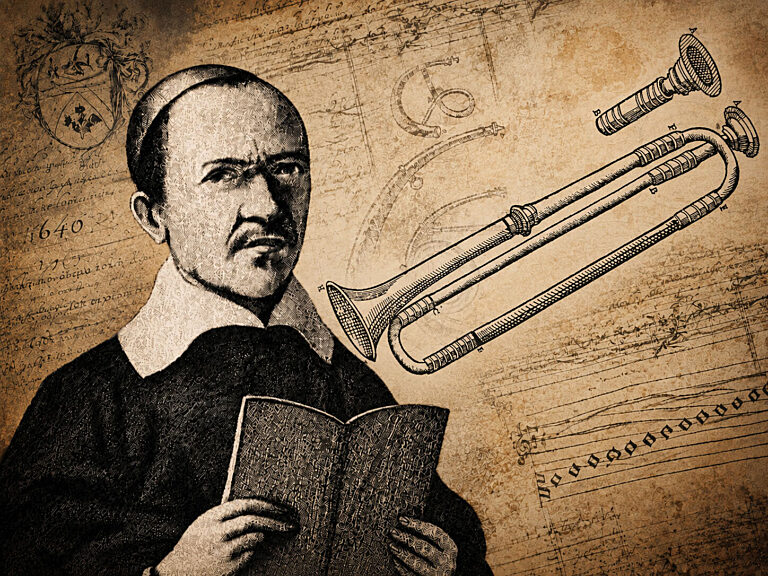
Trichet, Pierre
On Trumpets
Trumpets served war, ceremony and even medicine before Trichet turned to the mute, a simple device whose purpose extended far beyond changing the sound.
pp. 31–33
Brass Bulletin No 49 · 1985
Tromba· Storia· Equipaggiamento· Strumenti storici