3 min di lettura
Science in the service of music
Interview with René Périnelli
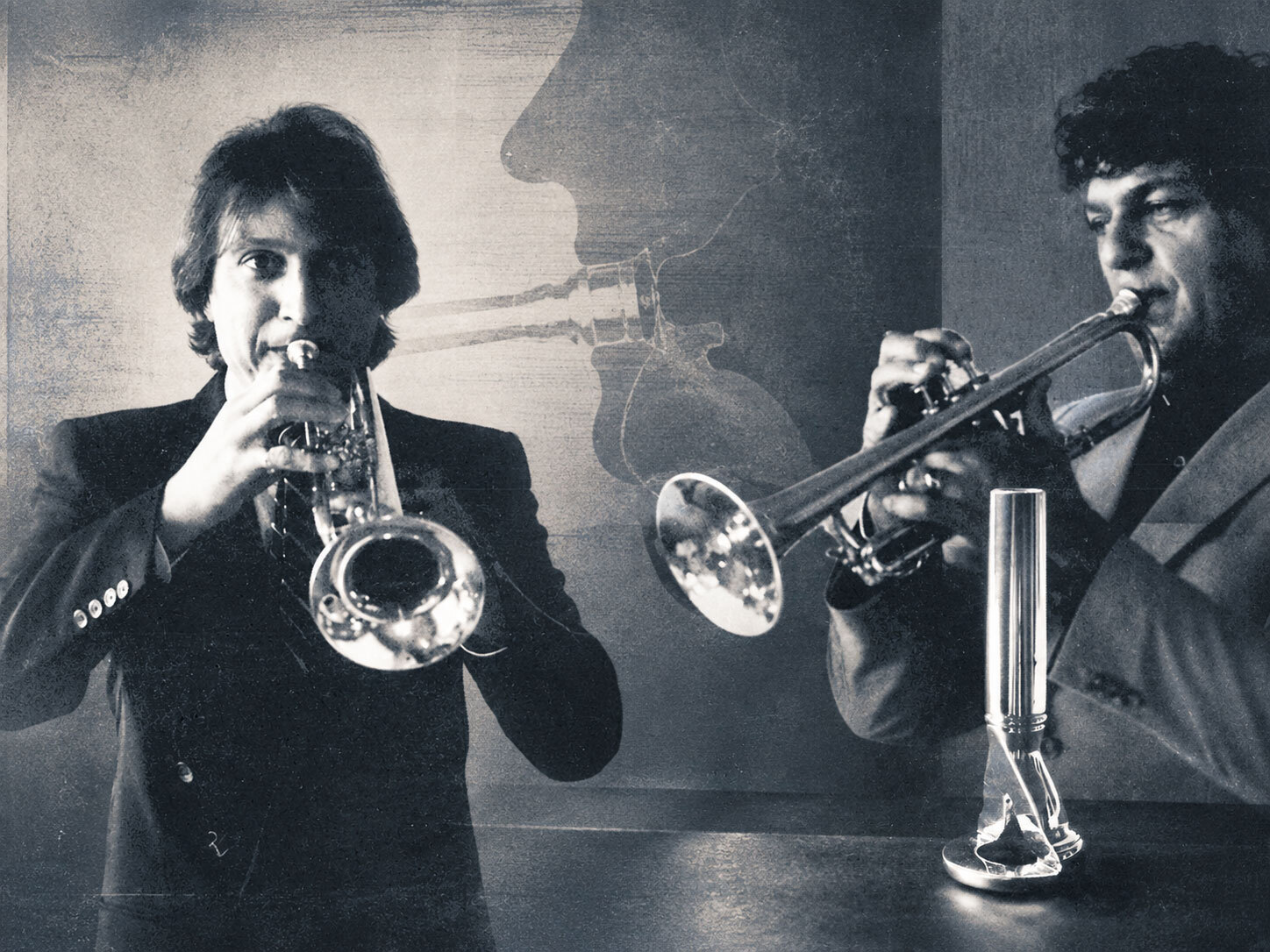
René Périnelli & Jean-Jacques Greffin
René Périnelli is a versatile trumpeter, classically trained and well known for his passionate curiosity towards everything which concerns his instrument. He has played all the various types of music. He won first prize at the Paris Conservatoire, where he was taught by the late Ludovic Vaillant, and then sought out many other renowned players to help him perfect and extend his skill. He plays in big bands (Sonny Grey, Aimé Barelli, etc.), symphony orchestras (Lamoureux, Colonne etc.), chamber music (Paul Kuentz), brass ensembles and solo recitals. Today he is soloist at the Marseille opera, professor at the Regional College of Music there and a member of the Aquitaine Brass Ensemble and the Solistes de Marseille.
BRASS BULLETIN: *René, your trumpet career is a brilliant one, and also impressive because of the variety of style in which you can perform. How did your passion for teaching start, and then this increasingly scientific research into the physiological phenomena of brass playing, which has now led to the publication of this exciting book on the subject?*¹
René PÉRINELLI: There were various stages, all marked by my taste for communication and exchange. It all started when I got my teaching diploma in Paris. This officially opened the door to teaching for me and enabled me to be appointed to the music college in Marseille, where I set up a new class. My numerous contacts with various great players has gradually provided me with a lot of knowledge which my pupils were able to profit from and whose effects I was able to measure. Later something happened which gave a new and special turn to the educational direction in which I was then heading: that was the arrival in the opera orchestra of my friend Jean-Jacques Greffin, the son of the famous Jean Greffin, solo cornet at the Paris Opéra, one of the grand masters of trumpet teaching (now retired). Jean-Jacques has inherited and developed his father’s exceptional knowledge (before coming to Marseille, Jean-Jacques was solo trumpet at the Paris Orchestra for fifteen years). Once he had come to Marseille, I became convinced of the value of his knowledge and we set up something unique in France — a joint trumpet class. This was made possible by an exceptional degree of understanding on the part of the college director, Pierre Barbizet. Out of this close collaboration, based on a positive confrontation of views, arose the outlines of what was to become the material for our methodological text.
B.B.: The last few years have seen the publication of many books about systems and many theories promising success. How is this one which you and Jean-Jacques Greffin have written different?
R.P.: The step we have taken is based fundamentally on scientific confirmation which we have obtained from the greatest specialists on the human body: French doctors, radiologists and professors. They enabled us to clarify definitively our knowledge of the physiological functions necessary to master the trumpet. On that basis we completely restructured the learning stages and established a new chronology of the teaching priorities.
Hitherto teaching has been more or less organised according to empirical experiences which depended on a teacher’s sensitivity, imagination, intelligence, assumptions, intuition or sensations. All this is still valid but in subjective reality we still lack the indispensable scientific element which it is now so easy for us to acquire if we really want to. Science helps us avoid tedious trial and error and serious mistakes in the face of certain fundamental problems in the art of brass playing. This is something we had to know more about and, above all, we had to make this essential information available to each and every player. That is the aim of our book.
B.B.: Musicians — especially brass players — are not overly enthusiastic about scientific explanations. Do you think yours will be accessible to them?
Brass Bulletin 47, III / 1984 pagine 26–29
Tutti i contenuti sono protetti dal diritto d’autore © Brass Bulletin 1984–2026