11 min di lettura
Hermann Baumann
A virtuoso's career
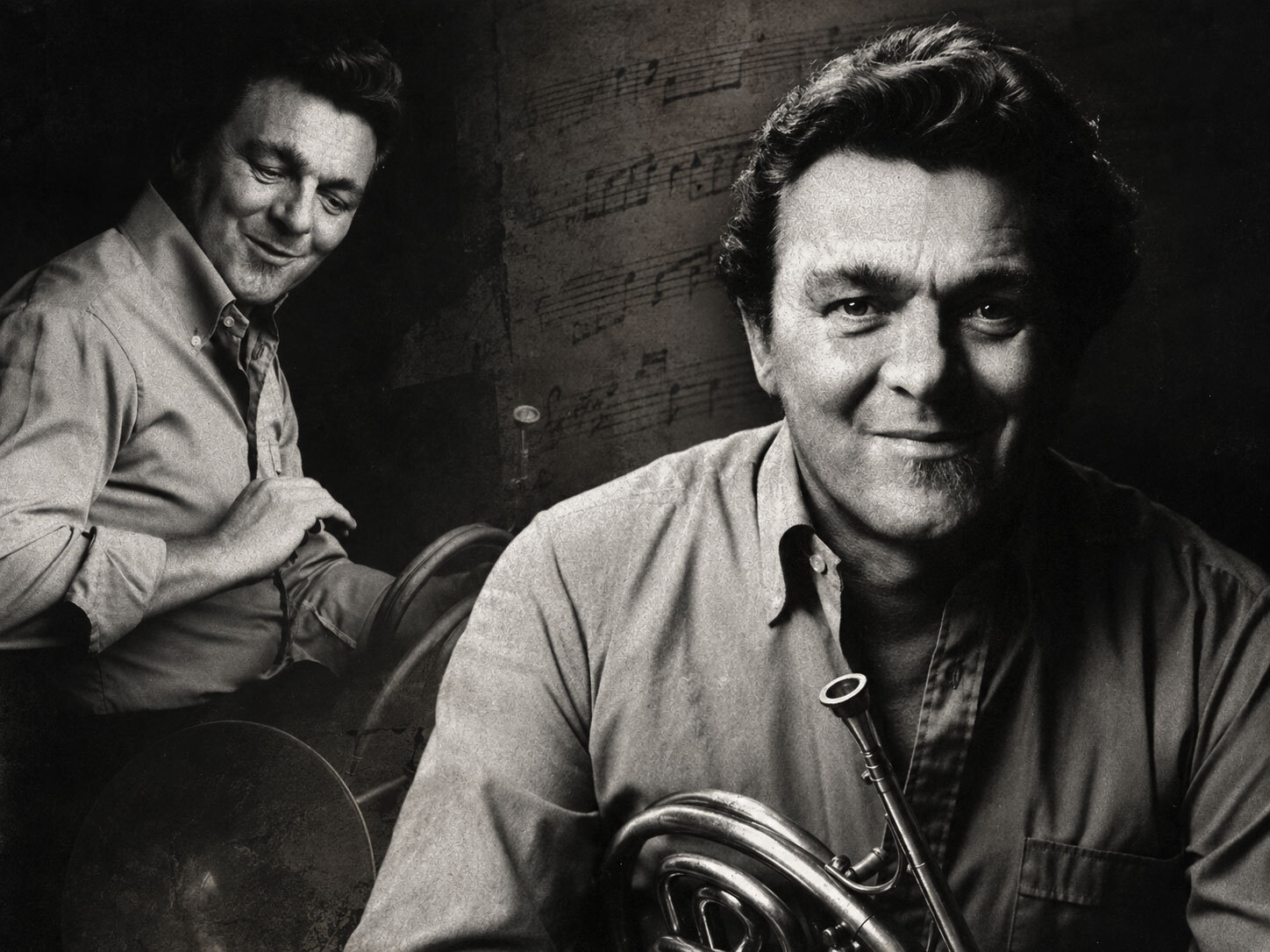
Hermann Baumann
Hermann Baumann is unquestionably one of the most outstanding of those few brass virtuosos who have succeeded in building a great international career.
His successes are fascinating and we thought it would be interesting to present a few aspects of this great horn player’s route to the top. We have taken the biographical material from a conversation which was recorded several years ago in Bern just after Hermann Baumann had given a masterly performance of the first concerto of Richard Strauss. The passages in italics are direct quotations from him.
Hermann Baumann came into the world in 1934 near Hamburg in West Germany. His father, a country doctor, was an amateur singer and his mother, a trained pianist, took charge of the music in the family. Thus his parents were not indifferent to the vocation their younger son Hermann was to follow; his musical talent was soon recognised and he profited from his parents’ experiences with their first son. That happens in a lot of families; it’s easier for the second child because the parents learn with the first one.
Both his grandfathers were teachers, organists and choirmasters. In this remarkable environment it is no wonder that Hermann could, while still very young, sing melodies which his mother played on the piano. Despite the worries and difficulties of the Second World War Hermann had his first piano lessons at the age of six.
His was a childhood without television, during which — and he emphasises this — he took advantage of every unoccupied minute to give free reign to his imagination.
In 1950 he discovered jazz; he sat at the drums and accompanied his cousin, an excellent pianist. He did best on the instrument which by chance he was able to buy from the famous Big Flechit personally.
His desire to hear classical music could be satisfied only by means of the radio but the Baumanns had some old records of Karl Erb, Heinrich Schlusnus and the Busch quartet. They were my models in those days.
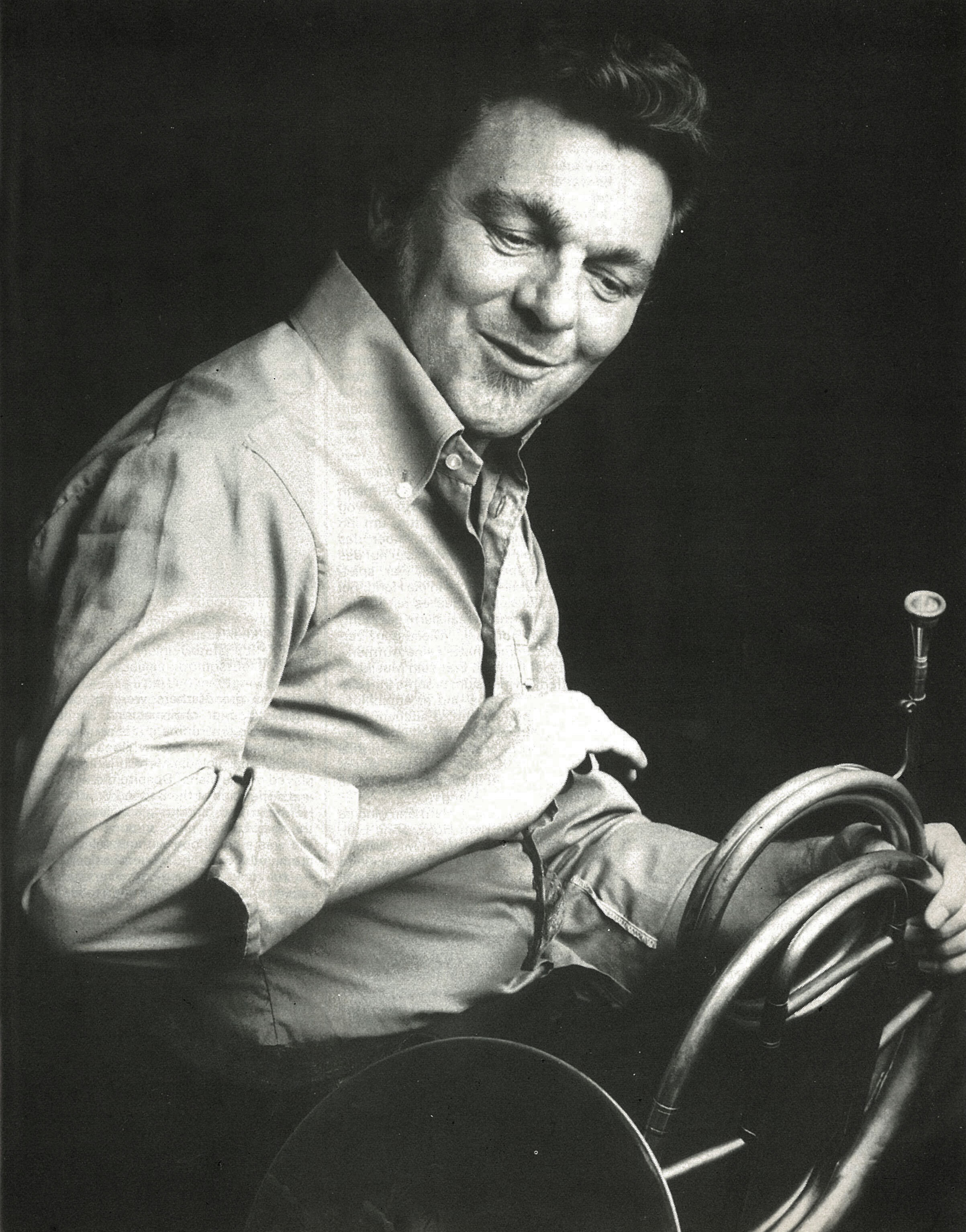
1982
Photo Christian Steiner
The success young Hermann had conducting choirs persuaded his parents to do what was necessary to allow him to become a conductor. But fate thought differently because, when he went to secondary school, quite by chance, he got his hands on a horn. His father had such an instrument at home but Hermann had not even realised it was a horn; this dented old “machine” had not attracted his attention. His music teacher at school was the first person to introduce him to the instrument and he decided to find him a teacher. Hermann was just seventeen; at the same time he also heard the “Eroica” at a concert for the first time and he was struck by the extraordinary beauty of the horn sound.
The lessons began. Hermann went to them with the horn under his arm, without a case. It was a military horn in B♭, fingered with the right hand. His teacher fastened the 1st and 3rd valves down with little pieces of wood; he did not like the sound of the B♭ horn at all and forced his young pupil to play on the “natural” horn in F. So Hermann had to play for a whole year with pieces of wood on his 1st and 3rd valves. That was the start — absolute concentration on sound.
Hermann was familiar with phrasing from his earlier music making and he could read music. Now it was a question of going deeper, of becoming aware of horn tone and making something out of it.
This first teacher, a postman by trade, developed in Hermann such enthusiasm for the horn that he had felt he would achieve distinction through the instrument.
At eighteen he decided to become a horn player rather than a conductor. A remark by one of the German soccer stars of the day, one Spundflasche, made the ambitious young musician think. This famous sportsman told the press, by way of explanation for his change of club: “I would rather be a member of a good team than a big star in a mediocre club.” Hermann saw his musical career in exactly the same light: I would rather be 1st horn in a good orchestra than conductor of a fourth-class one. And so he began to plan his career and to devote all his time to his horn studies.
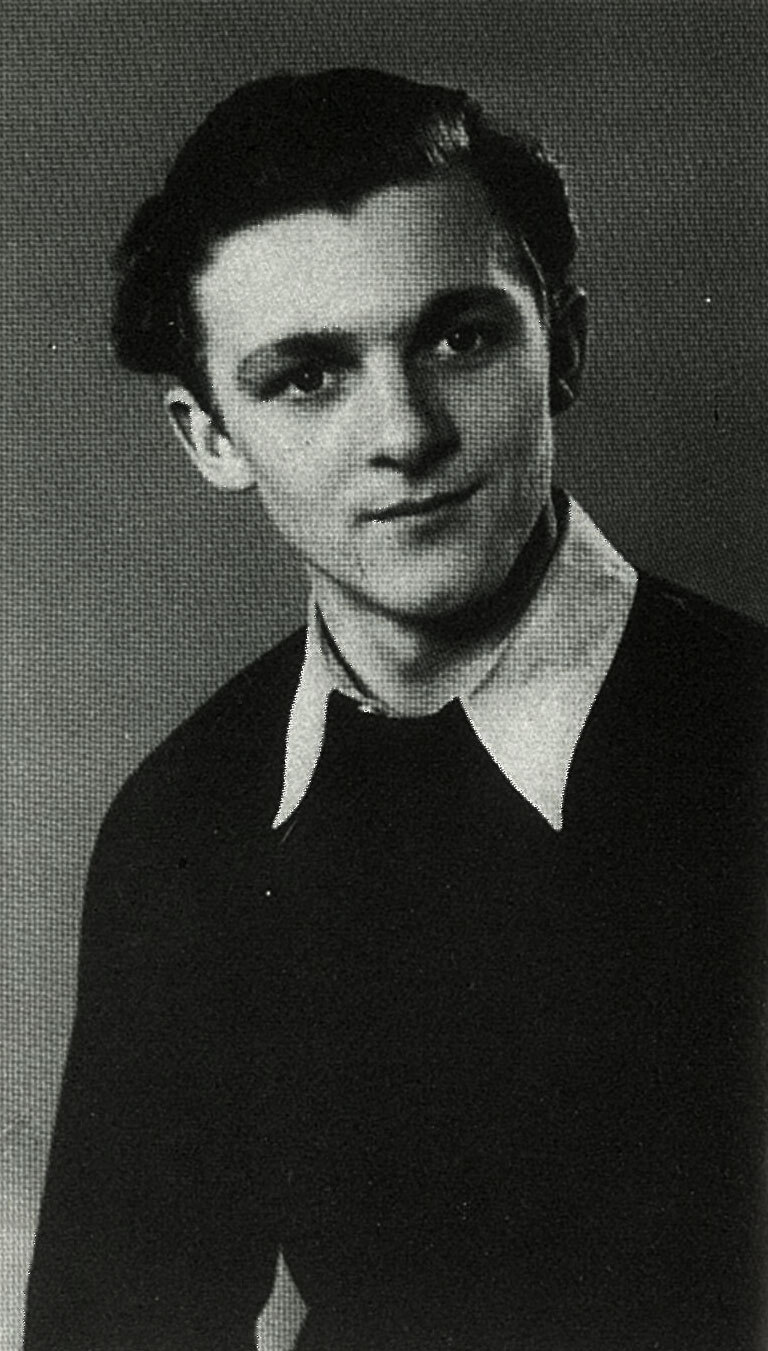
1955
Young student
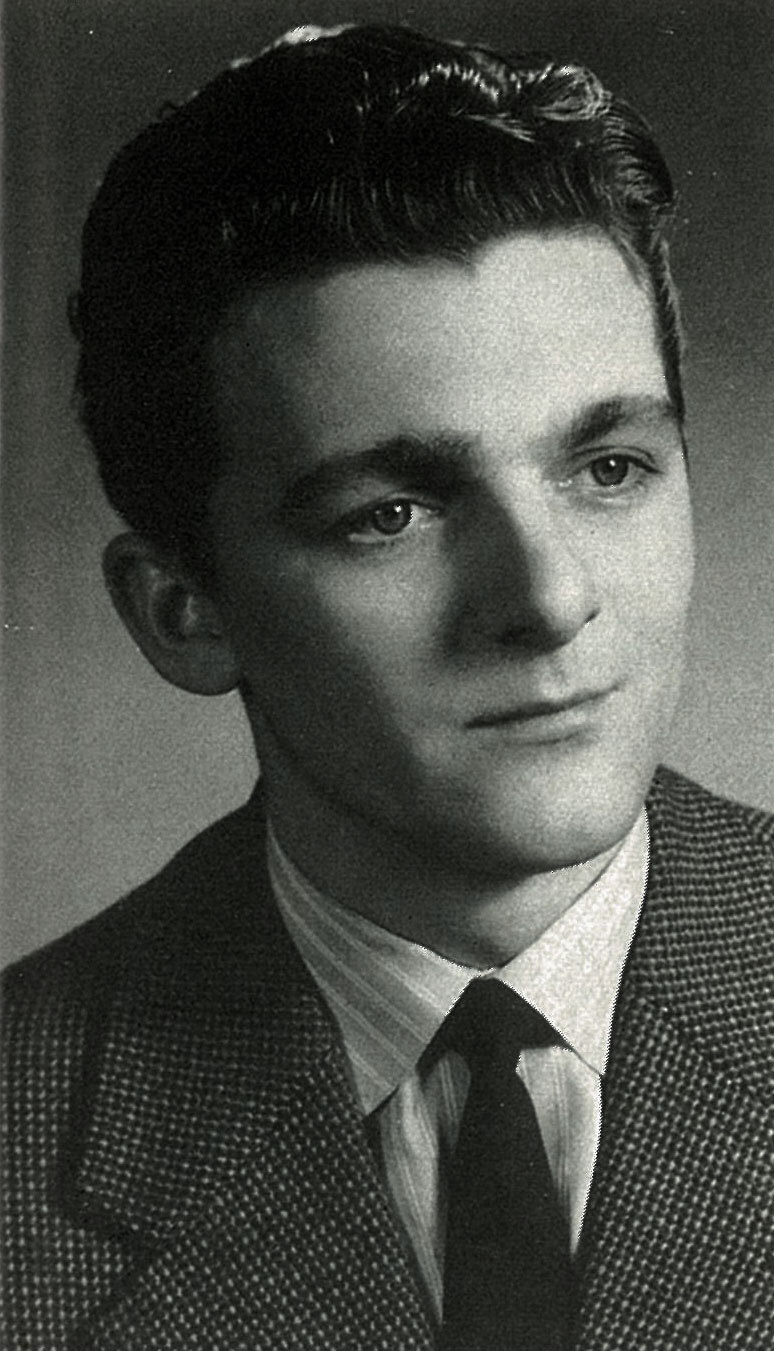
1957
1st year in Dortmund
He took lessons in Hamburg with Heinrich Keller, solo horn at the State Philharmonic Orchestra. He injured his lips in a car accident and could not play for four months. He used this opportunity to stop his private lessons and enrolled in the Hamburg College of Music, mainly to change teachers. Keller had dampened his enthusiasm, advising him to become a sound engineer — anything rather than a horn player, saying he had little prospect of success in that field.
I still find it a good idea nowadays for a pupil to change his teacher from time to time. After three years with the same teacher this is often a good idea; after four it is a necessity; five is much too long. Even today I have pupils who want to work with me after twelve years with the same teacher. I haven’t the faintest idea what to do in those circumstances. Cases like that are tragic. You need more than one source.
Brass Bulletin 51, III / 1985 pagine 26–39
Tutti i contenuti sono protetti dal diritto d’autore © Brass Bulletin 1985–2026