Rendete Brass Bulletin disponibile nella vostra università, nel vostro conservatorio o nella vostra biblioteca Scoprite l’accesso istituzionale

2 min di lettura

Editorial

Editorial

The second International Brass Congress (IBC2) took place recently. Readers will remember the first, which was held in Montreux, in Switzerland, in 1976 thanks to the Institute for Advanced Musical Studies (an ephemeral “US-international” institute which for several years benefited from the amazing generosity of an extremely wealthy Italian-American businessman).

That first meeting was an inspiration to the 500 brass players who took part. An outstanding bill of about 150’000 Swiss francs ($ 80’000) had to be paid by the Institute (its last act of generosity before disappearing from the scene). The founder, the tuba player Harvey Phillips, had envisaged a congress every four years but the economic problems of the last few years prevented him from doing so and it was certainly not easy to find a town and an institution which would agree to assume the inevitable deficit (IBC2 is said to have a budget of $ 200’000). Harvey Phillips, together with his colleagues from the various American guilds, eventually found the necessary support on his doorstep in Bloomington, at Indiana University, in one of the biggest schools of music in the world.

First problem

The location. Bloomington is a small university town and not very easy to get to, especially from overseas (Washington, New York, Boston or Chicago would have been easier) but it had to be done where possible.

Second problem

The date. The musical season and the academic year in American institutions are different from most of those in other countries, especially from those in Europe, where the music college exam period is at its height and the concert season has not finished. The dates 3rd-8th June were convenient from a US domestic point of view and so, understandably enough, they were chosen. The home market had to be considered first. The American brass guilds, although styled “international”, are in fact national, and characteristically American, in their structure, in keeping with the special criteria of that great country.

Third problem

The cost. The American guilds have organised several collections with a view to setting up scholarships to help students to participate. These scholarships will, naturally, go first to young American students. Meanwhile foreigners have to pay the whole cost of transport (which is considerable) as well as accomodation and congress fees (both of which are reasonable).

Not the same

When our American friends honoured us with their presence in Montreux, they were able to benefit from an American organisation on the spot, having travelled on advantageous charter flights. The official language — even in Montreux — was English.

The guilds are useful

Noting a number of problems in establishing internationalism does not mean that one is against this kind of association. It seems obvious that such organisations can help facilitate and develop an exchange of ideas and stimulate a widening of knowledge (although one has to beware of the singular lack of healthy argument which friendly instrumental associations engender — “Everybody’s great, everybody’s nice”).

It must also be recognised that the American guilds have not succeeded in taking a hold of brass players as they had hoped. Their “international” penetration has always been very modest and unrepresentative, despite all their efforts. This is one message which is very clear and which our transatlantic friends should read.

Refusal of hegemony

The world is rich and varied and must remain so. That there should be global influences is a good thing, but we must resist hegemony.

Welcome initiatives

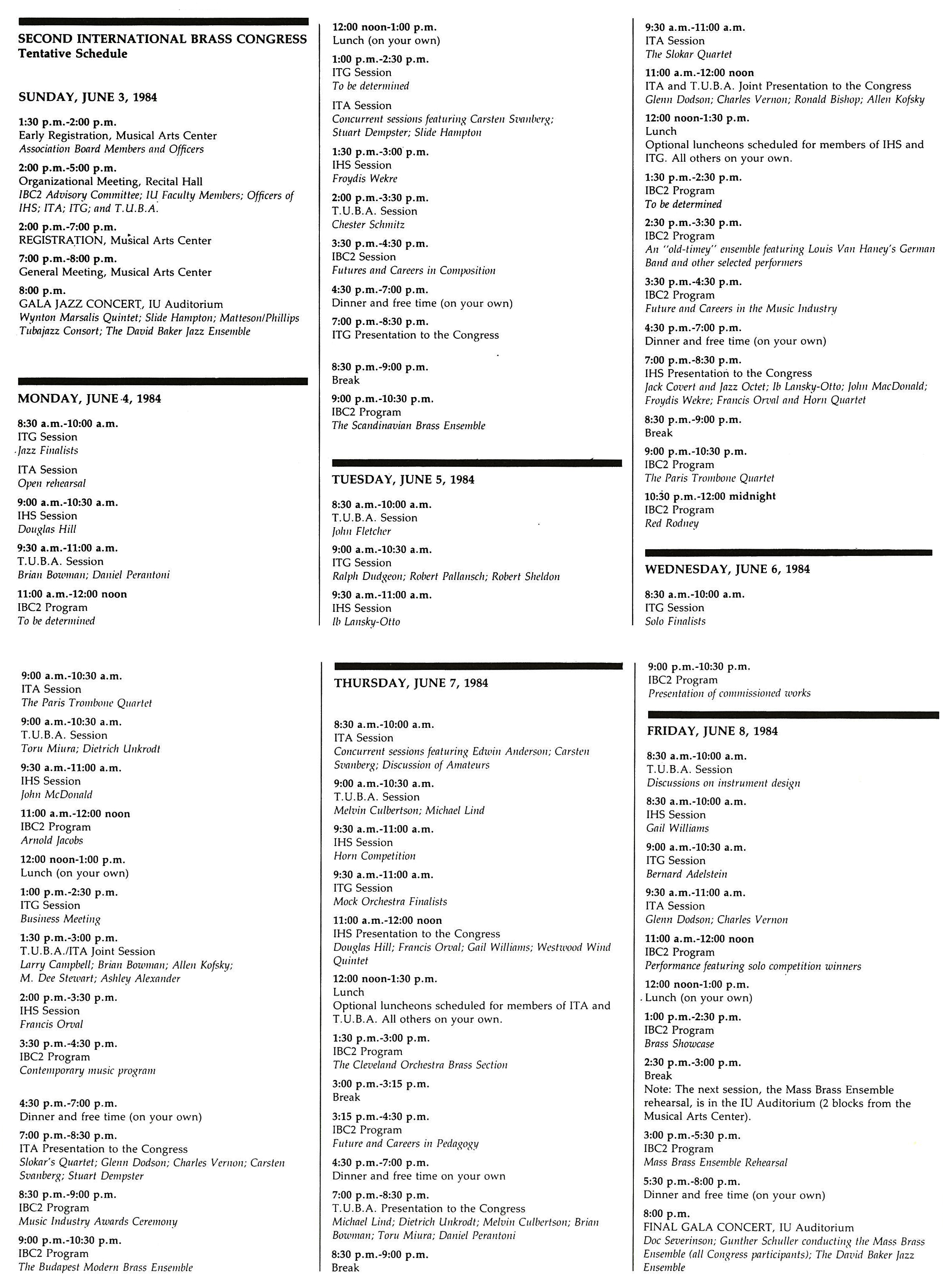
In the last few years we have noted the founding of national associations in many countries. These associations bear clear and legitimate names (French National Horn Association, French Trombone Guild, Japanese Trumpet Guild). BRASS BULLETIN views this movement sympathetically and supports it. It is a good thing that every country, indeed every region, should research and cultivate its identity and pass it on to its artists. On that basis nothing should stand in the way of international exchanges; quite the opposite, indeed. However — the IBC2 organisers have set up a marathon of fabulous events which makes it all the more unfortunate not to be able to attend (see below).
Brass Bulletin image

Brass Bulletin 46, II / 1984 pagine 9–11

Tutti i contenuti sono protetti dal diritto d’autore © Brass Bulletin 1984–2026

Condividi questo articolo

Facebook LinkedIn
Loading…

Domande e risposte

Come funziona l’edizione digitale

Che cosa comprende l’edizione digitale?

L’edizione digitale riunisce gli articoli già digitalizzati sotto forma di testi leggibili e ricercabili online — non semplicemente come scansioni o file PDF — insieme alle illustrazioni originali, alle note, agli autori, alle informazioni sul numero della rivista e alle traduzioni disponibili. I suggerimenti di articoli correlati comprendono attualmente solo questo materiale digitalizzato.

Gli articoli digitali sono identici agli originali?

Conserviamo il più fedelmente possibile il testo originale, la lingua, le illustrazioni, le didascalie, le note e il contesto editoriale. La presentazione viene adattata per una lettura confortevole online e gli evidenti errori di trascrizione o scansione possono essere corretti. Il contenuto e il carattere dell’articolo pubblicato rimangono invariati.

Quali lingue sono disponibili?

Brass Bulletin è stato pubblicato in inglese, francese e tedesco nel corso di tutta la sua storia. Le traduzioni italiane e spagnole sono state aggiunte a partire dal numero 60. Sui siti italiano e spagnolo, gli articoli dei numeri da 1 a 59 vengono quindi mostrati in inglese per impostazione predefinita.

Con quale frequenza vengono aggiunti nuovi articoli?

Nuovi articoli vengono aggiunti quasi ogni giorno, con circa un numero completo digitalizzato ogni settimana. Il ritmo può variare in base al lavoro di preparazione, elaborazione delle immagini e verifica editoriale necessario.

Perché non tutti gli articoli sono disponibili in formato digitale?

La collezione completa di Brass Bulletin comprende 1.246 articoli pubblicati tra il 1971 e il 2003. L’indice completo è già disponibile online e consente di scoprire tutti gli articoli della collezione, compresi quelli il cui testo integrale non è ancora stato digitalizzato.

La digitalizzazione è iniziata nel febbraio 2026. Ogni articolo viene accuratamente preparato per la lettura online, verificato e collegato al relativo numero, agli autori, agli argomenti e alle illustrazioni. Al ritmo attuale di digitalizzazione, la collezione completa dovrebbe essere disponibile online entro febbraio 2028.

Perché alcuni riferimenti citano articoli che non sono ancora disponibili?

I riferimenti presenti negli articoli originali vengono conservati anche quando il materiale a cui rimandano non è ancora stato digitalizzato. In questo modo si preserva l’integrità storica ed editoriale della rivista. Man mano che nuovi numeri vengono aggiunti all’edizione digitale, un numero crescente di questi riferimenti condurrà ad articoli leggibili online.

Posso suggerire un articolo o segnalare un errore di trascrizione?

Sì. Se desiderate che un determinato articolo venga digitalizzato, oppure se notate un possibile errore di trascrizione o un’informazione mancante, contattateci. I riscontri dei lettori ci aiutano a migliorare l’edizione digitale e a stabilire priorità utili all’interno dell’archivio.

Come posso sostenere Brass Bulletin?

Il vostro sostegno contribuisce a finanziare la preparazione, la verifica e la pubblicazione online dell’intera collezione.

Abbonati all’Edizione digitale

Preferite sostenerci senza abbonarvi?

Fate una donazione

Come procede la digitalizzazione?

Stiamo rendendo Brass Bulletin disponibile online gradualmente, articolo per articolo. Potete leggere gli articoli appena digitalizzati non appena sono pronti, anche prima che un intero numero sia completato.

Consultate il nostro calendario di digitalizzazione per scoprire le ultime aggiunte e le date di disponibilità stimate dei prossimi numeri. Le stime si basano sul nostro ritmo recente e possono cambiare.

Cerca in Brass Bulletin.