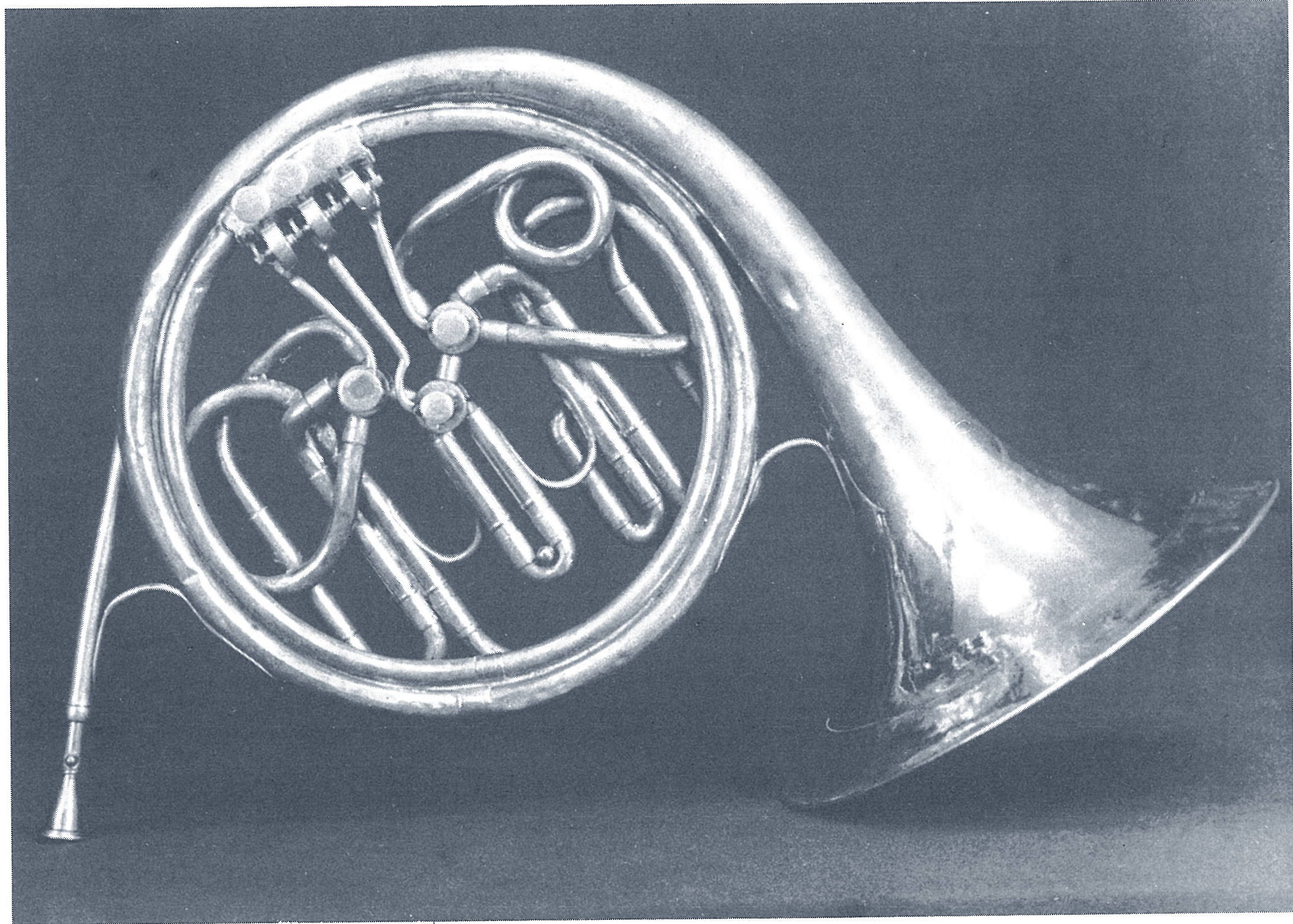
Concert-horn with rotary valves, by Riedl, Graslitz, ca 1875
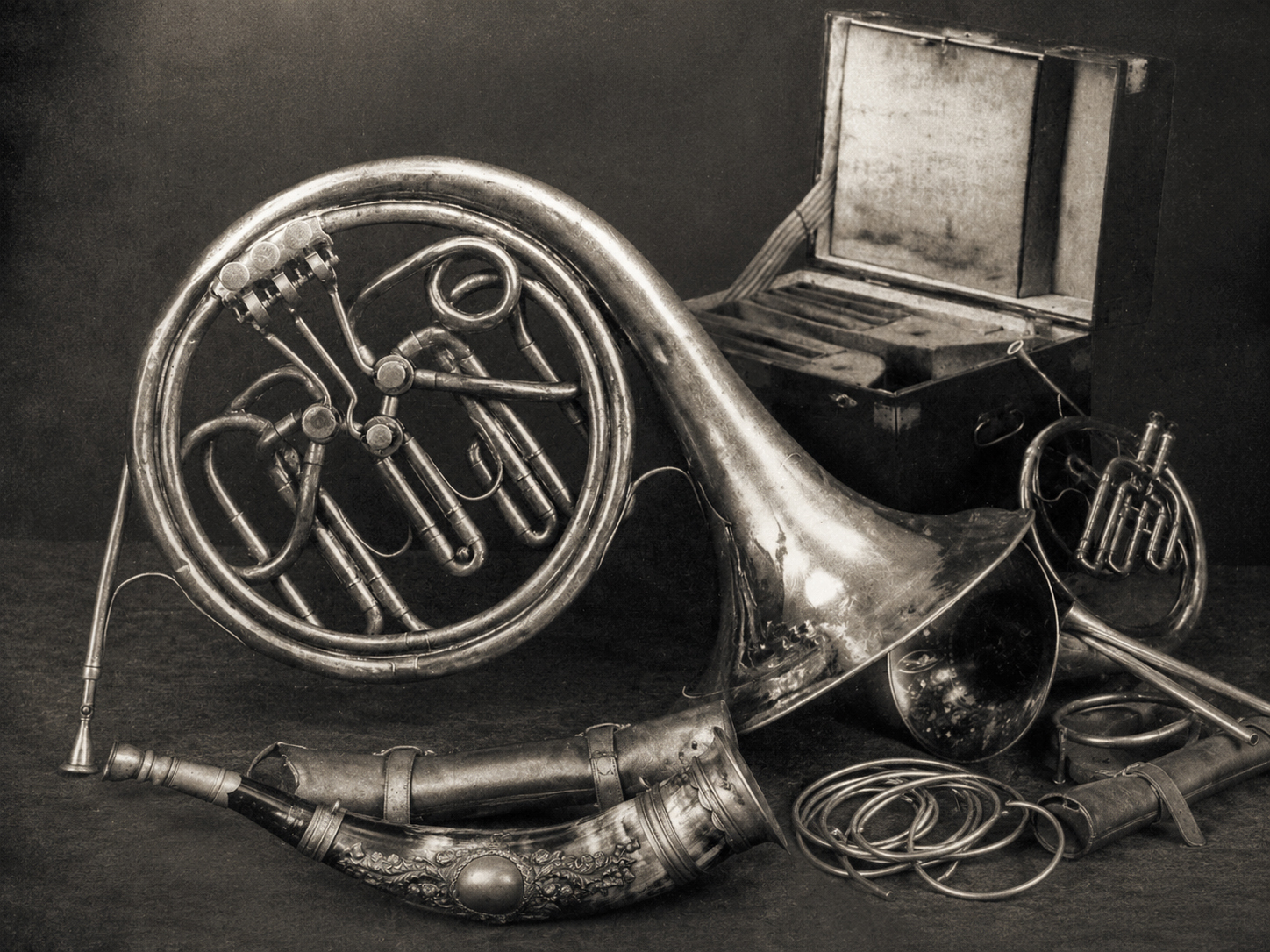
Hunting horns were particularly prominent. From the original 18th-century parforce horn in D, a single-coil Dampierre horn, to the delicate ladies’ hunting horn, worked in silver (England, 19th century), there was an abundance of parforce horns and trompes de chasse to be seen, from France, Germany and of course Bohemia. The way in which hunting-horn playing was preserved in Germany was shown by contemporary parforce horns, mostly from German workshops, Fürst Pless horns and an old half-moon horn from the Sauerland.
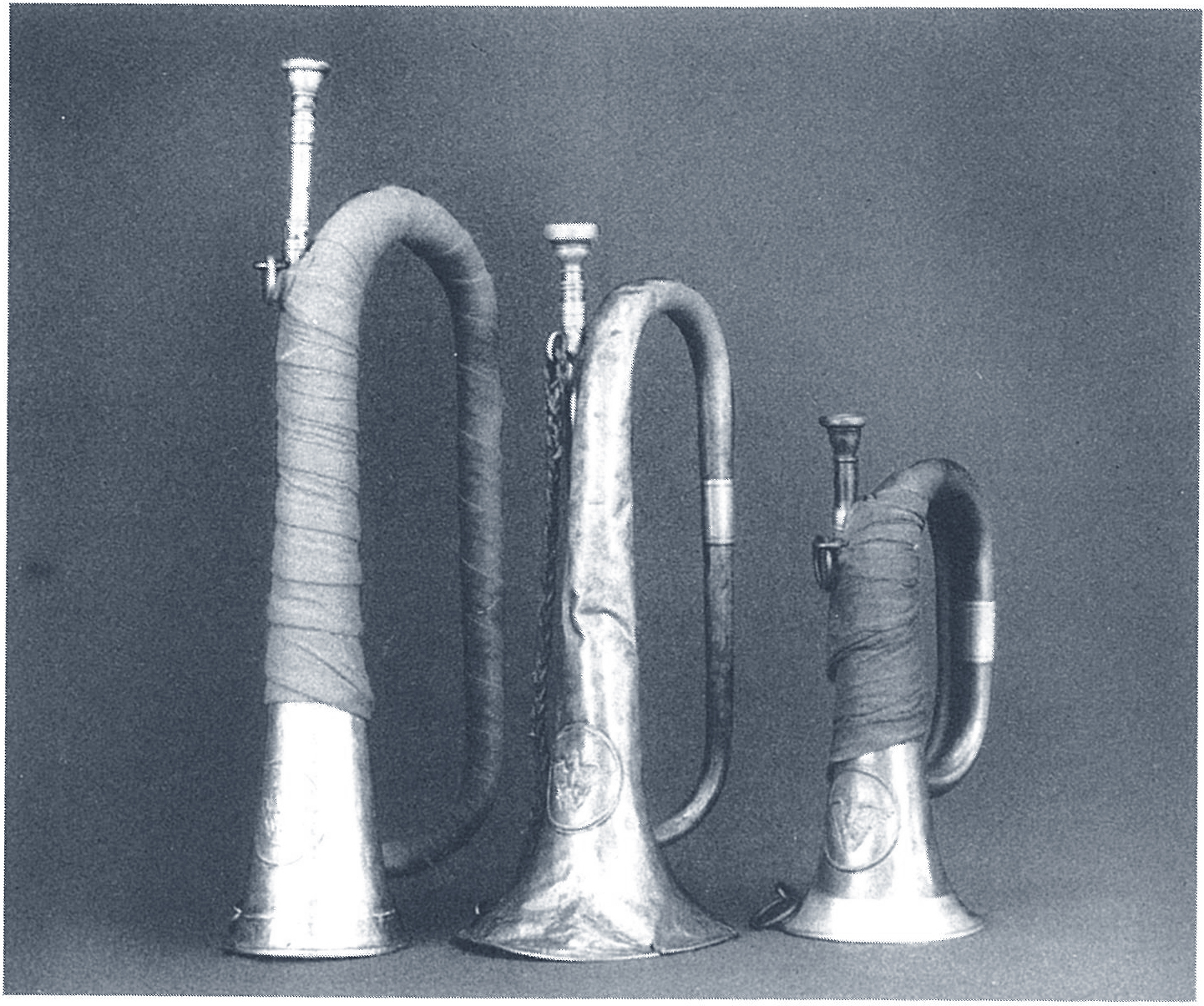
Development of the infantry bugle, Prussia, ca from 1840
There were also, by way of curiosities, horns of the post, coach, fire brigade and infantry varieties and cavalry and fanfare trumpets from all over Europe. One of the coach horns carries the British royal coat of arms and comes originally from Buckingham Palace; it was a personal gift from Prince Philip to the present owner who made it available for display. Nor should we forget those horns with keys and finger holes, some of them slightly ridiculous, such as the fingerpipa (Sweden), the soprano cornetto, the corno muto, then the menacing serpent, a keyed horn in C and finally a monumental bass keyed horn, the ophicleide. Splendid old concert horns from around 1800 with wooden cases and up to seven crooks from France, Austria and Germany; a combination horn (1844) with two Stölzel valves; and a Viennese horn from the 19th century in a modern reconstruction by Yamaha: all these took us back to the beginnings of the concert horn. Modern instruments by Alexander and Finke and the interesting Hamburg Lehmann double horn, copied by Lindl in Brno, rounded off this section of the exhibition.
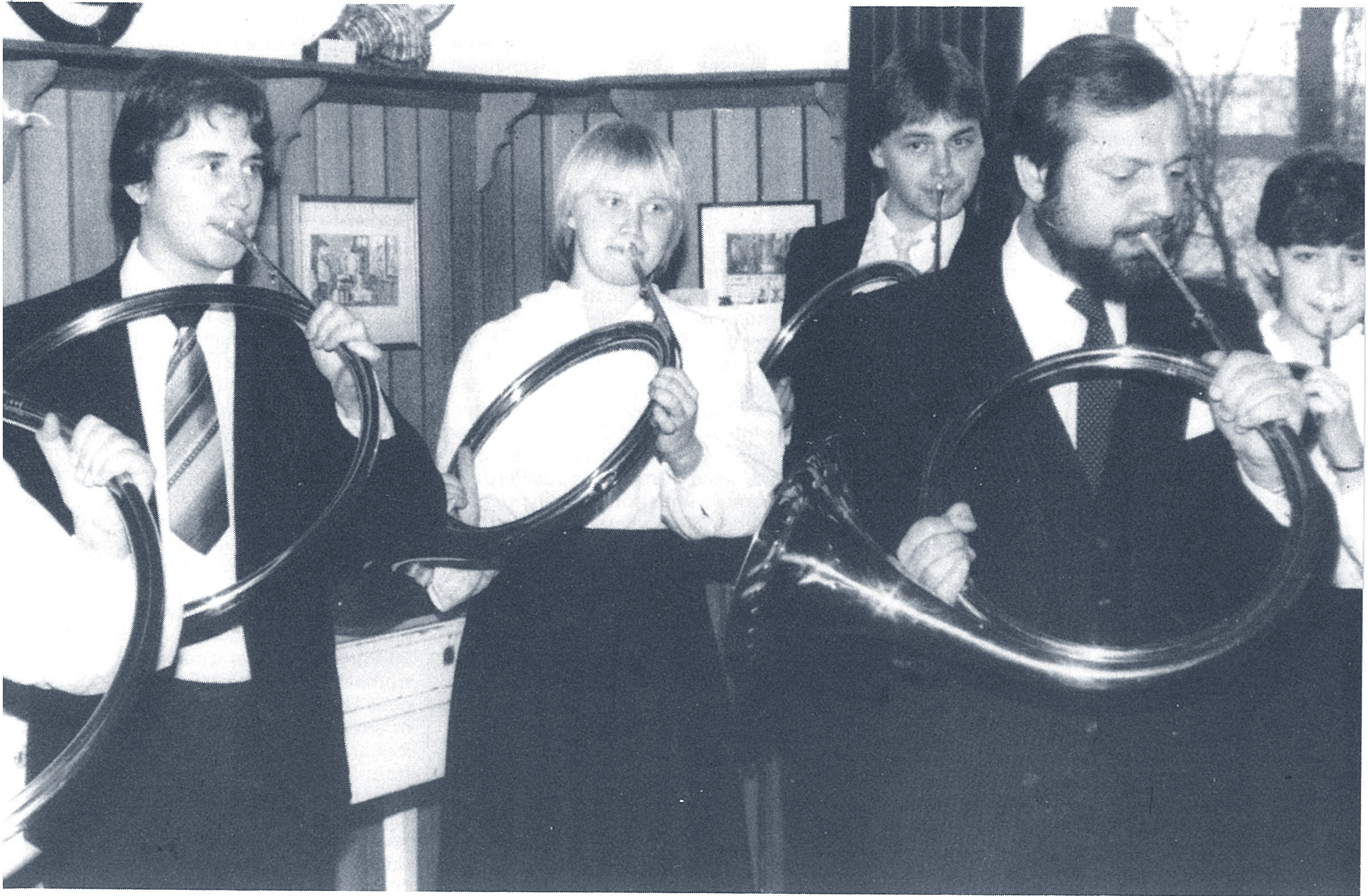
It was allowed to blow the old instruments (Michael Höltzel in front of young visitors).
Special mention should be made of the Kuhlo horn, a circular flugelhorn in B♭, which had a small, but in my view very important place in this exhibition. This instrument of the German Posaunenchor, with its wonderfully soft sound, halfway between horn and trumpet, was once the soprano and alto instrument of the Posaunenchöre — a rare situation nowadays, alas, now that it has been driven out by the cheaper and correspondingly squeakier piston-valve trumpet.
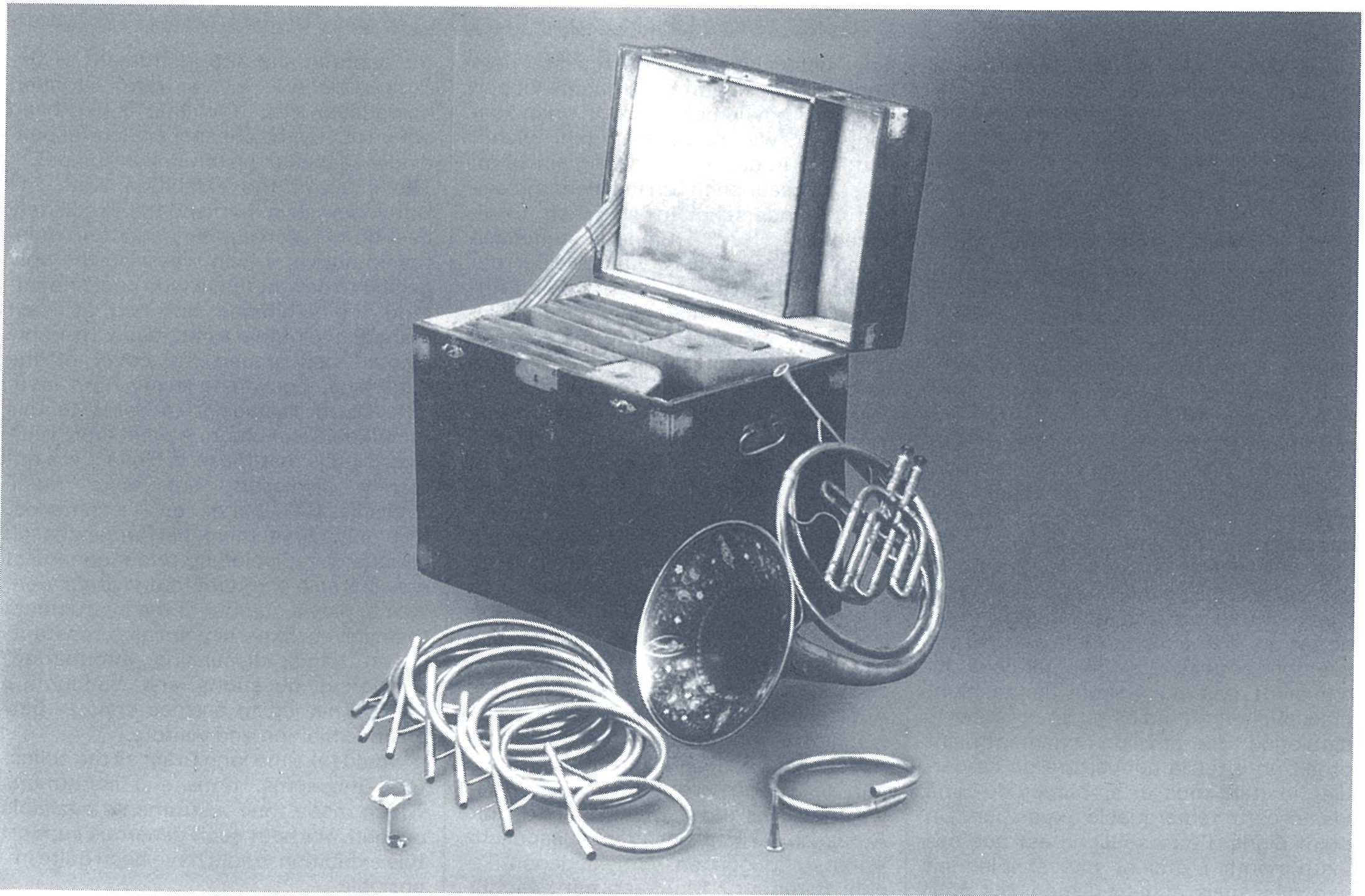
Concert-horn by Guichard, Paris, ca 1844
The stars of the exhibition were the Dutch porcelain horn and the exquisitely beautiful French combination horn mentioned above, which was also the only exhibit to delight those who could not attend the exhibition but had at least managed to obtain a catalogue. Its richly painted bell graced the cover of the catalogue, beckoning every horn lover who could manage it to come to this remarkable exhibition. A point worth emphasising is that these exhibits were not merely displayed, but were made available for “hands on” experience. Not only were there performances on various days, including two matinees of considerable standard, but visitors were able to play a number of the instruments themselves. Experts were also constantly on hand, dispensing information, answering questions and conducting tours. This led to a close contact between exhibition and visitors.
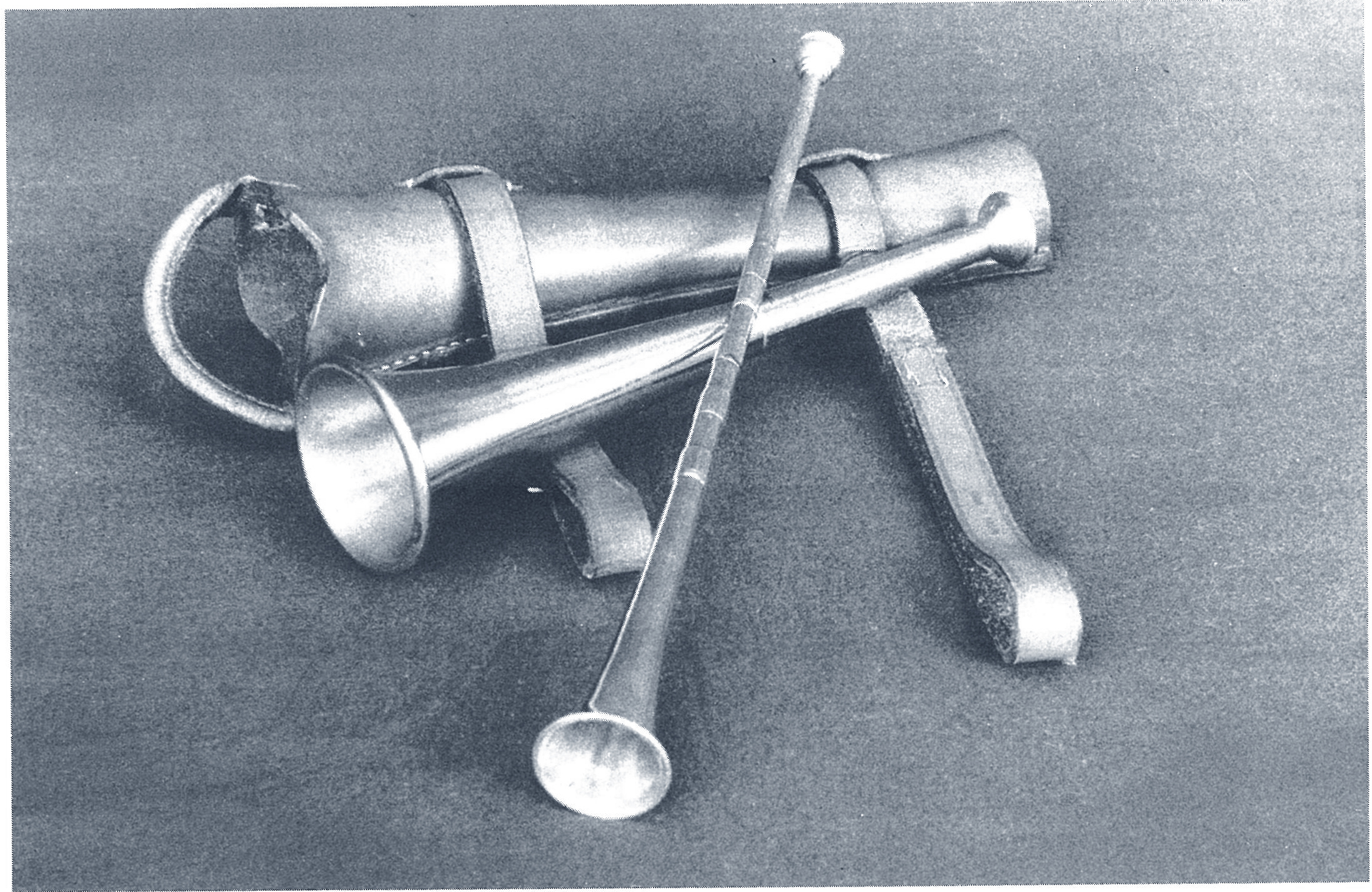
Hunting-horns (short) and Ladies hunting-horn (England)
It would take too long to list all the collectors, museums, firms and institutions which made their instruments available on loan. Without such generous support this exhibition would have been quite impossible.
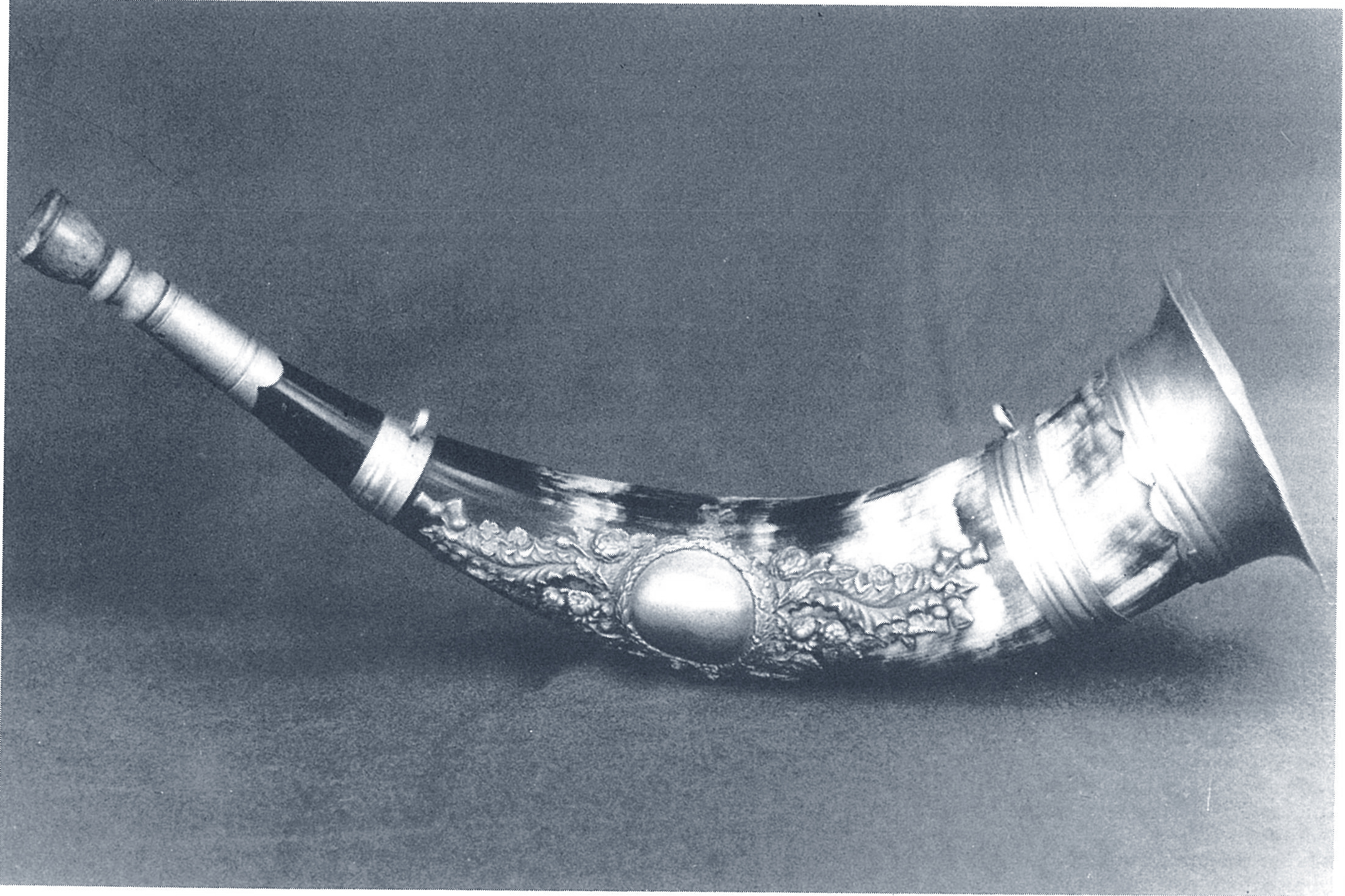
Buffalo-Horn with metallic bell and ornaments, England, around 1900
The really surprising thing is that a cultural and historical exhibition of such a high standard was organised not, as one might have expected, by experts on music, but by huntsmen. No-one would have thought that hunting-horn players (thought to number 40 000 in West Germany), who lead their own existence on the edge of the “brass world”, would have included experts of the kind necessary to plan and run such an event. I would like to express my appreciation to the Hamburg State Hunt Association as organisers, and to the German Gamekeepers’ Association as publishers of the special booklet.