Rendete Brass Bulletin disponibile nella vostra università, nel vostro conservatorio o nella vostra biblioteca Scoprite l’accesso istituzionale

3 min di lettura

Science and Technology in Trombone Teaching

Science and Technology in Trombone Teaching

Although we live in an age of great scientific and technological advances, very little of what has been written on the practice and teaching of instrumental performance has a sound scientific basis.

As brass players we all know the importance of good, clear sound production and we recognise the good fortune of those of our colleagues who have this gift naturally. For the rest of us the only way to make up for the lack of this natural gift is to understand the nature of sound production and the role of the musician and then consciously to adapt the various individual factors so as to improve the sound production.

In all the studies carried out on this subject to date a striking feature is the absence of a common theoretical basis or starting point; this lack greatly reduces the practical usefulness of such studies, whose aims (better playing and better teaching) are entirely practical.

And yet a theoretical basis exists: B. P. Konstantinov's theory of the automatic oscillation of a wind-instrument reed, set out in his book Hydro-dynamic sound production and the propagation of sound in a restricted space. Briefly, this states that a wind instrument is an acoustic system with an inherent, structurally determined frequency of oscillation. In the case of the trombone this frequency with the slide in the 1st position is 58.270 Hz, i.e. pedal Bb. (Each slide position has a different inherent frequency and so produces a different pedal note; the remainder of the instrument's compass consists of overtones of these seven notes.) Excitation of the system depends on the generator being tuned to the same frequency as the rest of the system, as has been shown experimentally using a trombone blown by a mechanically produced airstream and a rubber valve (rubber “lips”) without a musician. This experiment showed that it was necessary to use a separate rubber valve for each note produced, indicating that the player must be able, in a sense, to “change his embouchure”, or to be more precise to change the oscillation frequency of his lips, for each note. (This matching of generator frequency to system frequency is only essential at the beginning of the note; once the note is sounding, the system takes over and itself determines the frequency of the generator.)

The ability to match the frequency of the lip oscillation to the frequency of the desired note presupposes an understanding of the functioning of the lip muscles, especially the ring-shaped orbicularis oris which surrounds the mouth and the opposed muscles radiating from it, for these govern the embouchure. A transparent mouthpiece, rather than a mouthpiece visualiser, is very helpful in monitoring the action of the lips in working conditions.

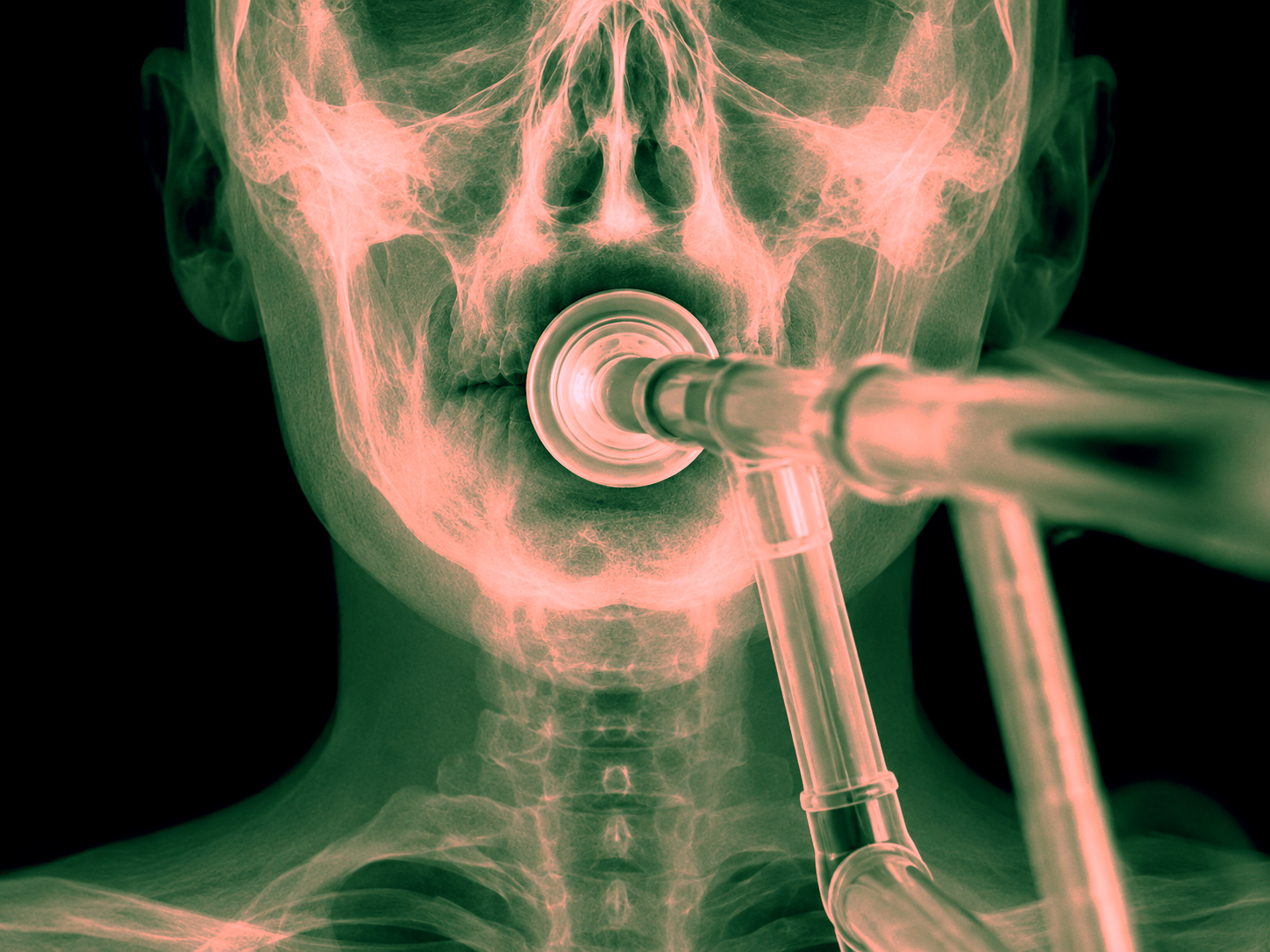
Two further points must be borne in mind if this acoustic system of player and instrument is to be made to function correctly: the first is an adequate energy supply, which here means correct breathing, which in turn means diaphragm breathing; the second is control over the speed of the airstream, which is achieved by raising and lowering the tongue in order respectively to reduce and increase the size of the mouth cavity through which the air flows (tongue high for high notes, low for low notes). Monitoring of the tongue position while playing requires X-ray photography.

If all these conditions have been met, the way is clear for good sound production. As a final check: if the player can produce light, clear sounds without using the tongue, this is an indication that all the conditions have indeed been met.

Brass Bulletin 41, I / 1983 pagine 37–38

Tutti i contenuti sono protetti dal diritto d’autore © Brass Bulletin 1983–2026

Condividi questo articolo

Facebook LinkedIn
Loading…

Domande e risposte

Come funziona l’edizione digitale

Che cosa comprende l’edizione digitale?

L’edizione digitale riunisce gli articoli già digitalizzati sotto forma di testi leggibili e ricercabili online — non semplicemente come scansioni o file PDF — insieme alle illustrazioni originali, alle note, agli autori, alle informazioni sul numero della rivista e alle traduzioni disponibili. I suggerimenti di articoli correlati comprendono attualmente solo questo materiale digitalizzato.

Gli articoli digitali sono identici agli originali?

Conserviamo il più fedelmente possibile il testo originale, la lingua, le illustrazioni, le didascalie, le note e il contesto editoriale. La presentazione viene adattata per una lettura confortevole online e gli evidenti errori di trascrizione o scansione possono essere corretti. Il contenuto e il carattere dell’articolo pubblicato rimangono invariati.

Quali lingue sono disponibili?

Brass Bulletin è stato pubblicato in inglese, francese e tedesco nel corso di tutta la sua storia. Le traduzioni italiane e spagnole sono state aggiunte a partire dal numero 60. Sui siti italiano e spagnolo, gli articoli dei numeri da 1 a 59 vengono quindi mostrati in inglese per impostazione predefinita.

Con quale frequenza vengono aggiunti nuovi articoli?

Nuovi articoli vengono aggiunti quasi ogni giorno, con circa un numero completo digitalizzato ogni settimana. Il ritmo può variare in base al lavoro di preparazione, elaborazione delle immagini e verifica editoriale necessario.

Perché non tutti gli articoli sono disponibili in formato digitale?

La collezione completa di Brass Bulletin comprende 1.246 articoli pubblicati tra il 1971 e il 2003. L’indice completo è già disponibile online e consente di scoprire tutti gli articoli della collezione, compresi quelli il cui testo integrale non è ancora stato digitalizzato.

La digitalizzazione è iniziata nel febbraio 2026. Ogni articolo viene accuratamente preparato per la lettura online, verificato e collegato al relativo numero, agli autori, agli argomenti e alle illustrazioni. Al ritmo attuale di digitalizzazione, la collezione completa dovrebbe essere disponibile online entro febbraio 2028.

Perché alcuni riferimenti citano articoli che non sono ancora disponibili?

I riferimenti presenti negli articoli originali vengono conservati anche quando il materiale a cui rimandano non è ancora stato digitalizzato. In questo modo si preserva l’integrità storica ed editoriale della rivista. Man mano che nuovi numeri vengono aggiunti all’edizione digitale, un numero crescente di questi riferimenti condurrà ad articoli leggibili online.

Posso suggerire un articolo o segnalare un errore di trascrizione?

Sì. Se desiderate che un determinato articolo venga digitalizzato, oppure se notate un possibile errore di trascrizione o un’informazione mancante, contattateci. I riscontri dei lettori ci aiutano a migliorare l’edizione digitale e a stabilire priorità utili all’interno dell’archivio.

Come posso sostenere Brass Bulletin?

Il vostro sostegno contribuisce a finanziare la preparazione, la verifica e la pubblicazione online dell’intera collezione.

Abbonati all’Edizione digitale

Preferite sostenerci senza abbonarvi?

Fate una donazione

Come procede la digitalizzazione?

Stiamo rendendo Brass Bulletin disponibile online gradualmente, articolo per articolo. Potete leggere gli articoli appena digitalizzati non appena sono pronti, anche prima che un intero numero sia completato.

Consultate il nostro calendario di digitalizzazione per scoprire le ultime aggiunte e le date di disponibilità stimate dei prossimi numeri. Le stime si basano sul nostro ritmo recente e possono cambiare.

Cerca in Brass Bulletin.